Artwork
The Merchant Georg Gisze
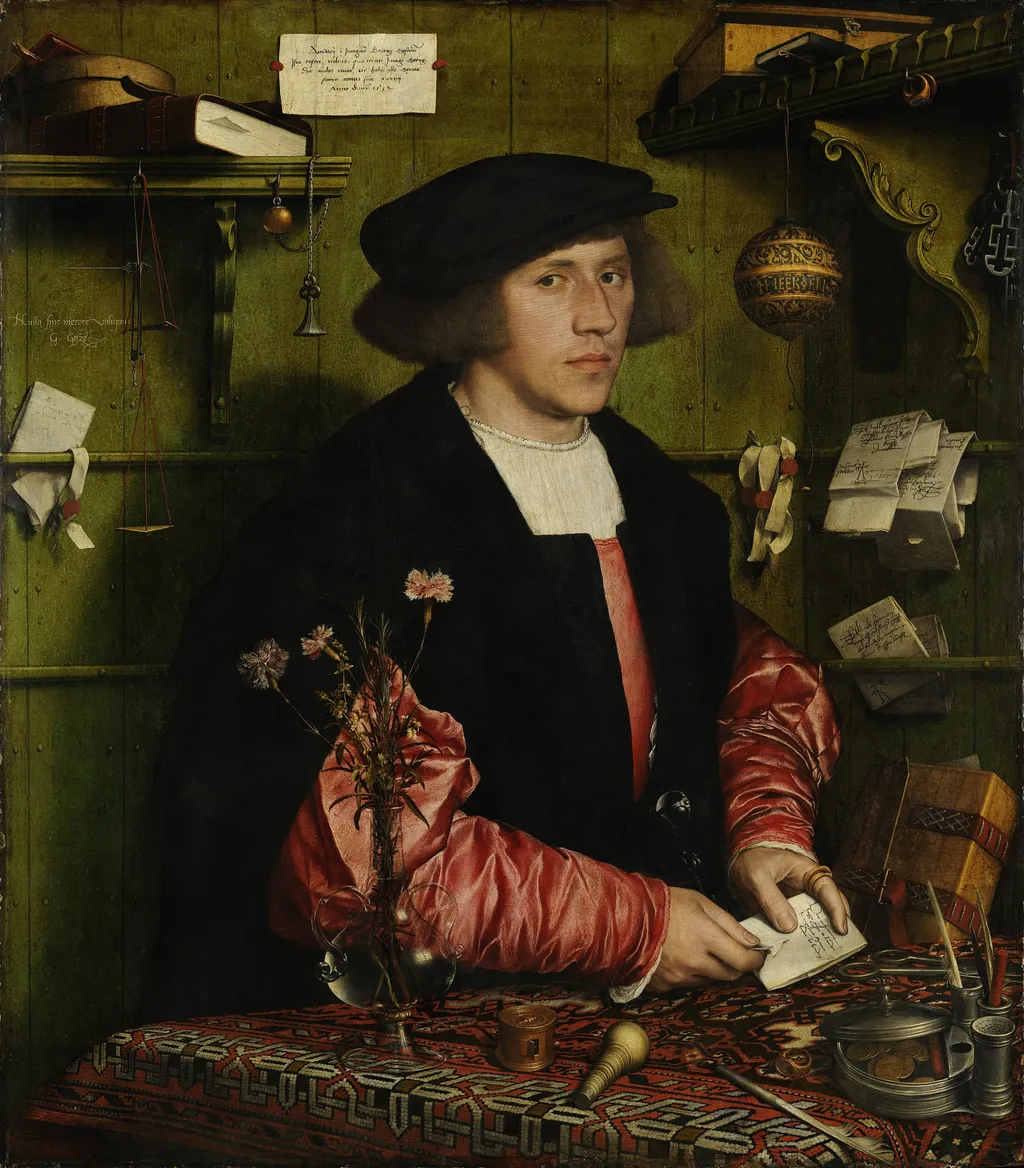
The Merchant Georg Gisze is an oil painting by the Northern Renaissance artist Hans Holbein the Younger. It dates from 1532 and is held in the collection of the Gemäldegalerie Berlin.
About this work
It belongs to a series Holbein made of wealthy Hanseatic merchants in the 1530s, showing how that class was gaining prominence on the world stage.
The painting titled The Merchant Georg Gisze is a portrait by Hans Holbein the Younger, created in 1532 with oil paint. It belongs to a series Holbein made of wealthy Hanseatic merchants in the 1530s, showing how that class was gaining prominence on the world stage. The work now hangs in the Gemäldegalerie Berlin, where you can see it alongside other early‑modern portraits.
If you’re curious about the artist’s broader output, check out the entry for artist: Hans Holbein the Younger.
Overview
The Merchant Georg Gisze is an oil painting on oak panel by Hans Holbein the Younger, executed in 1532 during the artist's second stay in London. Measuring 96.3 by 85.7 centimetres, the work is now held in the Gemäldegalerie, Berlin, as part of the Solly Collection. It is widely regarded as one of the most accomplished portraits of the Northern Renaissance and a defining image of the emerging merchant class in sixteenth-century Europe. The painting depicts Georg Gisze, a Hanseatic merchant from Danzig stationed at the London Steelyard, surrounded by the tools and symbols of his trade. Its combination of monumental Italianate composition with meticulous Northern European detail exemplifies Holbein's mature style and signals the rising social importance of wealthy bourgeois patrons in an era previously dominated by aristocratic and ecclesiastical commissions.
Subject & Meaning
The sitter, Georg Gisze, was born in Danzig in 1497 into a wealthy merchant family that had emigrated from Cologne in the 1430s. His father was mayor of Danzig, and his brother Tiedemann Giese became Bishop of Kulm and a correspondent of Erasmus of Rotterdam. Gisze worked at the family's London branch at the Steelyard from at least 1522, and the portrait was likely commissioned around the time of his betrothal. He is shown in half-length, wearing a black beret and vest over a white shirt with red silk sleeves and a pinkish-red sash, facing slightly right while looking left with a direct, cool gaze. The painting is dense with iconography. A Latin distich pinned above his head identifies him and attests to the portrait's verisimilitude, while also signalling his humanist education. His personal motto, "Nulla sine merore voluptas" (No joy without sorrow), inscribed on the rear wall beside a balance scale, suggests the transitory nature of worldly pleasure and the burdens of mercantile life. Carnations in a Venetian glass vase symbolise betrothal, while rosemary signifies friendship or remembrance and basil may allude to protection from plague. A small table-clock, the fragile glass vase, and perishable flowers serve as memento mori, reminders of time's passage. The letter in his hand, addressed in Middle Low German to "Jorgen gisze to lunden," establishes his fraternal and commercial networks. Multiple pieces of correspondence with variant spellings of his name, seals, keys, and a signet-ring underscore his integration into an international trading community. The overall effect is a carefully constructed self-image: a prosperous, educated, and connected merchant who operates within a humanist moral framework.
Technique & Style
Holbein painted in oil on oak panel, a support that allowed for the extraordinary precision of detail that characterises this work. The surface shows fine craquelure throughout. Light falls evenly across the scene, illuminating textures with almost microscopic fidelity: the sheen of red silk sleeves, the intricate weave of an Anatolian carpet covering the oblique table, the transparency of Venetian glass, the grain of wood panelling, and the metallic gleam of a brass box and silver vase. The composition is notably structured, with the table placed at an angle to the picture plane and the figure turned slightly inward, creating a shallow but coherent space crowded with objects that appear casually arranged yet are carefully orchestrated. Scholars have noted that Holbein synthesises two traditions: the Italian Renaissance concern with monumental form and colour, evident in the figure's volumetric presence and the bold red and black accents, and the Northern European tradition of detailed realism derived from Jan van Eyck, Hugo van der Goes, and fifteenth-century Flemish painting. The objects themselves form what has been described as an authentic still life, a bodegón, demonstrating Holbein's unmatched ability to render different materials, glass, metal, fabric, and organic matter, with tactile immediacy. Unlike the warmer luminosity of Flemish predecessors, however, Holbein's lighting is cooler and more even, creating a distinctive clarity that serves the documentary purpose of the portrait while achieving aesthetic harmony.
History & Provenance
The portrait was painted in London in 1532, shortly after Holbein's return from Basel, and is generally agreed to be the first work he produced during this second English sojourn. Gisze himself almost certainly commissioned it, possibly in anticipation of his marriage to Christine Krüger in 1535, after which he returned to Danzig and became a city counsellor. The painting's early history is obscure, but by 1727 it was in the collection of the Duke of Orléans, appearing in inventories until 1788. It was exhibited at the Royal Academy in London in 1793 and subsequently put up for auction. The Swiss publisher and copper-engraver Christian von Mechel acquired it but failed to persuade the Basel Library to purchase it. For approximately twenty years it remained in Switzerland without finding a buyer, until Edward Solly acquired it at a very low price. In 1821 it entered the Berlin Museum with the rest of the Solly Collection, where it remains today in the Gemäldegalerie.
Context
Holbein's portrait belongs to a broader series of eight portraits of Hanseatic merchants he painted in the early 1530s, including depictions of Hans of Antwerp, Hermann Wedigh, Hillebrant Wedigh, Dirk Tybis, Cyriacus Kale, Derick Born, and Derick Berck. These commissions reflect a significant shift in patronage patterns: the Hanseatic League, a commercial confederation of merchant guilds active across the Baltic and North Sea coasts, had become a major source of artistic commissions. In London, these merchants congregated at the Steelyard, a walled enclosure on the north bank of the Thames near London Bridge, which functioned as an independent community with its own warehouses, offices, residences, and guildhall, governed by Hanseatic codes and exempt from certain English taxes. The emergence of wealthy merchants as portrait subjects signals their increasing social prestige and self-consciousness as a class. Holbein rented a house in nearby Maiden Lane as a studio to accommodate these sitters. The portrait also reflects the humanist networks of the period: Gisze's brother Tiedemann was a scholar and friend of Copernicus who corresponded with Erasmus, whom Holbein had also portrayed. This connection may explain how Gisze secured the services of the leading portraitist of the day so promptly after Holbein's arrival in London. Critical reception has consistently ranked this work among Holbein's supreme achievements and among the finest German portraits ever painted, with particular praise for its synthesis of Italianate monumentality and Northern precision.
![Portrait of a Merchant [possibly Jan Snoeck]](https://artifactworldgallery.com/img/unknown--portrait-of-a-merchant-possibly-jan-snoeck--0a8a46dc3a051aff-w320.webp)
Own this work as a print
Artist & collection
Artist
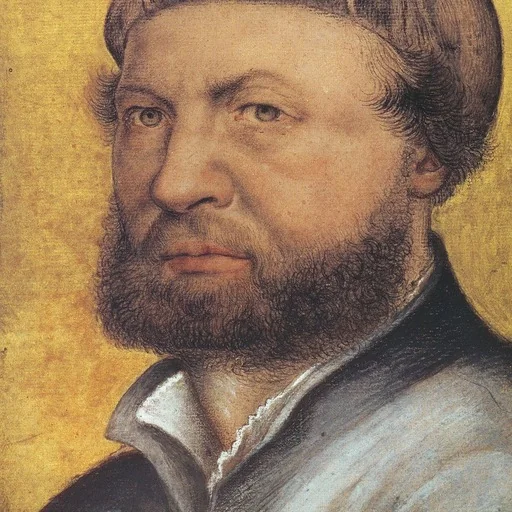
Hans Holbein the Younger (UK: HOL-byne, US: HOHL-byne, HAWL-; German: Hans Holbein der Jüngere; c.

 Portrait of a Man, possibly Jan Snoeck
 Männliches Bildnis
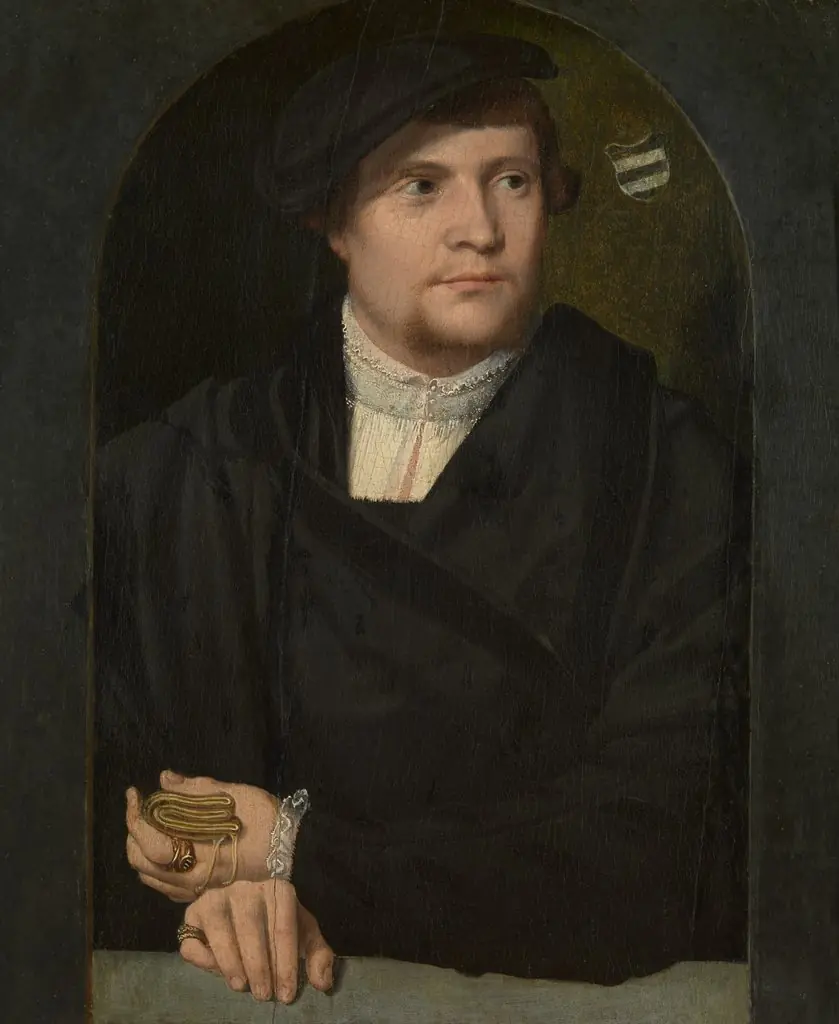 Portrait of a Man
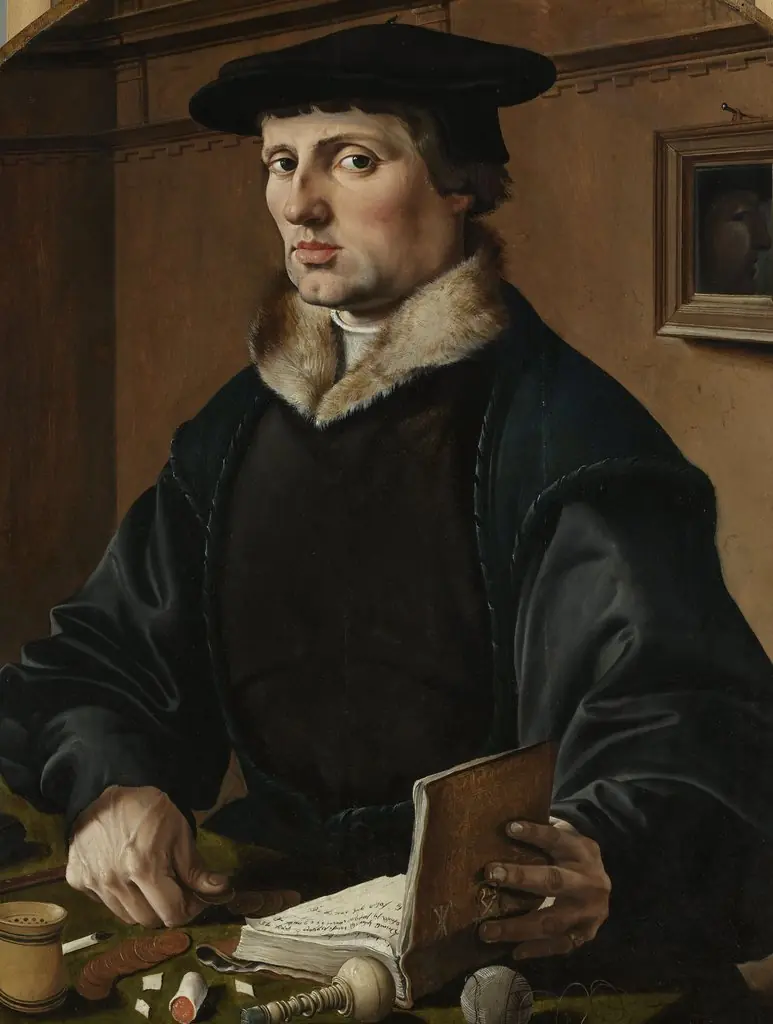 Portrait of (possibly) Pieter Gerritsz Bicker, pendant of (possibly) his wife Anna Codde
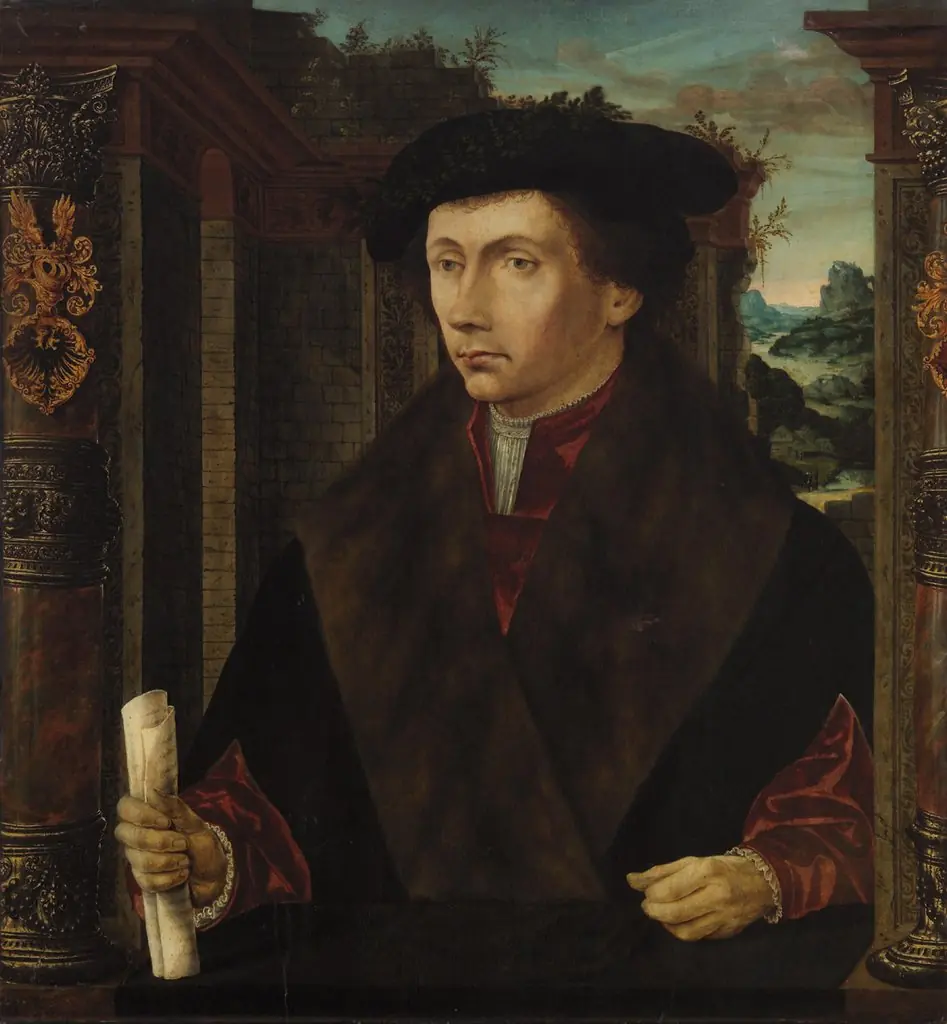 Portrait of Sybrand Pompejusz. Occo
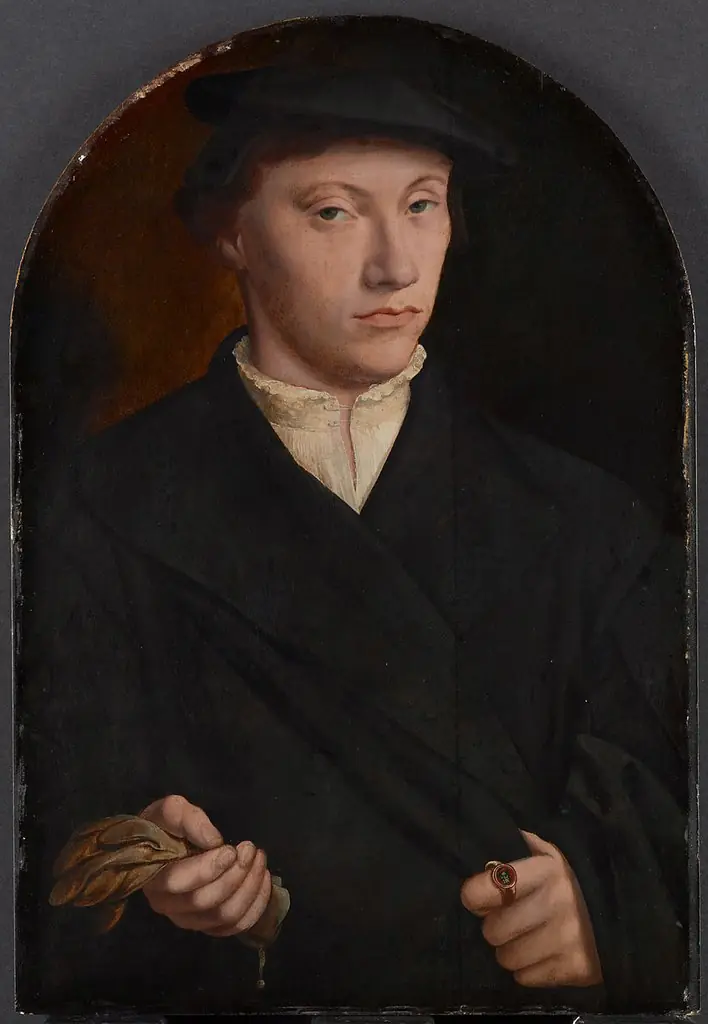 Portrait of a young man holding gloves
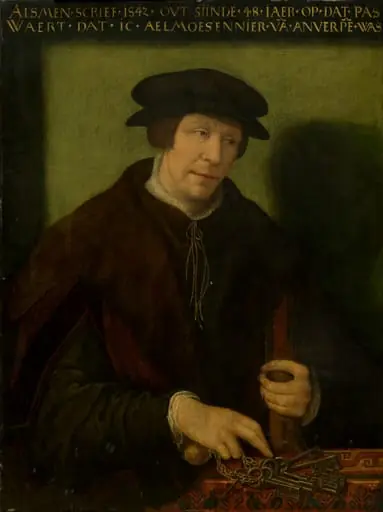 Portrait of an Almoner of Antwerp
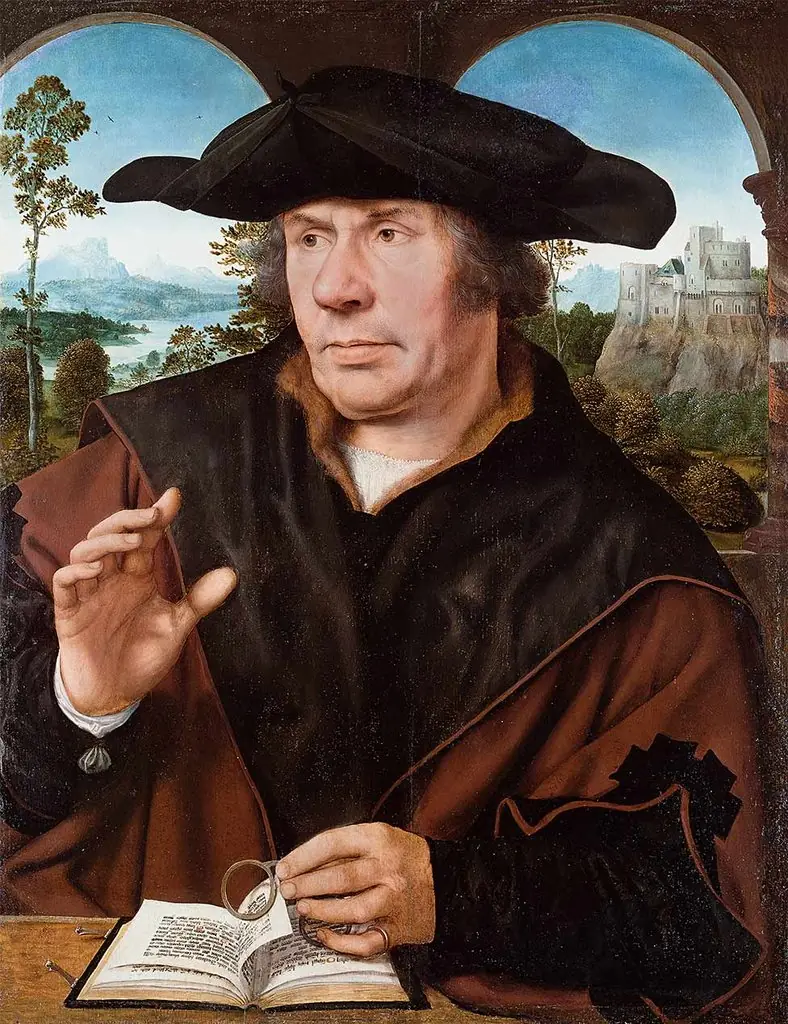 Portrait of a Scholar
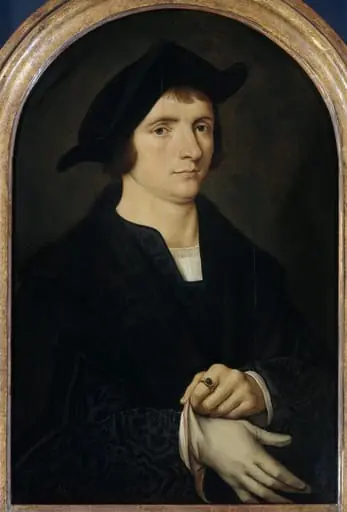 Portrait of Joris Vezeleer