Artwork
Goldfish and Palette
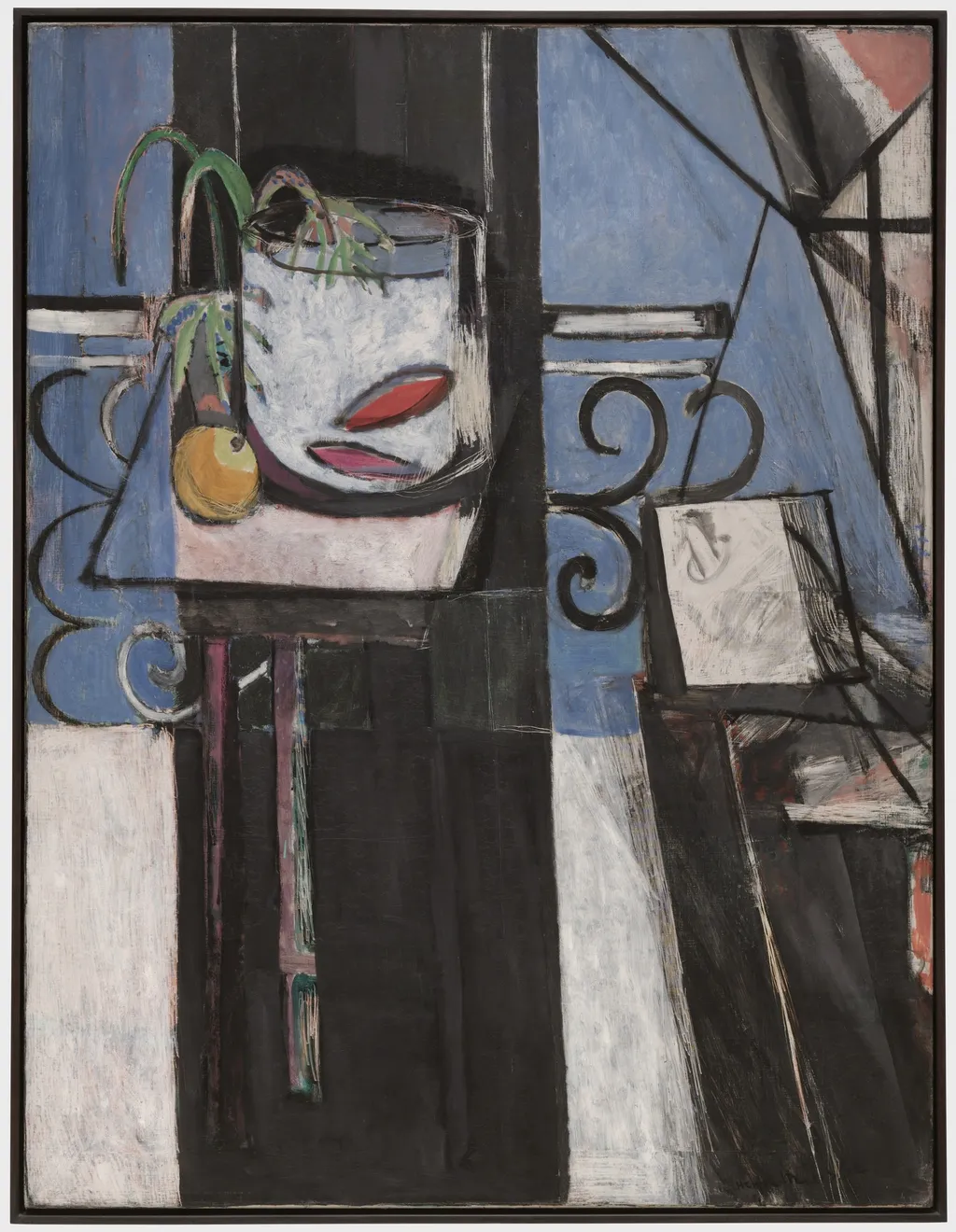
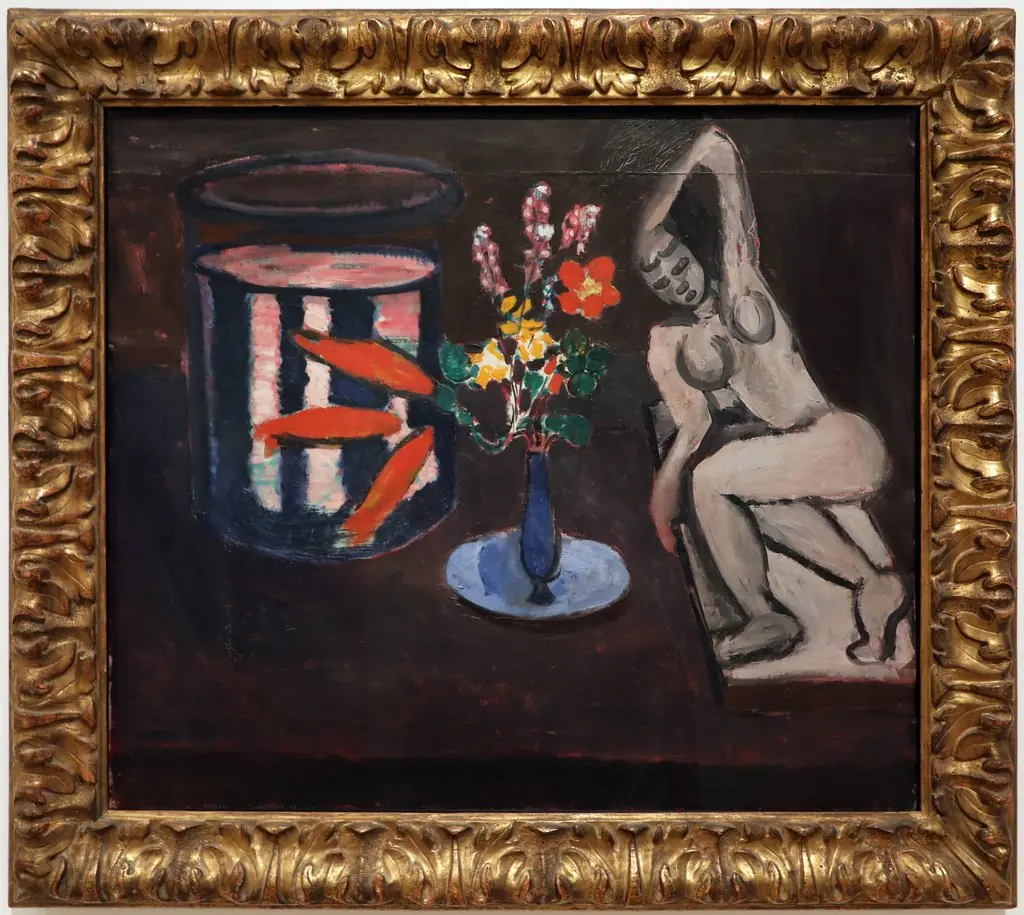
Goldfish and Palette is an oil painting by the Fauvist artist Henri Matisse. It dates from 1914 and is held in the collection of the Museum of Modern Art.
About this work
Overview
The palette, positioned at the right edge, suggests a self-referential meditation on the act of painting itself.
Henri Matisse created Goldfish and Palette in 1914 as an oil painting within the still life tradition. Though associated with Fauvism, this work reflects a shift toward quieter, more structured compositions. The scene centers on a fishbowl, a lemon, and an artist’s palette, arranged with deliberate simplicity. The palette, positioned at the right edge, suggests a self-referential meditation on the act of painting itself.
Subject & Meaning
The painting presents ordinary objects, a fishbowl, a lemon, and a palette, arranged with quiet intentionality. The goldfish, motionless within the glass, may symbolize contemplation or the artist’s inward focus. The hanging lemon and the palette, tools of creation, imply a link between observation and production. The stillness of the scene invites reflection rather than narrative, emphasizing presence over action.
Technique & Style
Matisse employs thick, dark outlines to define forms, creating a sense of structure amid simplified shapes. Colors are muted, deep blues, blacks, and earthy tones, contrasting with earlier Fauvist intensity. The background is divided into flat planes, and the metallic table base is rendered with geometric precision. Brushwork is deliberate, avoiding expressive flourish in favor of calm, measured composition.
History & Provenance
Painted during a period of personal and artistic transition, Goldfish and Palette emerged after Matisse’s more chromatically explosive years. It entered the collection of the Museum of Modern Art in New York, where it remains today. The work reflects his evolving interest in balance and spatial harmony, aligning with his broader exploration of form during the early 1910s.
Context
In 1914, Europe stood on the brink of war, and Matisse’s work grew more introspective. While contemporaries like Picasso pursued fragmentation, Matisse turned to stillness and order. This painting reflects his engagement with Eastern aesthetics, particularly Japanese prints, which emphasized asymmetry and empty space. The subdued palette and structured layout mark a departure from Fauvist exuberance toward a more meditative mode.
Legacy
Though less celebrated than his color-driven works, Goldfish and Palette illustrates Matisse’s enduring interest in the relationship between art and perception. Its restrained language influenced later artists exploring minimalism and spatial clarity. The painting endures as a quiet testament to his belief that art could convey depth through simplicity, not spectacle.
Artist & collection
Artist
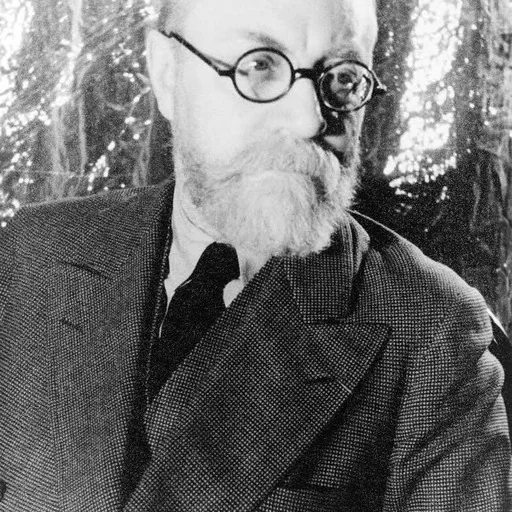
Henri Émile Benoît Matisse (French:; 31 December 1869 – 3 November 1954) was a French visual artist, known for both his use of colour and his fluid and original draughtsmanship.