Artwork
Music (Sketch)
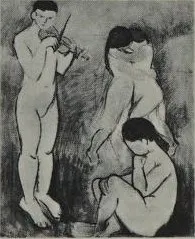
Music (Sketch) is an unspecified painting by the Fauvist artist Henri Matisse. It dates from 1907 and is held in the collection of the Museum of Modern Art.
About this work
Overview
Henri Matisse produced Music (Sketch) in 1907 as a preparatory study for a larger composition. Executed during his Fauvist phase, the work captures his interest in reducing form to essential lines and intensifying color for emotional resonance. Its unfinished appearance reflects Matisse’s process of rapid exploration rather than polished completion, emphasizing gesture over detail.
Subject & Meaning
The figures are arranged in a rhythmic, almost ceremonial grouping, evoking harmony through posture and spatial balance rather than narrative detail.
The painting depicts four nude figures arranged in a musical gathering: two standing, two seated. One figure holds a violin, suggesting a performance or rehearsal. The figures are arranged in a rhythmic, almost ceremonial grouping, evoking harmony through posture and spatial balance rather than narrative detail. Their nudity and simplified forms direct attention to movement and connection, not individual identity.
Technique & Style
Matisse employed loose, energetic brushwork and unblended pigments to define the figures, rejecting traditional modeling. The background, a flat gray-brown, contrasts with the warmer tones of the bodies, enhancing their presence. Forms are outlined with bold strokes, and details like hands or facial features are omitted, prioritizing overall composition over realism. The surface retains visible brushstrokes, hinting at impasto without heavy texture.
History & Provenance
Created in the spring of 1907, this sketch was part of Matisse’s intensive work on the final painting Music, now in the Hermitage Museum. The sketch remained in the artist’s possession until his death, later entering a private collection before being acquired by a public institution. Its survival as a working study offers insight into Matisse’s evolving vision for the larger piece.
Context
In 1907, Matisse was at the center of Paris’s avant-garde, challenging academic norms alongside artists like Picasso and Derain. Fauvism’s emphasis on expressive color and simplified form was still radical. Music (Sketch) exemplifies this moment: a departure from naturalism toward abstraction, where emotion and structure override representation, reflecting broader shifts in early modern art.
Legacy
Though a study, Music (Sketch) reveals Matisse’s commitment to distilling human form into expressive essentials. Its raw energy influenced later modernists exploring gesture and abstraction. The work remains a key document of Fauvism’s experimental spirit, illustrating how preliminary sketches could embody artistic breakthroughs as powerfully as finished paintings.
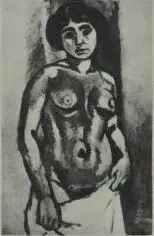
Artist & collection
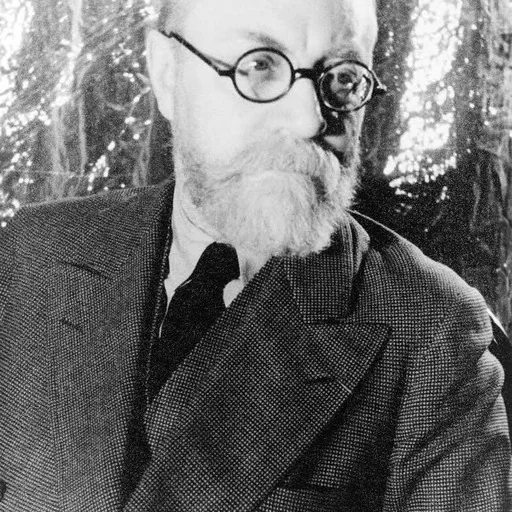
Artist
Henri Émile Benoît Matisse (French:; 31 December 1869 – 3 November 1954) was a French visual artist, known for both his use of colour and his fluid and original draughtsmanship.

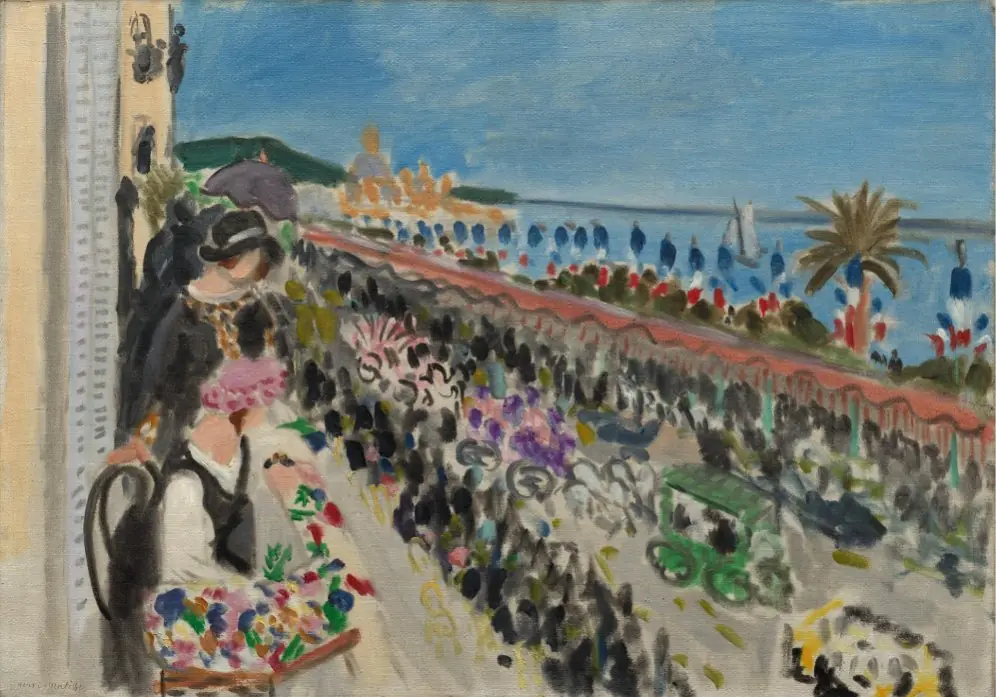
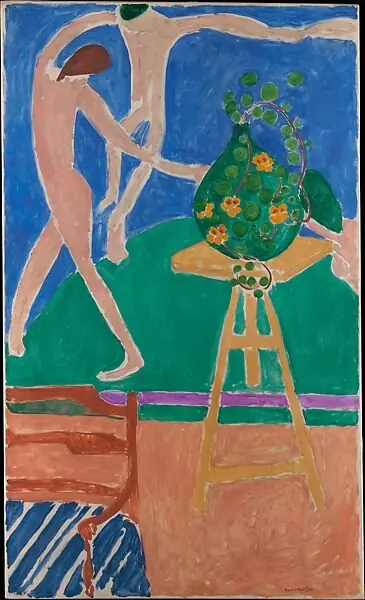
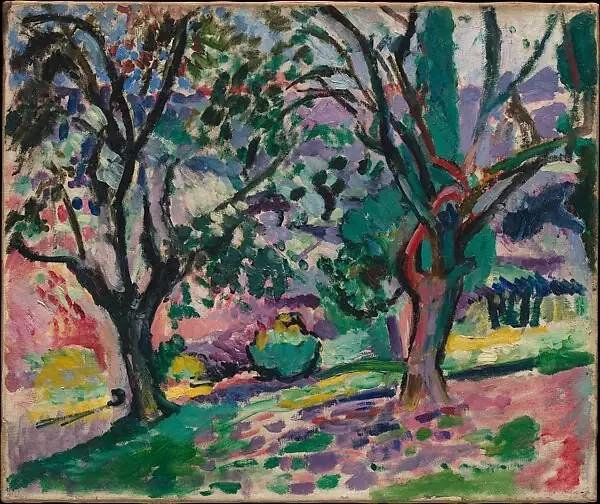
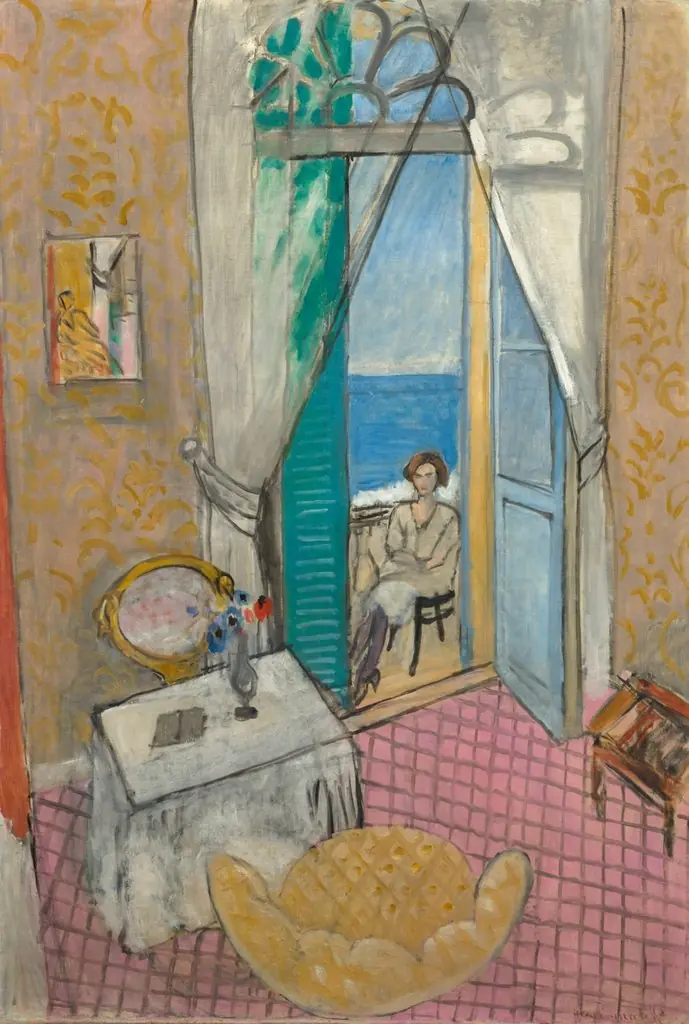
- Nude. Black and Gold
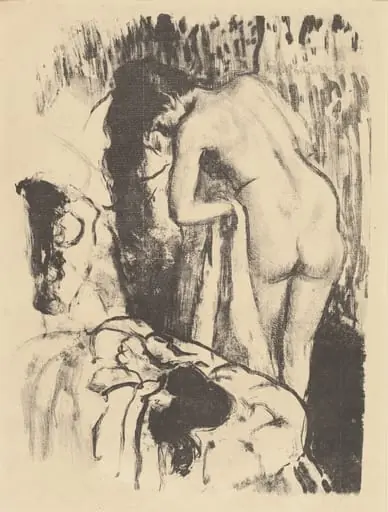 Nude Woman Standing, Drying Herself (Femme nue debout, a sa toilette)
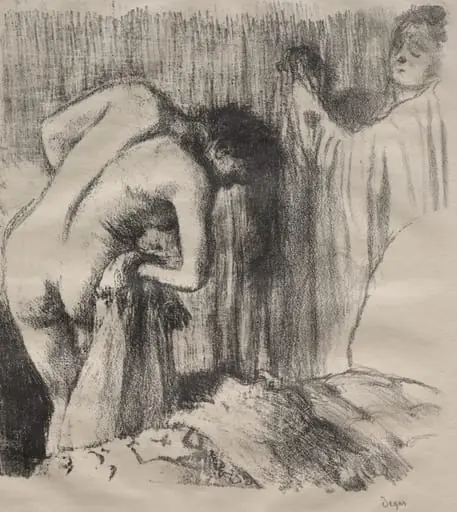 After the Bath III
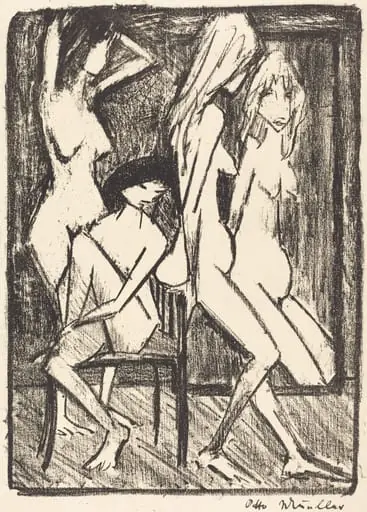 Three Girls in front of a Mirror (Drei Madchen vor dem Speigel)
 Nude in a Wood
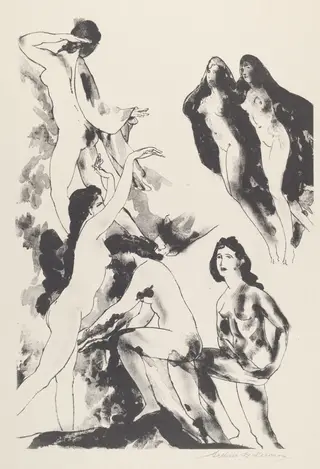 Free of Clouds
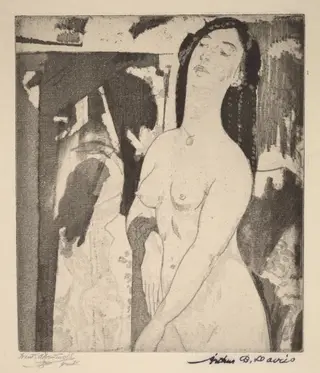 Doorway to Illusion
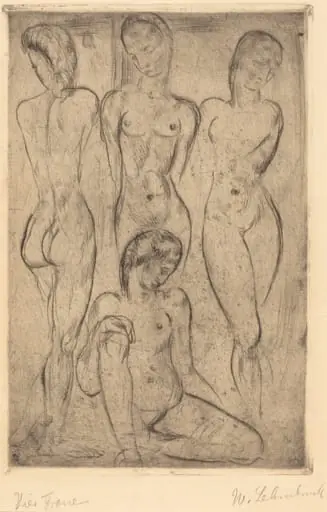 Four Women; Three Standing, One Sitting (VierFrauen; drei stehend, eine sitzend)
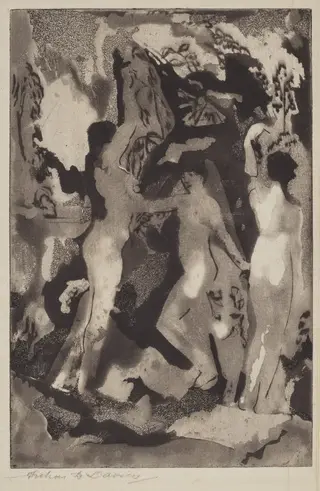 Kingdom of the Sun
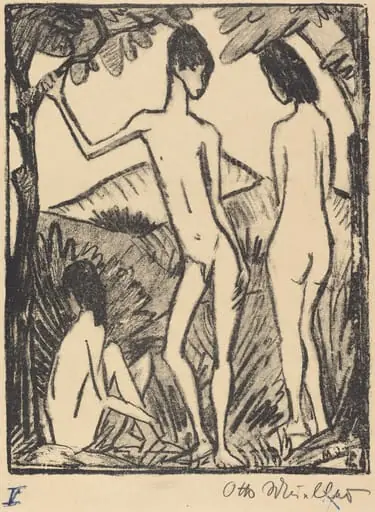 Standing Boy and Two Girls (second version) (Stehender Knabe und zwei Mädchen 2 )
 Singer at the Café-Concert
 Fată cu chitară