Artwork
Outskirts of Paris
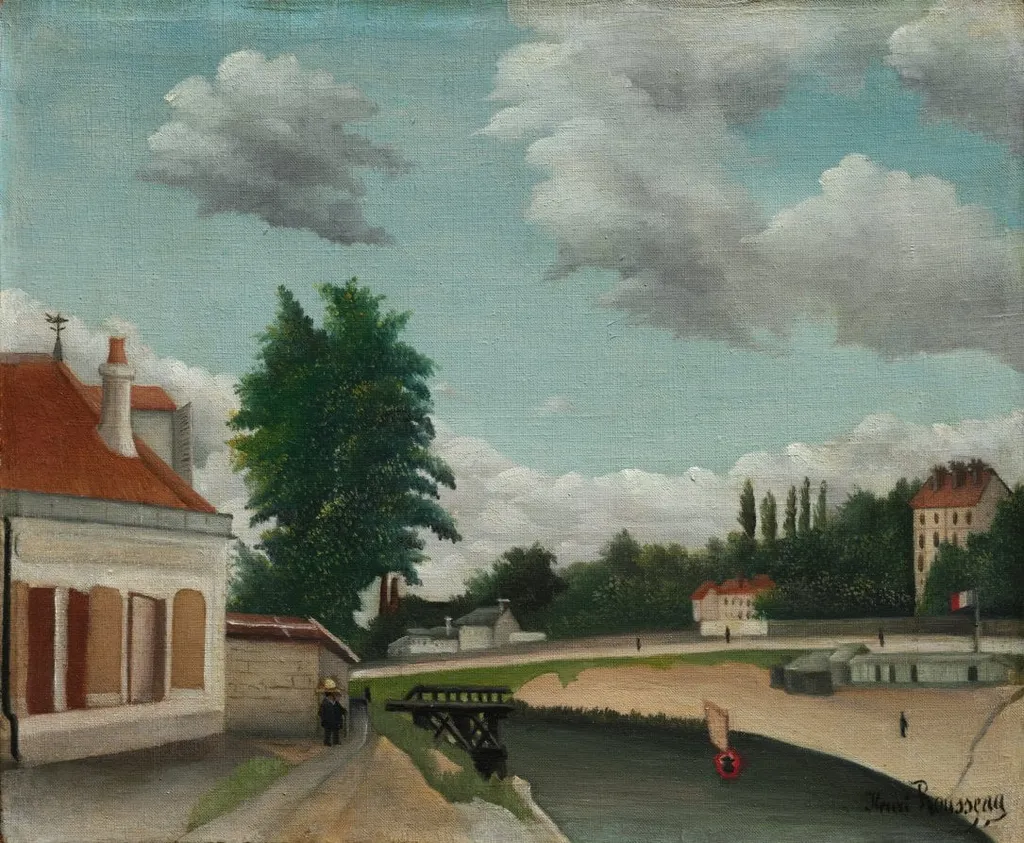
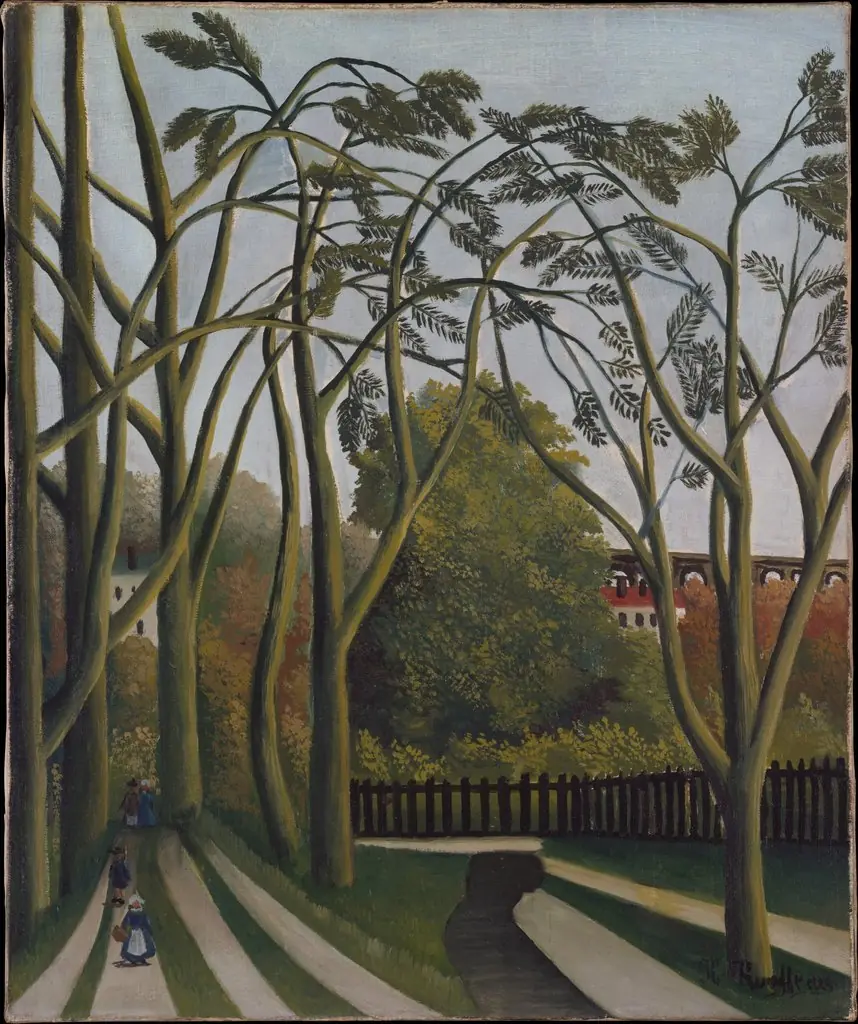
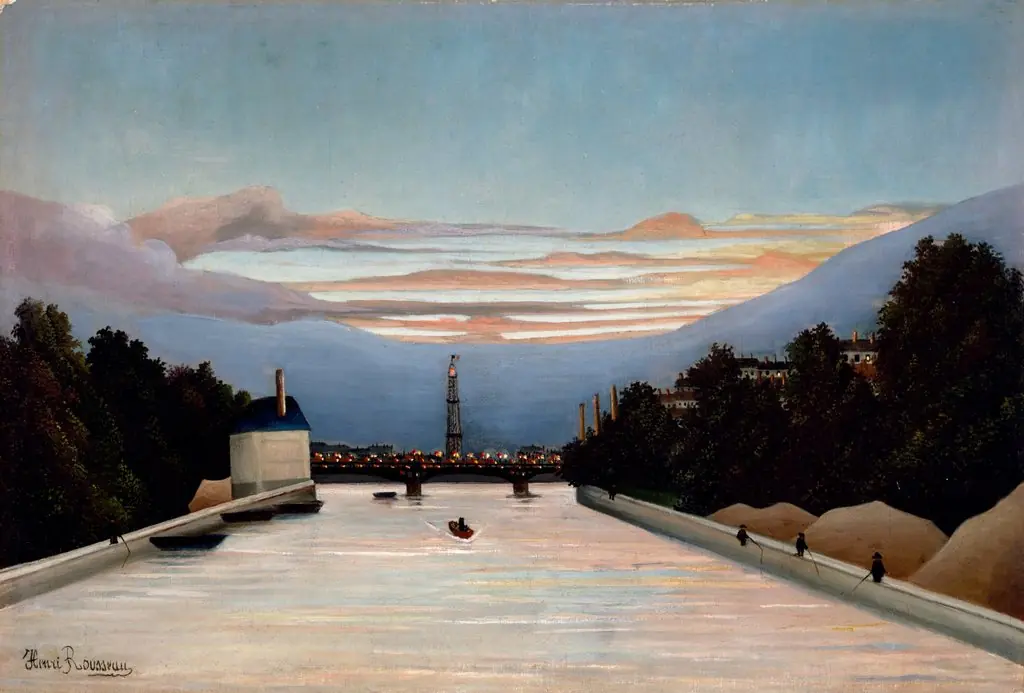
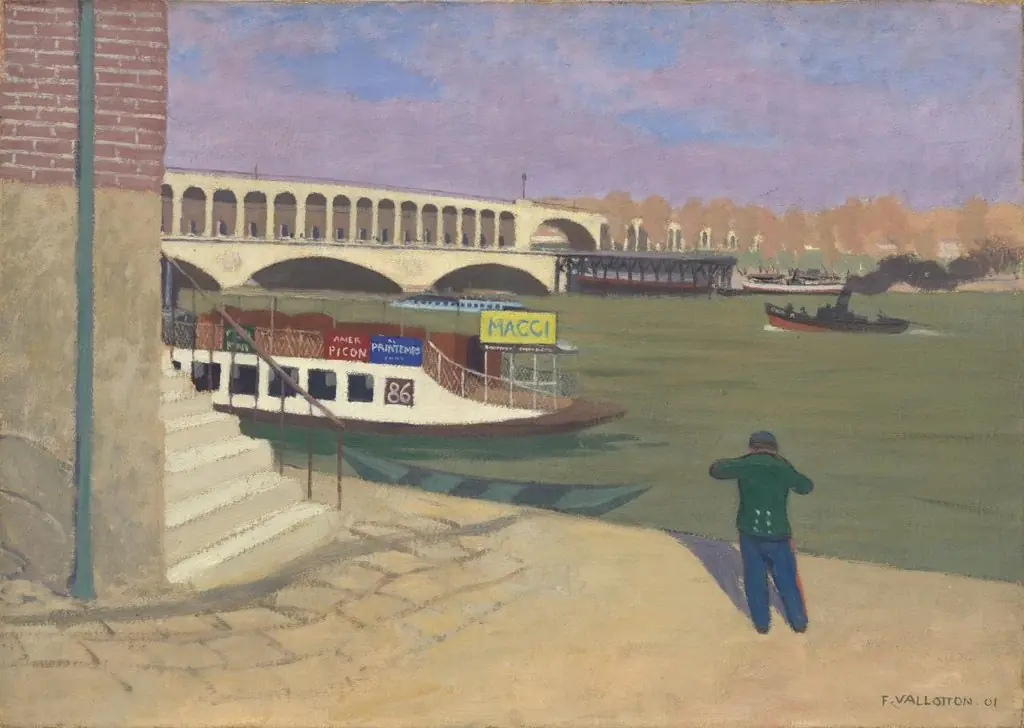
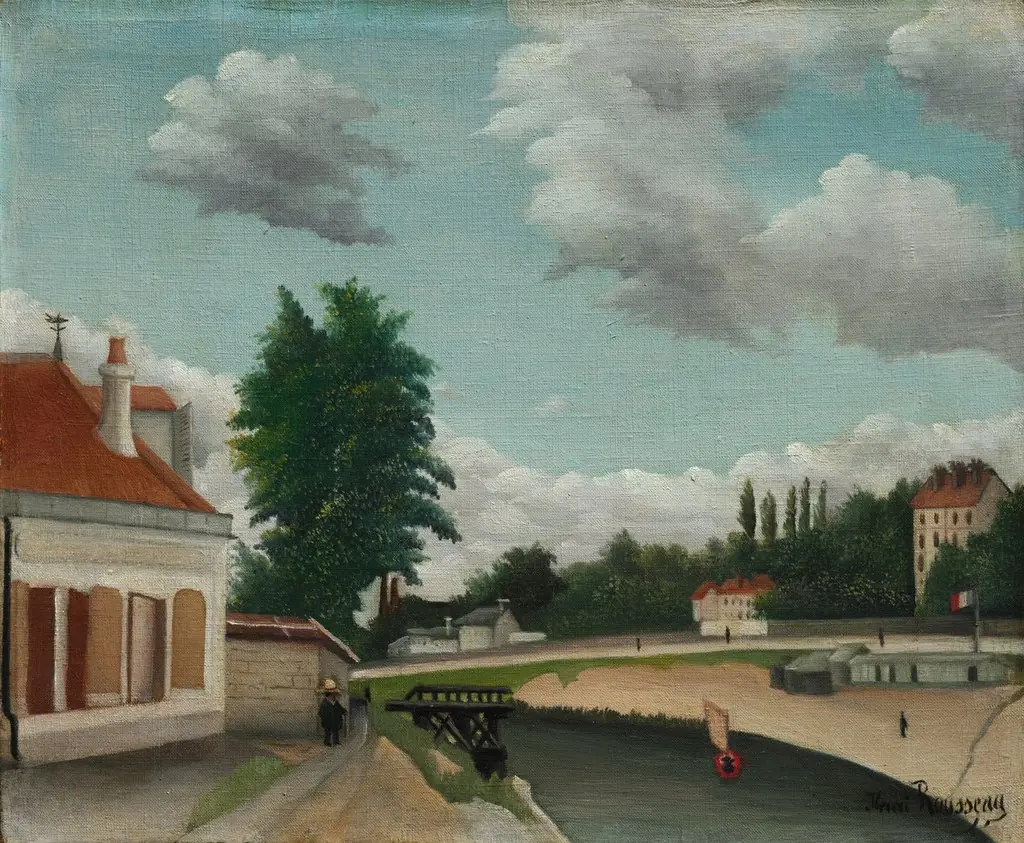
Outskirts of Paris is an unspecified painting by the Impressionist artist Henri Rousseau. It dates from 1901 and is held in the collection of the Cleveland Museum of Art. Painted in the early 20th century, this small landscape depicts a tranquil riverside on the edge of Paris.
- Accession no.
- 1929.951
- Credit line
- Purchase from the J. H. Wade Fund
About this work
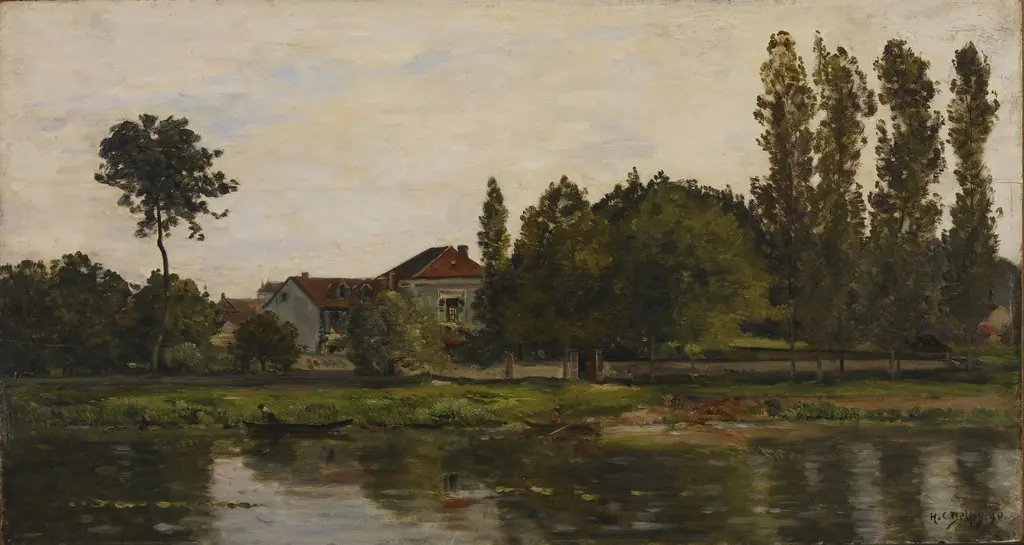
You see a quiet riverbank on the edge of Paris, with tiny houses, puffy clouds, and trees that look like they’re cut from paper.
You see a quiet riverbank on the edge of Paris, with tiny houses, puffy clouds, and trees that look like they’re cut from paper.
Rousseau never went to art school. He worked as a toll collector until he was 41, then started painting full-time. The critics laughed at first, but his odd, flat style made him stand out.
If you like this, look up the subject france, late 19th century-early 20th century, mod euro.
Overview
Painted in the early 20th century, this small landscape depicts a tranquil riverside on the edge of Paris. Unlike Rousseau’s more exotic jungle scenes, this work focuses on a quiet, everyday setting. His approach blends precise detail with a newfound sensitivity to light and form, marking a shift from the rigid flatness of his earlier paintings.
Subject & Meaning
The scene shows modest houses, scattered trees, and soft, rounded clouds above a still waterway. There is no human activity, no narrative drama, only stillness. The composition suggests a contemplative observation of suburban France, where nature and domestic life coexist without tension. The calmness of the view reflects an inner order, perhaps a personal refuge from urban life.
Technique & Style
Rousseau abandoned the rigid, planar surfaces of his earlier work in favor of gentle gradations in tone and looser brush handling. Clouds and foliage gain volume through subtle shading, while architectural forms retain crisp edges. Though his technique remained untrained, the painting reveals a deliberate effort to suggest spatial depth and atmospheric presence without relying on academic conventions.
History & Provenance
Created after Rousseau left his position as a toll collector at age 41, this painting belongs to a series of landscapes he produced during his full-time artistic career. Though initially mocked by critics, his work gradually attracted attention from younger avant-garde painters who valued his unorthodox vision. This piece exemplifies his transition from amateur to recognized, if unconventional, artist.
Context
Painted during a period of rapid urban expansion, the scene captures a liminal zone between city and countryside. While Paris modernized, such peripheral landscapes became symbols of fading rural life. Rousseau’s depiction avoids nostalgia or critique, instead offering a quiet, matter-of-fact record of a place often overlooked by mainstream art of the time.
Legacy
Though never formally trained, Rousseau’s unique vision influenced modern artists seeking alternatives to academic realism. His ability to convey emotional stillness through simplified forms and unconventional perspective helped pave the way for later movements that valued intuition over technique. This painting stands as evidence of his evolving skill and enduring quiet authority.
Artist & collection

Artist
Henri Julien Félix Rousseau (French: ; 21 May 1844 – 2 September 1910) was a French post-Impressionist painter in the Naïve or Primitive manner.