Artwork
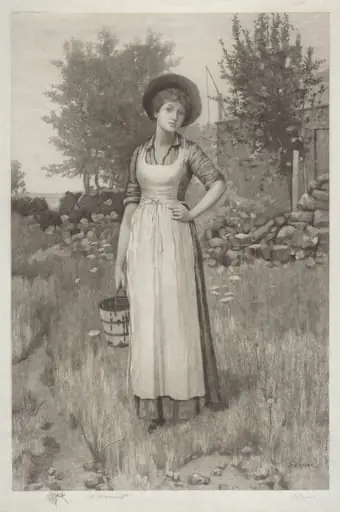
The Milk Maid
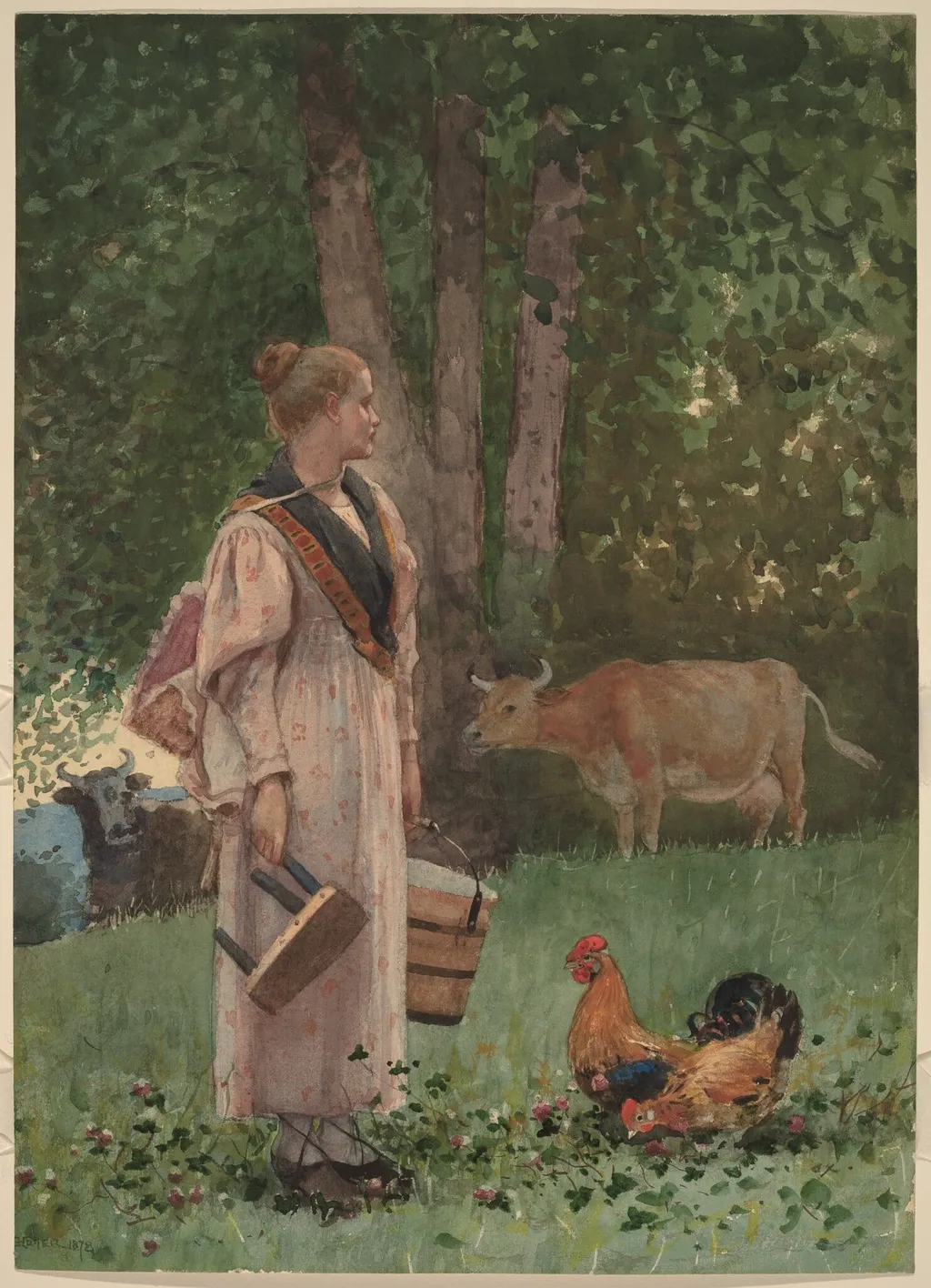
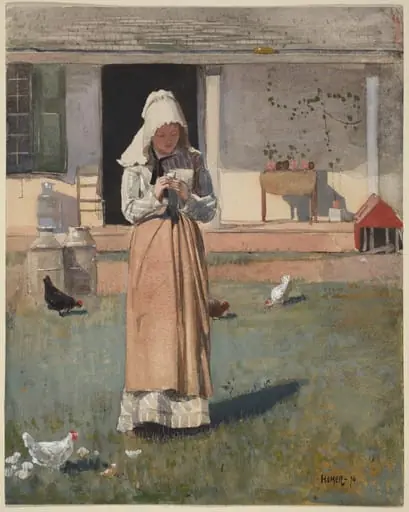
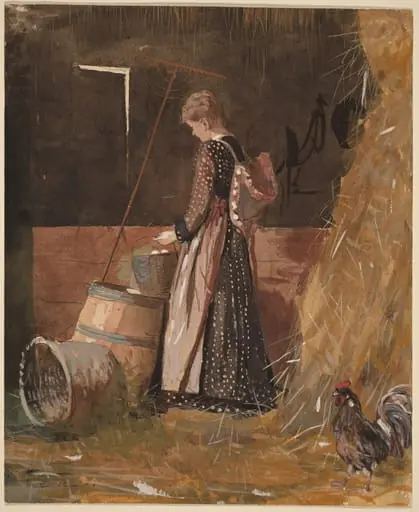
The Milk Maid is a graphite drawing by the Impressionist artist Winslow Homer. It dates from 1878 and is held in the collection of the National Gallery of Art.
- Inscription
- Inscribed:lower left in black watercolor: HOMER 1878; lower center verso in graphite by unknown hand: not deciphered
About this work
Overview
Winslow Homer’s 1878 work titled The Milk Maid is a small-scale drawing executed in watercolor applied over a graphite underdrawing on wove paper. The piece belongs to Homer’s early post‑Civil War period, when he was exploring rural American subjects through a combination of drawing and wash.
Technique & Style
The artist first sketched the composition in graphite, establishing form and gesture, then layered translucent watercolor washes to model light and atmosphere. The use of wove paper provides a smooth surface that supports fine line work while allowing the pigment to spread evenly, creating a delicate balance between line and color.
Subject & Meaning
The composition depicts a woman engaged in milking, a quotidian labor scene that reflects Homer’s interest in everyday rural life. By focusing on a single figure at work, the drawing emphasizes the dignity of manual labor and the quiet rhythm of agrarian routines in late‑19th‑century America.
History & Provenance
Created in 1878, The Milk Maid was produced during Homer’s transition from illustration to fine art. The work entered the public domain through acquisition by a regional museum in the early 20th century, where it has remained part of the institution’s collection of American watercolors.
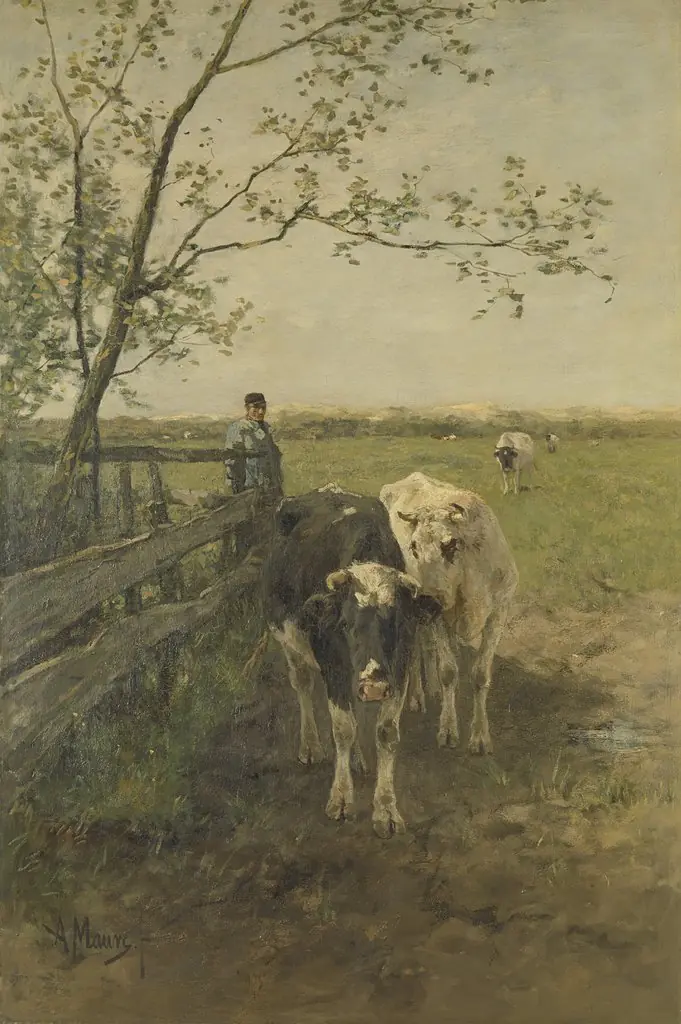
Own this work as a print
Artist & collection
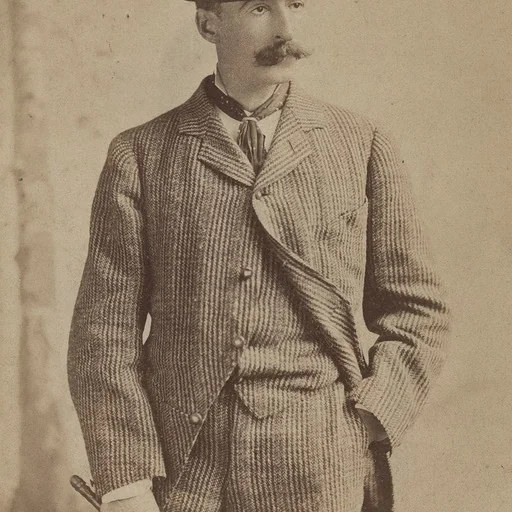
Artist
Winslow Homer (February 24, 1836 – September 29, 1910) was an American landscape painter and illustrator, best known for his marine subjects.