Artwork
Allegory of Love
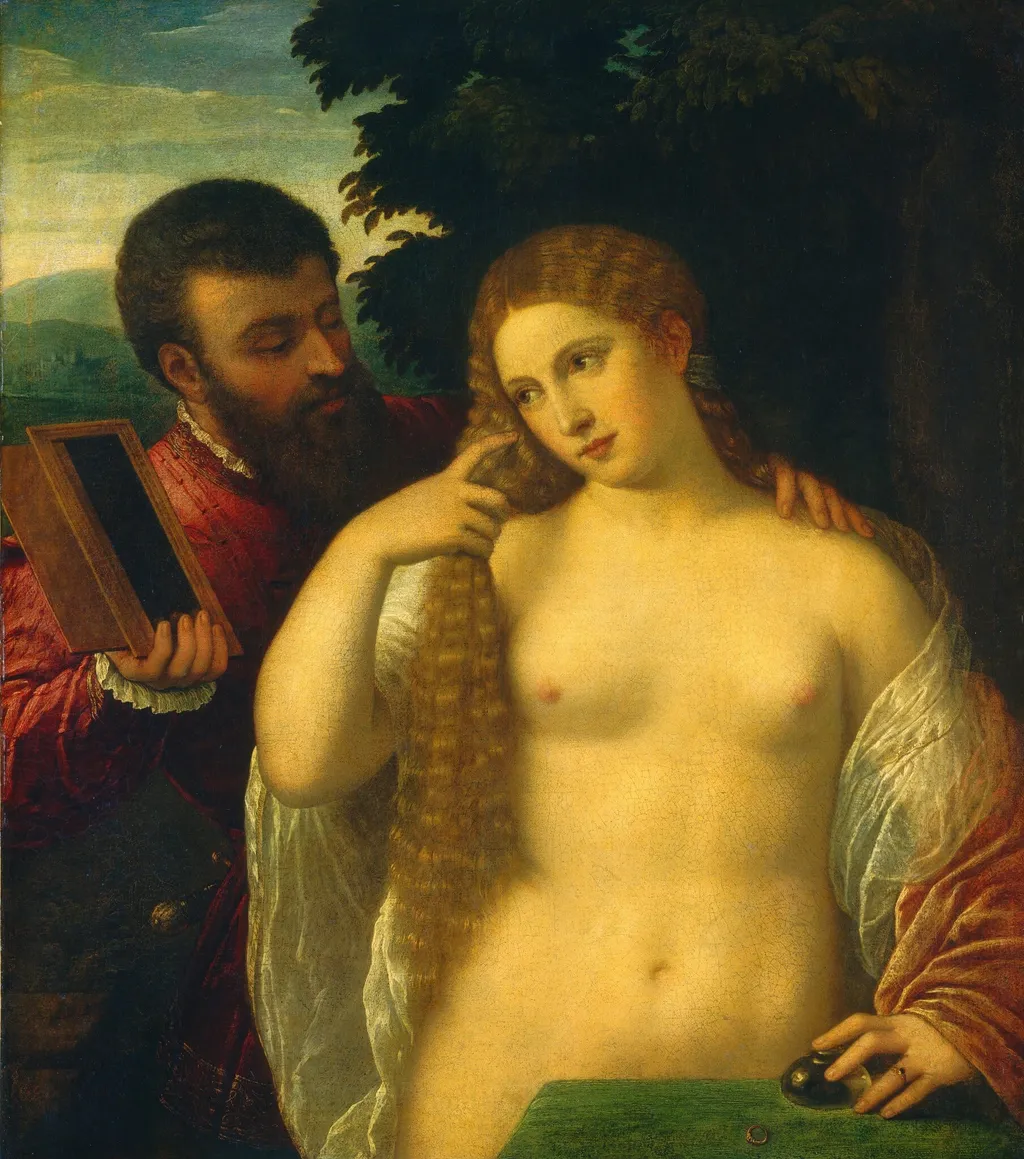
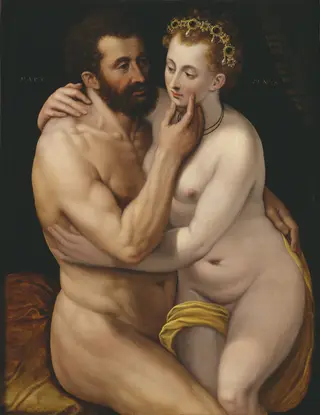
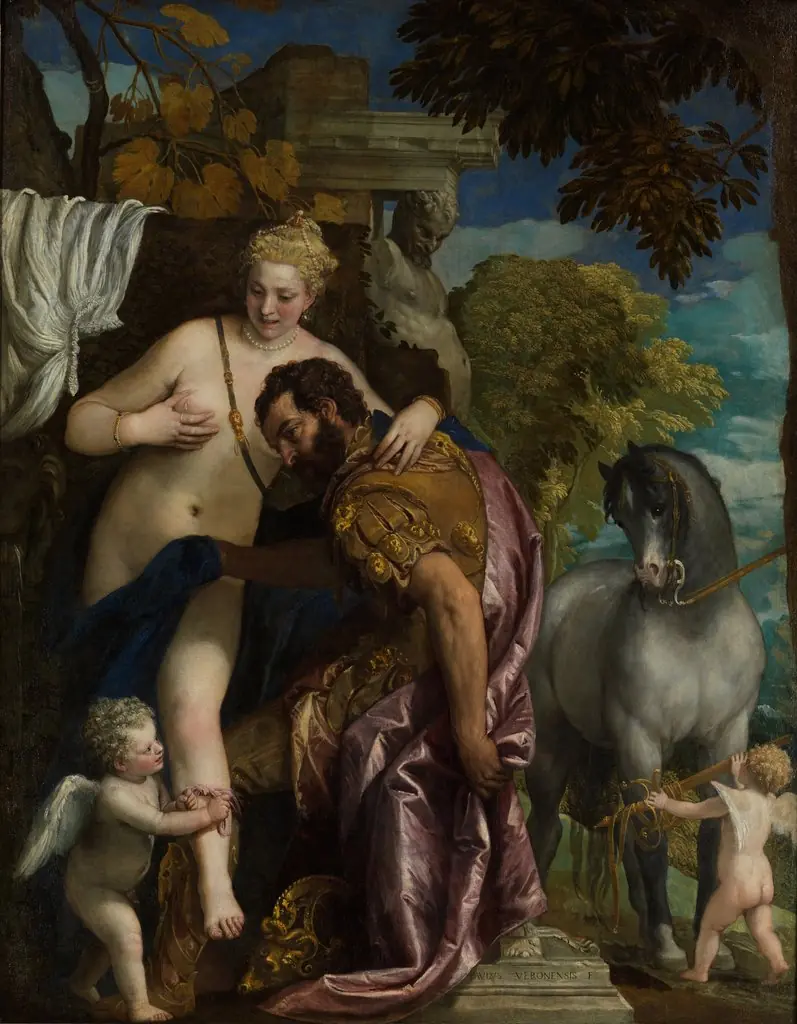
Allegory of Love is an oil painting. It dates from 1530 and is held in the collection of the National Gallery of Art.
About this work
Technique & Style
The painting is executed in oil on canvas, a medium and support typical of Italian workshop production in the early sixteenth century.
The painting is executed in oil on canvas, a medium and support typical of Italian workshop production in the early sixteenth century. The canvas has been relined, a structural conservation measure that often reinforces aged fabric. A seal affixed to the stretcher records the brief ownership of Lord Stewart in 1815–1816.
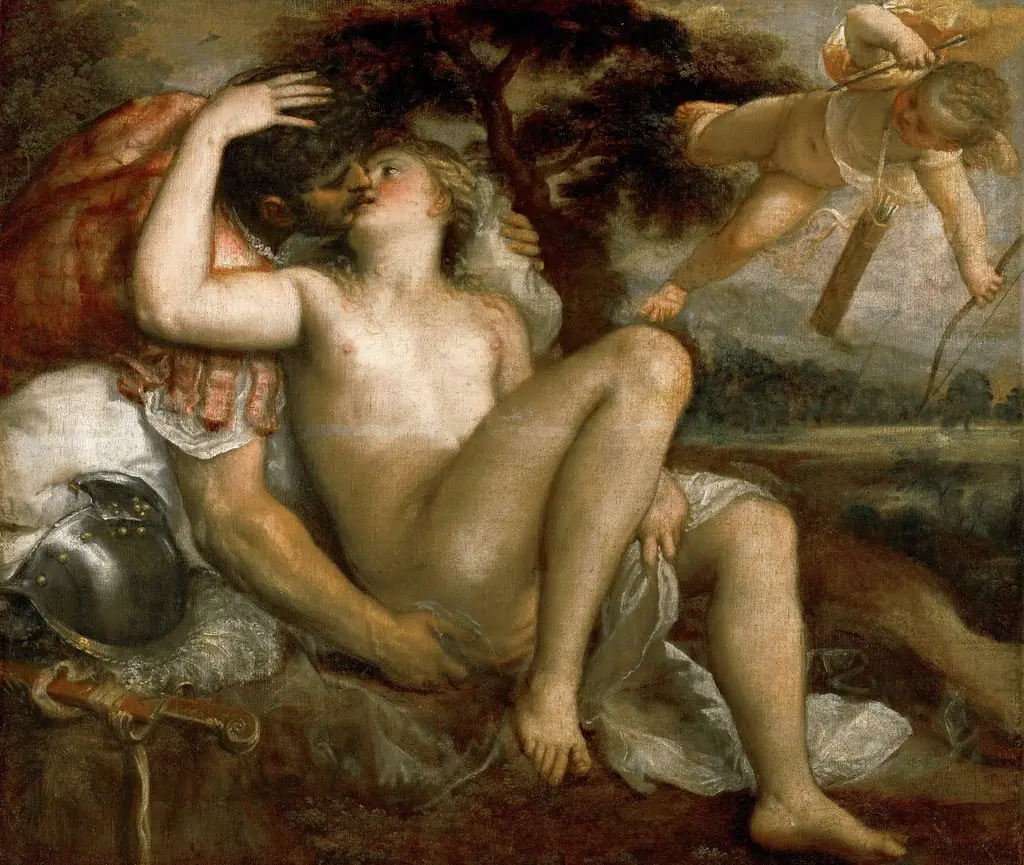
Stylistically, the work is an allegorical composition depicting a man and woman, attributed to the workshop of Titian, though formal handling such as brushwork and color cannot be assessed from available source data.
History & Provenance
The painting, dated to 1530, was discovered in an attic in Ferrara by Count Leopoldo Cicognara, who consigned it in Venice in 1815. It sold briefly to Lord Stewart (later 3rd Marquess of Londonderry) but was returned. After 1821 it entered the collection of James-Alexandre, comte de Pourtalès-Gorgier in Paris, appearing in his 1865 sale.
It later passed through the collections of Counts Benacosi, Comte Charles de Pourtalès, and Baron Michele Lazzaroni. Duveen Brothers acquired it in 1920 and sold to Henry Goldman in 1922. The Samuel H. Kress Foundation purchased it in 1937 and donated it to the National Gallery of Art in 1939. No specific commission is recorded.
The painting is held by the National Gallery of Art in Washington, D.C., as part of the Samuel H. Kress Collection. It was acquired by the Kress Foundation in March 1937 and gifted to the museum in 1939. No exhibition history is documented in the available sources.
Overview
Allegory of Love is an oil on canvas painting featuring a man and a woman enveloped by a dense array of symbolic elements. The artwork's title indicates a deeper narrative, communicated through the various emblematic components that surround the central figures. This piece exemplifies a common artistic practice of its period, where visual puzzles and layered meanings were frequently utilized to engage the viewer.
Subject & Meaning
The identities of the painting's primary subjects are subject to scholarly interpretation. The female figure is frequently identified as Laura Dianti, while the male is posited to be Alfonso I d'Este. The composition is replete with enigmatic symbols and veiled allusions, which were characteristic of allegorical works from this era.
Such visual complexity encouraged contemporary audiences to decode the underlying messages and moral implications embedded within the artwork.
Artist & collection