Artwork
The shepherdess
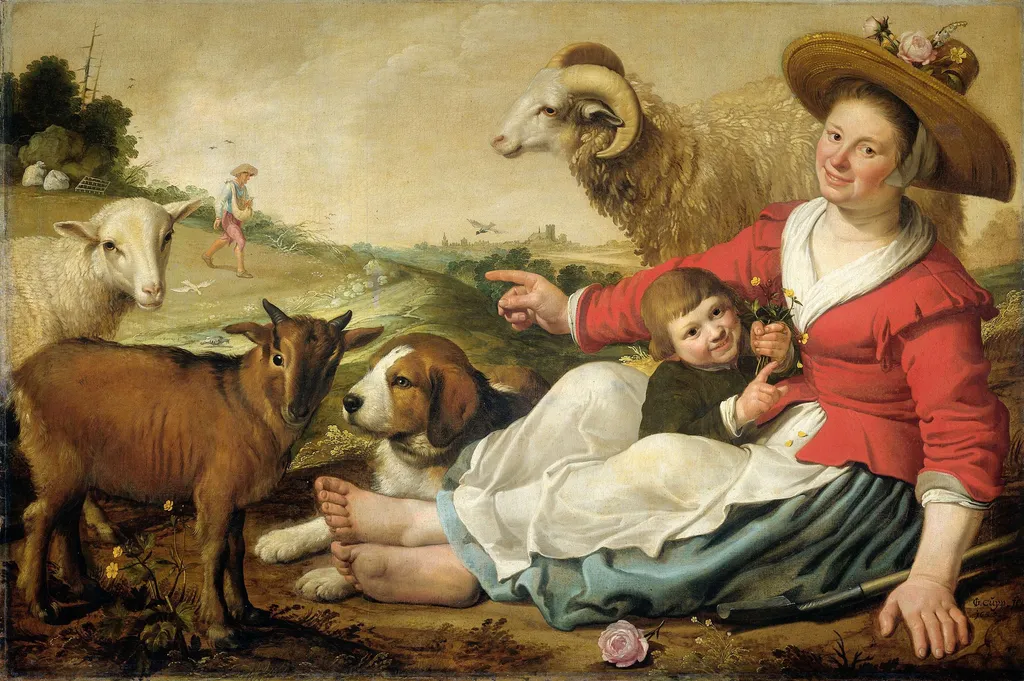
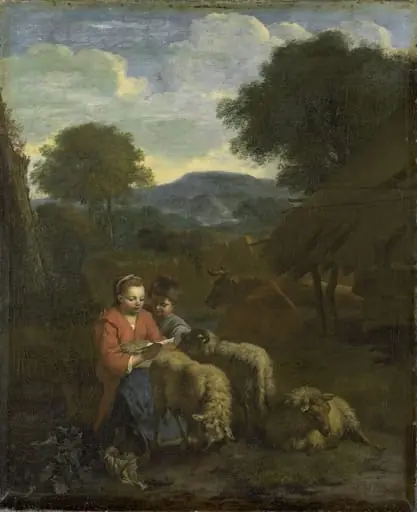
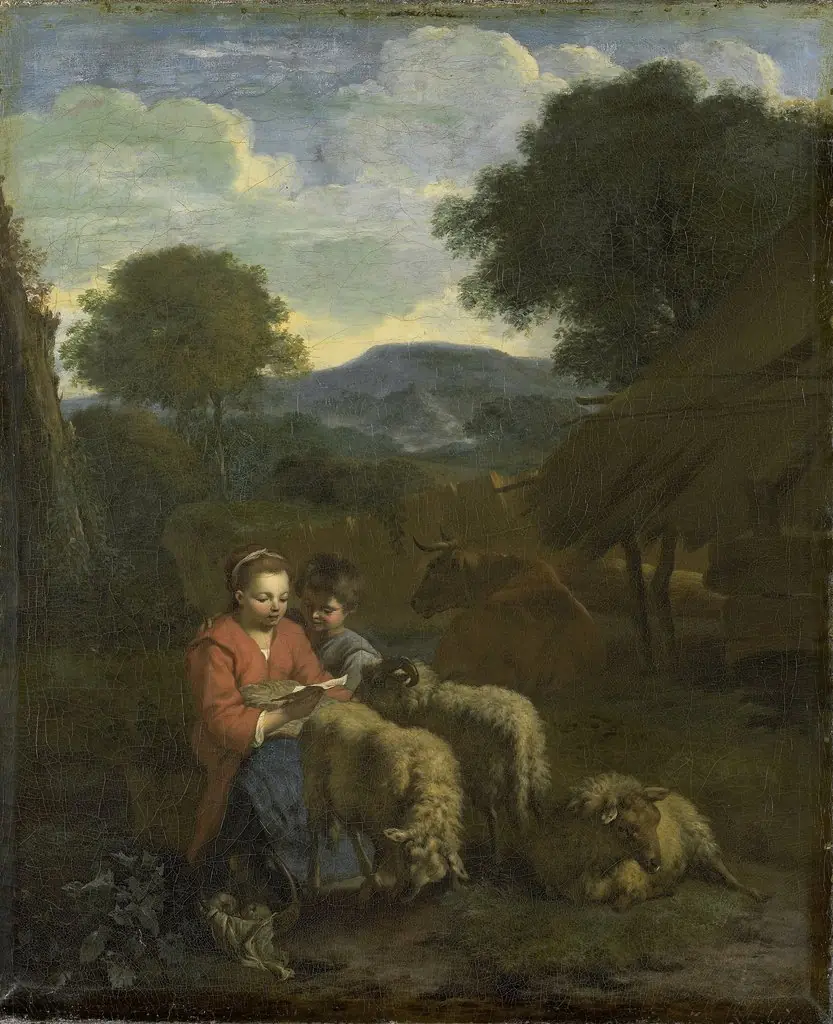
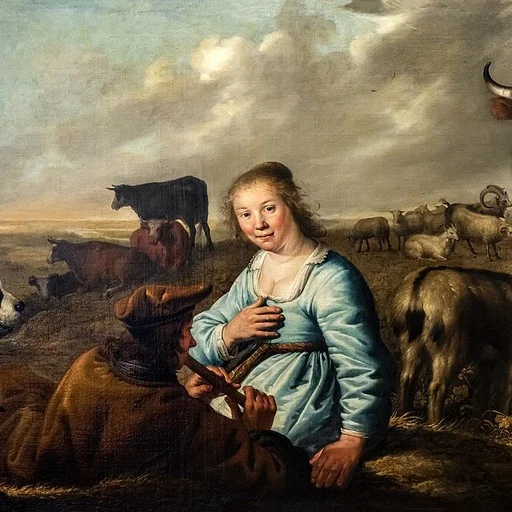
The shepherdess is an oil painting by the Dutch Golden Age artist Jacob Gerritsz Cuyp. It dates from 1628 and is held in the collection of the Rijksmuseum.
About this work
Technique & Style
The artist applied oil paint to create a scene depicting rural life, adhering to the conventions of genre art popular during the Dutch Golden Age.
Created in 1628, The Shepherdess by Jacob Gerritsz. Cuyp is executed in oil paint on a canvas support. The work measures 114 cm in height and 169 cm in width, classifying it as a substantial genre painting.
The artist applied oil paint to create a scene depicting rural life, adhering to the conventions of genre art popular during the Dutch Golden Age. The physical handling of the medium on the large-scale canvas allows for the detailed rendering of the pastoral subject matter.
History & Provenance
The painting titled The shepherdess was created in 1628 by Jacob Gerritsz. Cuyp as an oil on canvas work. It entered the collection of the Rijksmuseum, where it remains on display.
The work’s dimensions are 114 cm in height and 169 cm in width, matching the measurements recorded for the piece in the museum’s catalogue.
The painting is held in the collection of the Rijksmuseum. Its accession number is not specified in the provided sources. The work has been exhibited at the Rijksmuseum in Amsterdam as part of its permanent display of Dutch Golden Age paintings.
Context
Jacob Gerritsz. Cuyp created The shepherdess in 1628 as an oil-on-canvas genre scene, now housed in the Rijksmuseum's collection. The work exemplifies Dutch Golden Age realism through its meticulous rendering of pastoral labor and domestic tranquility, reflecting broader cultural fascinations with rural life.
Its formal qualities, particularly the compositional balance and atmospheric depth, have been analyzed as precursors to later genre developments in 17th-century Dutch painting. The painting's provenance and conservation history remain tied to its institutional home, where it continues to be studied within institutional archives and scholarly discourse on early modern European art.
Overview
The Shepherdess is a 1628 oil painting by Jacob Gerritsz Cuyp, a Dutch artist known for his landscapes and portraits.
Subject & Meaning
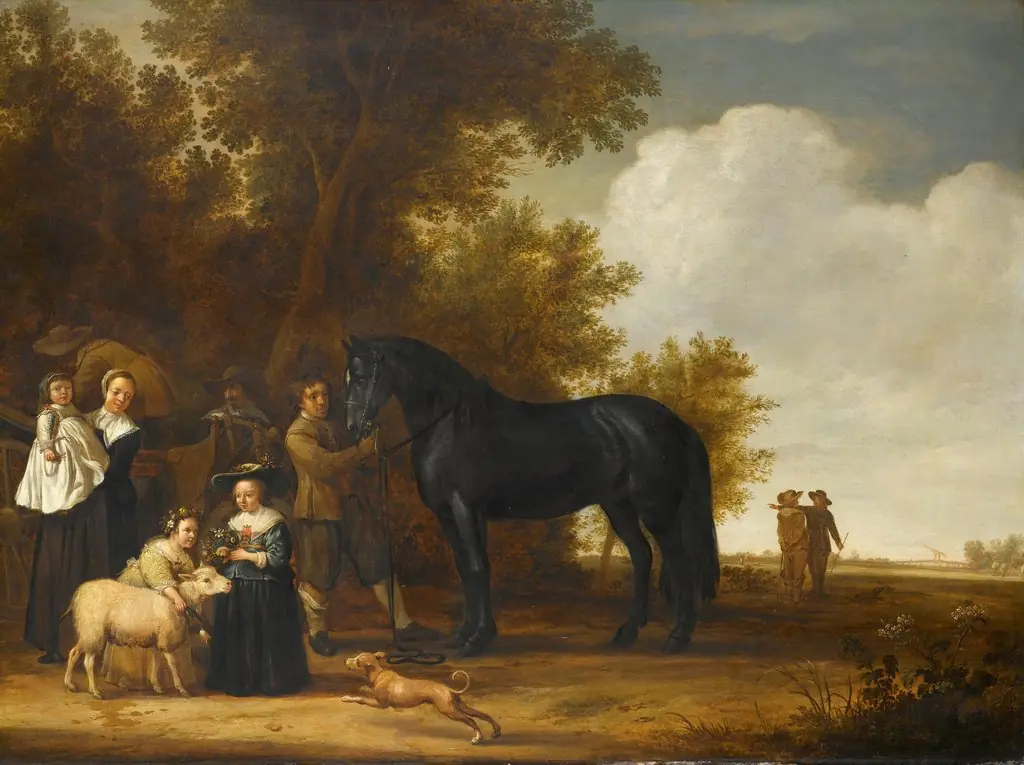
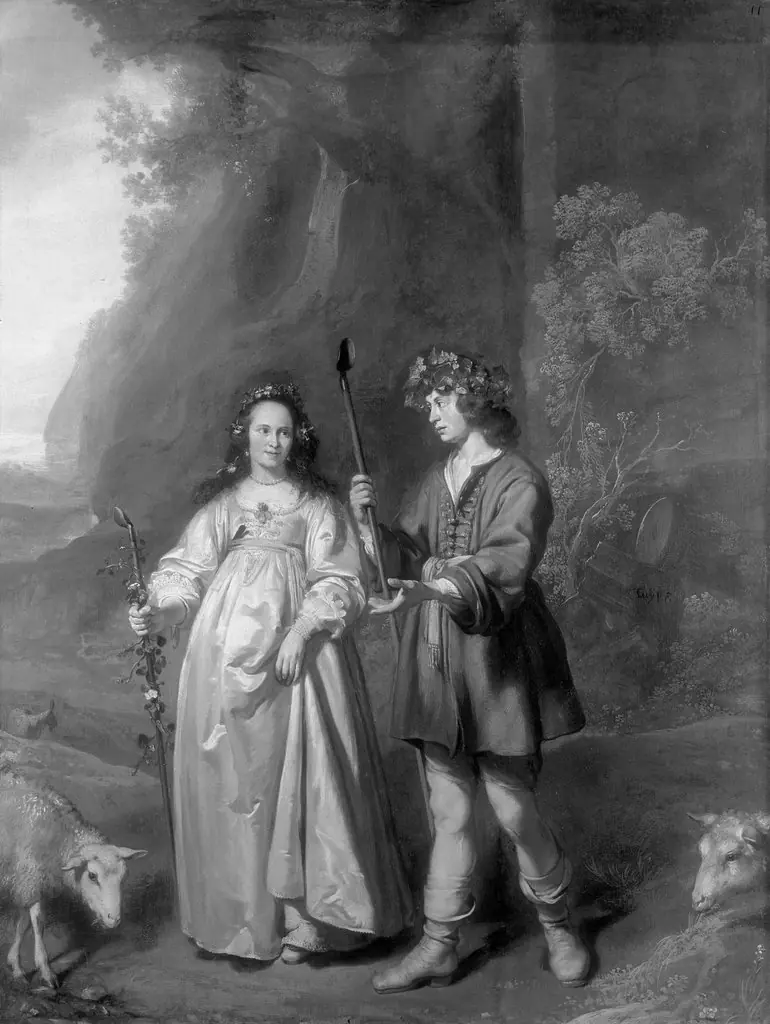
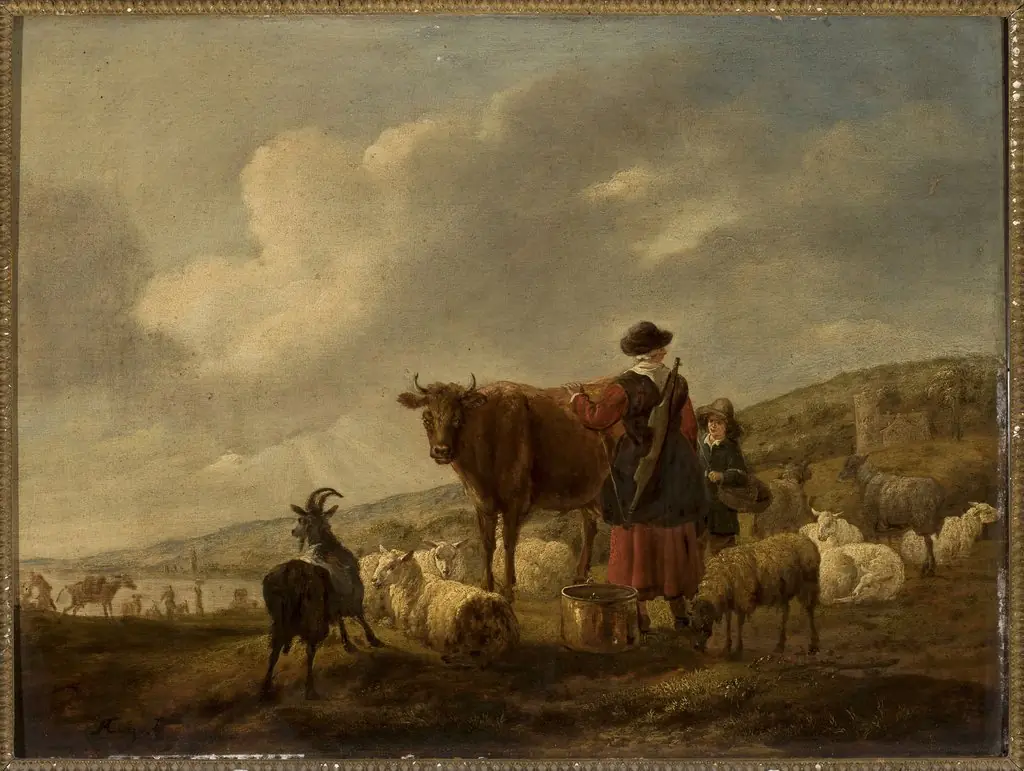
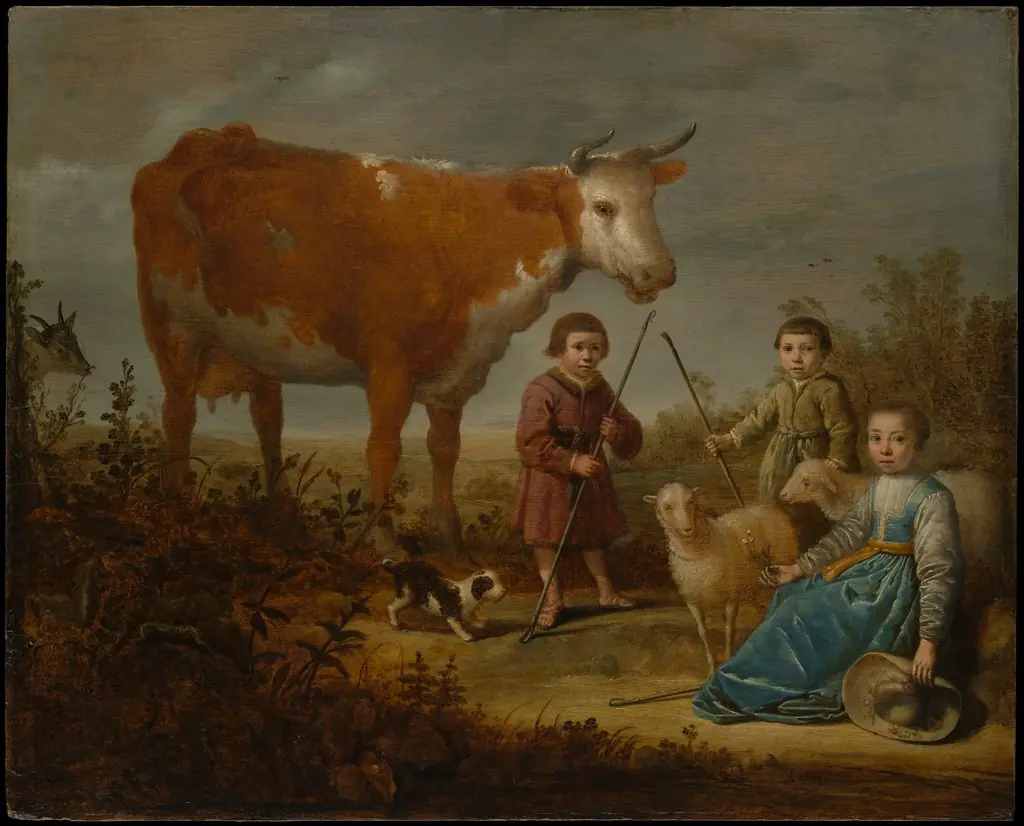
The painting depicts a serene scene: a woman in simple attire sits with a child and is surrounded by a dog, a ram, and sheep tended by a shepherd in the background, suggesting a tranquil rural family moment.
Own this work as a print
Artist & collection
Artist
Jacob Gerritszoon Cuyp or Cuijp (1594–1652) was a portrait and landscape painter, best known for his portraits.