Artwork
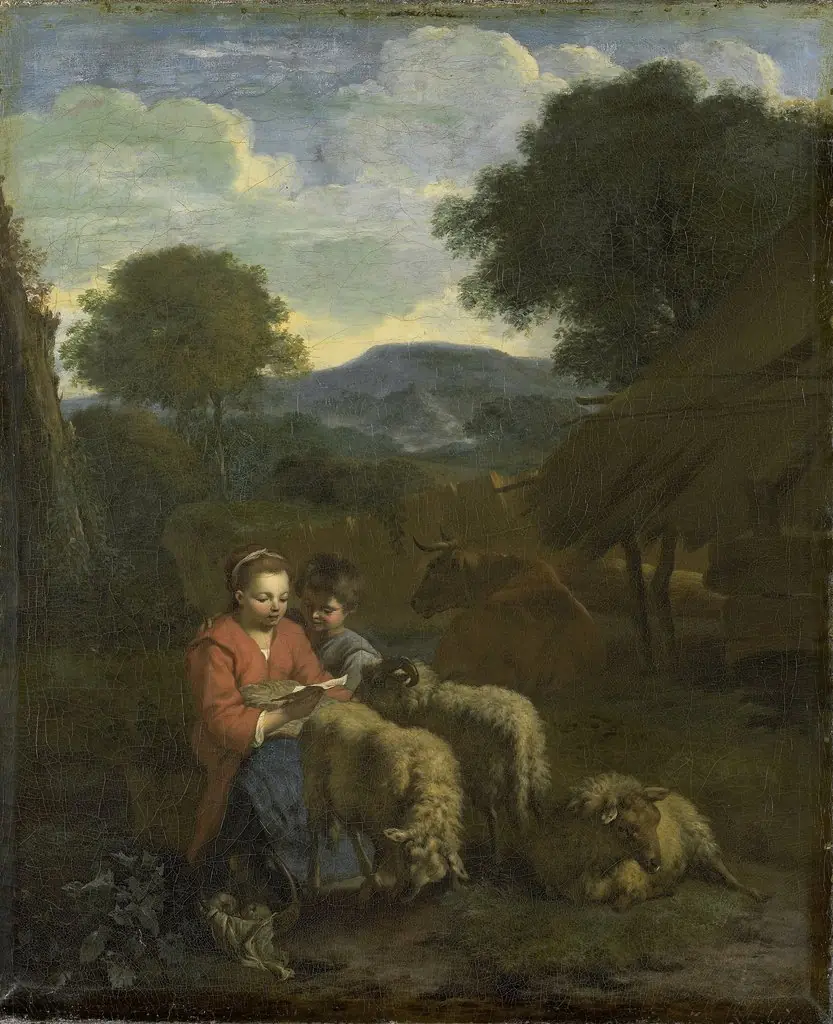
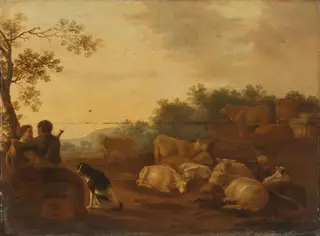
Shepherdess Reading
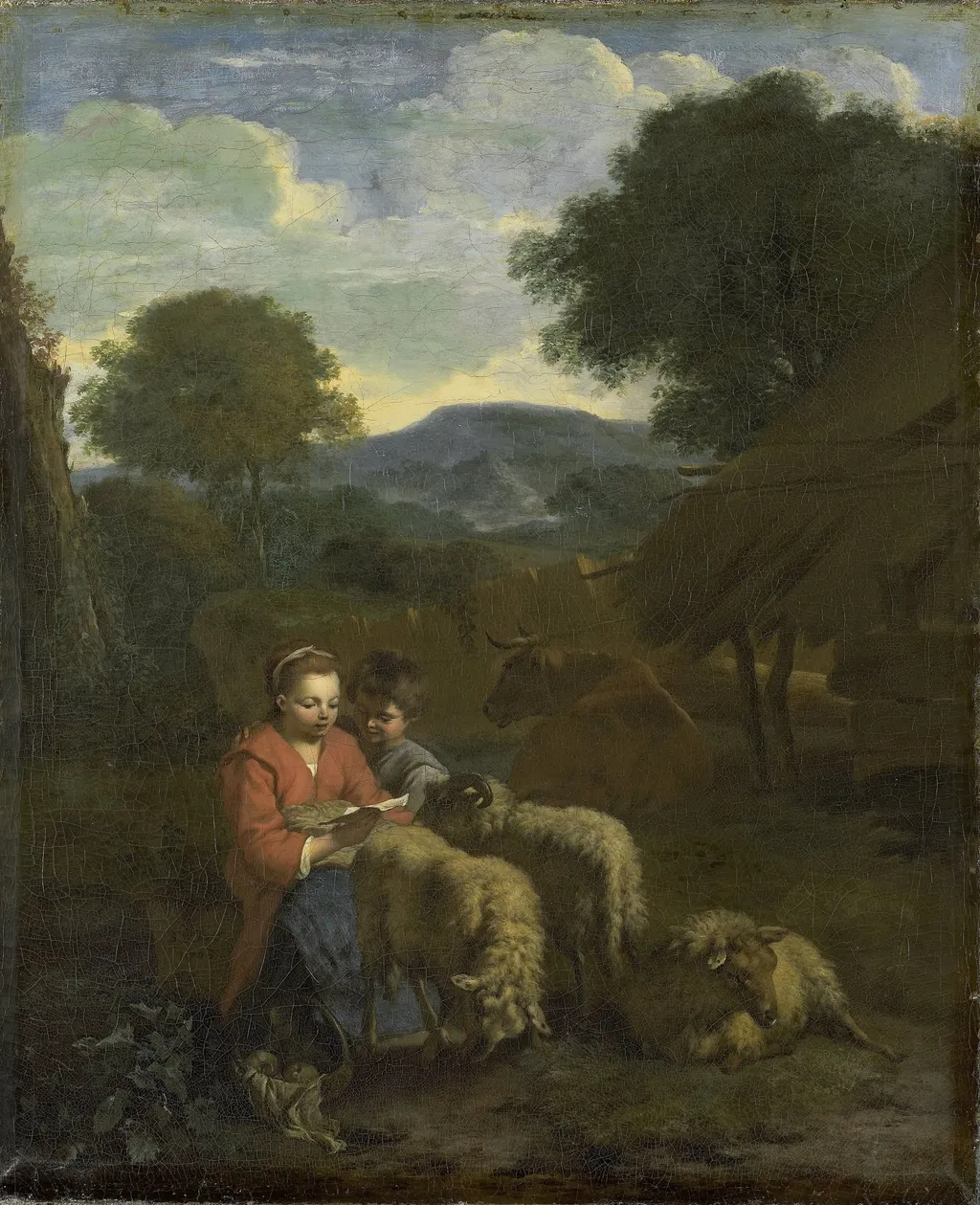
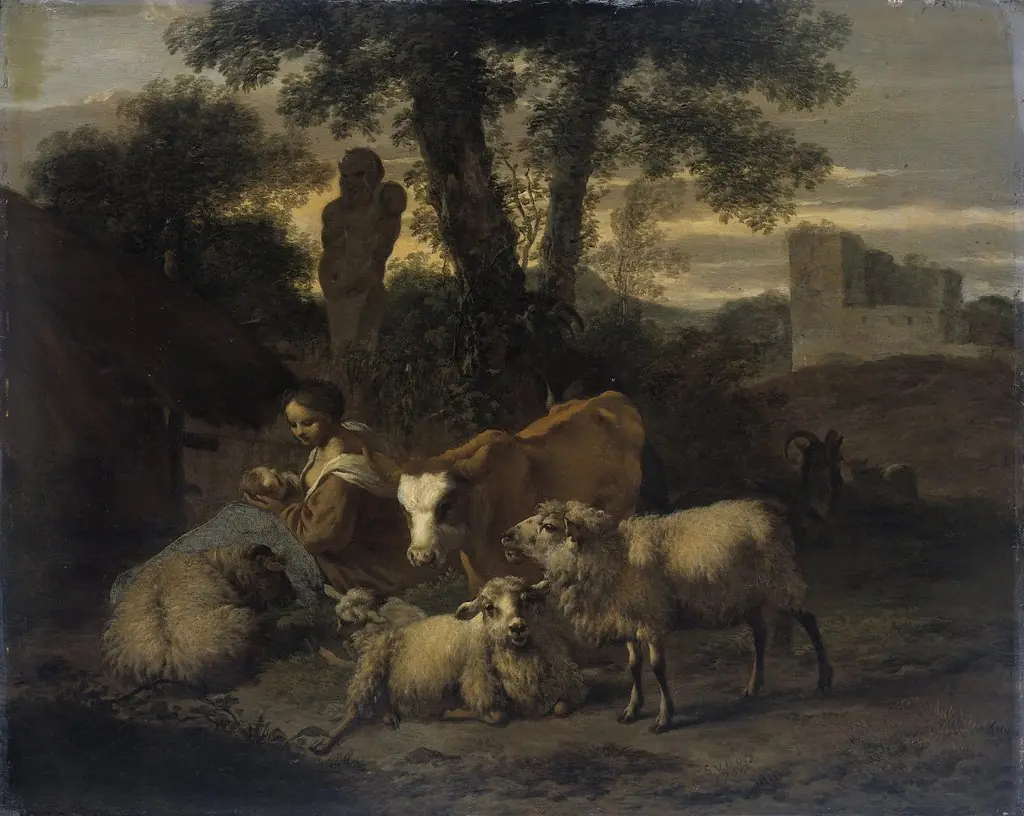
Shepherdess Reading is an unspecified painting by the Rococo painting artist Simon van der Does. It dates from 1706 and is held in the collection of the Rijksmuseum.
About this work
Context
His artistic context is rooted in Dutch landscape tradition, with contemporaries like Karel Dujardin as guardian and Gerard de Lairesse as employer.
Simon van der Does (1653 – after 1717) was a Dutch Golden Age landscape painter known for Italianate scenes with figures. He studied under his father Jacob van der Does and later taught Johan van Gool. Houbraken's biography notes his travels to Friesland, England, and Italy, his marriage and financial struggles after his wife and father died, and his work for art dealers in Antwerp before dying en route to Paris.
His artistic context is rooted in Dutch landscape tradition, with contemporaries like Karel Dujardin as guardian and Gerard de Lairesse as employer. Critical reception of his work is tied to his Italianate genre, placing him among painters of Italianate landscapes where human figures played a significant role, as observed by Waagen in 1864.
Legacy
The work Shepherdess Reading, painted by Simon van der Does in 1706, exemplifies his Italianate landscape style and contributed to the development of Dutch genre painting in the early 18th century. Though not widely celebrated during his lifetime, his influence persisted through his role as teacher of Johan van Gool and his impact on later Dutch painters, as documented in biographical sources and art historical references
Van der Does' technique of integrating human figures into idealized landscapes influenced contemporaries and successors, particularly in the depiction of pastoral scenes and rural life. His legacy is noted in later art historical assessments, including evaluations of his place within the Dutch Golden Age tradition and his stylistic contributions to landscape painting with narrative elements
Overview
Shepherdess Reading portrays a youthful shepherdess seated on a gentle slope, holding a scrap of paper from which she appears to read or sing. A small boy watches attentively, while a flock of sheep grazes nearby and a solitary cow stands beside a distant barn.
Subject & Meaning
The composition captures a tranquil, idealised moment of rural life, emphasizing innocence and domestic calm. The act of a shepherdess engaging with written text suggests a subtle commentary on literacy and education among country folk, a rarity in the period depicted.
Technique & Style
Rendered with a delicate palette and soft brushwork, the scene balances fine detail, such as the texture of the sheep’s wool, with broader, atmospheric treatment of the landscape. The arrangement feels staged, with figures positioned deliberately to create a harmonious tableau.
History & Provenance
The work belongs to the collection of the Rijksmuseum, where it is displayed among other Dutch landscape paintings. Its provenance traces back to the museum’s acquisition of 19th‑century genre scenes, though the artist’s identity remains undocumented in the provided facts.
Own this work as a print
Artist & collection