Artwork
Het toilet
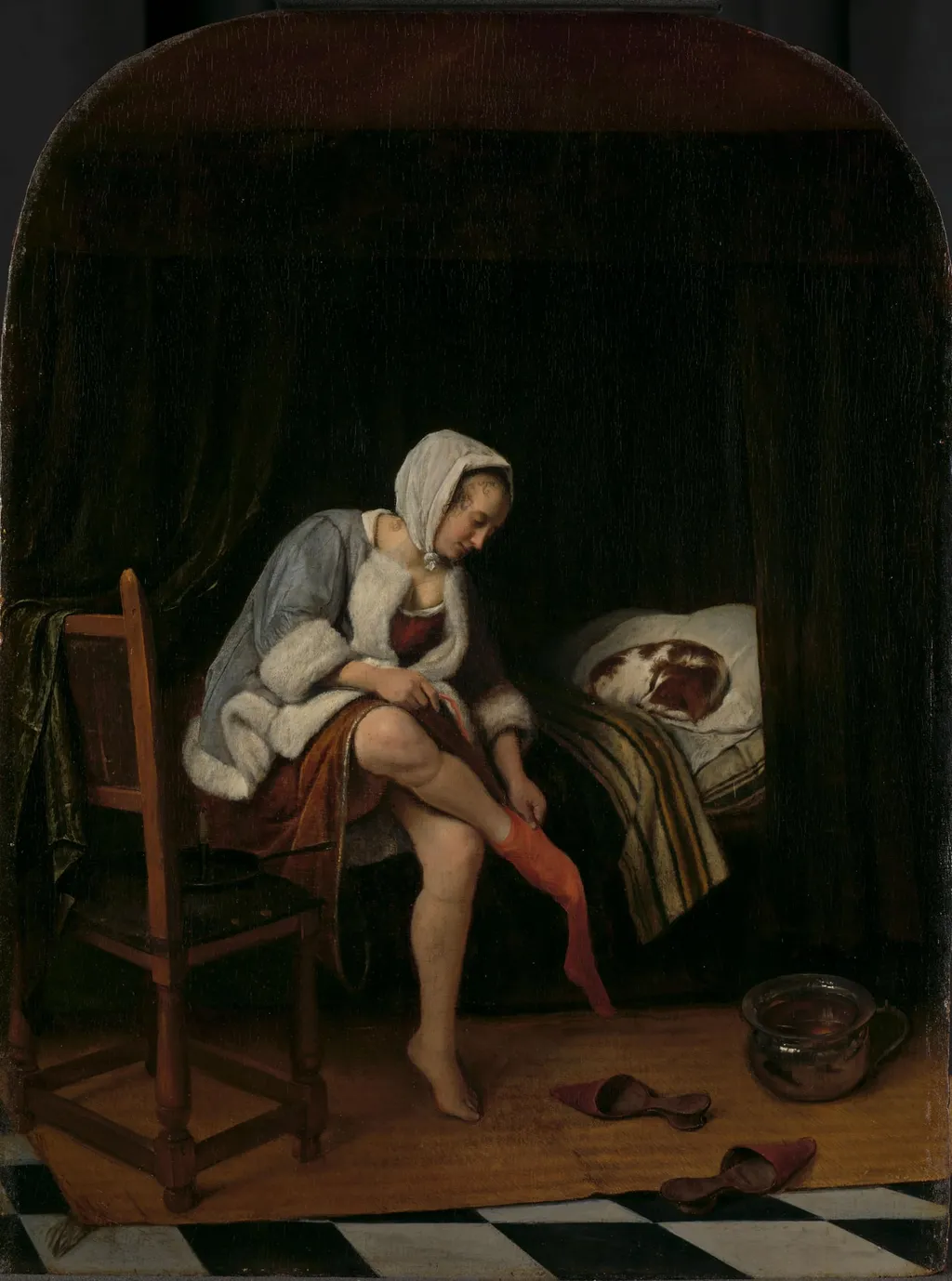
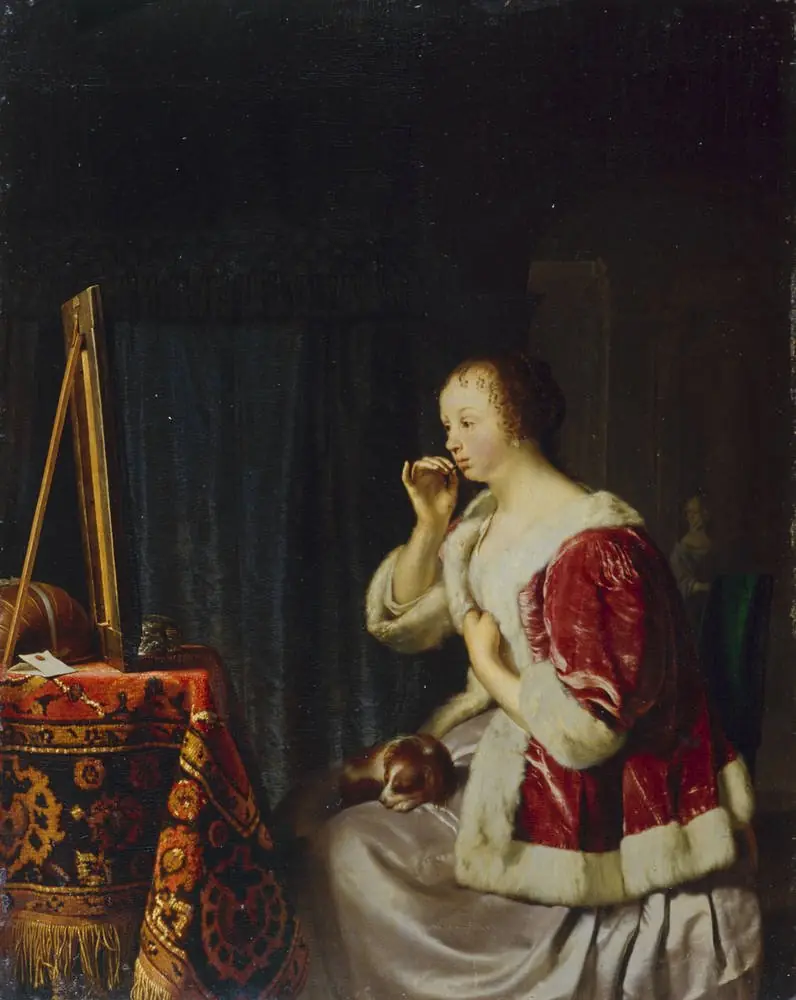
Het toilet is an unspecified painting by the Dutch Golden Age artist Jan Steen. It dates from 1658 and is held in the collection of the Rijksmuseum. This painting depicts a young woman in a private chamber, engaged in the intimate act of undressing for bed.
About this work
Subject & Meaning
It employs symbolic details to warn viewers against vice, reflecting the artist's tendency to embed proverbs and literary references that critique behavior.
Jan Steen's painting Het toilet depicts a prostitute preparing for bed, utilizing specific 17th-century slang where a "red stocking" and a "piss pot" carried distinct sexual connotations. The subject holds a garter, with visible marks on her legs indicating its prior use, while a chamber pot and her bare legs, elements later obscured by overpainting, reinforce the scene's illicit nature. As with much of Steen's oeuvre, the work functions as a moralizing satire rather than a mere genre scene.
It employs symbolic details to warn viewers against vice, reflecting the artist's tendency to embed proverbs and literary references that critique behavior. The composition serves as a cautionary example, inviting the audience to recognize the folly of the depicted lifestyle rather than emulate it.
Context
Jan Havicksz. Steen is recognized as a leading genre painter of the Dutch Golden Age, celebrated for works that blend psychological insight, humor, and moral satire. His painting Het toilet (c. 1655–1660) exemplifies his method of using everyday scenes to deliver didactic messages rather than mere realism.
Scholarship, notably by Sturla Gudlaugsson, identifies a strong influence from the Rederijkers (Rhetoricians) on Steen's work, suggesting his figures often function as theatrical characters rather than realistic portraits. This connection is evident in the painting's depiction of a prostitute, utilizing period-specific slang and symbols like the red stocking and chamber pot to convey moral warnings. Steen's broader oeuvre, characterized by chaotic domesticity, was so distinctive that the phrase "een huishouden van Jan Steen" entered the Dutch language to describe a messy household.
His art frequently references proverbs and literature, employing family members as models to underscore themes of vice and virtue.
Overview
This painting depicts a young woman in a private chamber, engaged in the intimate act of undressing for bed. Seated on a bed, she is shown in the process of removing a white stocking, with the impression of a garter still visible just below her knee. A flickering candle casts a soft glow, illuminating her raised skirt and exposed legs, emphasizing the quiet, personal nature of the scene.
History & Provenance
The painting's depiction of nudity was not universally accepted throughout its history. At some point, an additional layer of paint was applied, obscuring the woman's thighs with an underskirt to temper the perceived explicitness. This alteration remained in place for over a hundred years before conservation efforts eventually removed the overpainting, restoring the artwork to its original composition.
Own this work as a print
Artist & collection
Artist
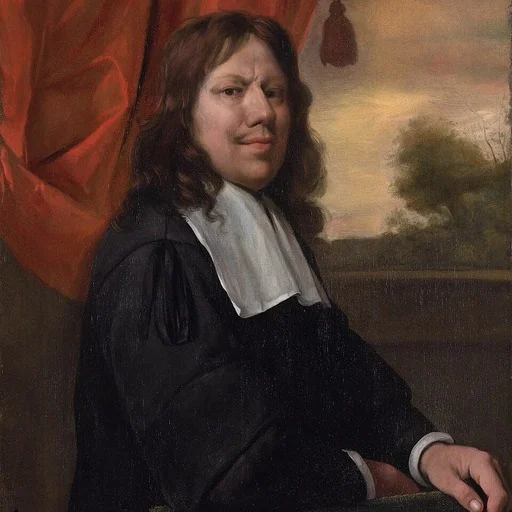
Jan Havickszoon Steen was a Dutch Golden Age painter, one of the leading genre painters of the 17th century.

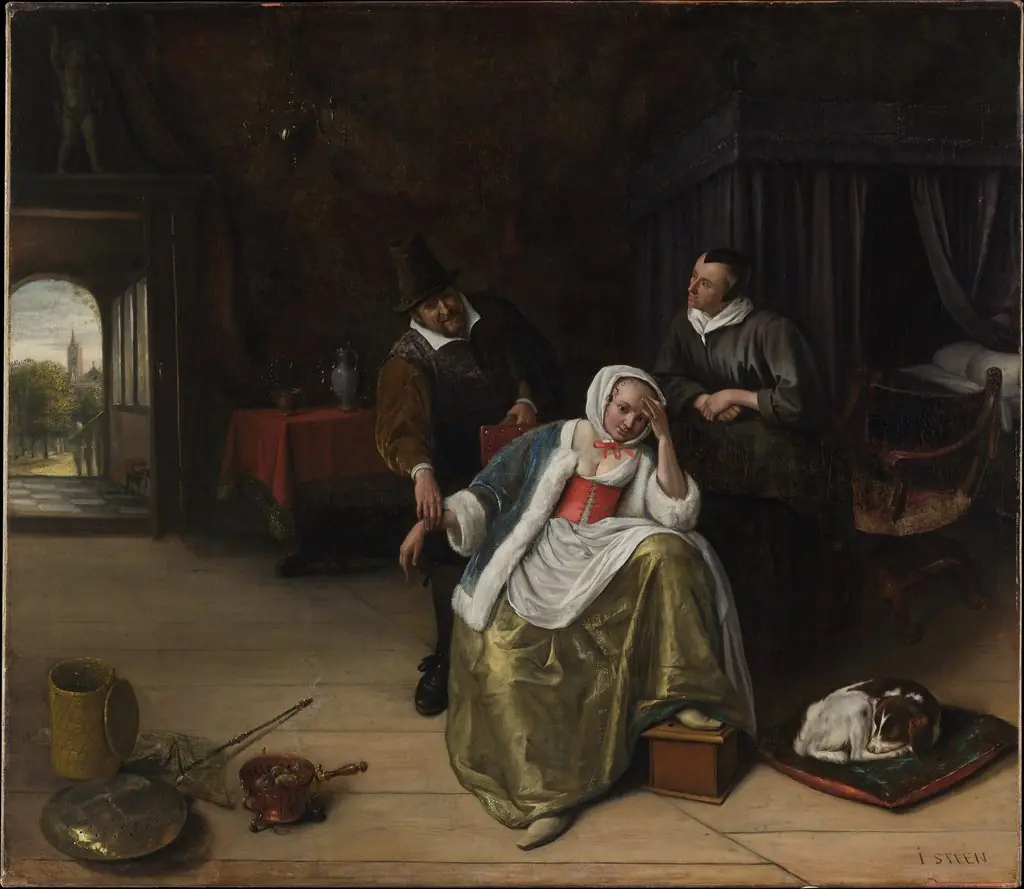 Paintings of physicians by Jan Steen
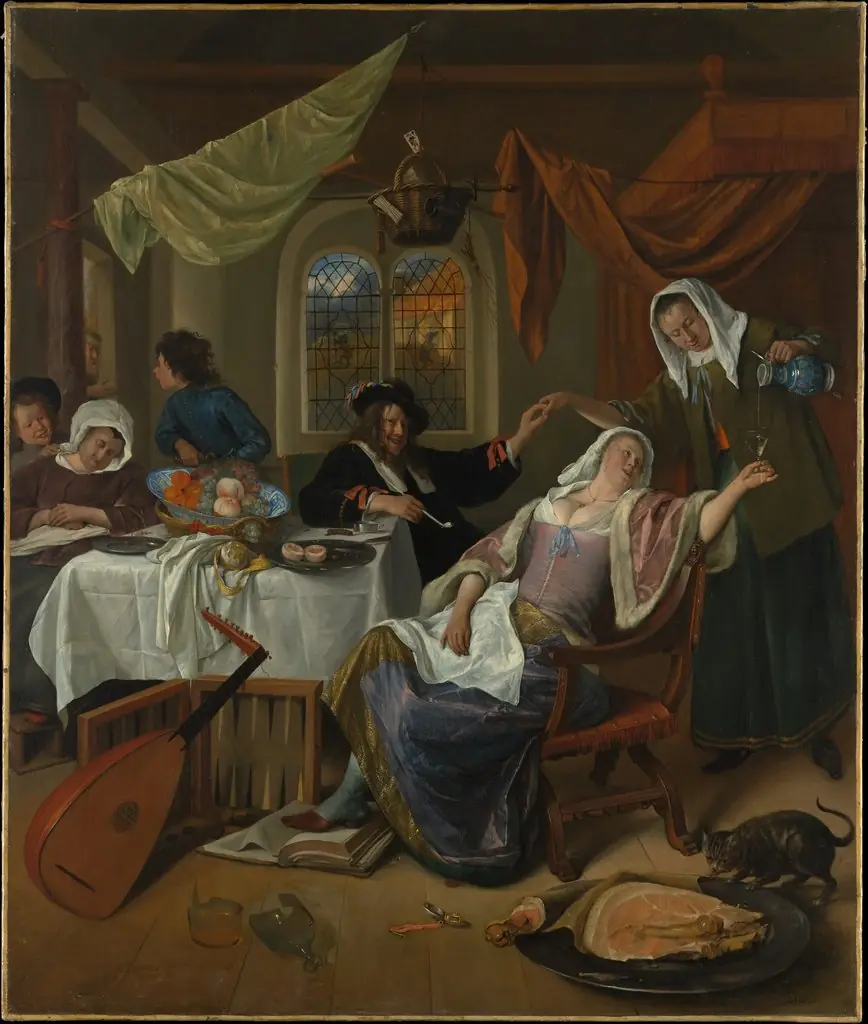 The Dissolute Household
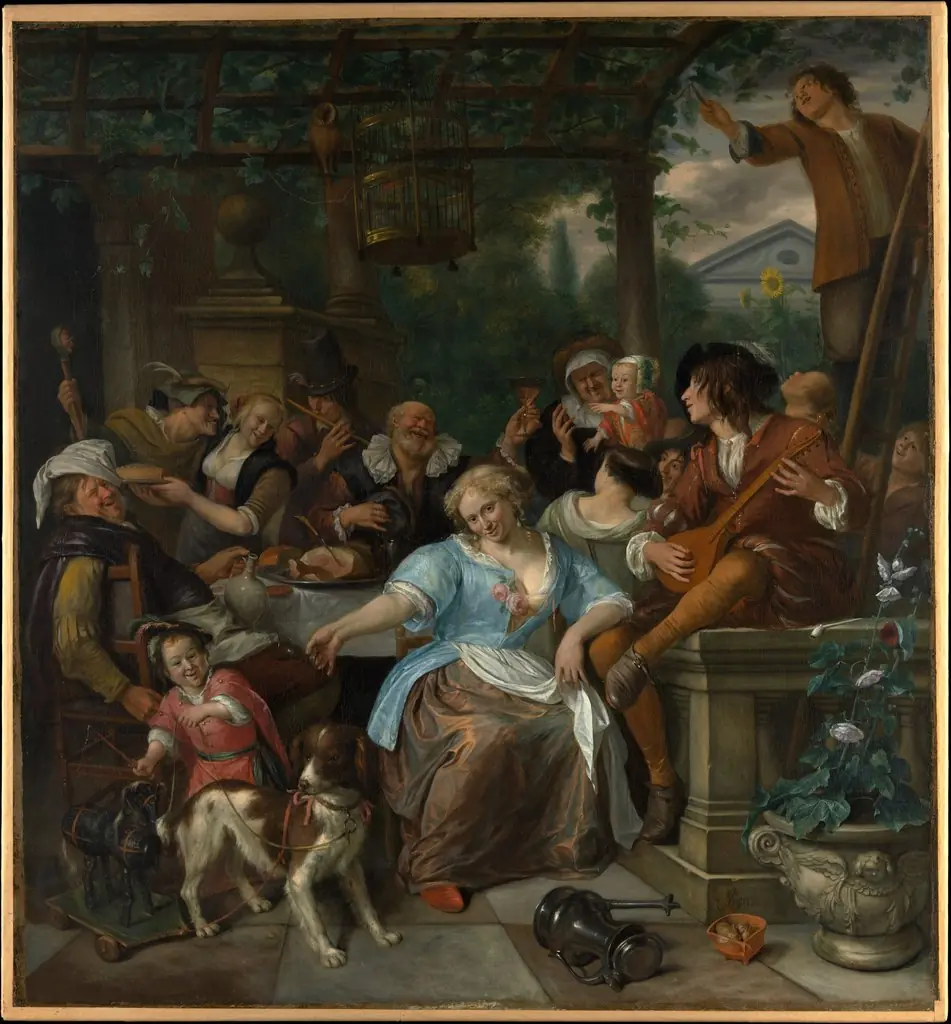 Merry Company on a Terrace
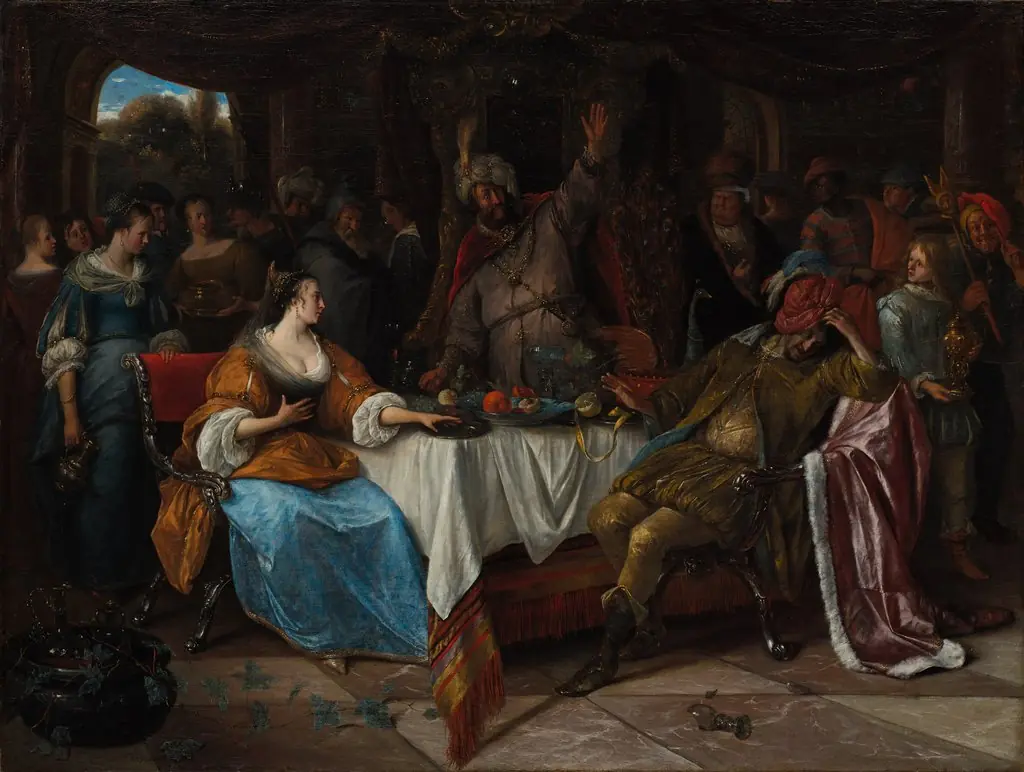 Esther, Ahasuerus, and Haman
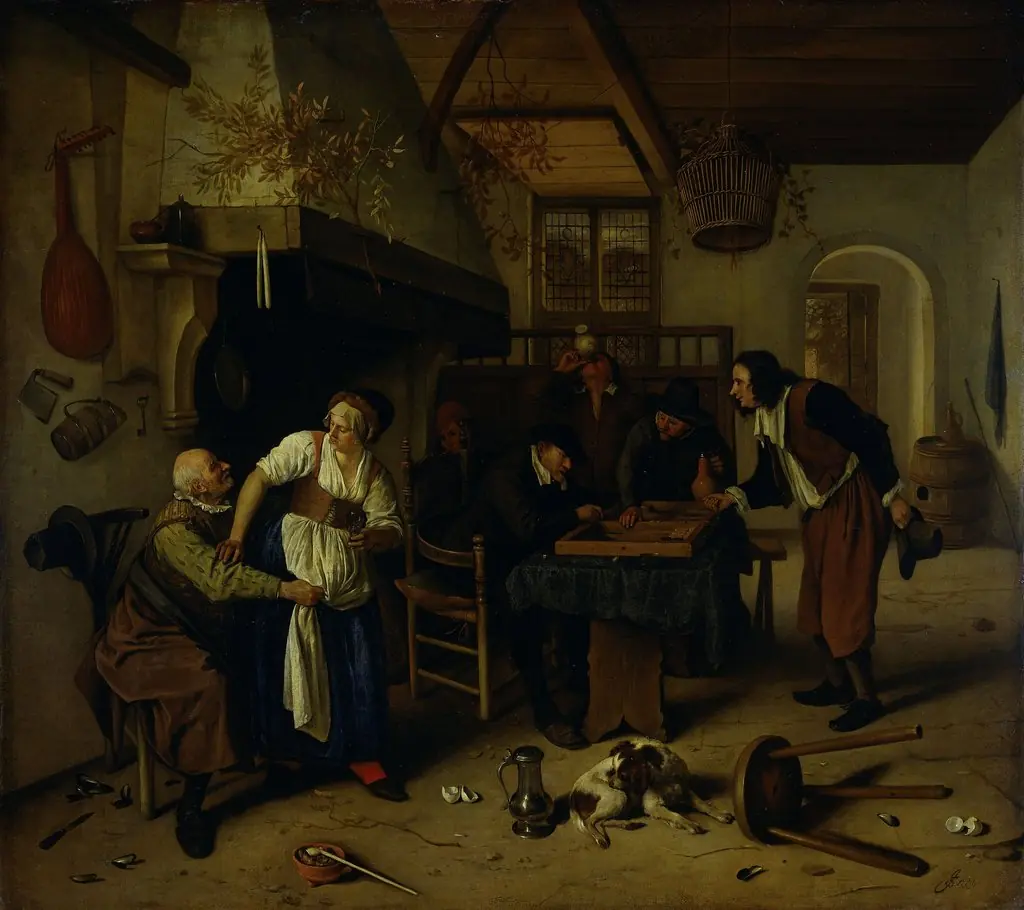 Interior of an inn with an old man amusing himself with the landlady and two men playing backgammon, known as 'Two kinds of games'
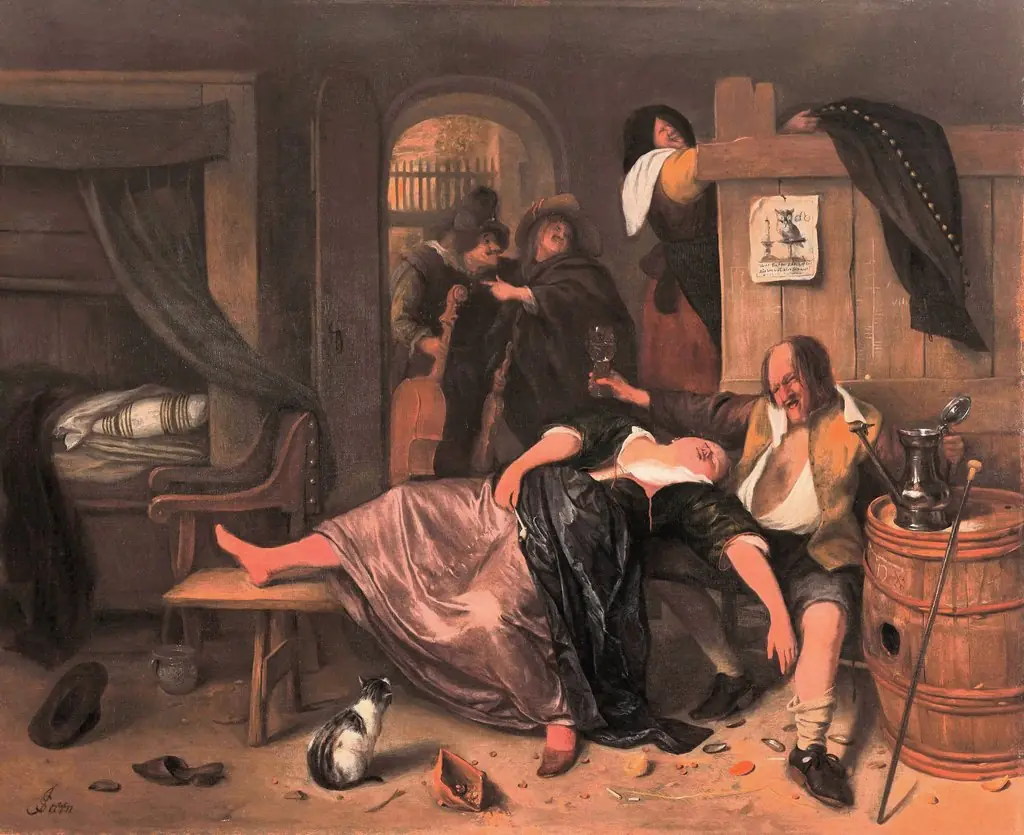 The Drunken Couple
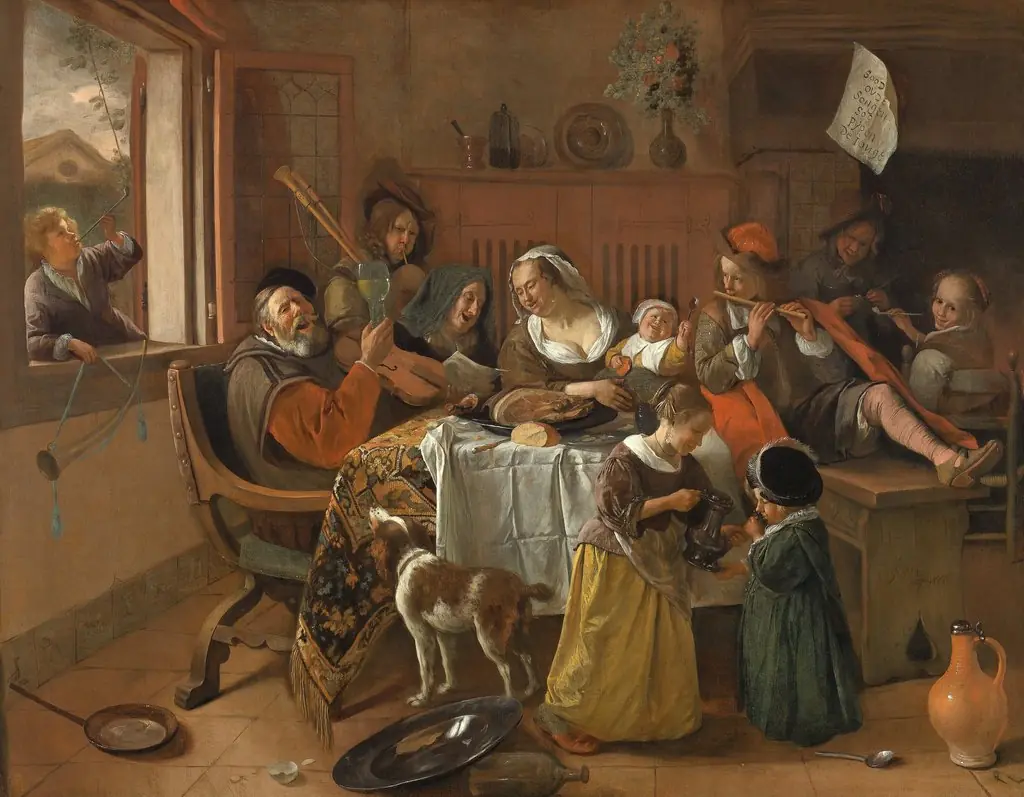 The Happy Family
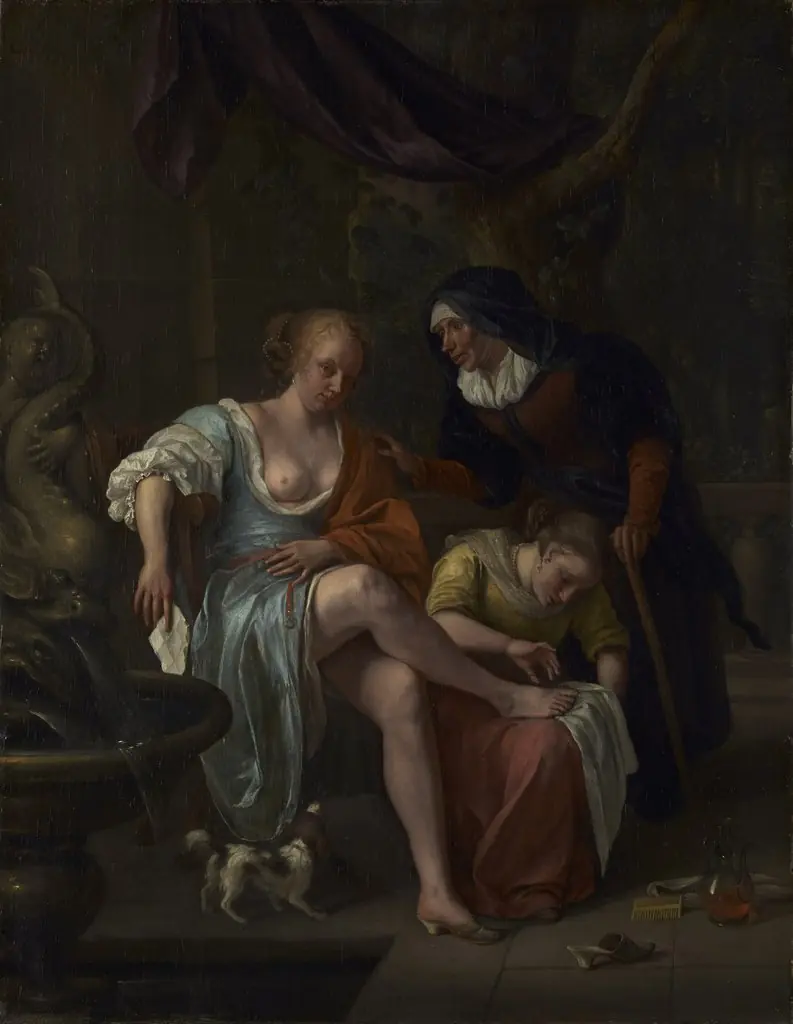 Bathsheba after the Bath
- The Lacemaker
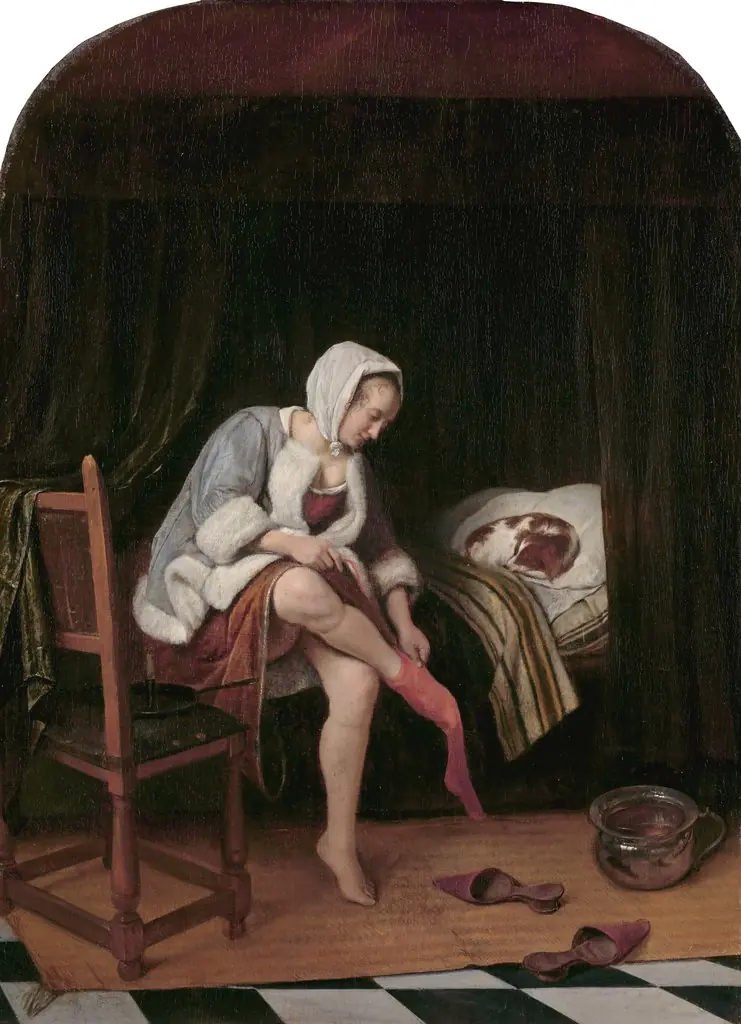 Woman at her Toilet
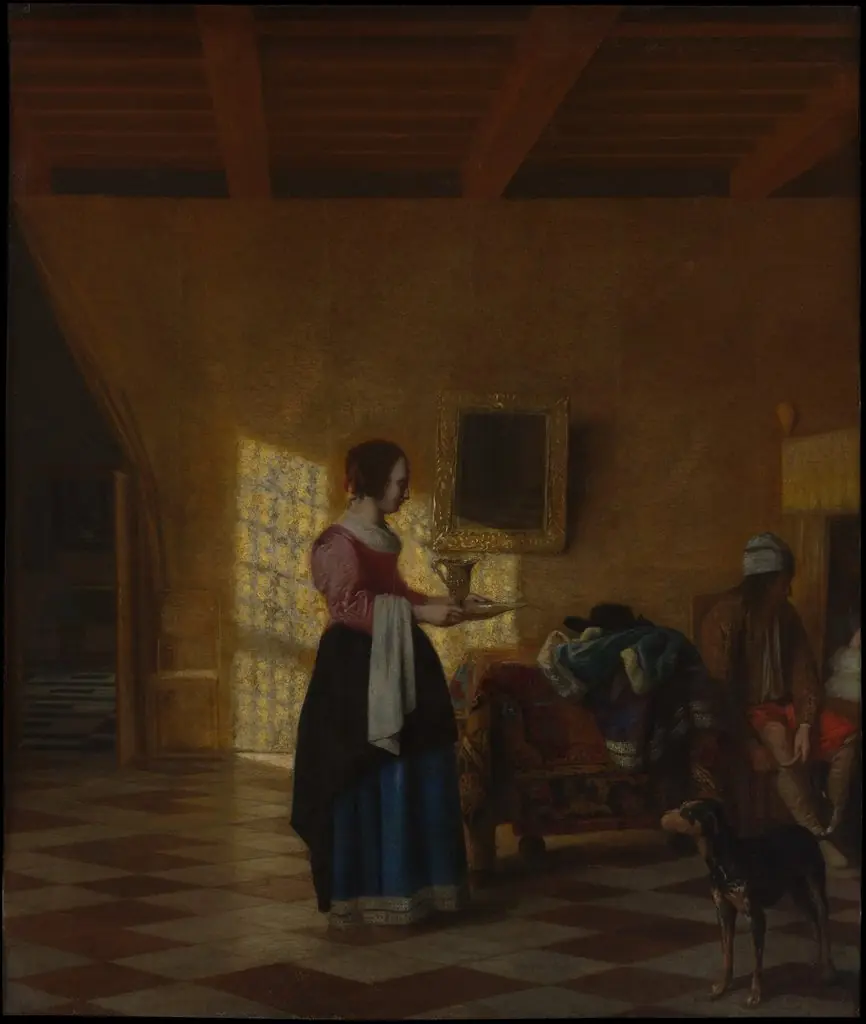 Woman with a Water Pitcher, and a Man by a Bed ("The Maidservant")
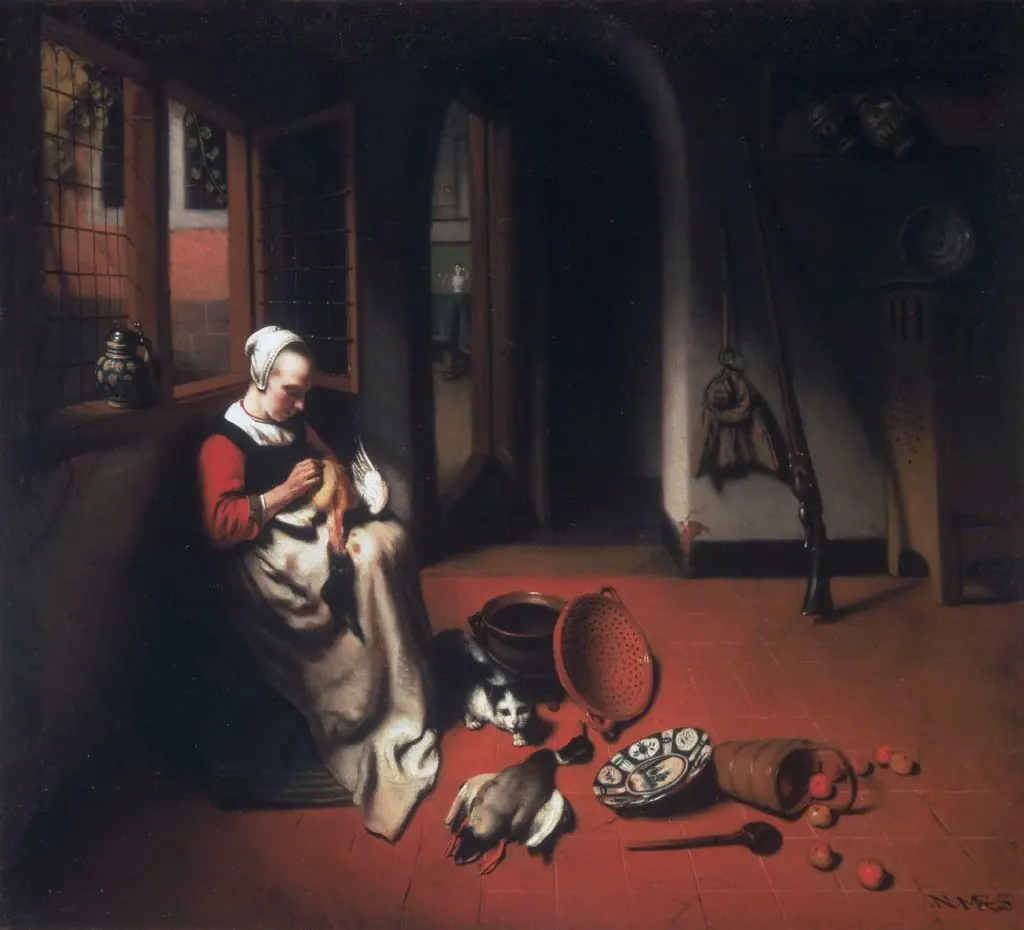 Woman Plucking a Duck
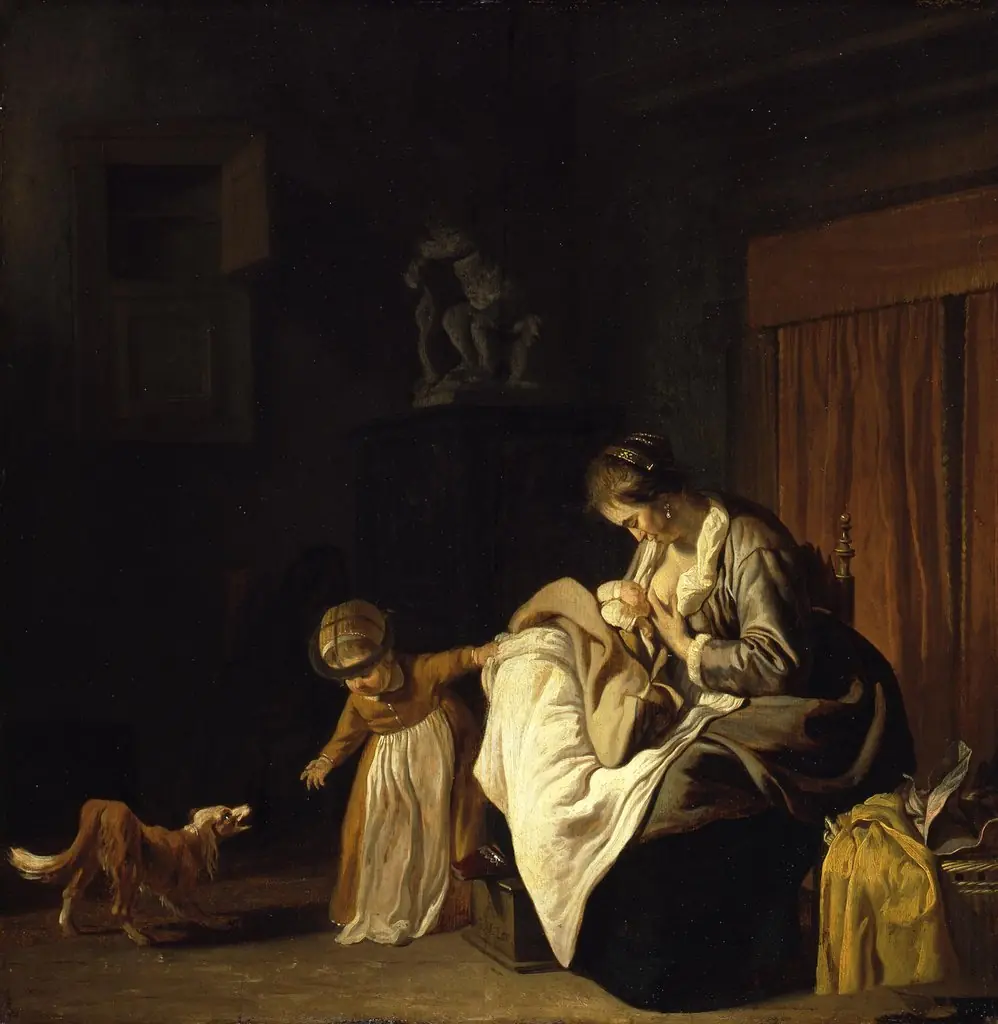 Mother with two children
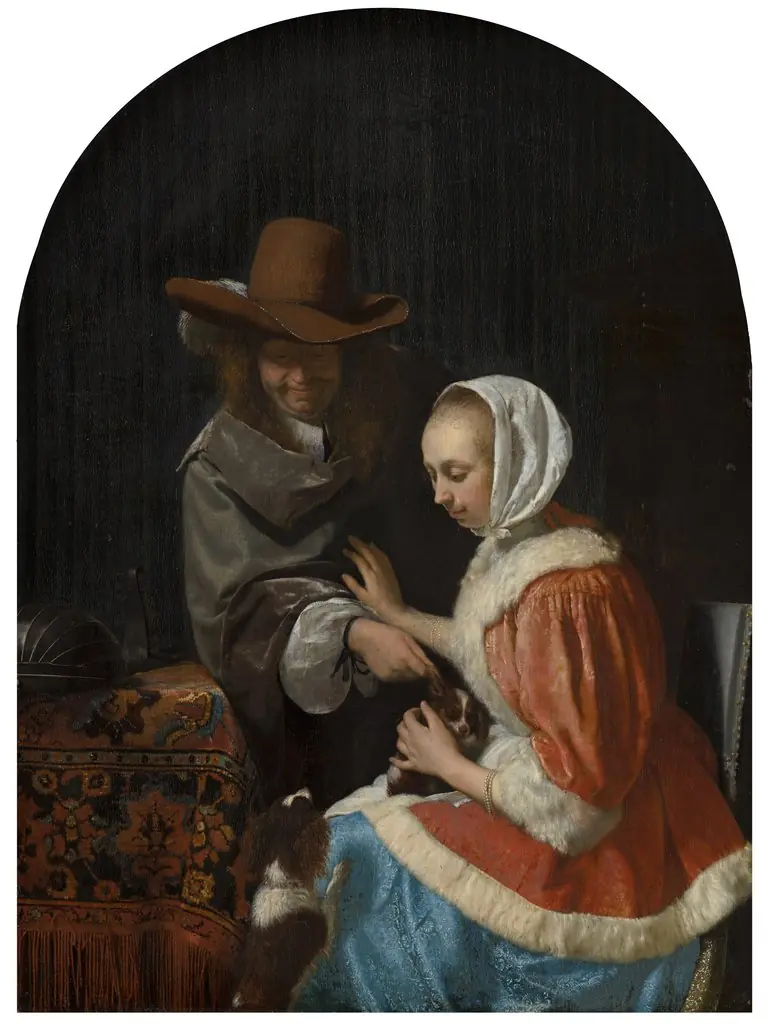 Man and Woman with Two Dogs, known as 'Teasing the Pet'
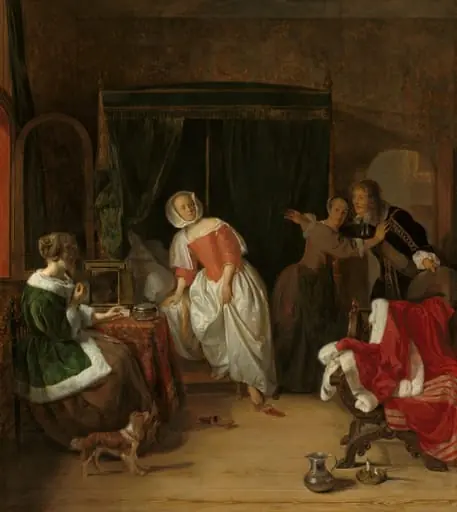 The Intruder
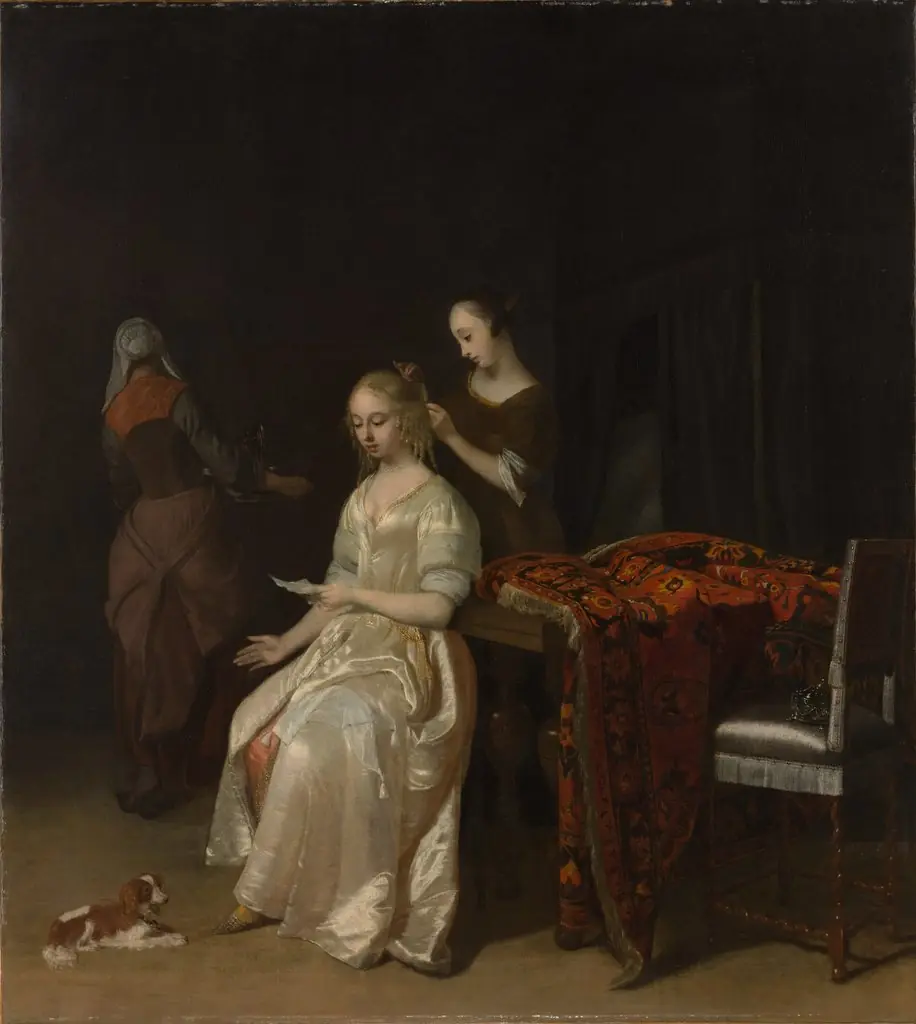 The Love Letter
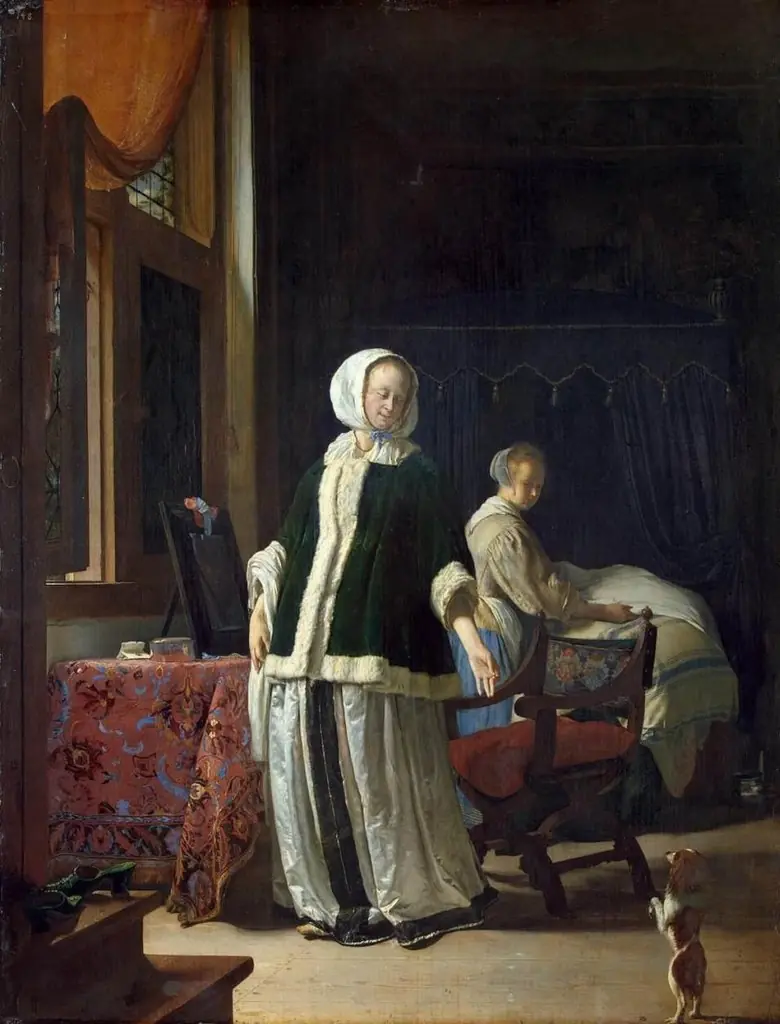 Lady at her Toilet
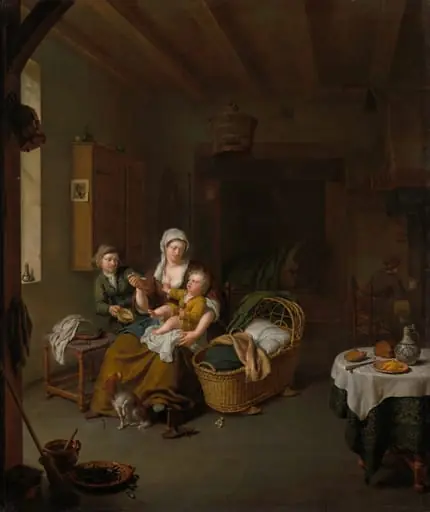 A Mother Feeding her Child (The Happy Mother)
 Young Woman at her Toilet