Artwork
Gundakar, Prince of Dietrichstein (1623-1690)
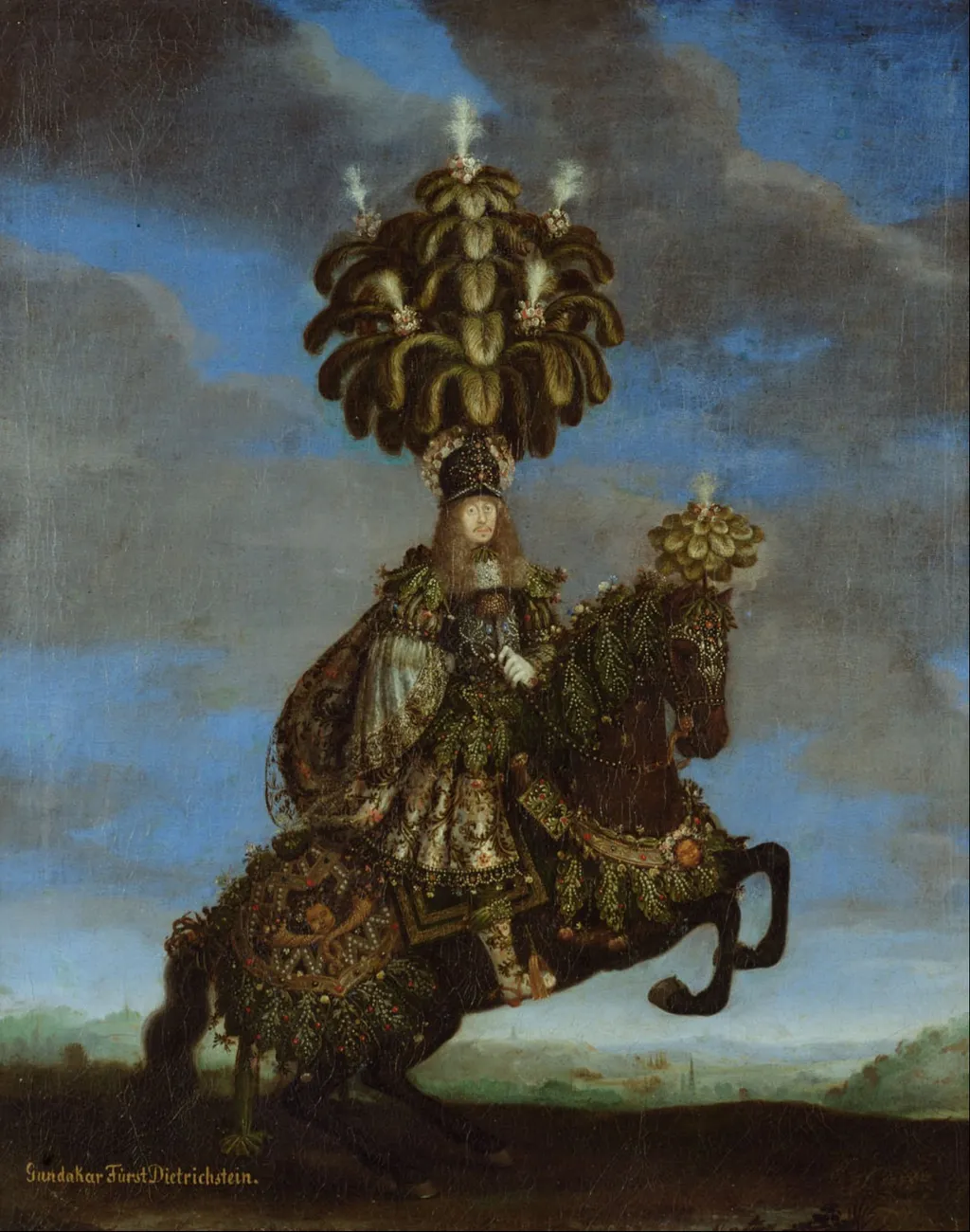
Gundakar, Prince of Dietrichstein (1623-1690) is an oil painting by the Flemish Baroque painting artist Jan Thomas van Ieperen. It dates from 1667 and is held in the collection of the Kunsthistorisches Museum.
About this work
Overview
Gundakar, Prince of Dietrichstein (1623-1690) is an oil-on-canvas portrait painted circa 1667 by the Flemish Baroque artist Jan Thomas van Ieperen.
Gundakar, Prince of Dietrichstein (1623-1690) is an oil-on-canvas portrait painted circa 1667 by the Flemish Baroque artist Jan Thomas van Ieperen. Measuring 60.5 by 49.5 centimeters, the work depicts its noble subject in elaborate mounted regalia and is held in the Gemäldegalerie of the Kunsthistorisches Museum in Vienna under accession number GG 9676. The painting exemplifies the elegant, decorative portrait style that Flemish artists developed at the Habsburg court in Vienna during the second half of the seventeenth century, combining precise observation of textiles and adornments with a formal presentation of aristocratic status.
Subject & Meaning
The portrait depicts Gundakar, Prince of Dietrichstein, a member of the Austrian high nobility. The prince appears as a mounted figure at the center of a vertical composition, wearing an enormous headdress of layered brown feathers with white plumes and small decorations, a dark jeweled cap, a long curled wig, and an ornate costume with embroidery, a cape, and patterned stockings. His dark horse is heavily adorned with beaded and jeweled trappings, a decorative headpiece with feathers, and a saddle with gold and red details, with one foreleg raised in a pose of controlled animation. The iconography of such princely mounted portraits served to assert authority, wealth, and military bearing, while the exotic feathered headdress suggests connections to courtly spectacle and perhaps theatrical or ceremonial occasions. A gold inscription in the lower left corner, added in the nineteenth century, identifies the sitter as "Gundakar Fürst Dietrichstein." The background opens onto a blue sky with gray and white clouds, a distant green horizon with faint buildings, and dark ground below, placing the noble subject within a spacious, atmospheric setting that elevates his status.
Technique & Style
The painting is executed in oil on canvas with a smooth and detailed technique, showing precise rendering of textiles, decorations, and the various surfaces of the costume and horse trappings. The palette combines deep browns, golds, greens, and blues, with even light falling across the figures and soft shadows modeling the forms. The paint surface exhibits fine craquelure throughout, consistent with its age. Stylistically, the work aligns with the elegant and decorative portrait style that Jan Thomas and other Flemish artists working in Vienna cultivated in the mid-seventeenth century, translating the monumental Baroque manner of Peter Paul Rubens into the more intimate scale of court portraiture. The handling of the luxurious materials, the attention to the textures of feathers, jewels, and embroidered fabrics, and the balanced composition all demonstrate the artist's skill in conveying aristocratic splendor without the grand scale of history painting.
History & Provenance
The portrait was painted circa 1667, during Jan Thomas's documented residence in Vienna, where he lived on the Kärntnerstrasse and worked for the imperial court and aristocratic patrons. The painting remained in princely Dietrichstein family possession until 1966, when it was acquired by the Kunsthistorisches Museum from the Fürstlich Dietrichstein'schen Besitz. It is now located in the Gemäldegalerie of the Kunsthistorisches Museum, Vienna, with inventory number 9676. No specific exhibition history is recorded in the available sources.
Context
Jan Thomas van Ieperen was a Flemish Baroque painter who trained in the workshop of Peter Paul Rubens in Antwerp before becoming court painter at the Habsburg court in Vienna. He was active in Vienna from the late 1650s until his death in 1673, receiving commissions from the imperial court, higher clergy, and aristocracy including the House of Zrinski. His life-size portraits from this Vienna period, including portraits of Leopold I and Margaret Theresa in theatrical costume for their 1666 marriage celebrations, established the elegant decorative portrait style seen in this work. The portrait of Gundakar of Dietrichstein belongs to a period when Jan Thomas was firmly established as a leading court portraitist in Vienna, translating the Flemish Baroque tradition into the service of Habsburg aristocratic patronage. The work has received limited specialized scholarly attention beyond its place within the artist's broader oeuvre of court portraiture.
Legacy
The portrait remains a significant example of mid-seventeenth-century Habsburg court portraiture by a Flemish artist, preserved in one of Europe's major museum collections. Its acquisition by the Kunsthistorisches Museum in 1966 brought it from private aristocratic possession into public ownership, ensuring its place within the institutional narrative of Austrian and Flemish artistic exchange. The work contributes to understanding how Flemish Baroque visual culture was transmitted and adapted at the Habsburg court, and how artists like Jan Thomas mediated between the grand manner of Rubens and the more intimate requirements of aristocratic portraiture in Central Europe. Its continued display in the Gemäldegalerie maintains its visibility within the broader context of Habsburg visual culture and Flemish emigre artistic production.
Own this work as a print
Artist & collection
Artist
Jan Thomas or Jan Thomas van Ieperen (5 February 1617 – 6 September 1673) was a Flemish Baroque painter, draughtsman and printmaker.

- Kuningas Kaarle XII
 Equestrian Portrait of Philip IV
 Portrait of Karl XI, King of Sweden
 Le Duc de Guise, Roy Ameriquain
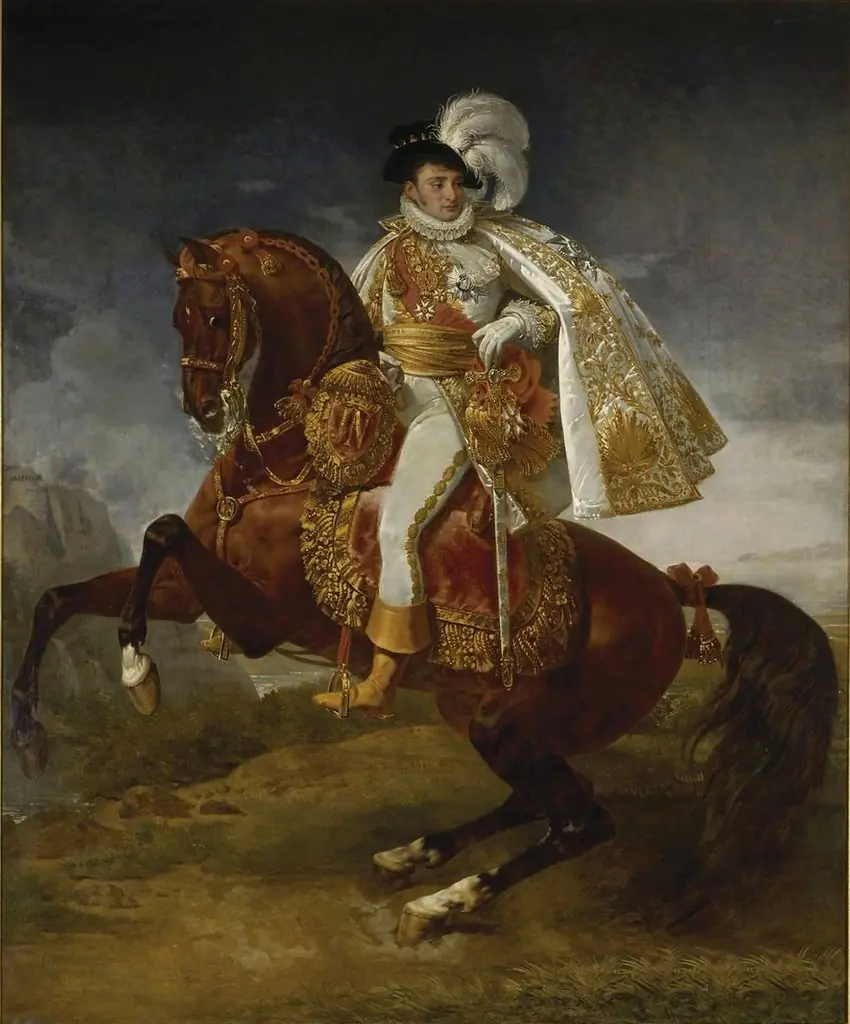 Jérôme Bonaparte, King of Westphalia
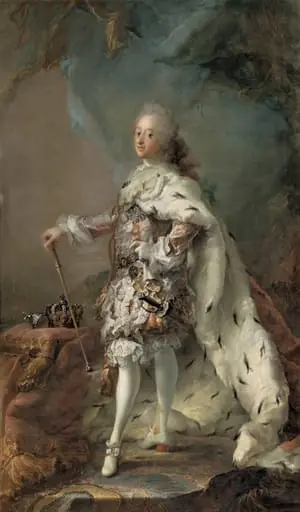 Portrait of Frederik V in Anointment Robe
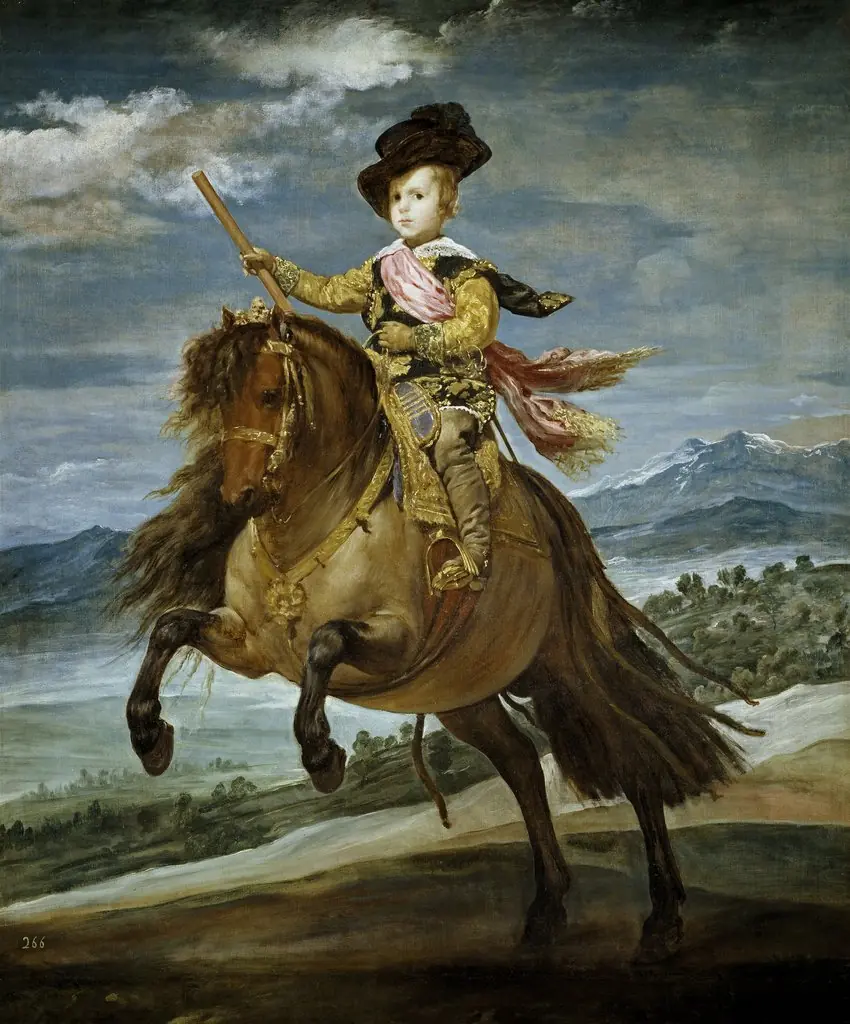 Equestrian Portrait of Prince Balthasar Charles
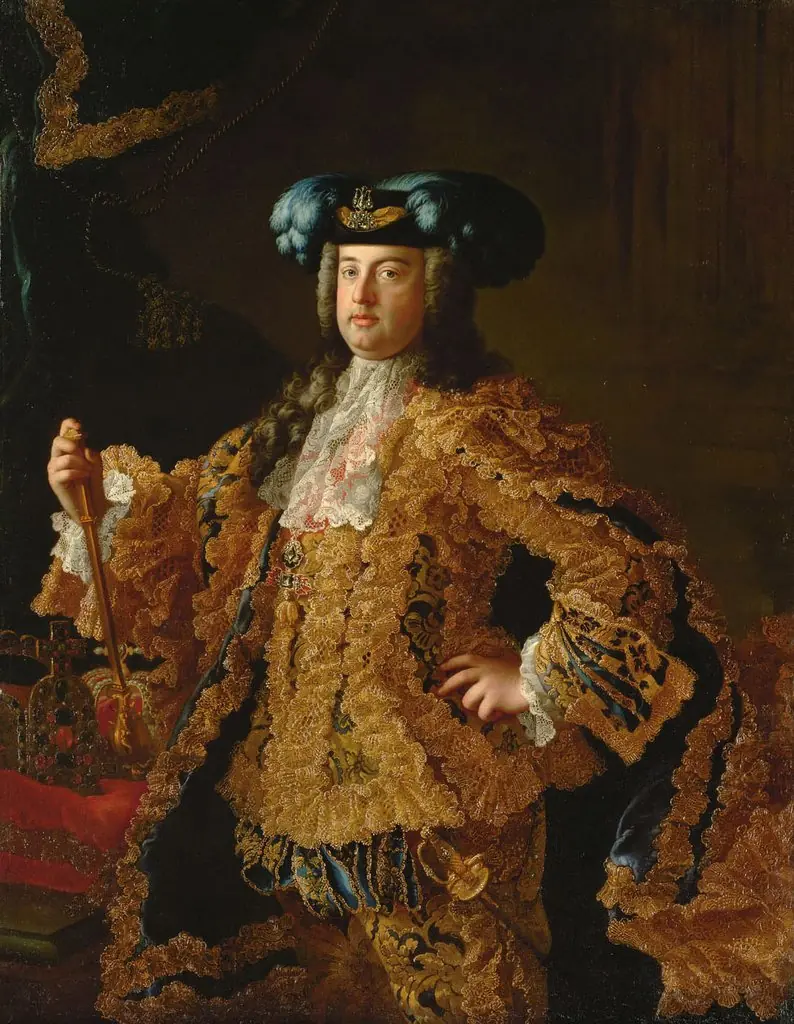 Herzog Franz (I.) Stephan von Lothringen (1708-1765), in reichem Hofkleid, Kniestück
 Retrato equestre de Luís XIV
 Charles II, King of Spain, on Horseback
 Portrait of Frederik V in Anointment Robe