Artwork
The Dreamer
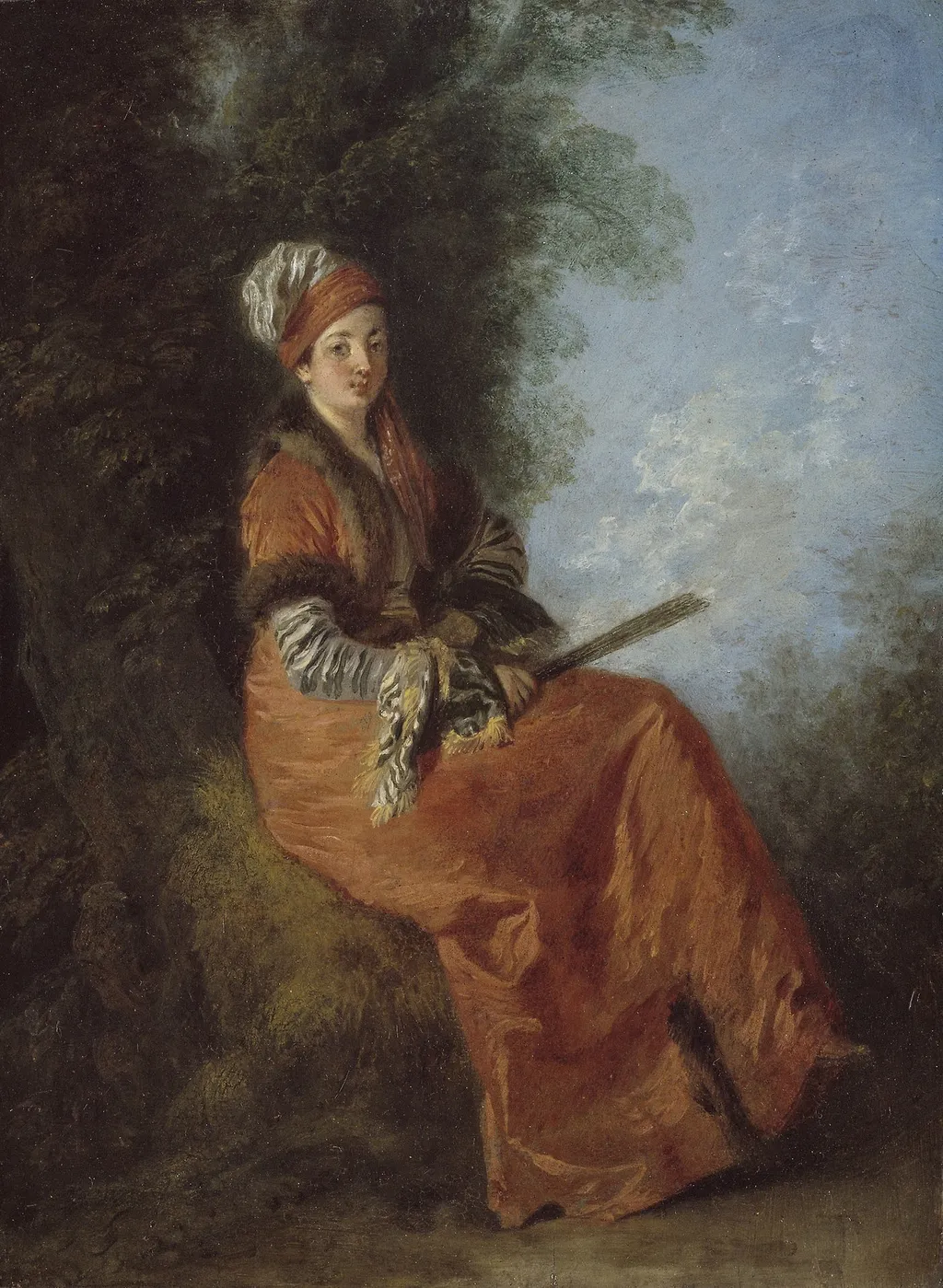
The Dreamer is an oil painting by the Rococo painting artist Jean Antoine Watteau. It dates from 1713 and is held in the collection of the Art Institute of Chicago.
About this work
This painting shows a young woman sitting in a landscape, dressed in a long red gown with fur and a white bonnet. She looks lost in thought. French artist Jean Antoine Watteau painted it around 1713.
People once tried to guess who she was. Some thought she might be a famous actress from his time.
Check out the Art Institute of Chicago to see this work in person.
Overview
The Dreamer (La Rêveuse) is a small oil-on-panel painting by the French artist Jean-Antoine Watteau, created between 1712 and 1714.
The Dreamer (La Rêveuse) is a small oil-on-panel painting by the French artist Jean-Antoine Watteau, created between 1712 and 1714. Measuring 23.2 by 17 centimeters, the work depicts a single seated female figure in exotic costume within a landscape setting. It is held by the Art Institute of Chicago, acquired in 1960 as part of the Mr. and Mrs. Lewis Larned Coburn Memorial Collection under accession number 1960.305. The painting exemplifies Watteau's delicate, intimate approach to figure painting and reflects the early 18th-century European fascination with turquerie, the vogue for Turkish-inspired imagery and costume. As one of Watteau's small figure paintings influenced by contemporary theater, it occupies an important place in the development of Rococo painting and the artist's exploration of reverie, costume, and mood.
Subject & Meaning
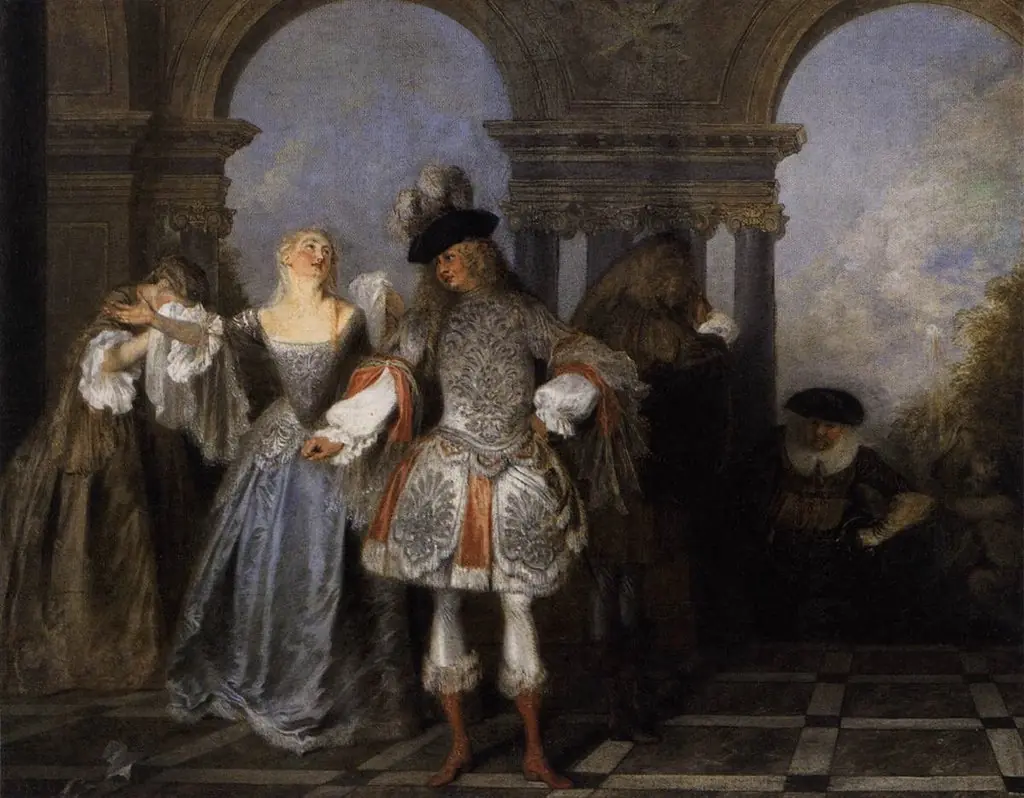
The painting presents a young woman seated on a grassy mound, positioned slightly left of center, gazing outward toward the viewer with her head turned three-quarters. She wears a voluminous rust-orange gown trimmed with fur at the sleeves and neckline, a matching turban with white fabric visible beneath, and a striped blue-and-white sash with fringed ends around her waist. In her lap she holds a thin staff or rod. The figure's attire constitutes a pseudo-Turkish costume, placing the work within the genre of turquerie that reflected Western European fascination with Ottoman culture. The traditional title, The Dreamer, derives from an engraving made after the painting that was intended for wider commercial distribution. Scholars have attempted to identify the sitter, with the Comédie-Française actress Charlotte Desmares proposed as a possible model, depicted here in theatrical costume. The subject recurs across numerous paintings and drawings by Watteau, including The Coquettes, dit Actors of the Comédie-Française, suggesting the artist's sustained interest in this type. The woman's contemplative pose, emerging from shadow into light, and her ambiguous gaze, create an atmosphere of introspection that aligns with the work's evocative title.
Technique & Style
Executed in oil on panel, the painting displays Watteau's characteristic handling: loose, visible brushwork in the foliage and drapery, with smoother, more refined treatment in the face. The finish is matte rather than glossy, with no sharp contours, contributing to the work's soft, atmospheric quality. The palette centers on warm oranges and browns of the costume against cool blues and deep greens of the landscape, with light falling from the upper right to illuminate the face, chest, and gown while leaving much of the surrounding environment in shadow. The background divides into two distinct zones: dense dark foliage behind and to the left, and an open pale blue sky with soft white clouds to the right. This contrast between enclosure and openness enhances the figure's psychological state. The composition's vertical format and small scale, 23.2 by 17 centimeters, intensify the intimacy of the encounter. Watteau's technique here exemplifies the shift from the more severe Baroque style toward the naturalistic, color-sensitive Rococo that he helped pioneer, with particular attention to the effects of light on fabric and the expressive potential of posture and gaze.
History & Provenance
The Dreamer was painted between 1712 and 1714, during Watteau's mature period in Paris, when he had been accepted as an associate member of the Academy and was developing his signature fête galante and theatrical subjects. In the early eighteenth century, the painting belonged to Abbé Pierre-Maurice Haranger, canon at Saint-Germain l'Auxerrois, who was one of Watteau's closest friends. Over the following two centuries, the work passed through various private collections. It was long attributed to Nicolas Lancret before being correctly identified as Watteau's work. The painting was engraved by Pierre Aveline, which helped disseminate the image and established its traditional title. By the mid-twentieth century, it came into the possession of the art dealer and connoisseur Georges Wildenstein, who sold it to the Art Institute of Chicago in 1960. The painting has been exhibited internationally, including at the Galerie Georges Petit in Paris in 1883-1884, at Wildenstein & Company in New York in 1943 for Fashion in Headdress 1450-1943, at the Museum of Art in Baltimore in 1959 for Age of Elegance: The Rococo and its Effect, and most notably in the major Watteau retrospective of 1984-1985 held at the National Gallery of Art in Washington, the Galeries nationales du Grand Palais in Paris, and Charlottenburg Palace in Berlin.
Context
The Dreamer emerges from Watteau's engagement with contemporary French theater and the broader European taste for exoticism. The artist's work in the studio of Claude Gillot had introduced him to the characters of the commedia dell'arte, and his subsequent association with Claude Audran III deepened his understanding of decorative art and ornamental design. The painting reflects Watteau's lifelong interest in theatrical costume and pose, drawn from the world of the Comédie-Française and the Italian theater. The turquerie elements connect to a wider cultural phenomenon in early eighteenth-century France, where Ottoman-inspired dress and settings conveyed both fashionable exoticism and a sense of imaginative escape. Within Watteau's oeuvre, this small panel belongs to a group of intimate figure paintings that explore solitary reverie rather than the social gatherings of his fêtes galantes. The work has been catalogued by multiple scholars, appearing as number 45 in Hédouin's early catalogue, as G 88 in the Goncourt raisonné, and in various subsequent scholarly inventories. Its correct attribution to Watteau, after earlier misattribution to Lancret, reflects the evolving understanding of the artist's body of work across the nineteenth and twentieth centuries.
Legacy
The Dreamer occupies a significant position in Watteau's legacy as an exemplar of his small-scale, intimate figure paintings that influenced painters throughout the eighteenth century. The work's dissemination through engraving by Pierre Aveline helped establish its fame and ensured its place in the visual culture of the period. As a prime example of turquerie in French painting, it documents the cross-cultural imaginative exchanges of the early eighteenth century. The painting's acquisition by the Art Institute of Chicago in 1960 brought it into one of the major public collections of European art in the United States, where it remains on view in Gallery 216. Its inclusion in the landmark 1984-1985 Watteau retrospective, which traveled from Washington to Paris to Berlin, confirmed its status within the artist's accepted corpus. The Dreamer continues to attract scholarly attention for its synthesis of theatrical inspiration, exotic costume, and psychological subtlety, qualities that define Watteau's contribution to the emergence of Rococo painting and his broader influence on European art.
Own this work as a print
Artist & collection
Artist
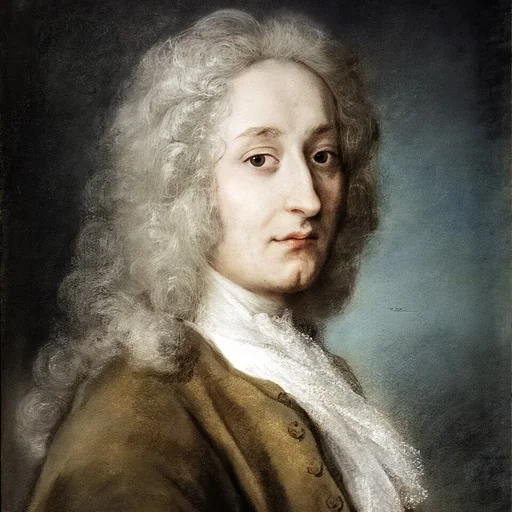
Jean-Antoine Watteau was a French painter and draughtsman whose brief career spurred the revival of interest in colour and movement, as seen in the tradition of Correggio and Rubens.

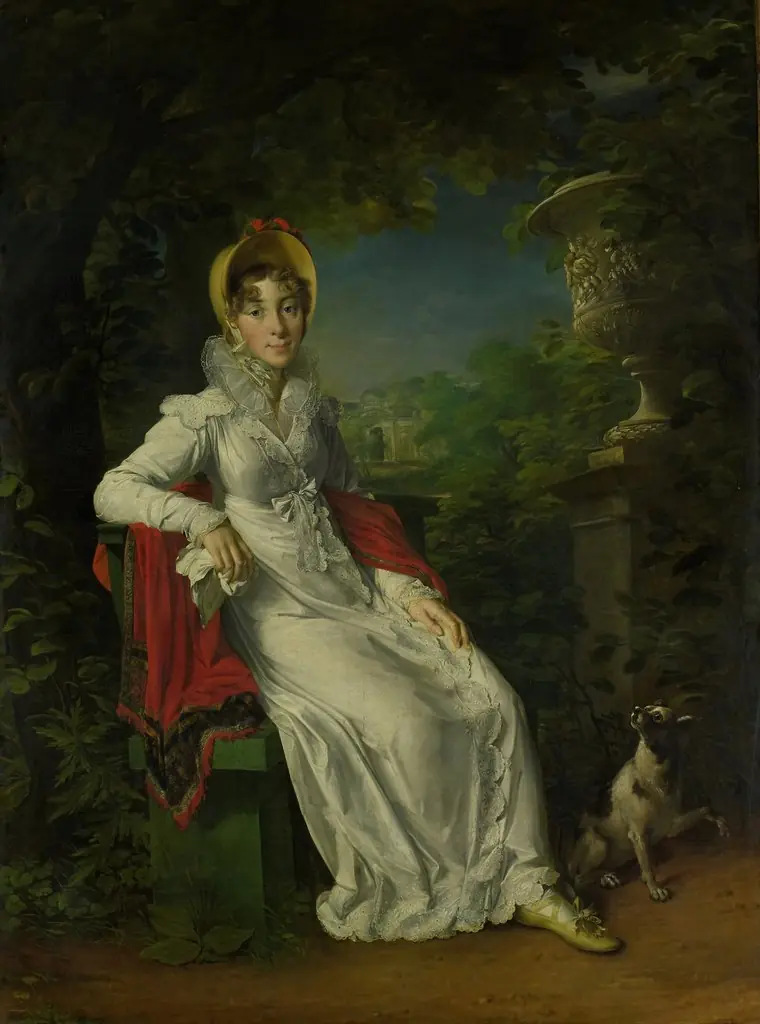
- Portrait of Marie Caroline Ferdinande Louise de Naples, Wife of Charles Ferdinand, Duke de Berry, in the Park de Bagatelle in the Bois de Boulogne, Paris
 Nourmahal
 Mrs Woodhull
 Head of a Young Woman
 Head of a Young Woman
 Portrait of a Lady in Turkish Fancy Dress
 Spinner at Her Work
 Portrait of Adélaide d'Orléans
 Mrs. George Baldwin (Jane Maltass, 1763–1839)
 A Turkish Woman
 The Beautiful Greek Woman
 Portrait of a young woman