Artwork
De grootvizier Nevşehirli Damat Ĭbrahim Pasa
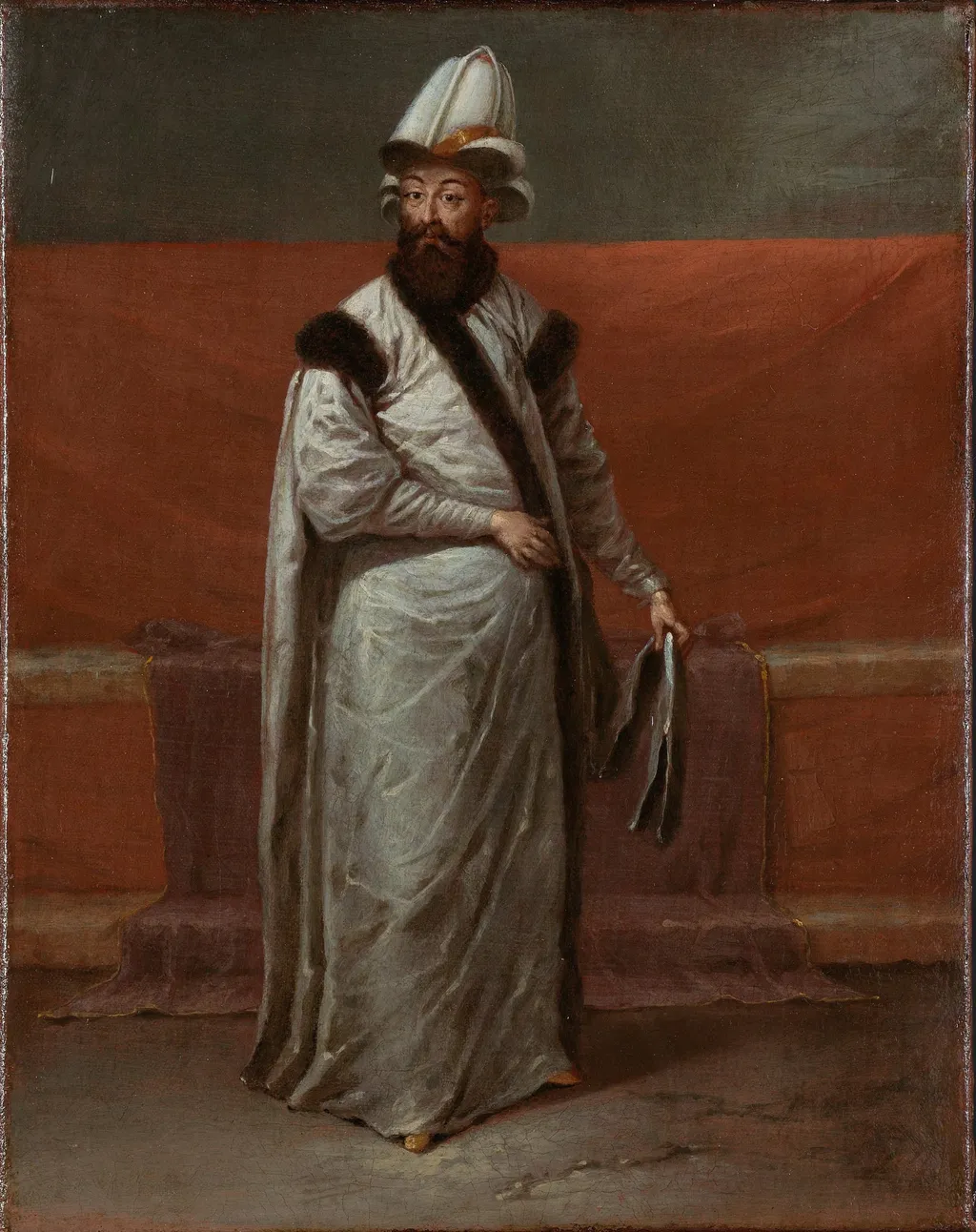
De grootvizier Nevşehirli Damat Ĭbrahim Pasa is an unspecified painting by the Orientalist artist Jean Baptiste Vanmour. It dates from 1727 and is held in the collection of the Rijksmuseum. This portrait depicts Nevşehirli Damat İbrahim Pasha, the Grand Vizier of the Ottoman Empire during the early 1720s.
About this work
Overview
This portrait depicts Nevşehirli Damat İbrahim Pasha, the Grand Vizier of the Ottoman Empire during the early 1720s.
This portrait depicts Nevşehirli Damat İbrahim Pasha, the Grand Vizier of the Ottoman Empire during the early 1720s. Painted for a European viewership, it presents him in formal attire, seated on a low divan with composed demeanor. Though unsigned and of uncertain origin, the work reflects a period when Ottoman elites were subjects of fascination in Western art circles, often framed through a lens of exoticism.
Subject & Meaning
İbrahim Pasha, as Grand Vizier, held the highest administrative authority under Sultan Ahmed III. The folded paper in his hands suggests official duties, while his richly trimmed robe and turban signify status within the imperial hierarchy. The calm expression conveys authority rather than aggression, aligning with European ideals of enlightened governance, even as it catered to Orientalist fantasies of the Eastern court.
Technique & Style
The painting employs a naturalistic style with attention to textile detail and facial modeling, typical of 18th-century portraiture adapted for Eastern subjects. Light falls evenly across the figure, avoiding dramatic contrasts. The background is muted, focusing attention on the subject’s attire and posture. Materials and methods remain undocumented, as the artist’s identity and pigment sources are unknown.
History & Provenance
Created during the Tulip Era, a time of relative peace and cultural flourishing in the Ottoman court, the portrait likely originated in Istanbul for export to European collectors. Its lack of signature and uncertain commissioning context suggest it was produced by a local artist catering to foreign demand, rather than as an official imperial commission.
Context
The painting emerged amid growing European interest in Ottoman culture, fueled by diplomatic exchanges and travel literature. While Ottoman elites maintained their own artistic traditions, this work was shaped by Western expectations of the Orient, emphasizing luxury, mystery, and exotic decorum. It reflects a cultural exchange where Eastern figures were reimagined for foreign consumption.
Legacy
This portrait contributes to the broader genre of Orientalist art, which shaped European perceptions of the Islamic world for centuries. Though not signed, it exemplifies how Ottoman officials were visually codified as symbols of power and otherness. Today, it serves as a historical artifact of cross-cultural representation, revealing both admiration and distortion in colonial-era visual culture.
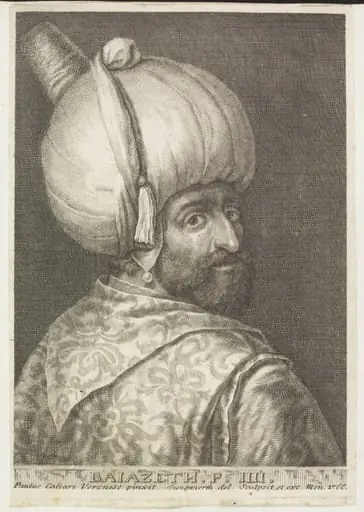
Own this work as a print
Artist & collection
Artist
Jean Baptiste Vanmour or Van Mour (9 January 1671 – 22 January 1737) was a Flemish-French painter, remembered for his detailed portrayal of life in the Ottoman Empire during the Tulip Era and the rule of Sultan Ahmed III.

- Turkish sultans, sultanas and other historical figures
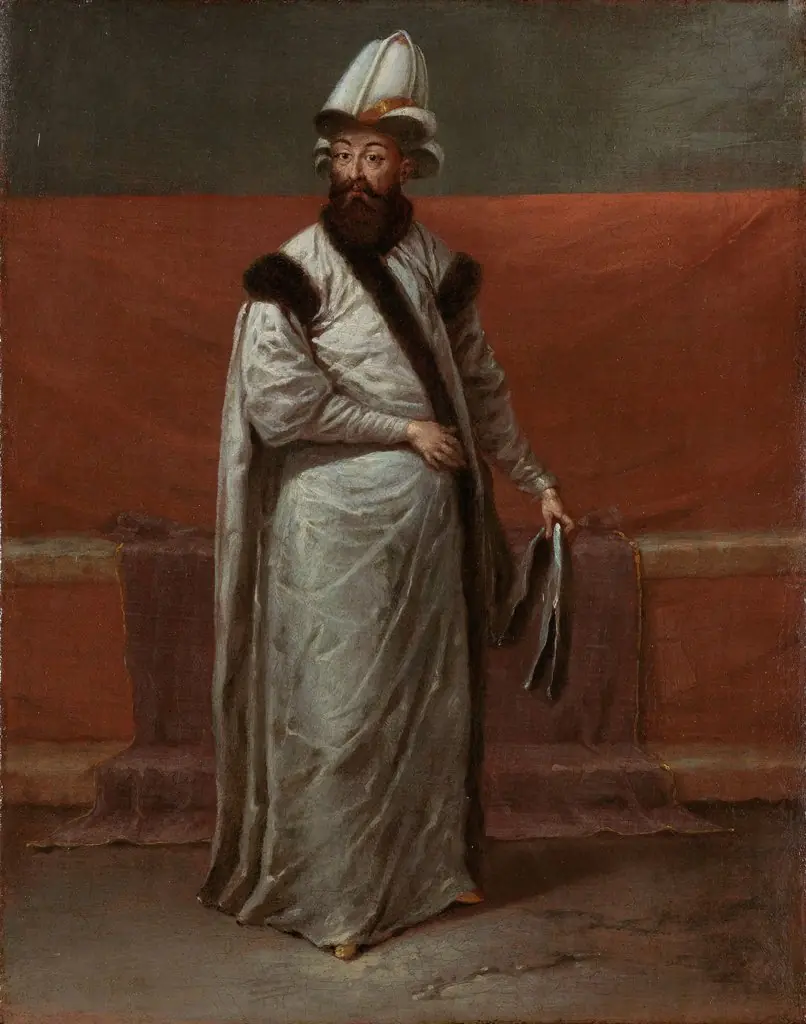 Grand Vizier Nevşehirli Damat Ĭbrahim Pasa
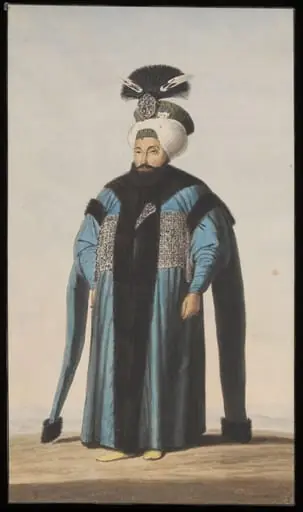 Portrait of Sultan Mahmud II of Turkey
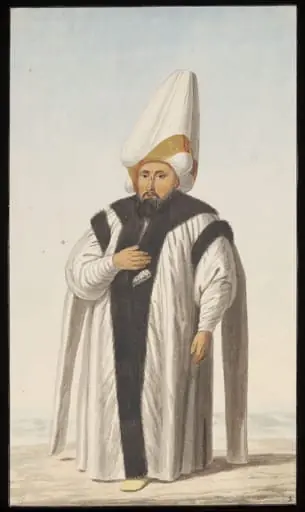 Sadrazam or Grand Vizier
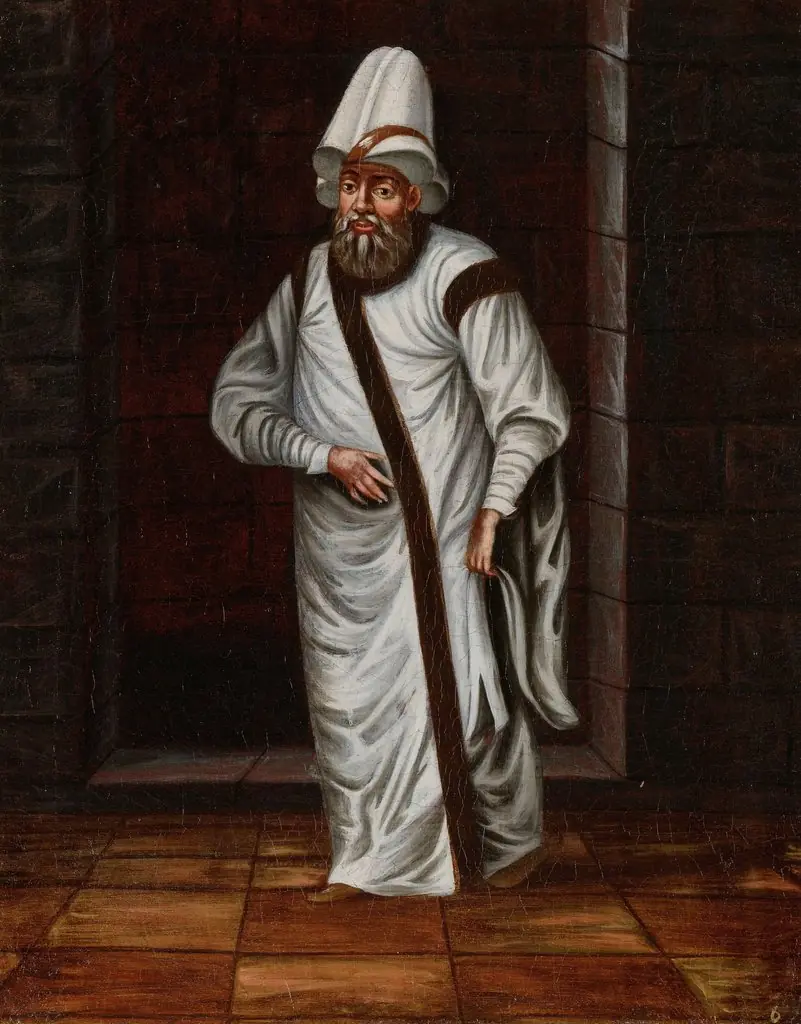 Grand Vizier
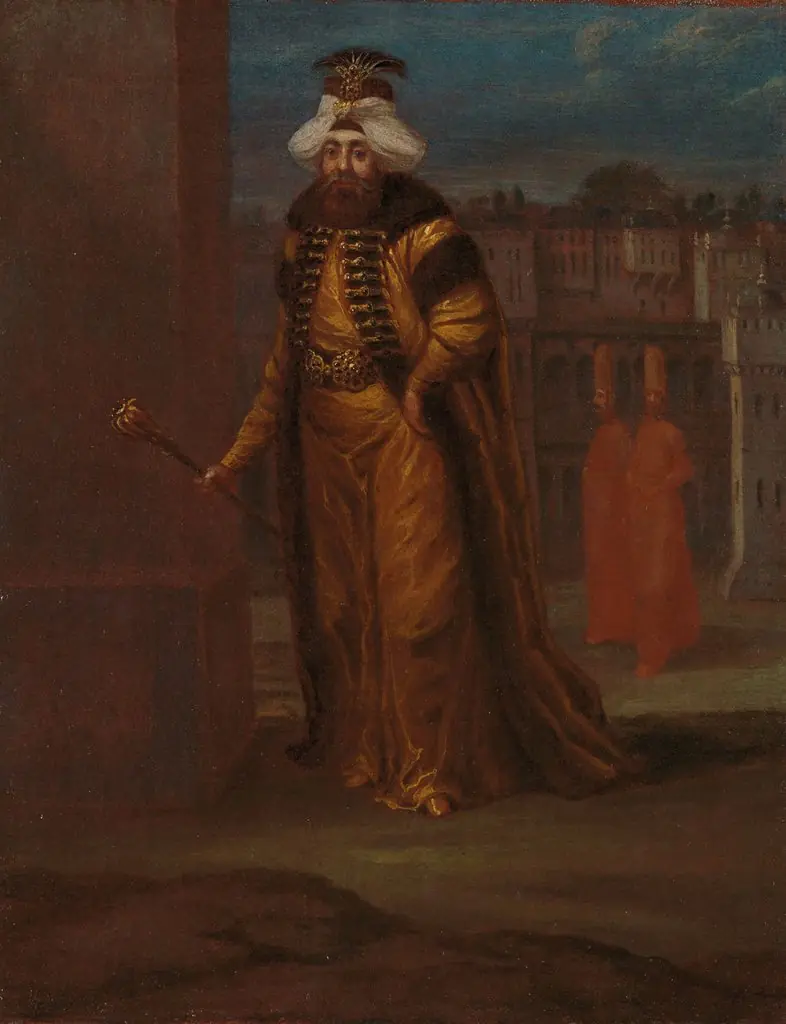 Sultan Mahmud I
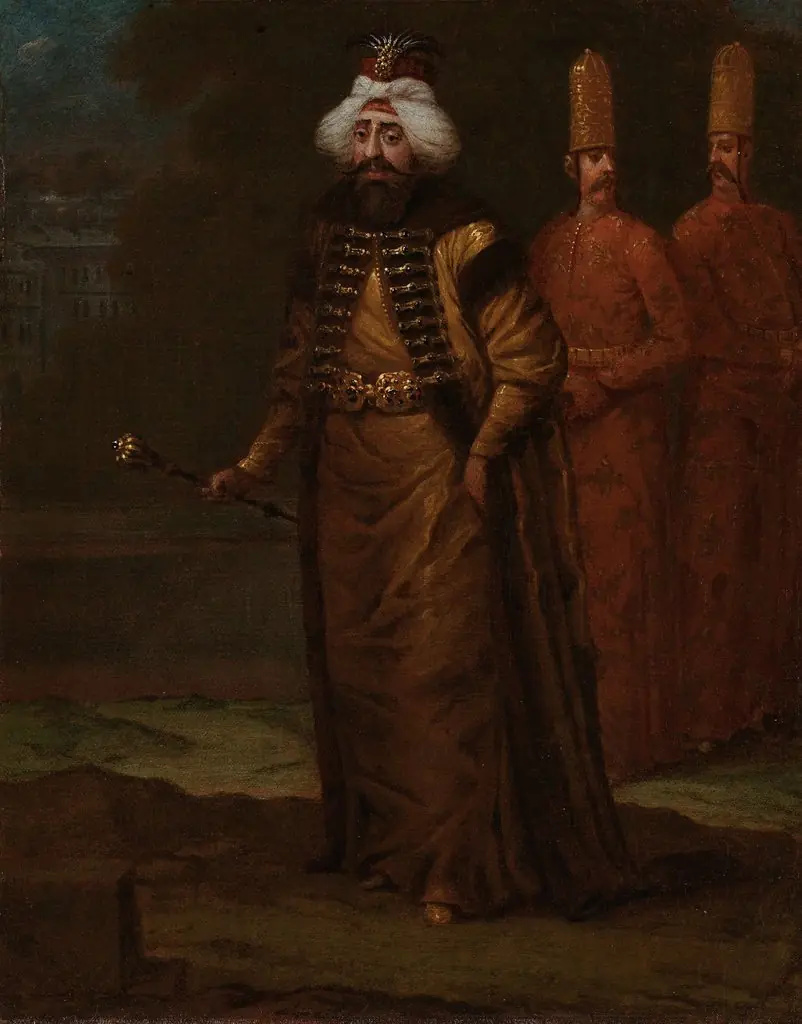 Sultan Ahmed III
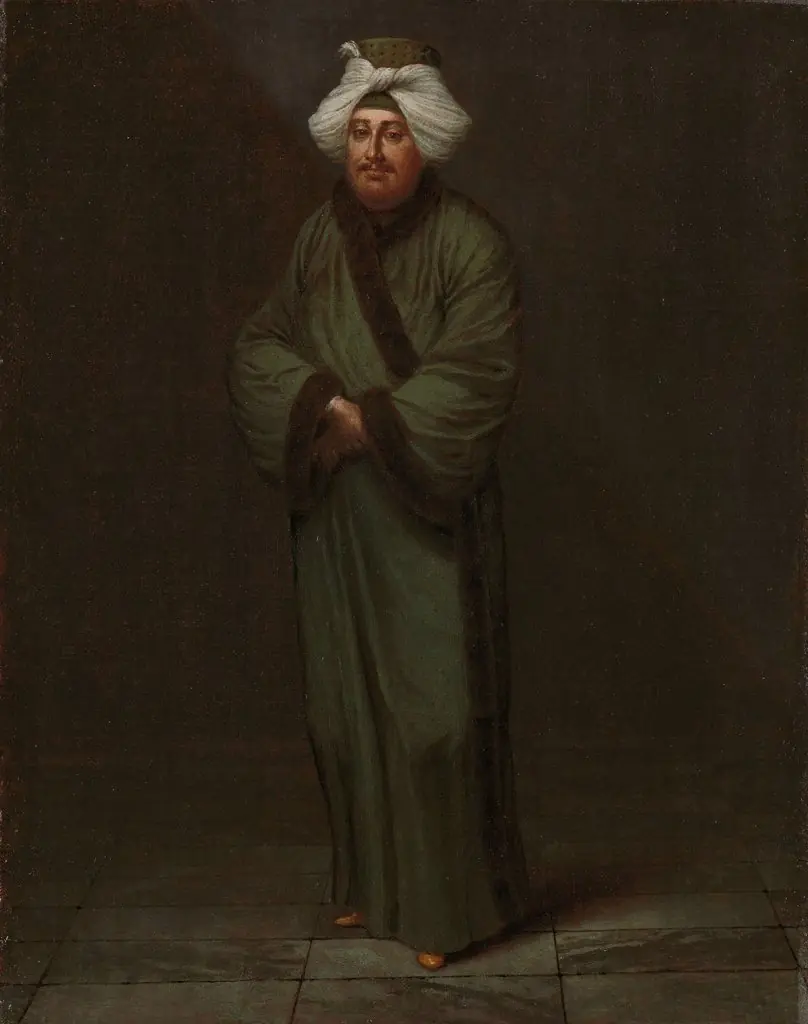 Mehmet, the vizir kâhyasi
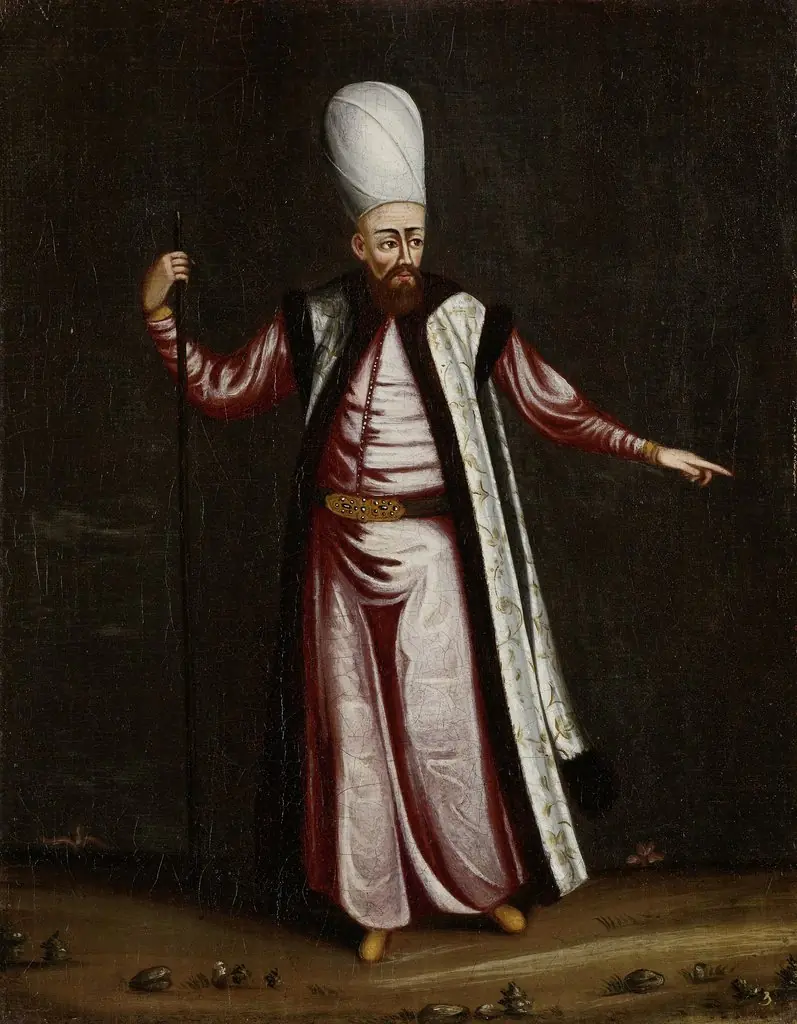 The Capoudgi Bachi, Grand-master of the Seraglio
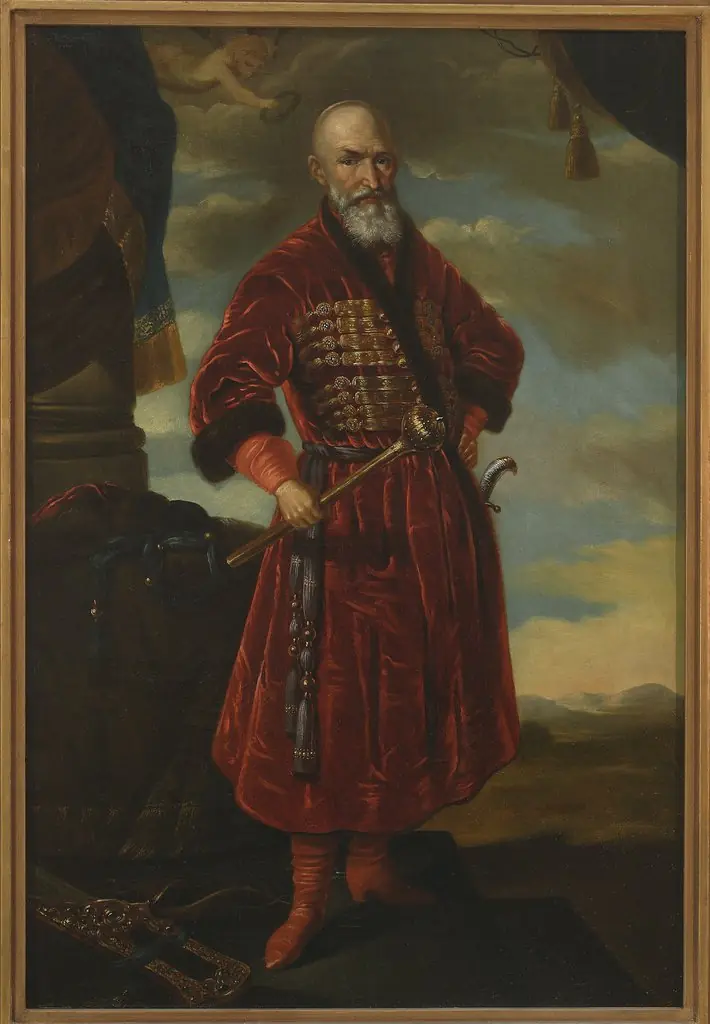 Portrait of Stefan Czarniecki (1599–1665)
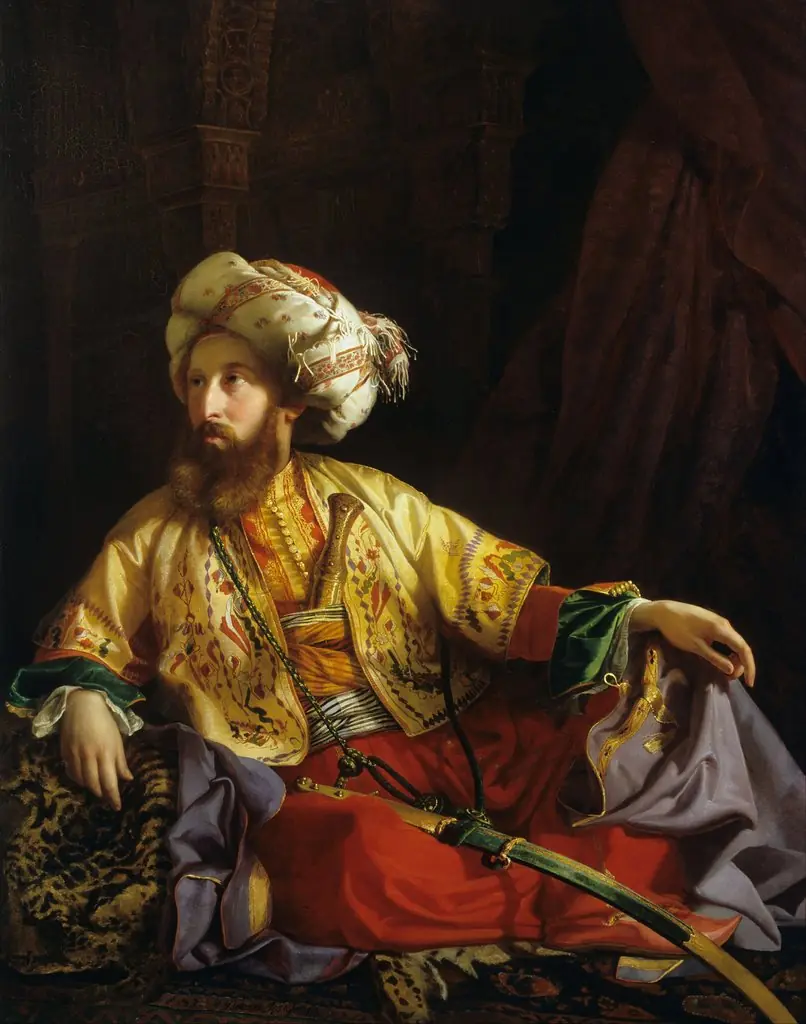 Emir of Lebanon
 Grigore Ghica I