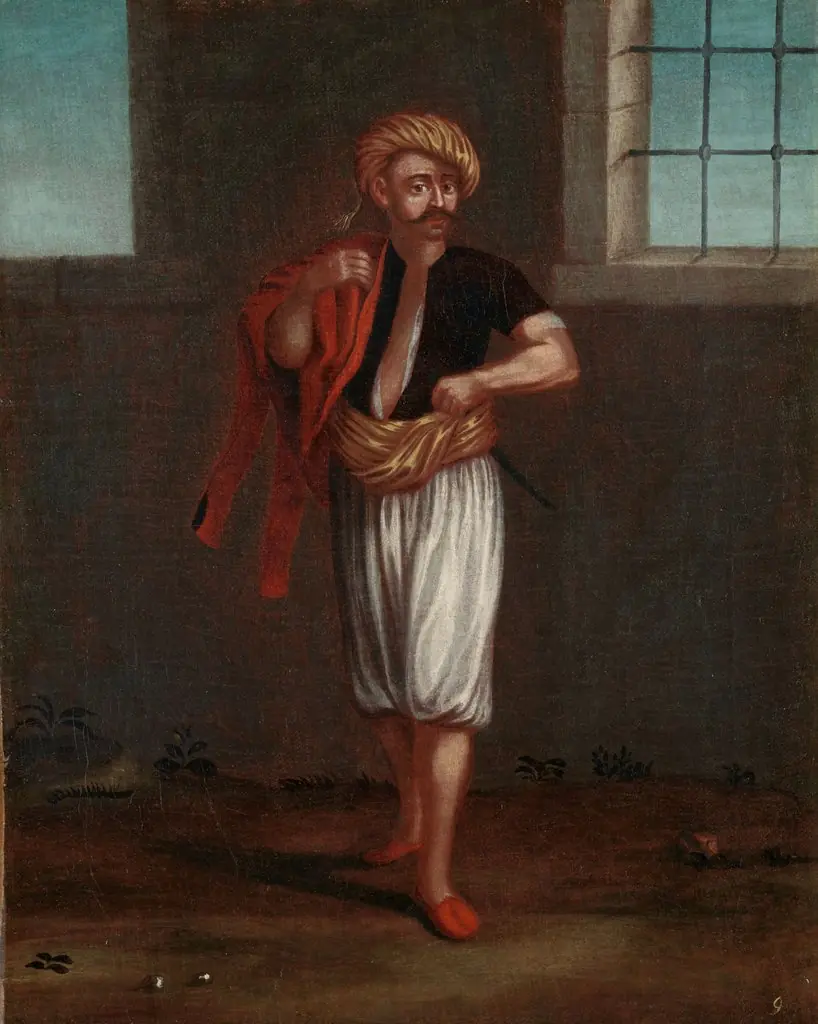
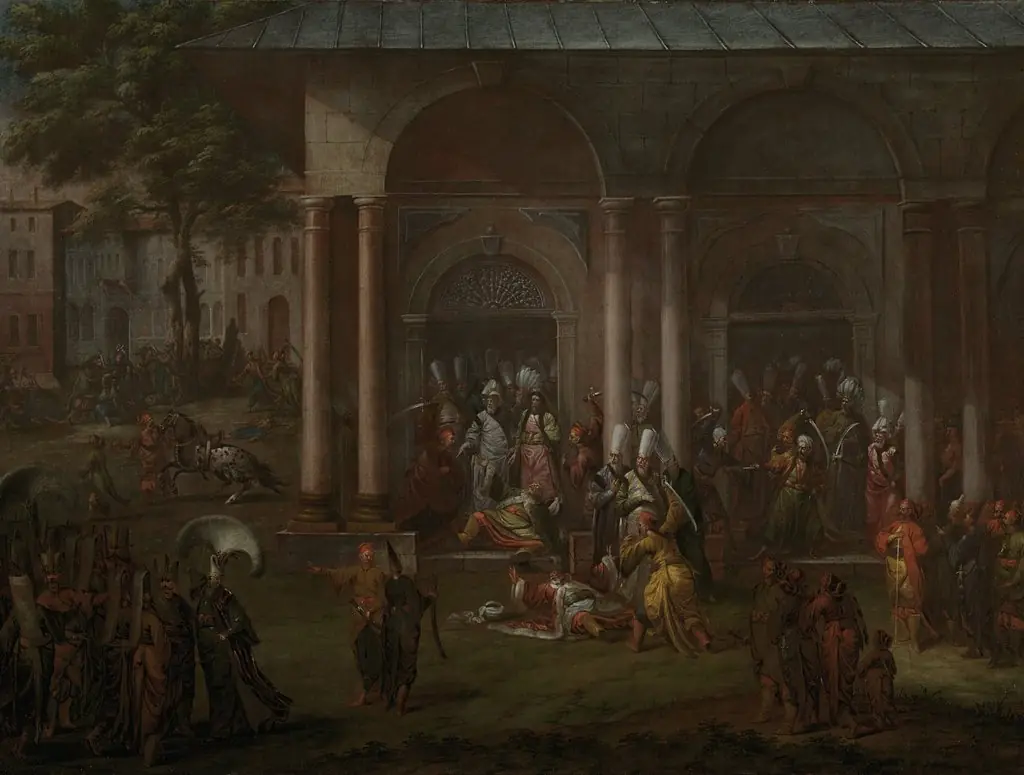
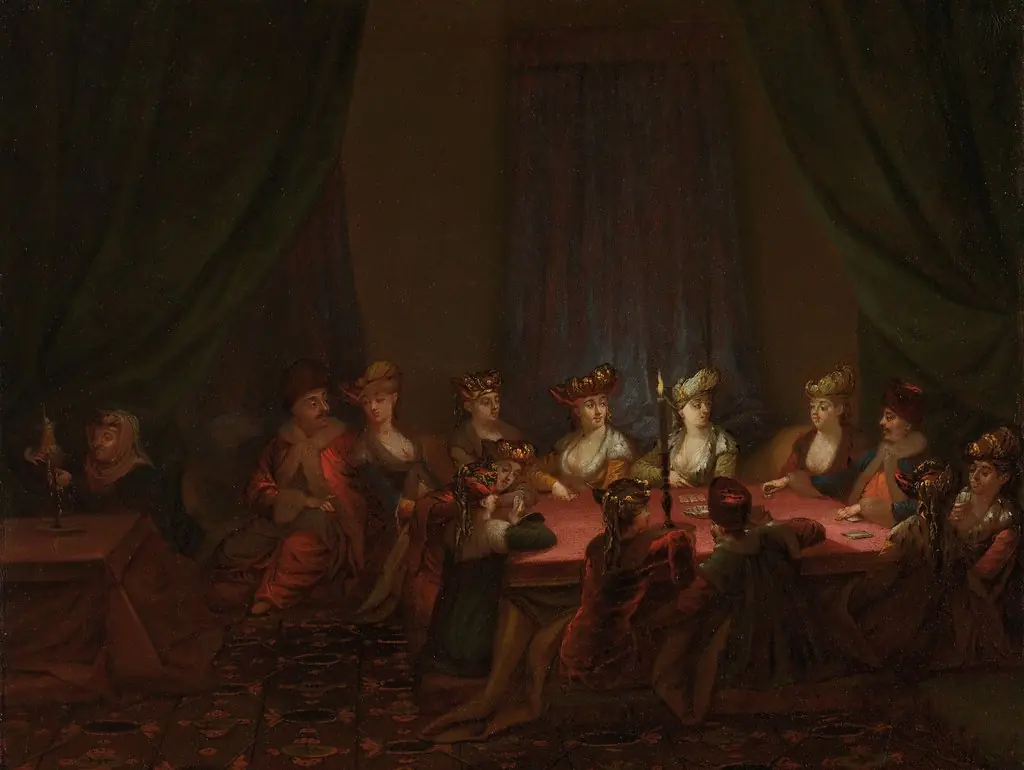
Artwork
Sultan Ahmed III
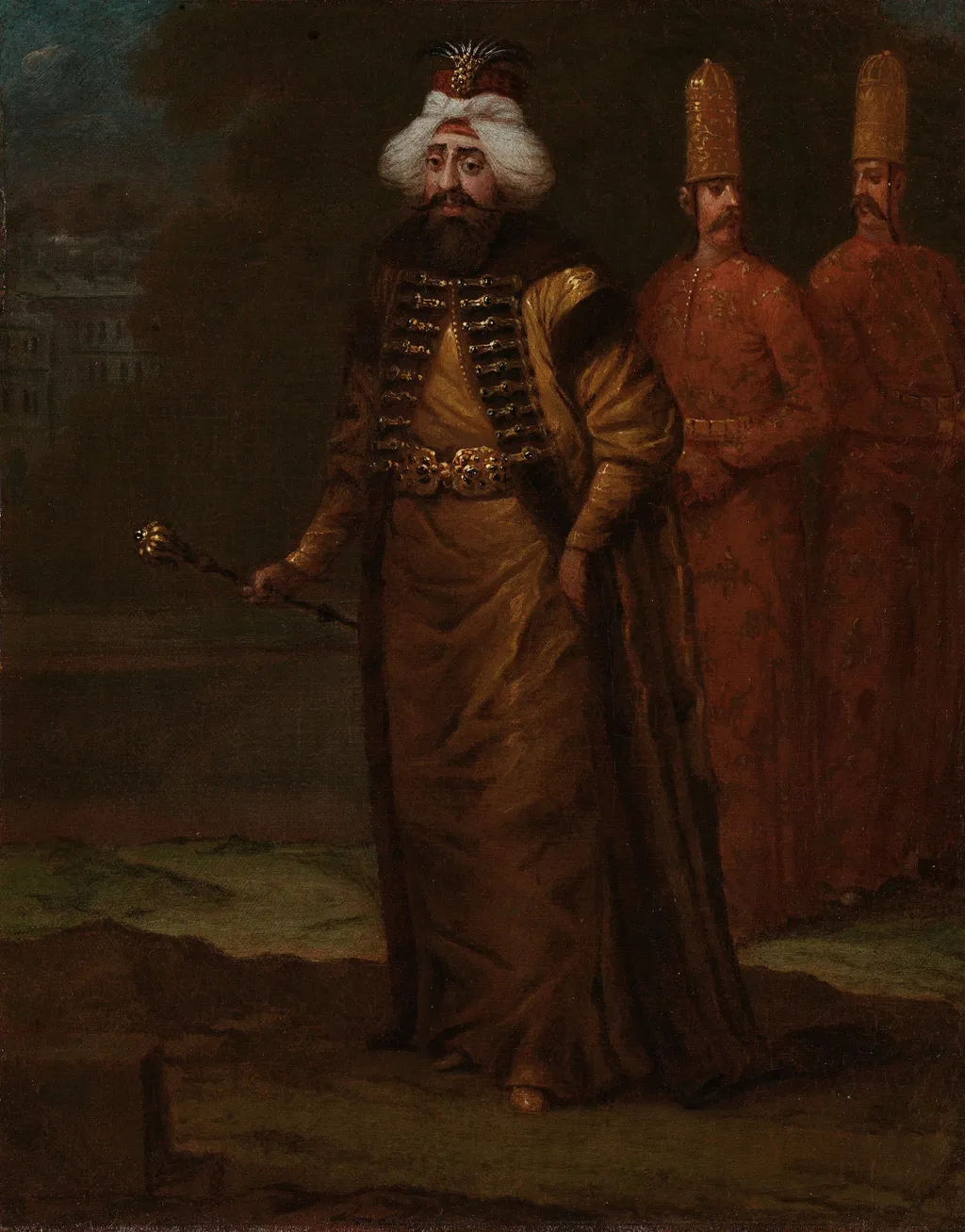
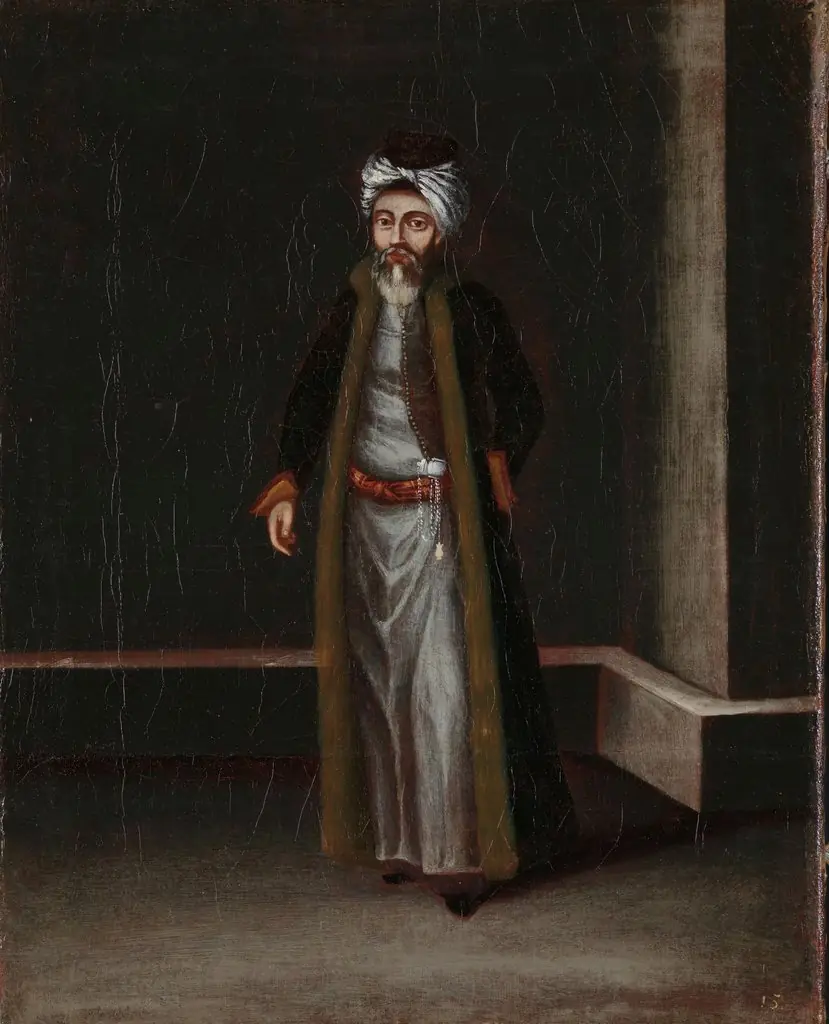
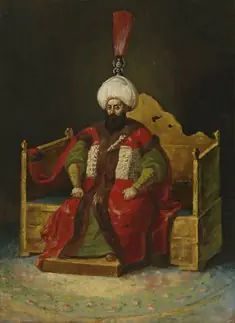
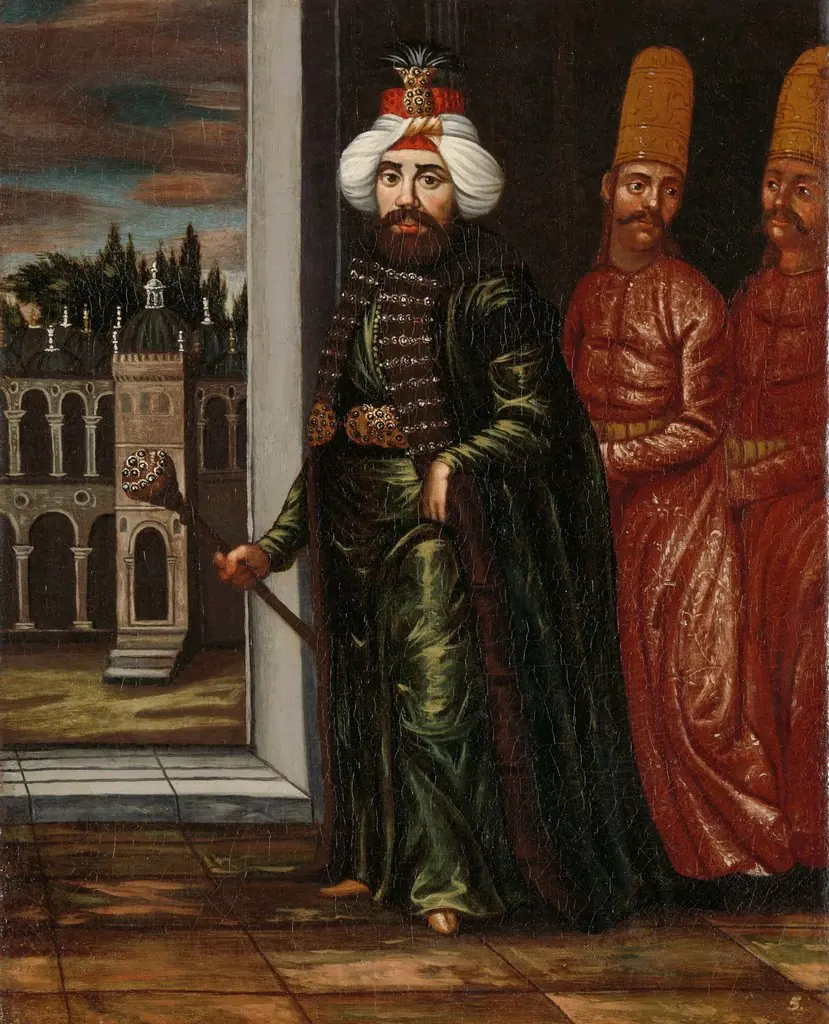
Sultan Ahmed III is an oil painting by the Rococo painting artist Jean Baptiste Vanmour. It dates from 1728 and is held in the collection of the Rijksmuseum.
About this work
Technique & Style
Created in 1728, the portrait of Sultan Ahmed III by Jean Baptiste Vanmour is executed in oil paint on a canvas support.
Created in 1728, the portrait of Sultan Ahmed III by Jean Baptiste Vanmour is executed in oil paint on a canvas support. The work measures 33.5 cm in height and 27 cm in width, presenting a formal depiction of the Ottoman ruler. As a portrait genre piece, the painting utilizes the medium of oil to render the subject's likeness with the stylistic conventions typical of Vanmour's diplomatic commissions during the early eighteenth century.
History & Provenance
Created in 1728 by Jean Baptiste Vanmour, this oil painting on canvas depicts Sultan Ahmed III. The work originally entered the collection of Cornelis Calkoen, who served as the Dutch ambassador to the Ottoman Empire. Following Cornelis, ownership passed to Nicolaas Calkoen.
The portrait was subsequently integrated into several institutional holdings, including the Royal Cabinet of Rarities and the Dutch Museum of History and Art, before becoming part of the Directorate of Levant Trade and Navigation on the Mediterranean. It is currently housed in the Rijksmuseum.
The portrait of Sultan Ahmed III by Jean Baptiste Vanmour is held in the collection of the Rijksmuseum in Amsterdam. The work entered the museum's holdings through the Directie van de Levantse handel en de Navigatie op de Middellandse Zee, the Koninklijk Kabinet van Zeldzaamheden, and the Nederlandsch Museum voor Geschiedenis en Kunst. It was previously owned by Cornelis Calkoen and Nicolaas Calkoen before its acquisition by the institution.
No specific exhibition history or inventory accession number is provided in the available records. The painting, created in 1728, remains part of the museum's permanent collection as a portrait depicting the Ottoman Sultan.
Legacy
Sultan Ahmed III's legacy is anchored in the portrait painted by Jean Baptiste Vanmour in 1728, a work that helped shape European perceptions of Ottoman leadership. The painting, now housed in the Rijksmuseum, exemplifies early 18th-century portraiture and contributed to the visual documentation of imperial figures. Its detailed rendering and diplomatic context have informed scholarly studies of Ottoman-European relations and artistic exchange during the Tulip Era.
The work's provenance, including ownership by Cornelis and Nicolaas Calkoen, underscores its historical circulation among elite collectors, reinforcing its role in the transmission of Ottoman imagery in Western art circles.
Overview
Jean Baptiste Van Mour, a Flemish‑French artist active in the early eighteenth century, painted this oil portrait of Sultan Ahmed III in 1728. Executed in a style linked to the Rococo, the work is part of the Rijksmuseum’s collection and presents the Ottoman ruler in a formal, courtly pose.
Subject & Meaning
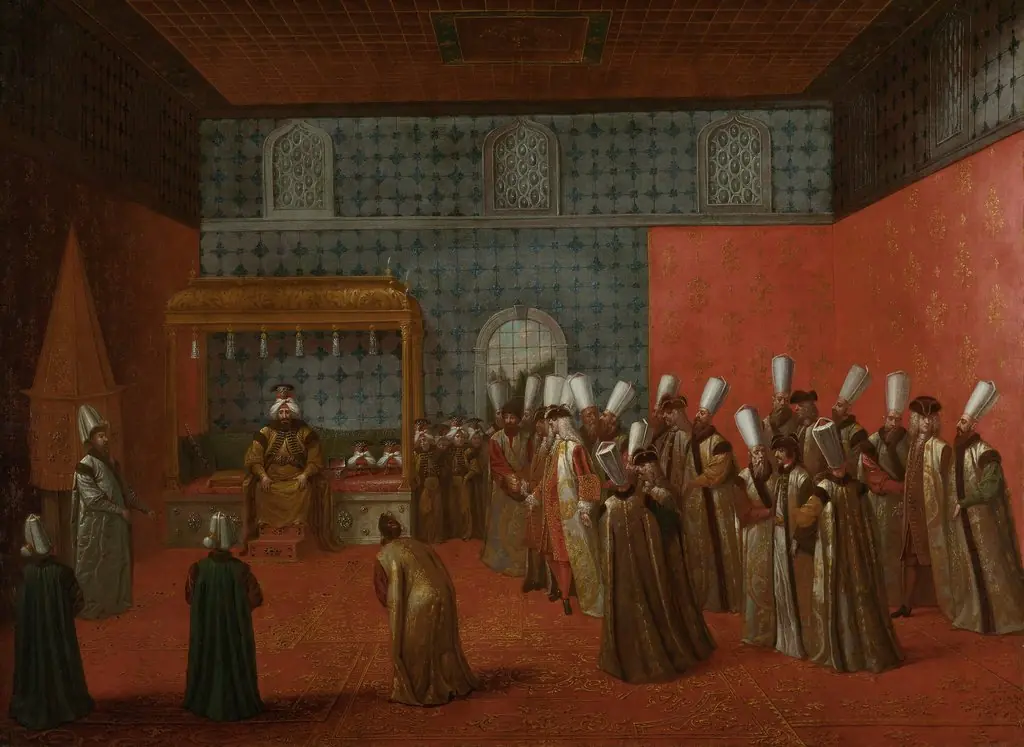
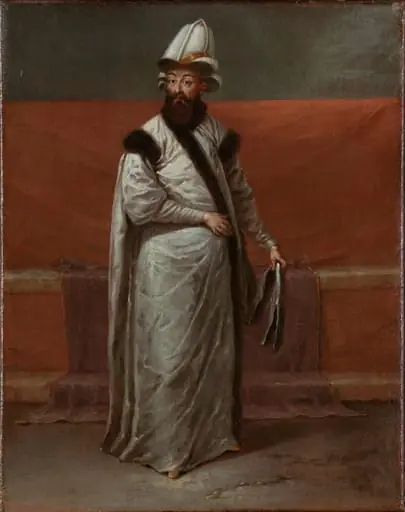
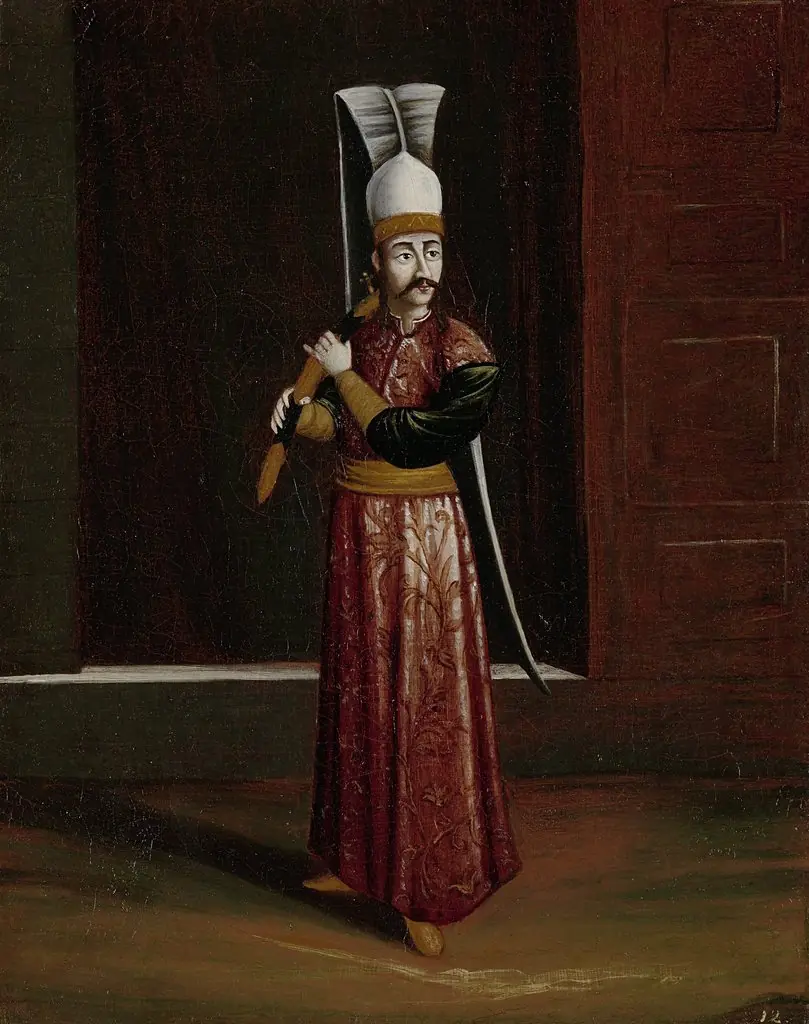
The central figure is the sultan, distinguished by a long white beard, a brown robe, a gold‑trimmed jacket, and a red‑and‑white turban. He holds a staff in his right hand, a symbol of authority, while two attendants in red robes and gold hats stand behind him, reinforcing the hierarchical composition.
Context
Van Mour’s oeuvre is noted for detailed visual accounts of Ottoman society, and this portrait aligns with his broader series of courtly depictions. The work illustrates the cross‑cultural artistic dialogue between Europe and the Ottoman Empire, highlighting European interest in the exoticism of the Turkish court during the early 1700s.
Own this work as a print
Artist & collection
Artist
Jean Baptiste Vanmour or Van Mour (9 January 1671 – 22 January 1737) was a Flemish-French painter, remembered for his detailed portrayal of life in the Ottoman Empire during the Tulip Era and the rule of Sultan Ahmed III.