Artwork
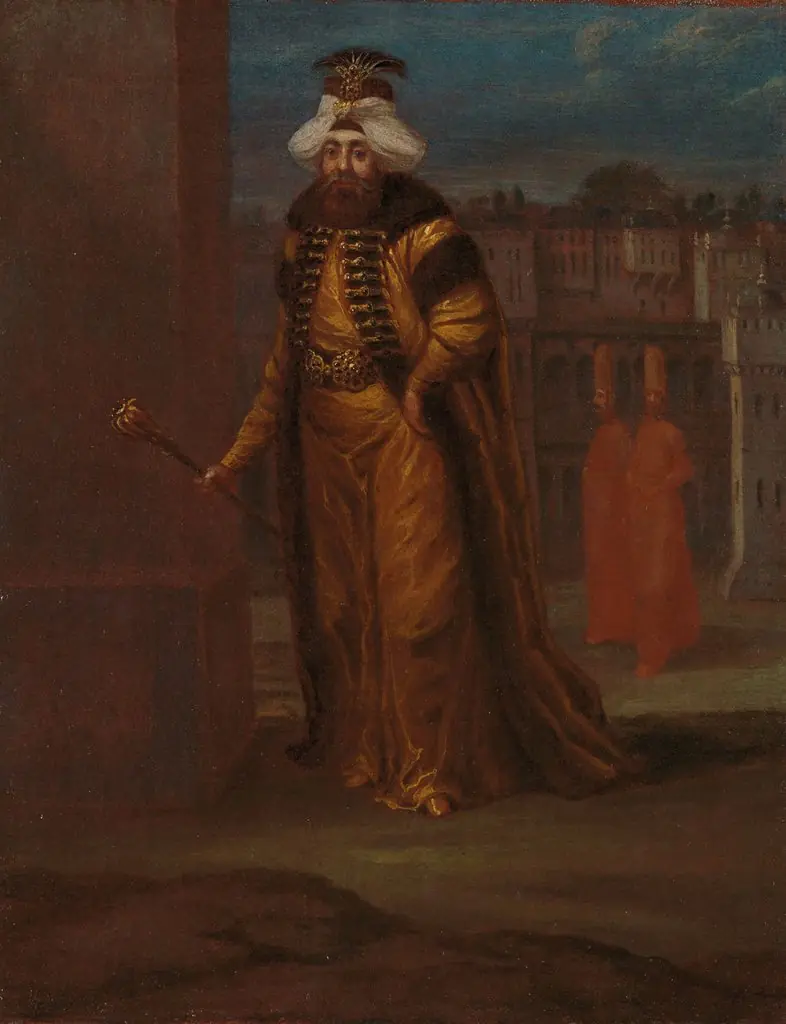
Portrait of Sultan Ahmed III
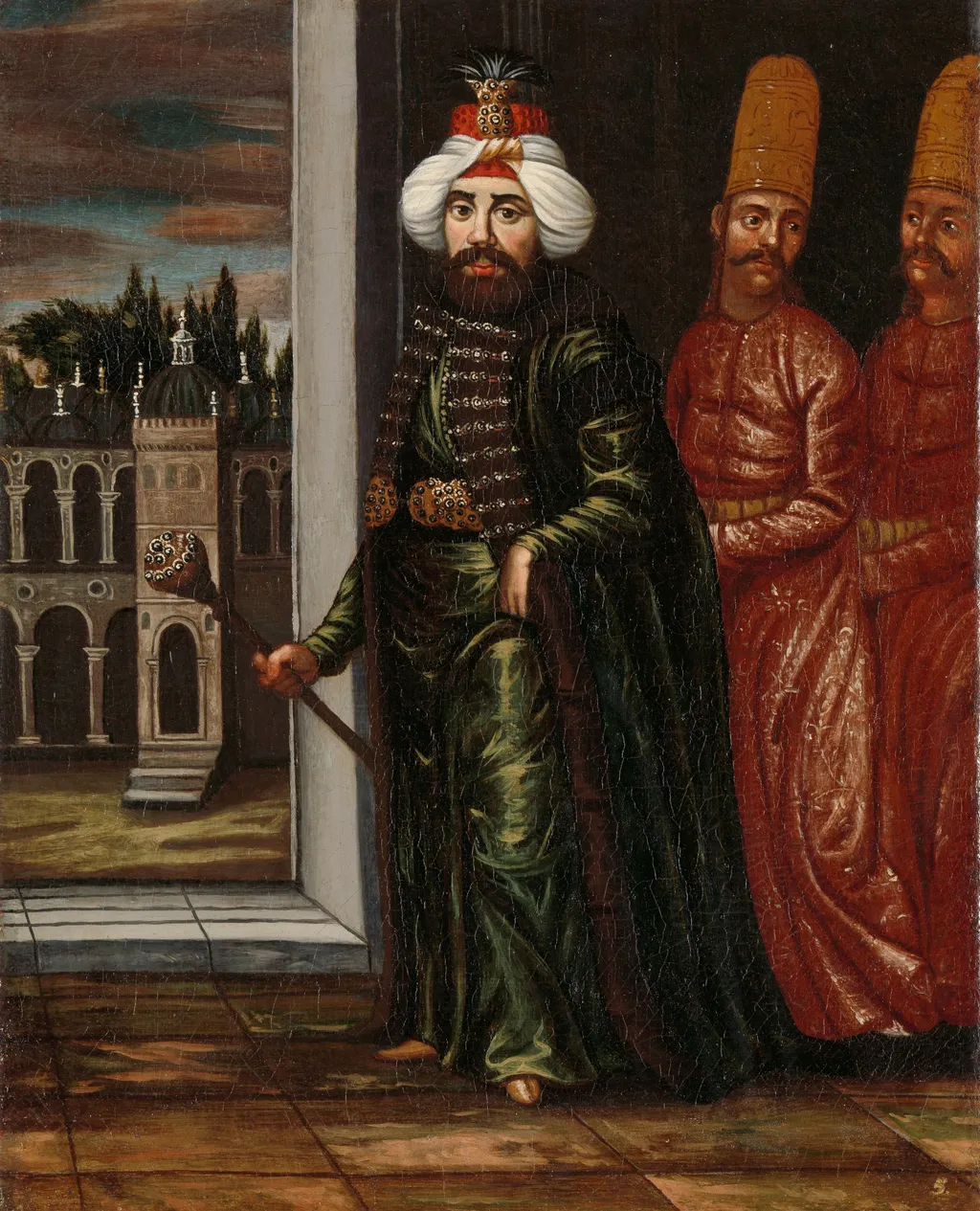
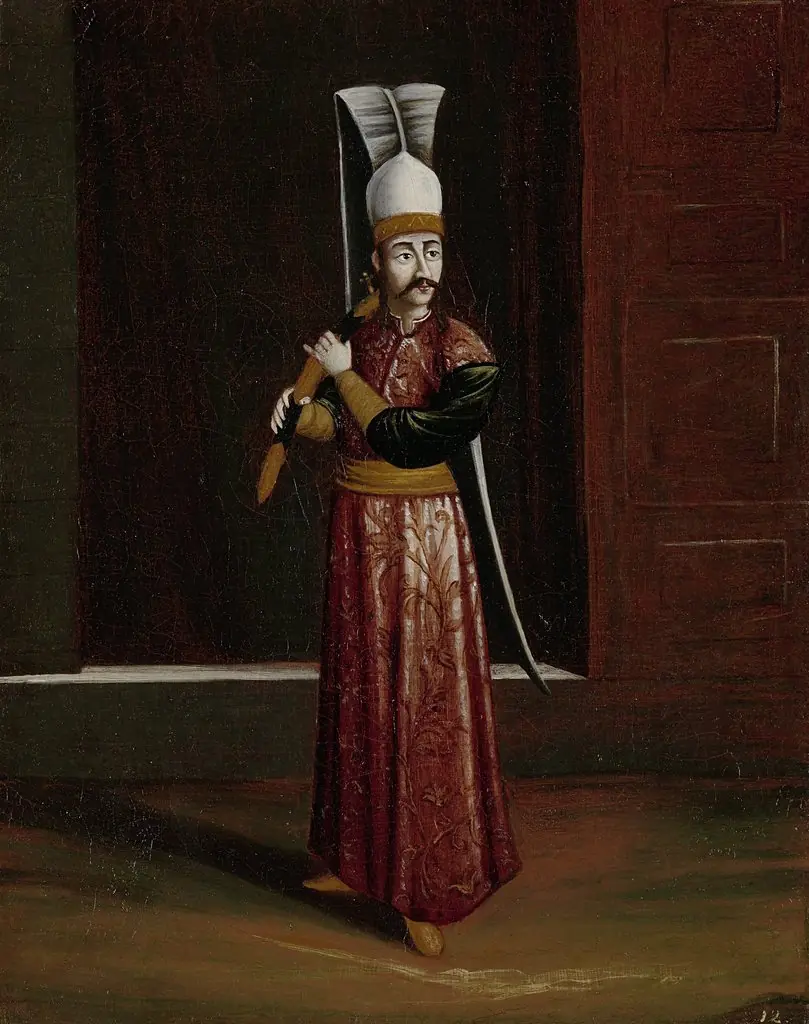
Portrait of Sultan Ahmed III is an oil painting by the Flemish Baroque painting artist Jean Baptiste Vanmour. It dates from 1718 and is held in the collection of the Rijksmuseum.
About this work
Technique & Style
The work measures 38 cm in height by 31 cm in width, indicating a relatively intimate scale suited to private diplomatic or ambassadorial display.
The portrait is executed in oil paint on canvas, a standard support for European easel painting of the period, and is classified as a portrait. The work measures 38 cm in height by 31 cm in width, indicating a relatively intimate scale suited to private diplomatic or ambassadorial display. It was produced in Istanbul in 1718, situating it within Jean Baptiste Vanmour's documented activity as a resident artist in the Ottoman capital, where he supplied such likenesses to Dutch and other European patrons.
The canvas and oil medium are consistent with the studio practice Vanmour employed for his series of Ottoman court portraits commissioned by figures including Cornelis Calkoen. No condition notes are recorded in the available sources.
History & Provenance
The portrait of Sultan Ahmed III was commissioned by the Dutch ambassador Cornelis Calkoen during his tenure in the Ottoman capital, Istanbul, and painted by French artist Jean Baptiste Vanmour in 1718. The work remained in the Calkoen family, passing to Nicolaas Calkoen, before being acquired by the Rijksmuseum in the Netherlands, where it has been part of the collection since its acquisition. The painting measures 38 by 31 centimeters and is executed in oil on canvas, depicting the sultan in his ceremonial attire.
The work's provenance reflects diplomatic ties between the Dutch and Ottoman courts in the early 18th century, with its creation linked to the Levant trade and cultural exchange.
The portrait was made in Istanbul and has been housed in the Rijksmuseum since its acquisition, forming part of the museum's holdings related to Dutch-Ottoman relations.
The Portrait of Sultan Ahmed III is held in the collection of the Rijksmuseum in Amsterdam. It is part of the Directie van de Levantse handel en de Navigatie op de Middellandse Zee, Koninklijk Kabinet van Zeldzaamheden, and Nederlandsch Museum voor Geschiedenis en Kunst groups within the institution's holdings. The work depicts the Ottoman Sultan Ahmed III and was created in Istanbul in 1718.
Prior to its current location, the painting was owned by Cornelis Calkoen and Nicolaas Calkoen. The provided sources do not contain specific inventory numbers or a documented exhibition history for this work.
Overview
Jean Baptiste Van Mour, a painter of Flemish origin who worked in France, executed an oil portrait in 1718 that depicts a high‑ranking Ottoman figure. The work is part of the Rijksmuseum’s holdings and exemplifies the artist’s interest in the courtly life of early‑18th‑century Turkey.
Subject & Meaning
The central figure, dressed in a white turban topped with a red jewel, a green‑gold embroidered robe, and a long beard, holds a cane and rests a hand on a doorway, indicating authority. Flanked by two uniformly dressed guards in red garments and tall, conical hats, the composition suggests a formal presentation of a person of considerable status within the Ottoman hierarchy.
Context
Van Mour’s oeuvre includes numerous depictions of Ottoman court life, documenting attire, architecture, and ceremonial customs. This portrait aligns with his broader body of work that served both as artistic record and as visual material for European audiences eager to understand the exoticized Ottoman world.
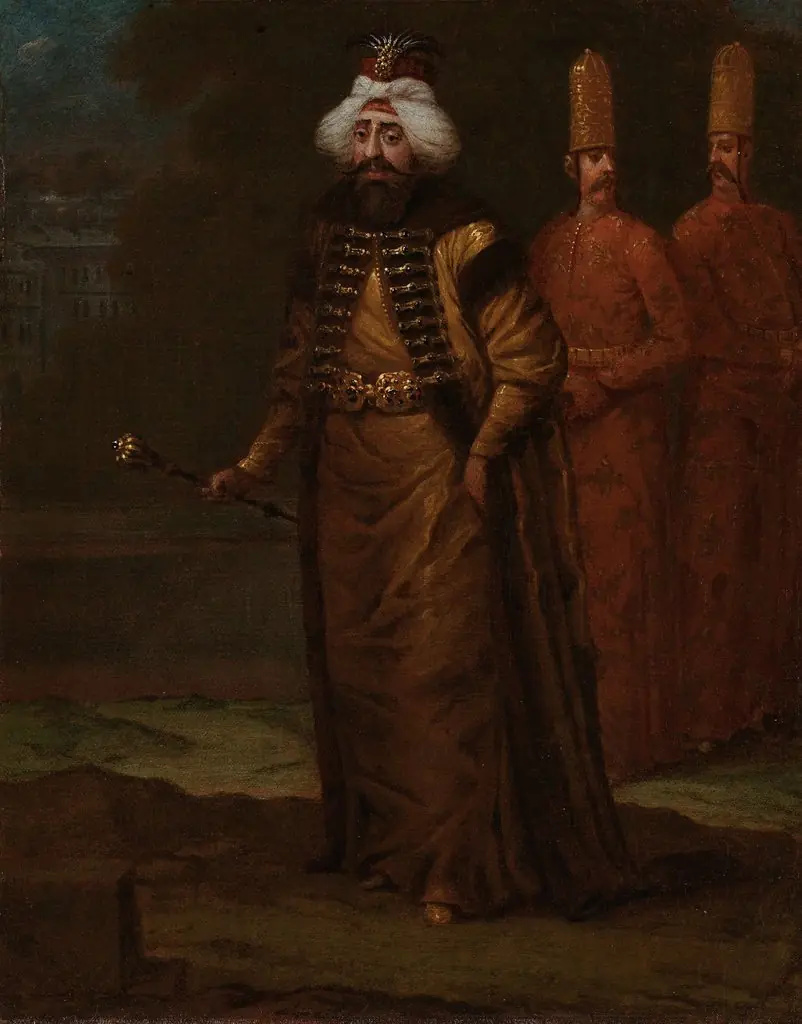
Own this work as a print
Artist & collection
Artist
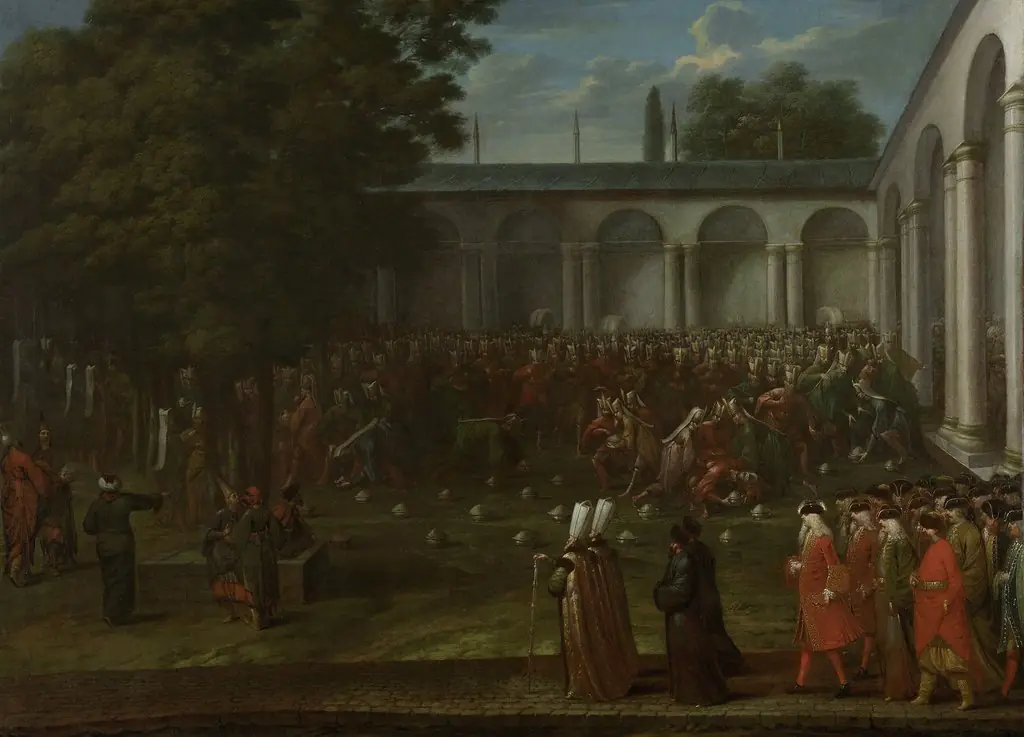
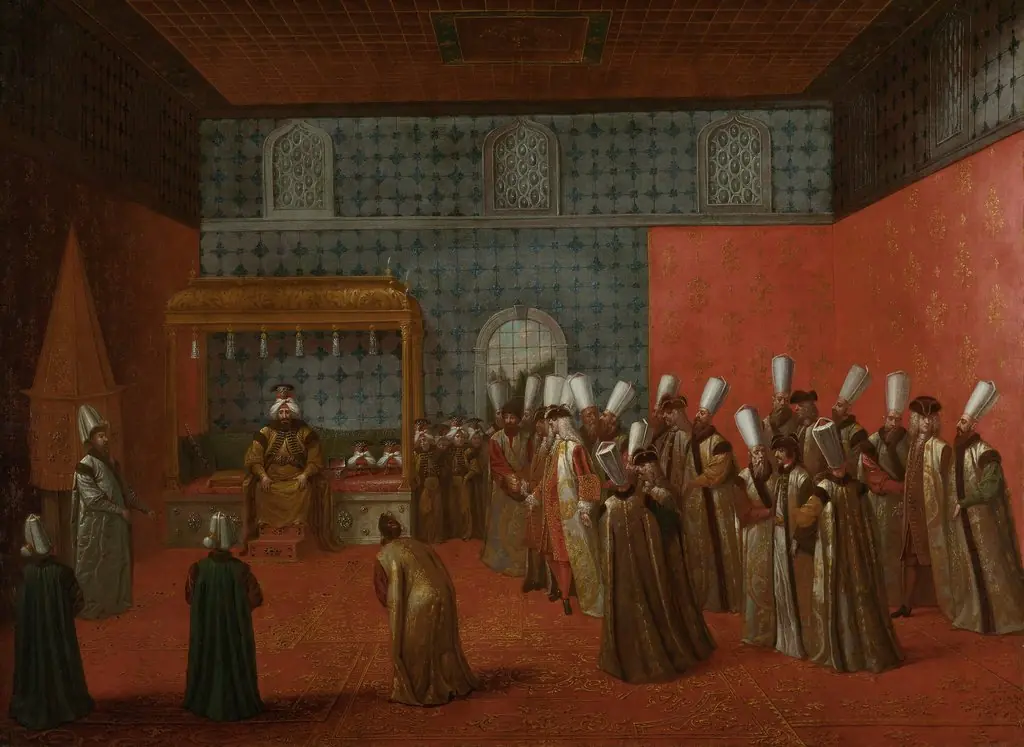
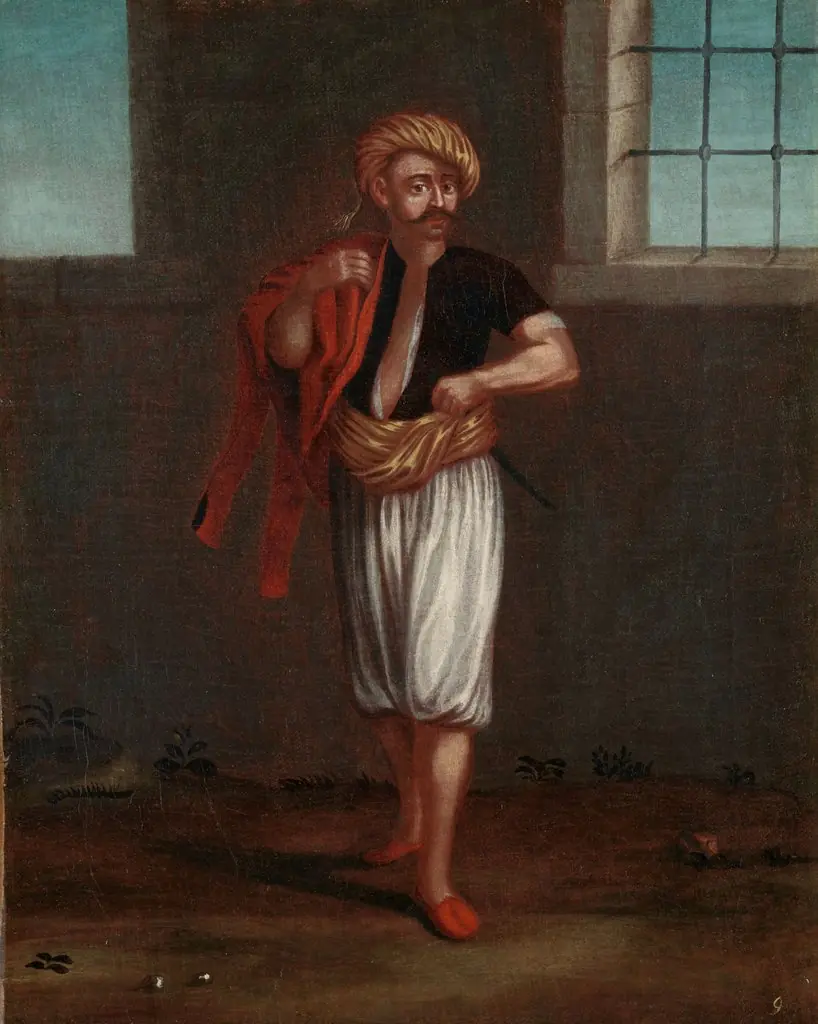
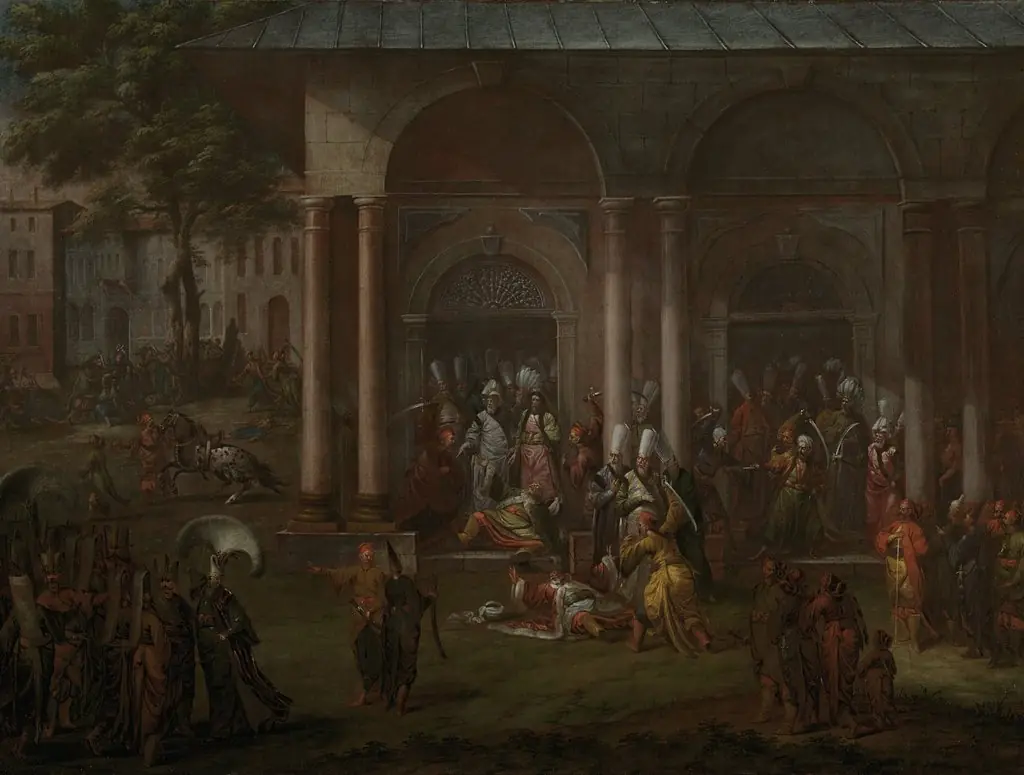
Jean Baptiste Vanmour or Van Mour (9 January 1671 – 22 January 1737) was a Flemish-French painter, remembered for his detailed portrayal of life in the Ottoman Empire during the Tulip Era and the rule of Sultan Ahmed III.

 Sultan Mahmud I
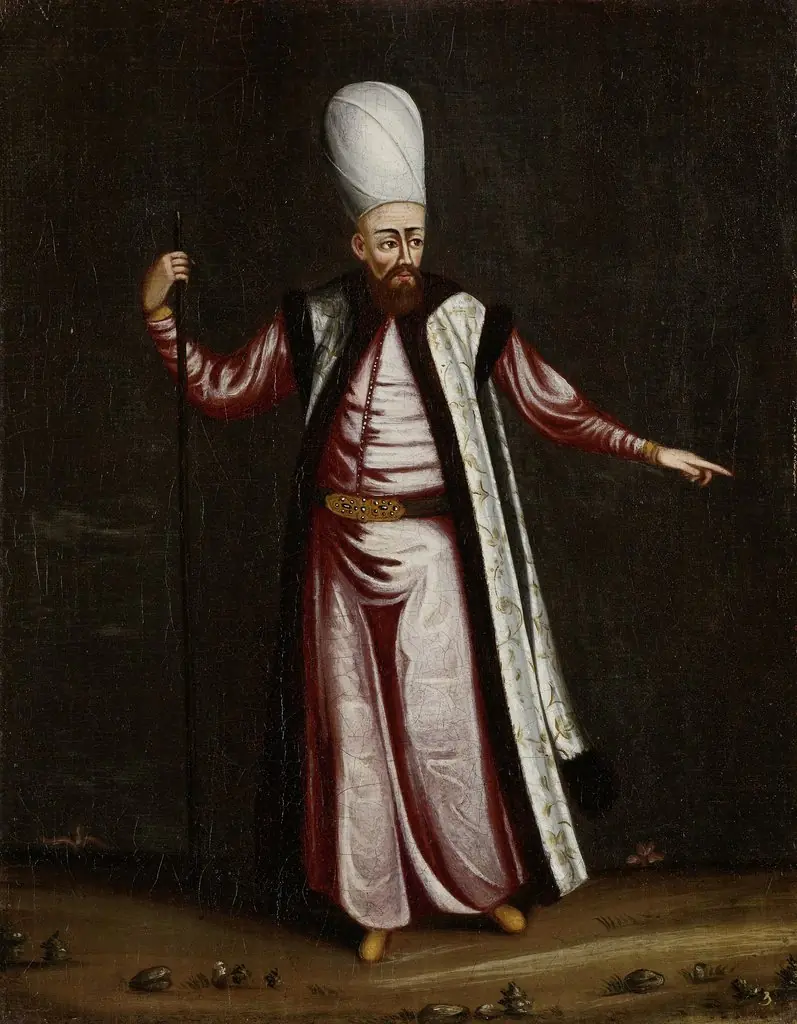 The Capoudgi Bachi, Grand-master of the Seraglio
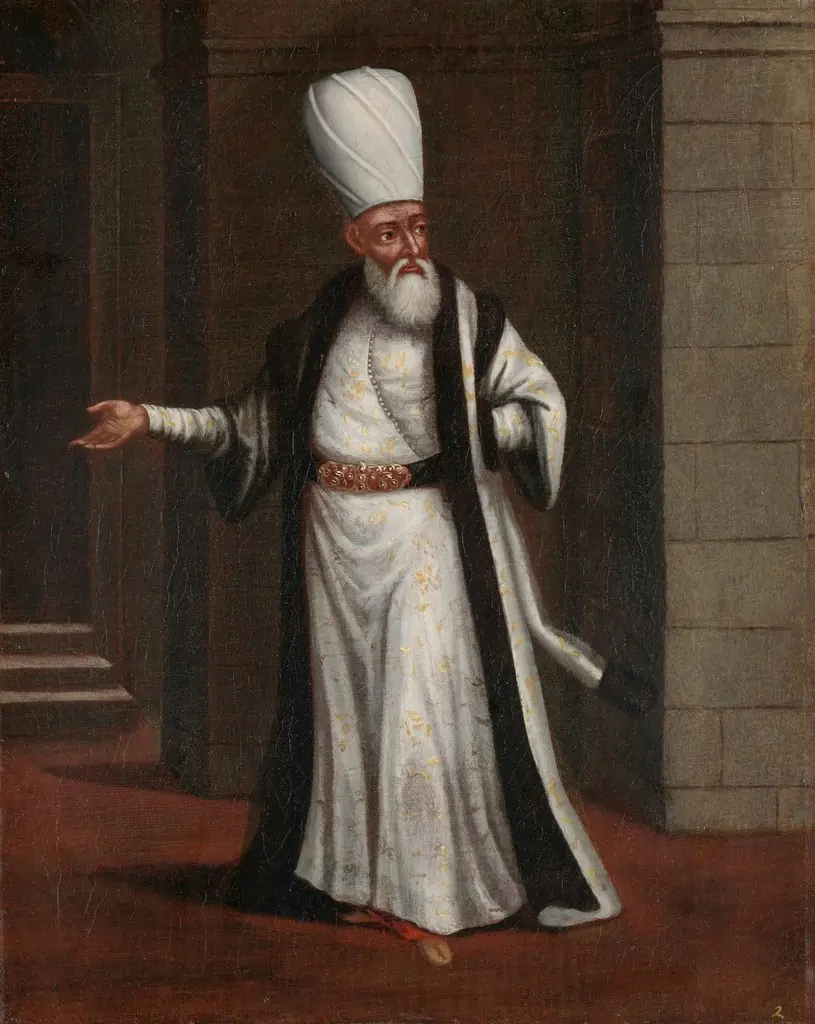 The Janissary Aga, Commander-in-Chief of the Janissaries
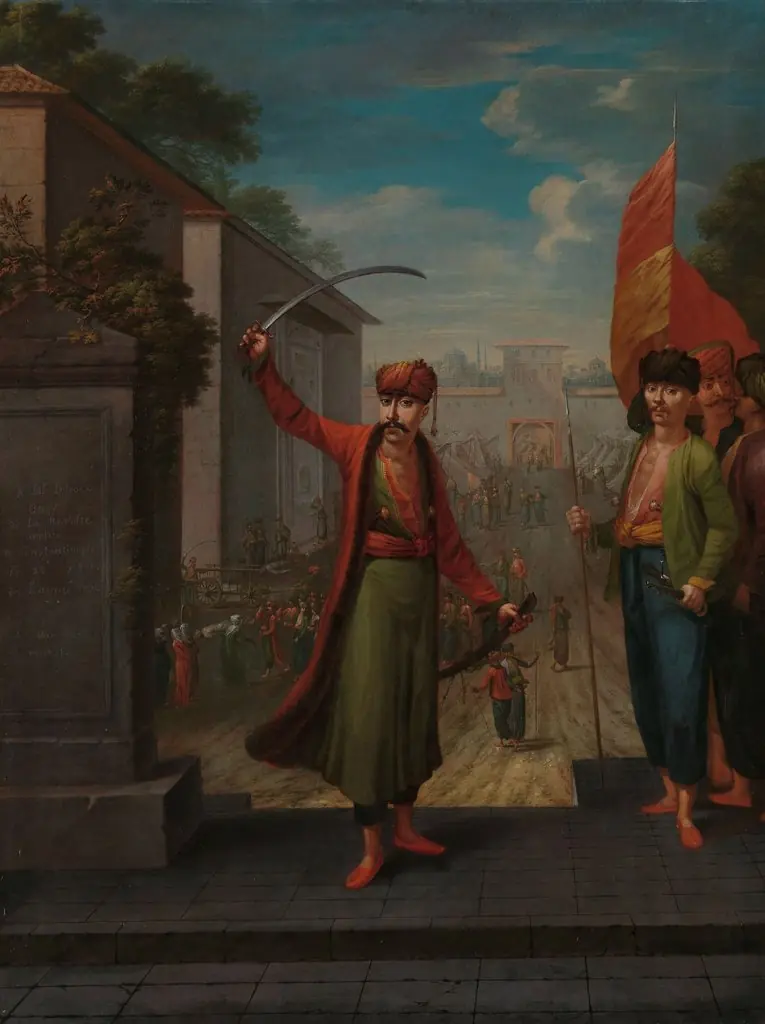
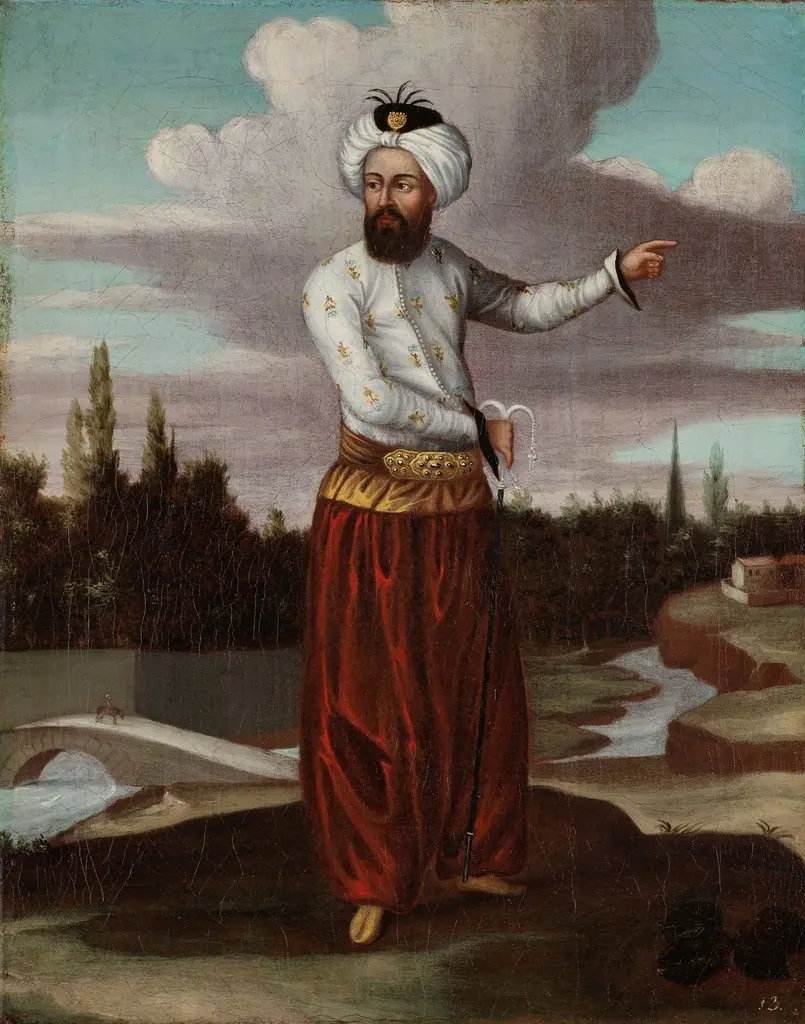 A Chaous, a Courier to the Sultan
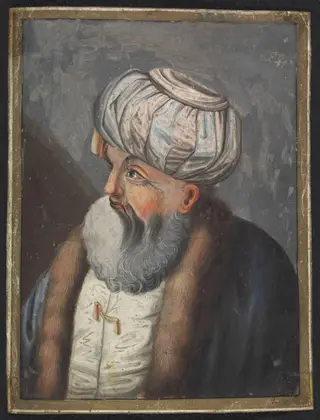 Portrait, head and shoulders, facing left, possibly of an Ottoman Pasha
 The Janissary Aga, Commander-in-Chief of the Janissaries
 Seliktar Agassi, Equerry to the Sultan (Supreme Weapon-Bearer)