Artwork
The Fourth King of Hell
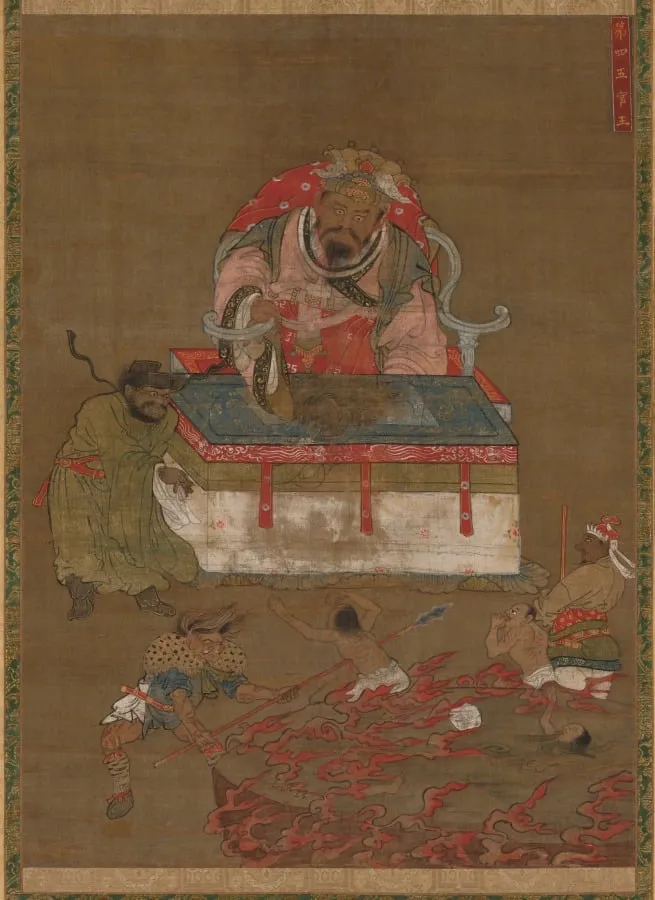
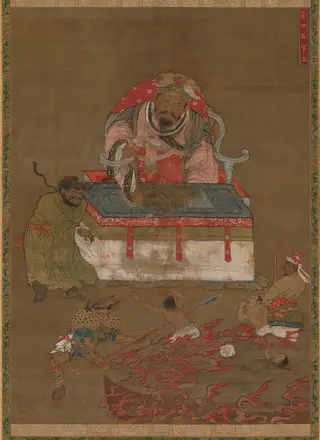
The Fourth King of Hell is an unspecified painting by the Korean Minhwa artist Unknown. It dates from 1304 and is held in the collection of the Cleveland Museum of Art. The work is a hanging scroll from Korea’s Goryeo period that forms part of a larger series of ten paintings.
- Accession no.
- 2019.224
- Credit line
- Leonard C. Hanna Jr. Fund and museum purchase from various donors by exchange and Partial Gift of The Honorable Joseph P. Carroll and Roberta Carroll, M.D.
About this work
Overview
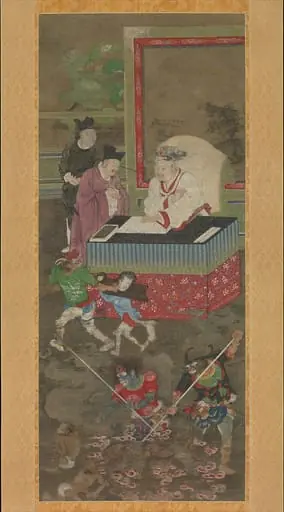
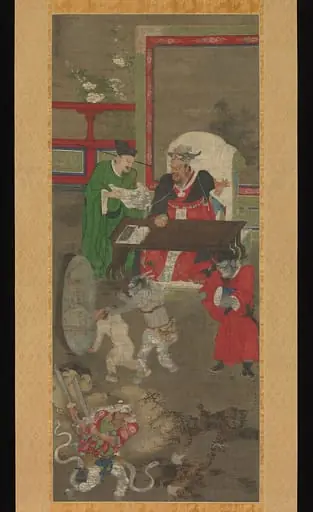
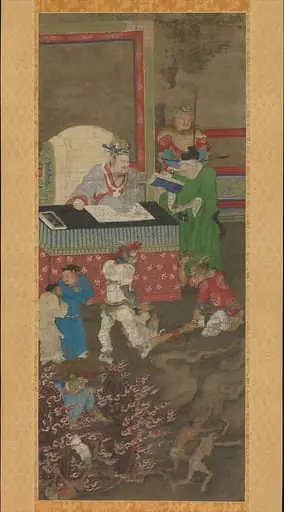
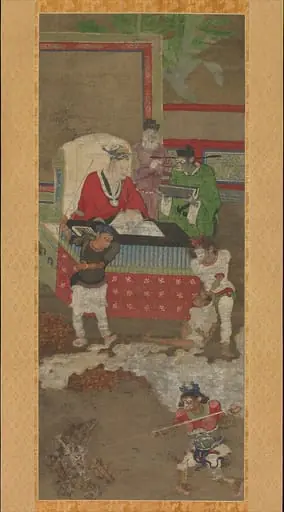
The work is a hanging scroll from Korea’s Goryeo period that forms part of a larger series of ten paintings. It portrays the Fourth King of Hell seated centrally, overseeing the punishment of condemned souls. The composition includes the king’s secretary, a massive cauldron of boiling water, and armed guards thrusting fiery spears into the suffering figures below.
Subject & Meaning
The scene illustrates a Buddhist vision of the after‑life, where the Fourth King of Hell adjudicates the fate of sinners. The king’s exaggerated, bulging eyes convey his vigilance, while the secretary records each verdict. The tormented figures in the cauldron serve as a stark moral warning, emphasizing the consequences of unethical conduct in life.
Technique & Style
Executed in the characteristic brushwork of Goryeo court workshops, the scroll employs sharp, linear contours and vivid coloration to heighten the drama. The figures are rendered with a combination of delicate detailing for the royal attendants and more aggressive strokes for the guards and suffering souls, creating a visual contrast that intensifies the narrative.
History & Provenance
The painting originates from professional workshops in the port city of Ningbo, China, where ready‑made Buddhist images were produced for export. These Chinese models influenced the Korean version, which was later incorporated into a ten‑panel series. The scroll entered the collection of the Cleveland Museum of Art, where it remains on display.
Context
During the Goryeo Dynasty, known for its refined celadon ceramics, hell paintings functioned as didactic tools, reminding viewers of Buddhist ethical teachings. By depicting the Fourth King of Hell with such vivid severity, the work reflects contemporary concerns about moral behavior and the after‑life, aligning with broader East Asian visual traditions of punitive cosmology.
Artist & collection