Artwork
The Fourth King of Hell
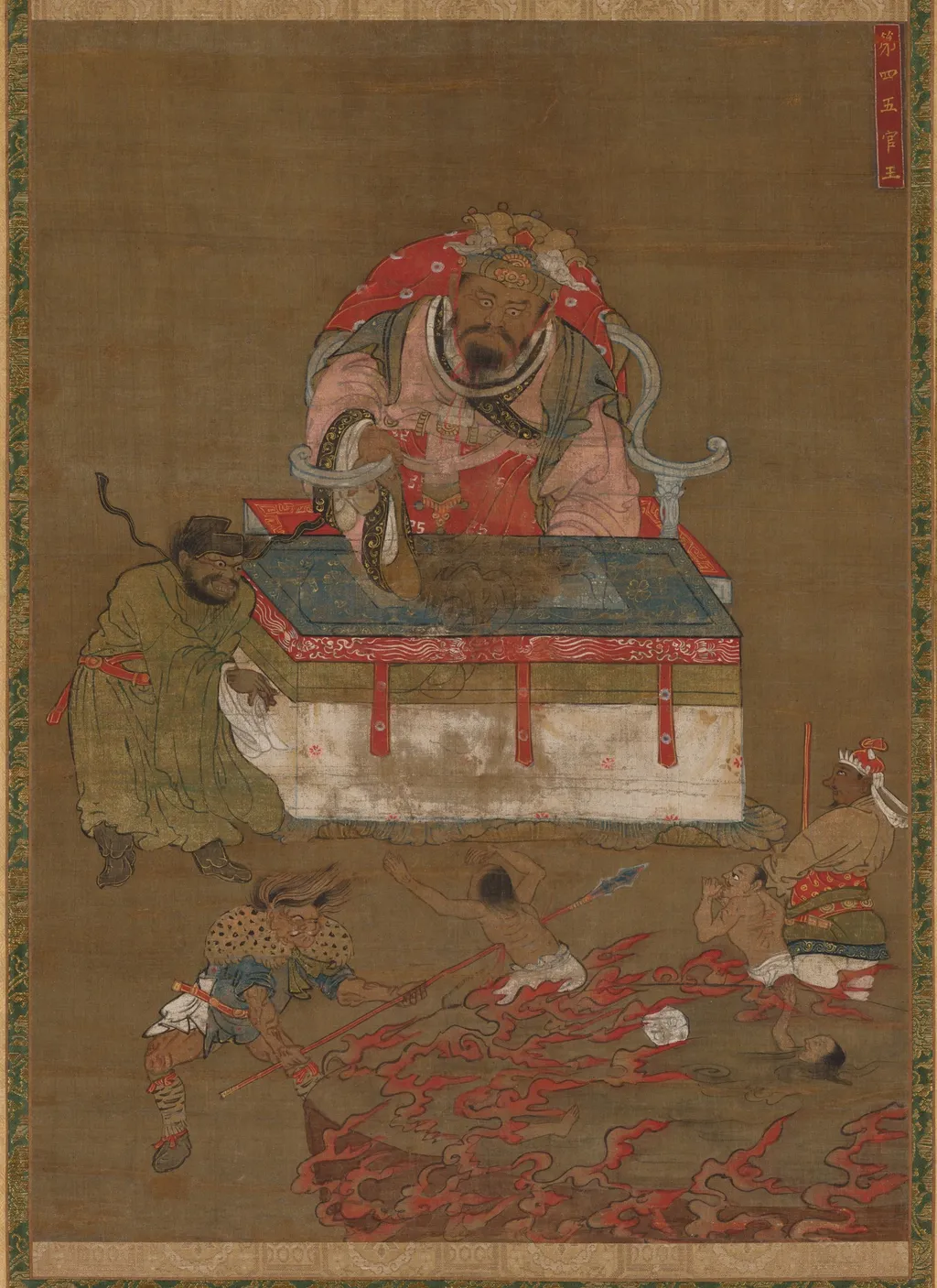
The Fourth King of Hell is an unspecified painting. It dates from 1392 and is held in the collection of the Cleveland Museum of Art.
About this work
History & Provenance
The Fourth King of Hell, a painting attributed to an unknown artist, entered the museum's holdings in 2019 and is recorded with an inception date of 1383.
The painting known as The Fourth King of Hell was created in 1383. The work is attributed to an unknown artist and is classified as a painting. It is currently held in the collection of the Cleveland Museum of Art, where it is cataloged under the accession number 2019.224.
The painting is part of the Cleveland Museum of Art collection and is cataloged under its accession number 2019.224. It has been displayed in exhibitions at the Cleveland Museum of Art.
The Fourth King of Hell, a painting attributed to an unknown artist, entered the museum's holdings in 2019 and is recorded with an inception date of 1383.
The work is listed in the museum's collection database and has been included in thematic exhibitions focusing on medieval and early modern visual culture.
Overview
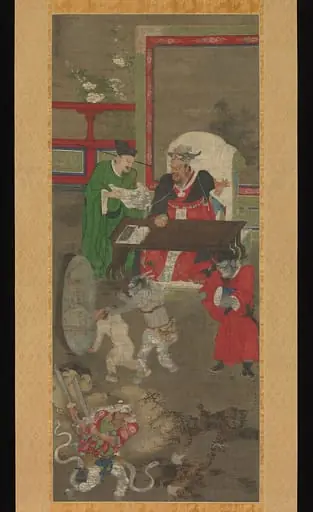
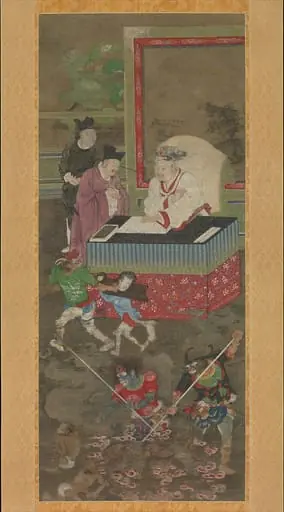
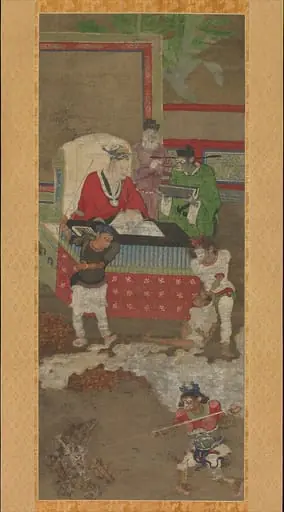
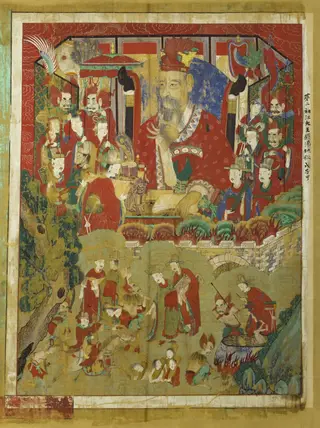
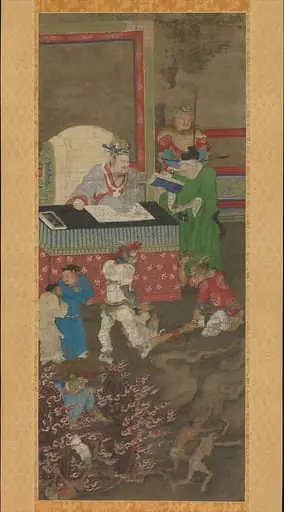
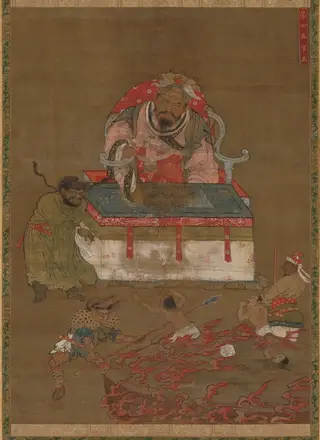
The work, titled The Fourth King of Hell, depicts a dominant figure seated upon an elaborate throne. He is dressed in a vivid red robe and wears a tall, ornate crown. Surrounding him, a tumult of smaller figures is caught in swirling red clouds, some engaged in combat, one descending, and another clutching a spear. A kneeling figure in green robes holds a scroll, while an armored presence stands to the right.
Subject & Meaning
The central seated man appears as a ruler of a chaotic realm, suggested by his regal attire and throne. The surrounding combatants and falling figures convey conflict and disorder, perhaps alluding to mythological or infernal narratives. The presence of a scroll‑bearing figure in green may indicate a record‑keeping or advisory role, while the armored figure could represent a guardian or enforcer within this imagined hierarchy.
Technique & Style
The composition relies on strong contrasts, with the throne’s red and gold hues set against a dark background that heightens drama. The swirling red clouds create a sense of movement, enveloping the figures and linking the chaos visually. The artist employs a vivid palette and detailed rendering of garments and armor, emphasizing hierarchy through color and position while maintaining a cohesive, turbulent atmosphere.
Context
The painting’s dramatic use of color, mythic subject matter, and crowded, dynamic arrangement align it with traditions of allegorical and fantastical art that explore infernal or otherworldly themes. Its emphasis on a singular, powerful ruler surrounded by conflict reflects longstanding visual conventions for depicting dominion over chaos, a motif that appears across various cultural depictions of underworld monarchs.
Artist & collection