Artwork
Reverend William Lupton Johnson
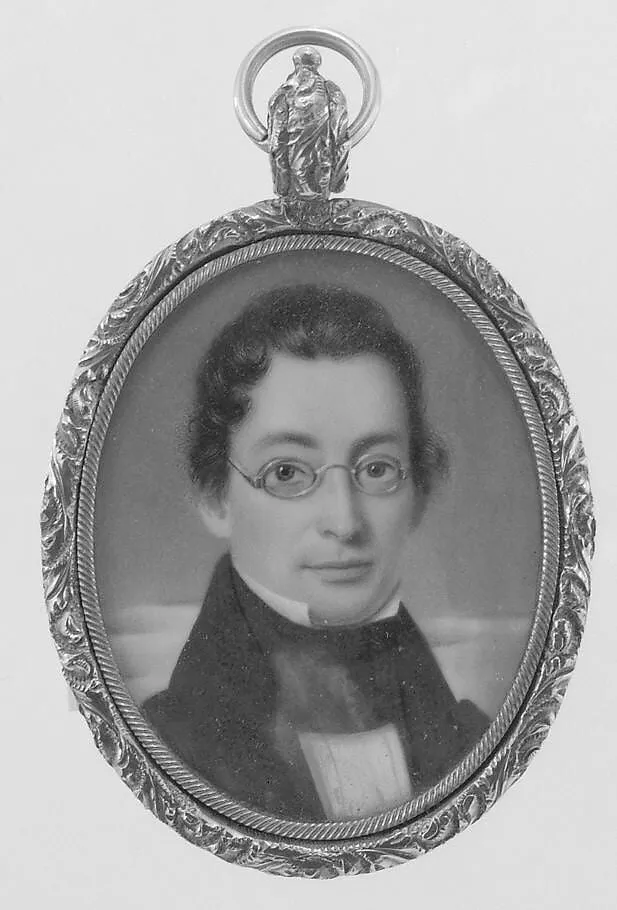
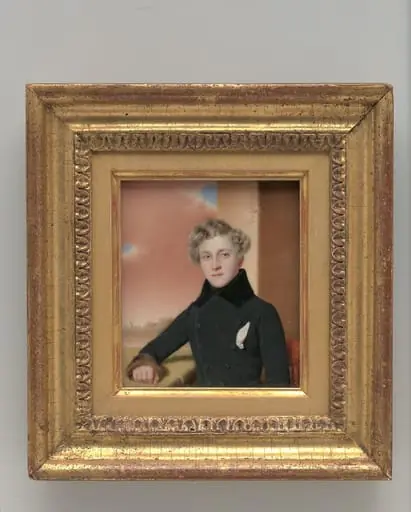
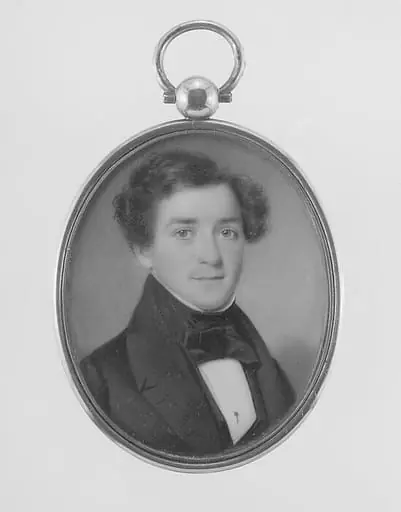
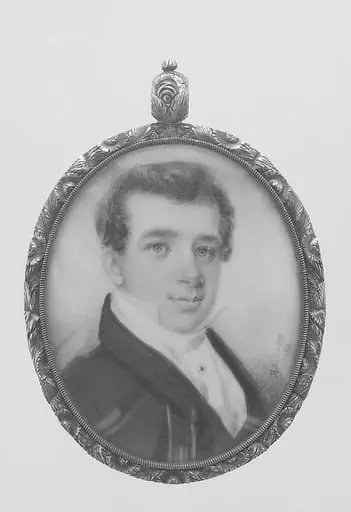
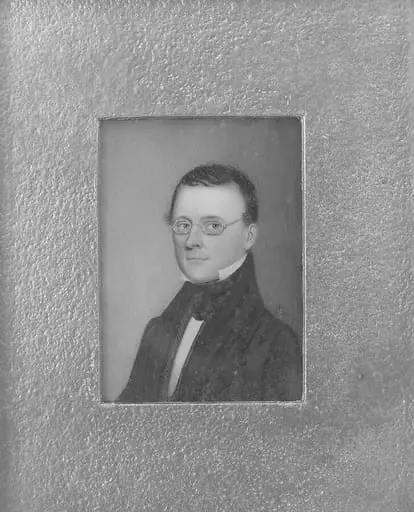
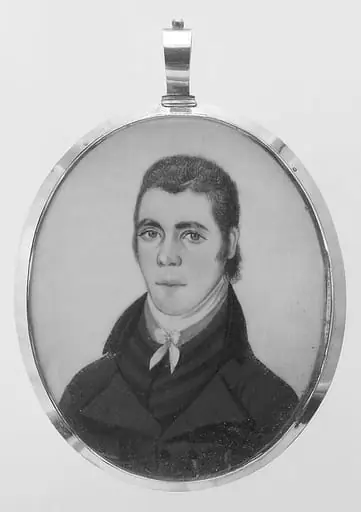
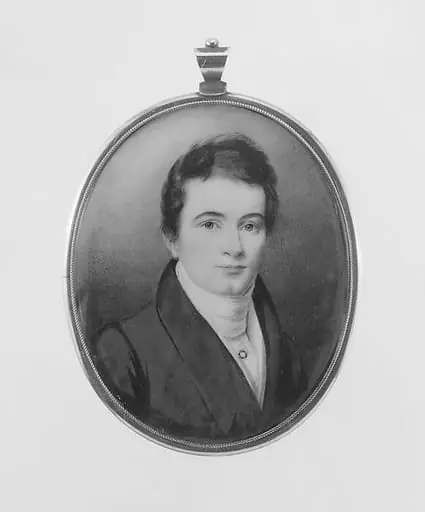
Reverend William Lupton Johnson is a watercolor painting by the American Folk Art artist John Wood Dodge. It dates from 1834 and is held in the collection of the Metropolitan Museum of Art.
About this work
Subject & Meaning
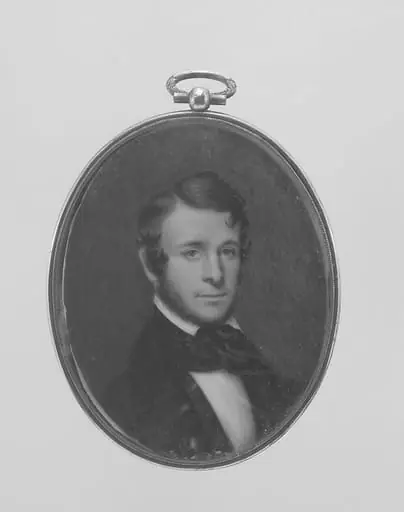
The painting portrays Reverend William Lupton Johnson, a 19th-century clergyman, rendered in watercolor on ivory by John Wood Dodge in 1834.
The painting portrays Reverend William Lupton Johnson, a 19th-century clergyman, rendered in watercolor on ivory by John Wood Dodge in 1834. As a portrait within the American Wing of the Metropolitan Museum of Art, the work functions as a visual record of the sitter's clerical office, emphasizing his status and personal presence. The composition, typical of contemporary portraiture, conveys dignity through formal attire and a straightforward pose, while the medium's delicacy underscores the intimate nature of the depiction.
Thus the image serves both as a documentation of Johnson's appearance and as a symbolic expression of his religious vocation within the early American cultural context.
Technique & Style
Reverend William Lupton Johnson is a portrait miniature executed in watercolor on ivory, a medium characteristic of early-nineteenth-century American portraiture. The work measures 4.2 by 3.3 inches, dimensions typical of intimate miniature paintings designed for personal possession. John Wood Dodge employed the delicate, precise handling that ivory supports demand, utilizing the smooth, luminous surface to achieve fine detail and subtle tonal gradations.
The watercolor medium, applied to this thin, polished support, would have produced the characteristic translucent layers and smooth finish associated with portrait miniatures of this era. The small scale and refined technique reflect the conventions of the genre, prioritizing meticulous rendering of facial features and a polished, elegant presentation suitable for close viewing.
History & Provenance
Created in 1834, this watercolor on ivory portrait depicts Reverend William Lupton Johnson. The work was executed by the artist John Wood Dodge. While specific details regarding the original commission or the full chain of private ownership prior to its museum acquisition are not provided in the available records, the piece is currently held in the collection of the Metropolitan Museum of Art within its American Wing.
The physical dimensions of the ivory support are recorded as 4.2 by 3.3 inches, and the work's inception is dated to 1834.
Reverend William Lupton Johnson is housed in the Metropolitan Museum of Art in New York, where it is listed under the American Wing's portrait category. The watercolor on ivory, painted by John Wood Dodge in 1834, measures 4.2 by 3.3 inches and is recorded in the museum's collection database. No accession number is published in the available documentation, and the work has not been featured in documented exhibition catalogs to date.
Overview
Painted in 1834 by John Wood Dodge, this miniature portrait depicts Reverend William Lupton Johnson. Executed in watercolor on ivory, the work exemplifies the refined technique of American miniature painting during the early nineteenth century. The composition features the sitter seated against a dark, neutral background, which isolates his figure and emphasizes the contrast of his white collar against a black suit.
His hands rest formally upon a book, likely signifying his clerical vocation and intellectual pursuits. Dodge renders the face with a smooth, porcelain-like finish, a characteristic effect achieved by painting on the translucent ivory support, which allows light to reflect from within the material and creates a luminous skin tone. This piece dates from a period when Dodge was establishing his reputation as a leading miniaturist in New York, working in a tradition that valued precise detail and psychological presence within a compact format.
The work serves as a testament to the enduring popularity of ivory miniatures before the widespread adoption of photography, capturing the dignified bearing of a religious figure with the intimacy and delicacy specific to the medium.
Context
In an era when large-scale oil paintings dominated portraiture, this miniature watercolor on ivory offered an alternative. Its intimate size, smaller than a playing card, and delicate medium lent it a personal quality. Such works were often cherished as private mementos, providing a more intimate and less public representation of the sitter compared to grander canvas works.
Artist & collection