Artwork
Saint Peter
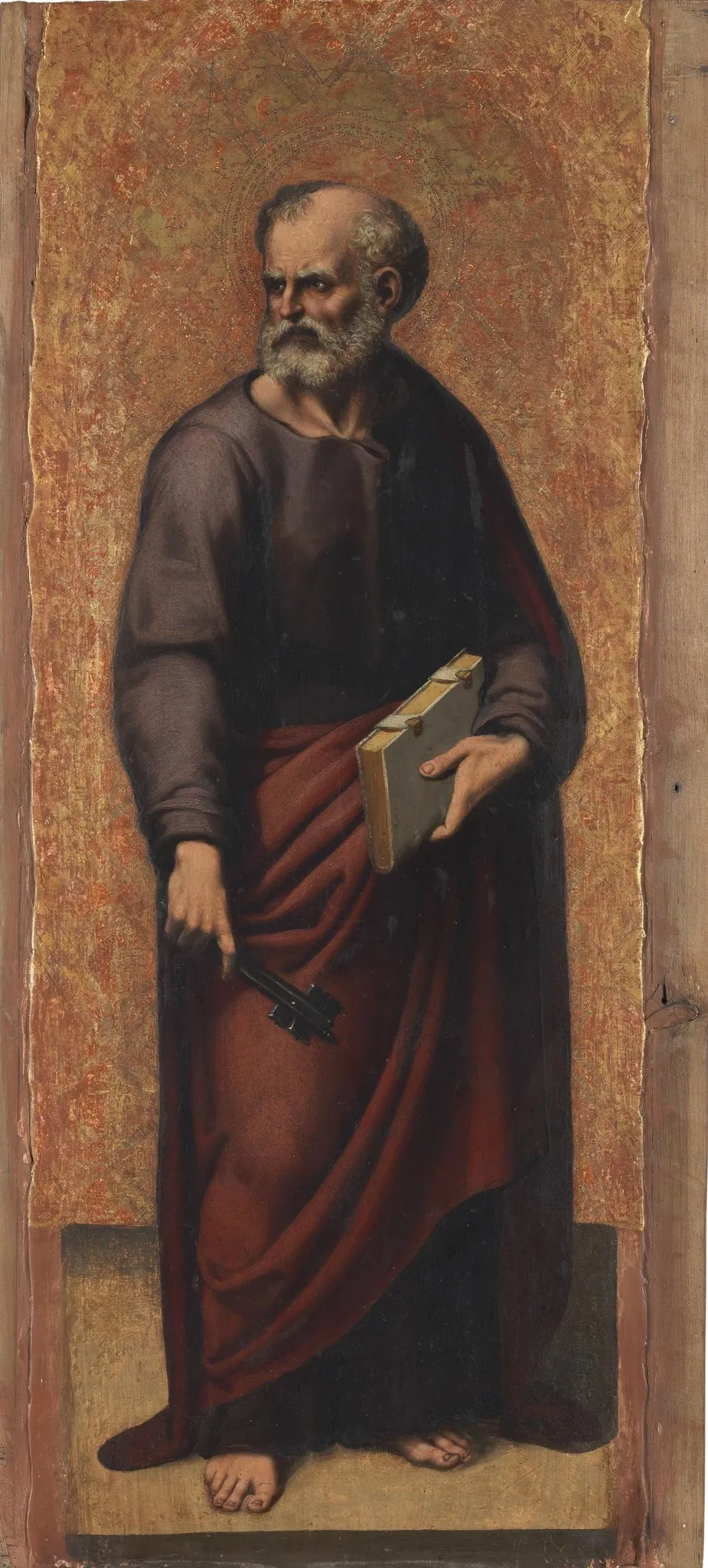
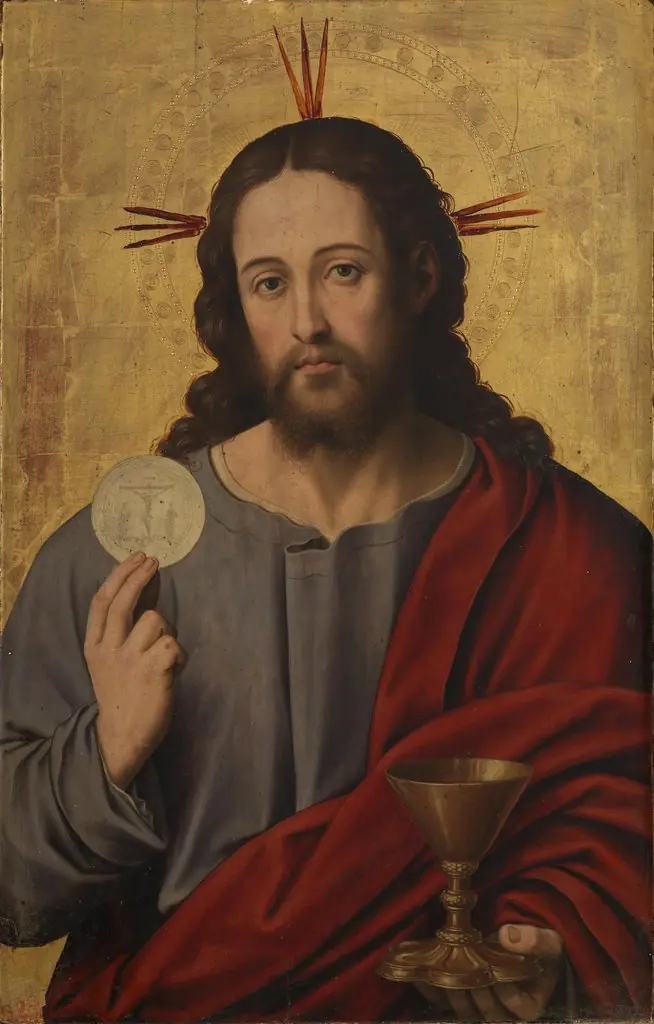
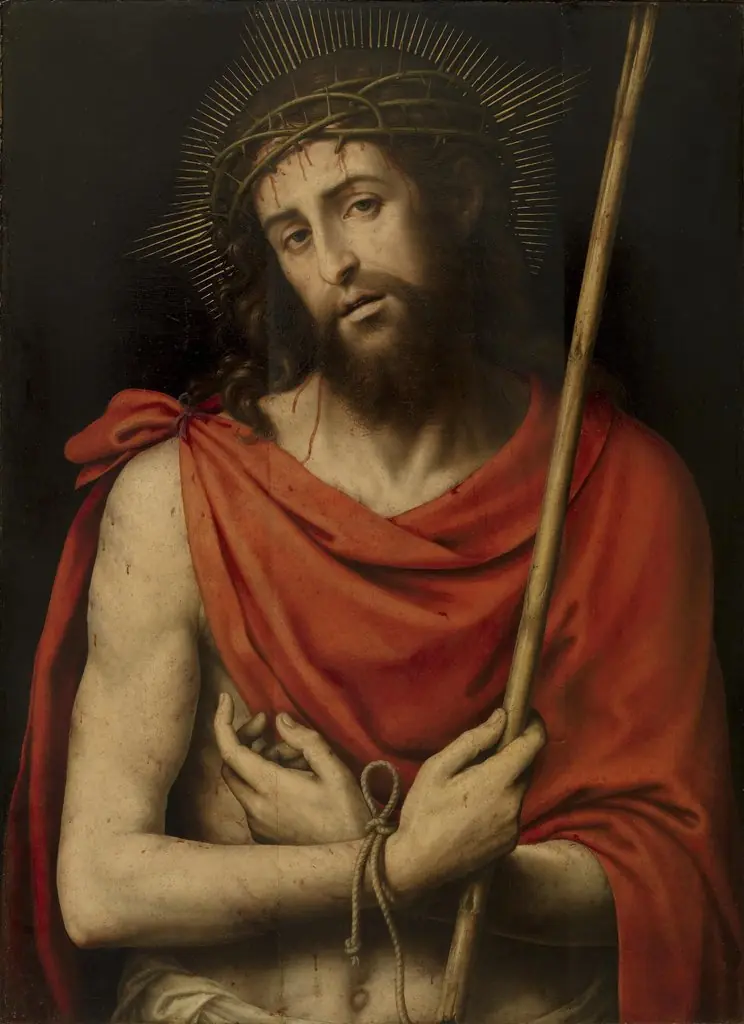
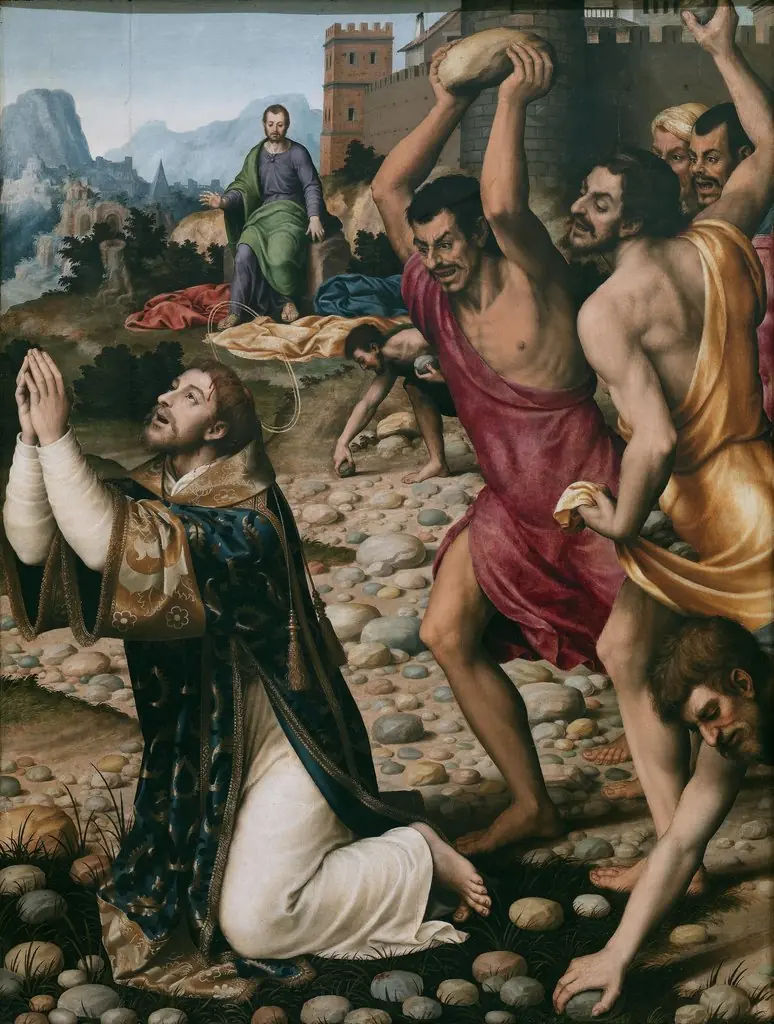
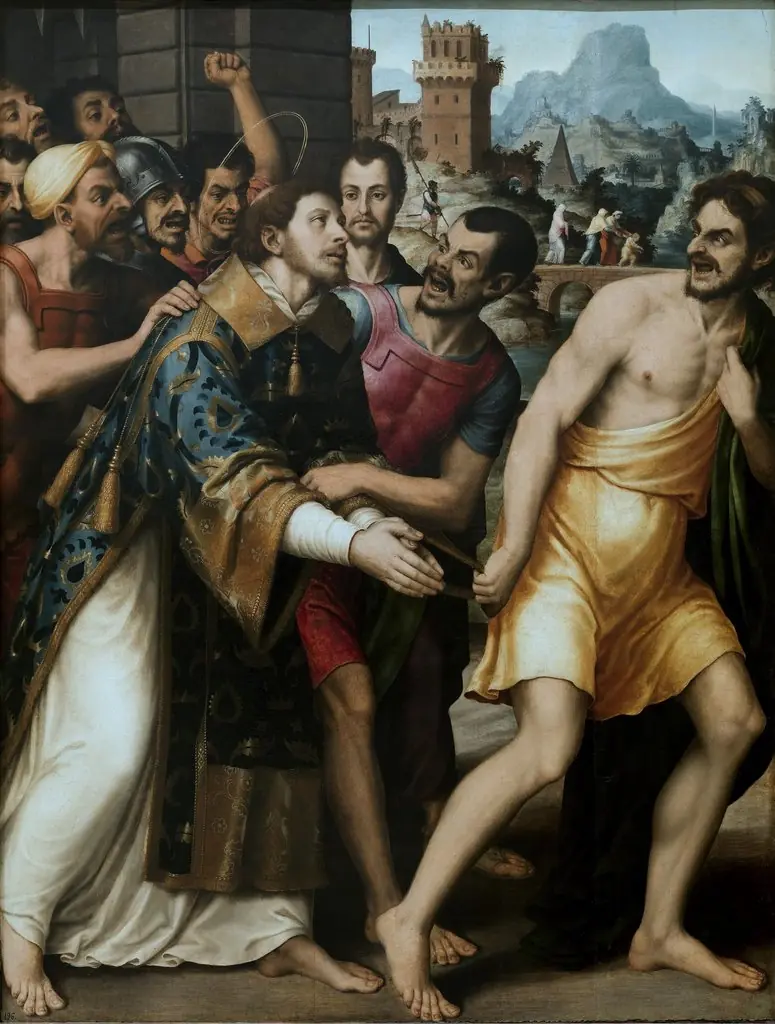
Saint Peter is an oil painting by the Mannerist artist Juan de Juanes. It dates from 1536 and is held in the collection of the Museo del Prado.
About this work
Subject & Meaning
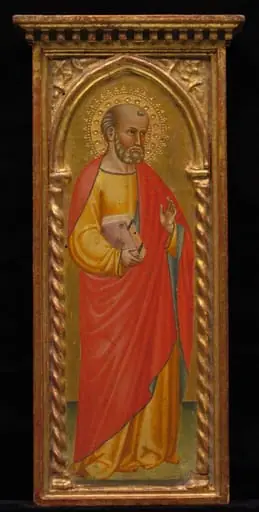
The painting depicts Saint Peter, identified as the main subject of the work. Created by Juan de Juanes in the mid-1530s, the piece falls within the religious art genre. As a religious painting, the work represents the veneration of the apostle, focusing entirely on his figure as the central iconographic element.
Technique & Style
The work is an oil painting executed on a wooden panel, measuring 88 cm in height by 40 cm in width.
The work is an oil painting executed on a wooden panel, measuring 88 cm in height by 40 cm in width. Juan de Juanes rendered Saint Peter with a restrained palette and clear modeling, emphasizing the saint’s contemplative expression and the tactile quality of his drapery. The brushwork exhibits a characteristic blend of Venetian colorito and the narrative clarity of Italian Renaissance models, while the surface remains largely intact, showing only minor craquelure associated with age.
History & Provenance
Saint Peter is an oil painting on panel executed by Juan de Juanes. The work dates to 1536, with the inception recorded as 1536–1537.
The painting belongs to the collection of the Museo del Prado, where it is held today. No further details of commission, intermediate ownership, or acquisition history are documented in the available sources.
Juan de Juanes's painting Saint Peter, created between 1536 and 1537, is held in the collection of the Museo del Prado in Madrid. The work is executed in oil paint on a panel measuring 88 cm in height and 40 cm in width. While the artwork is confirmed as part of the museum's holdings, the provided sources do not specify an inventory or accession number. Additionally, the available documentation contains no record of specific exhibitions where this piece has been displayed.
Context
Juan de Juanes painted Saint Peter in 1536 as an oil on panel work housed in the Museo del Prado, where it remains part of the permanent collection. The painting depicts the apostle with traditional attributes of keys and martyrdom, reflecting Counter-Reformation emphasis on saintly authority. Art historians situate this work within the artist's mature period, noting its compositional clarity and naturalistic rendering as exemplars of Valencian Renaissance painting.
Legacy
The painting's influence is tied to its role within the oeuvre of Juan de Juanes and its presence in a major institutional collection. Its depiction of Saint Peter aligns with Counter-Reformation themes of apostolic authority and martyrdom, reflecting broader artistic trends in 16th-century Spanish religious art. The work's attribution and dating to 1536, documented in archival records, contribute to scholarly understanding of the artist's development during this period.
Its continued presentation in a public museum setting ensures ongoing visibility, supporting its recognition as part of Spain's cultural patrimony.
Overview
This oil painting, titled 'Saint Peter', is the work of Juan de Juanes, a prominent artist of the Valencian school during the Spanish Renaissance.

Artist & collection
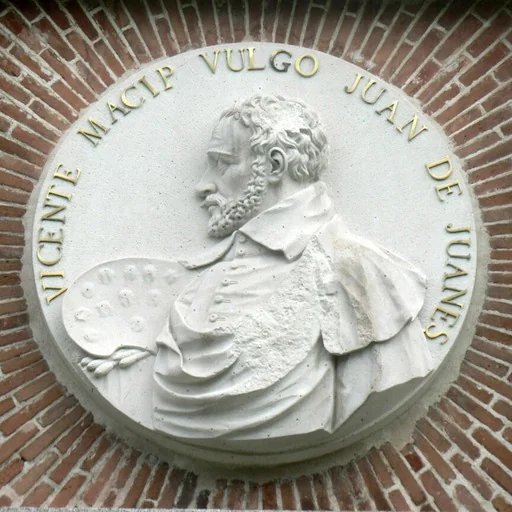
Artist
Vicente Juan Masip (also known as Joan de Joanes) (1507 – 1579) was a Spanish painter of the Renaissance period.