Artwork
White-Robed Guanyin
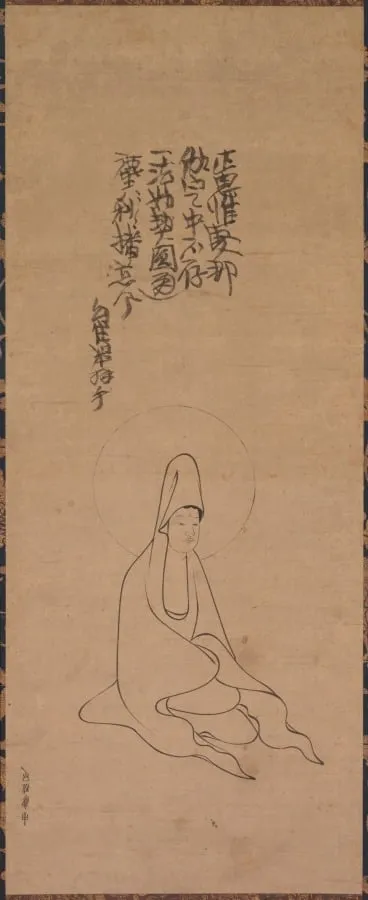
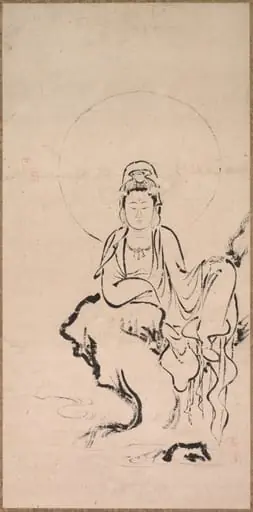
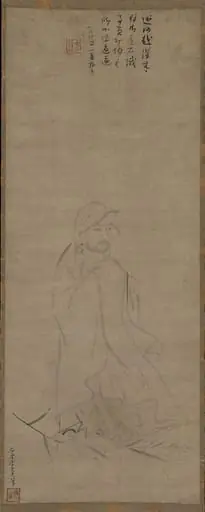
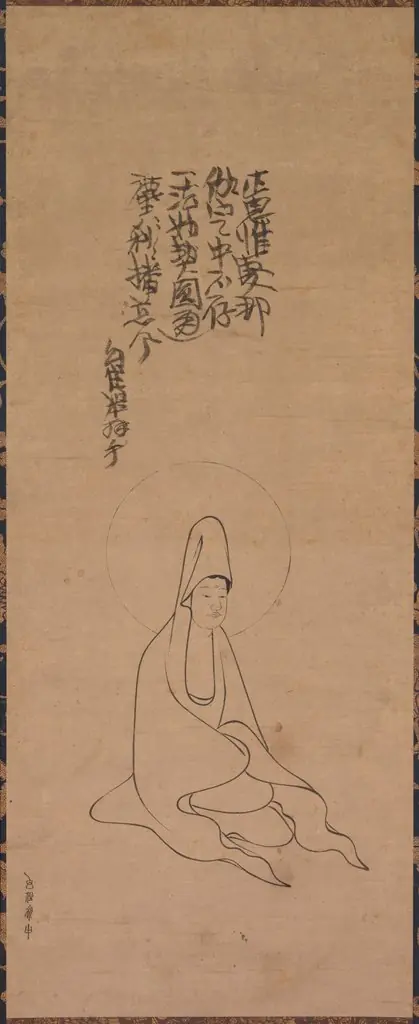
White-Robed Guanyin is an unspecified painting by the Ming dynasty painting artist Jueji Yongzhong. It dates from 1300 and is held in the collection of the Cleveland Museum of Art. The painting presents Guanyin, the bodhisattva associated with boundless compassion, rendered in a stark, monochrome manner.
- Accession no.
- 1978.47.1
- Credit line
- Purchase from the J. H. Wade Fund
About this work
Most paintings of Guanyin from this time are detailed and colorful, but this one feels almost like a sketch, just enough lines to suggest peace and quiet.
You see a single figure in a flowing white robe, sitting on a rock with a few quick brushstrokes of ink.
This is Guanyin, the Buddhist figure of compassion, shown here in a rare, simple form. Most paintings of Guanyin from this time are detailed and colorful, but this one feels almost like a sketch, just enough lines to suggest peace and quiet. The artist left out backgrounds, faces, even hands, so the robe itself seems to hold the meaning.
To see how other Yuan-dynasty artists handled ink figures, look up china, yuan dynasty (1271-1368).
Overview
The painting presents Guanyin, the bodhisattva associated with boundless compassion, rendered in a stark, monochrome manner. The figure is seated on a rock that suggests the sacred island of Putuo, a site linked to Guanyin’s mythic residence off the coast of present‑day Ningbo in Zhejiang Province. The work relies on a handful of ink strokes to convey the presence of the deity.
Subject & Meaning
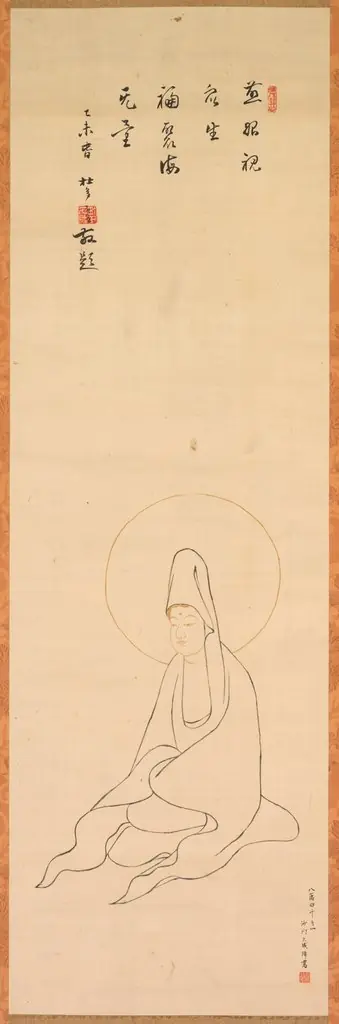
In Buddhist tradition Guanyin manifests in countless guises; this version adopts a white robe, a symbol of purity and mercy. By stripping away elaborate detail, the artist emphasizes the spiritual essence of compassion, allowing the simple drapery and posture to evoke serenity and the protective aura traditionally attributed to the bodhisattva.
Technique & Style
Executed with rapid, economical brushwork, the composition consists of a few decisive ink lines that outline the robe and the supporting rock. The absence of facial features, hands, or background creates a sketch‑like quality, focusing attention on gesture and form rather than decorative embellishment, a departure from the richly colored Guanyin images common in the period.
History & Provenance
An inscription above the figure is attributed to Zhongfeng Mingben, a preeminent Chan master of the Yuan era, indicating the painting’s connection to contemporary religious practice. The artist’s seal, Huanzhu Yongzhong, appears below on the left, providing a rare signature that helps identify the work’s creator within the Yuan artistic milieu.
Context
During the Yuan dynasty (1271–1368), ink brushwork was a favored medium among scholar‑artists who valued spontaneity and personal expression. This piece aligns with that aesthetic, reflecting the period’s inclination toward minimalist representation of sacred subjects, contrasting with the more elaborate, polychrome depictions prevalent in earlier Song and later Ming works.
Legacy
The painting exemplifies a restrained approach to Buddhist iconography that influenced later Zen and Chan visual traditions, where the suggestion of form often superseded detailed realism. Its concise execution continues to be referenced in studies of Yuan ink painting as a model of spiritual economy in visual art.
Artist & collection