Artwork
狩野探幽筆 『画苑』|Famous Themes for Painting Study Known as “The Garden of Painting” (Gaen)
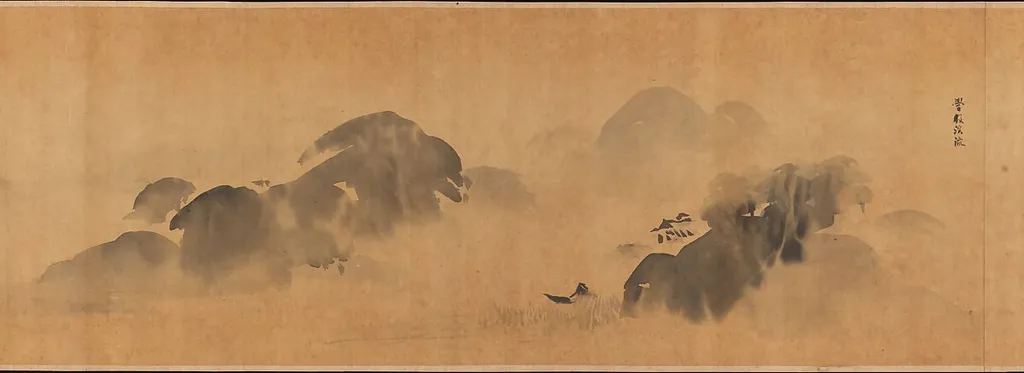
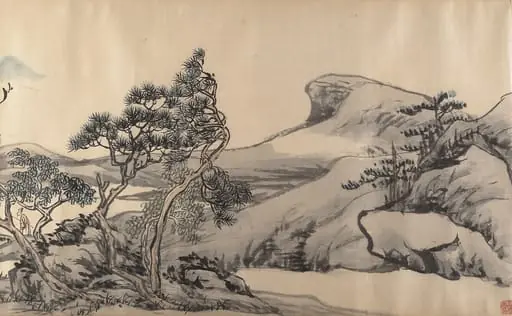
狩野探幽筆 『画苑』|Famous Themes for Painting Study Known as “The Garden of Painting” (Gaen) is an ink painting by the Baroque artist Kano Tan'yū. It dates from 1670 and is held in the collection of the Metropolitan Museum of Art.
- Accession no.
- 1975.268.52
- Credit line
- The Harry G. C. Packard Collection of Asian Art, Gift of Harry G. C. Packard, and Purchase, Fletcher, Rogers, Harris Brisbane Dick, and Louis V. Bell Funds, Joseph Pulitzer Bequest, and The Annenberg Fund Inc. Gift, 1975
About this work
Technique & Style
The piece forms part of a pair of handscrolls, reflecting the material practice of using paper support for ink-based compositions in early Edo-era Japanese art.
The work is a handscroll dating to 1670, executed in ink on paper as its medium and support. As a painting classified as a landscape, it portrays a traditional landscape motif typical of the Edo period. The piece forms part of a pair of handscrolls, reflecting the material practice of using paper support for ink-based compositions in early Edo-era Japanese art.
It is held in the Metropolitan Museum of Art collection with dimensions of 27.6 cm height and 324.2 cm width.
History & Provenance
The handscroll known as Gaen (The Garden of Painting) was created by the Edo-period master Kanō Tan'yū in 1670. Executed in ink on paper, this landscape work was produced in Japan as one of a pair of scrolls intended for the study of famous painting themes. The piece measures 27.6 cm in height and 324.2 cm in width. It is held within the collection of the Metropolitan Museum of Art under accession number 1975.268.52.
Context
Kanō Tan'yū's handscroll The Garden of Painting (1670) exemplifies Edo-period landscape practice and is frequently cited in scholarship as a representative work of the Kanō school's synthesis of Chinese-inspired composition and Japanese decorative flair. The painting's inclusion in the Metropolitan Museum's collection and its designation as a landscape genre piece underscore its recognized status within the artist's broader oeuvre, which encompassed both monumental screen works and intimate study pieces. Researchers view the piece as a key example of the "Famous Themes for Painting Study" series, reflecting contemporary aesthetic discourse on natural scenery and artistic pedagogy.
Overview
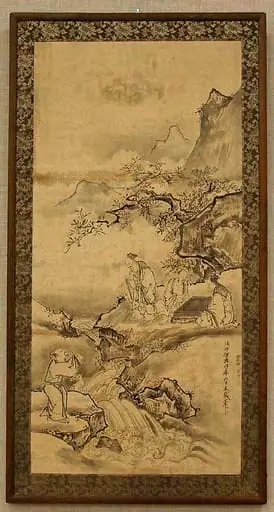
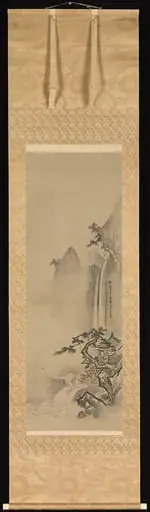
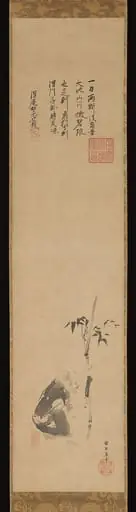
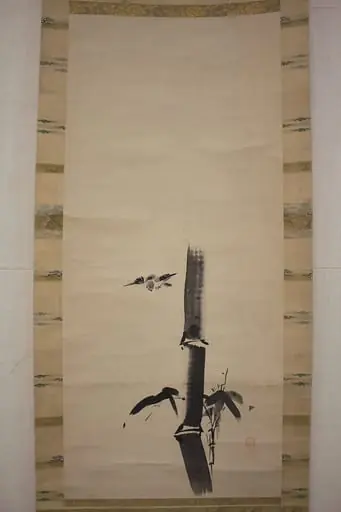
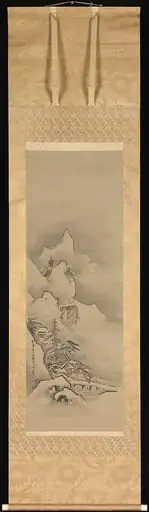
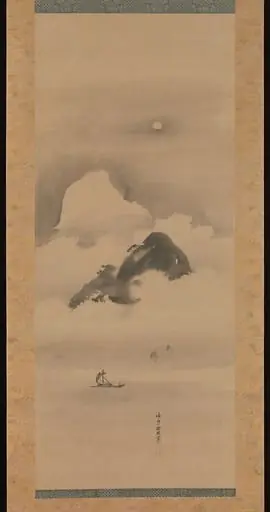
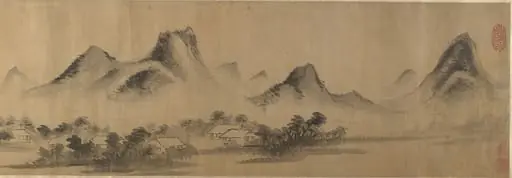
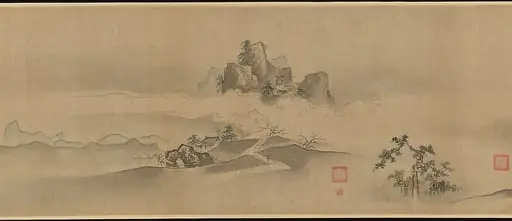
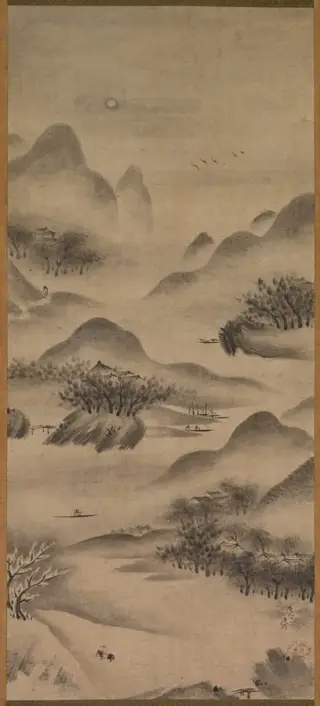
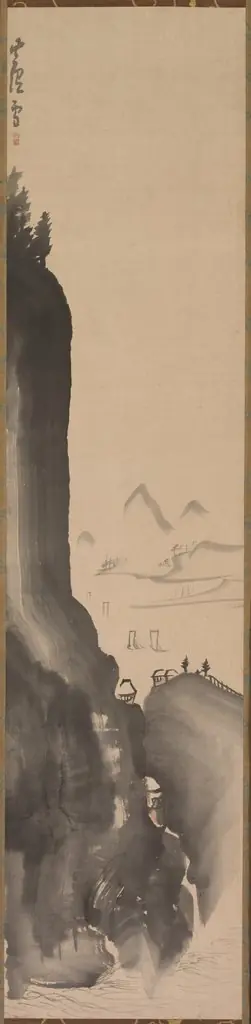
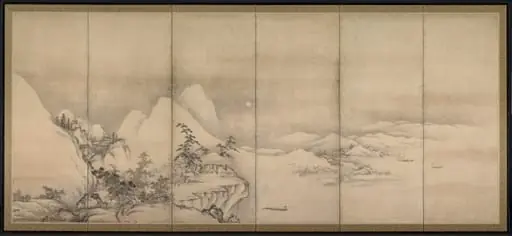
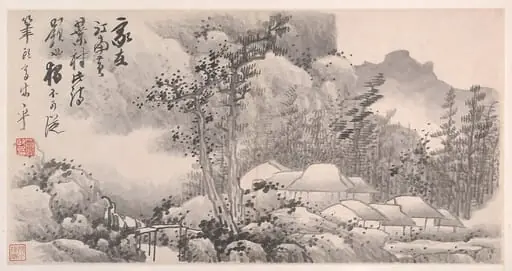
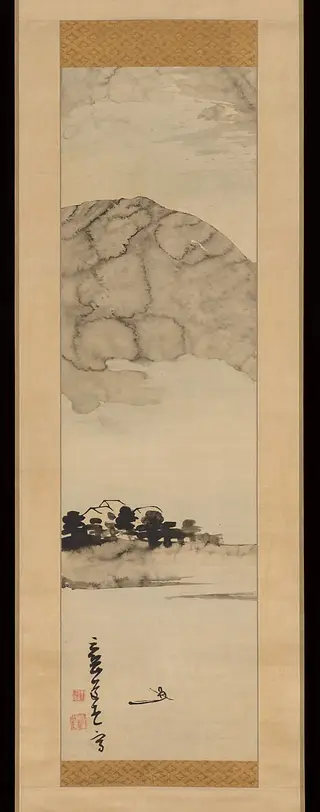
Created in 1670 by Kano Tan'yū, the leading painter of the Edo period, this handscroll titled 'The Garden of Painting' (Gaen) serves as an instructional compendium of landscape motifs. Executed in ink on paper, the work is one of a pair designed to guide aspiring artists through canonical Japanese painting themes. The composition unfolds as a continuous river valley, featuring mist-shrouded mountains, delicate fishing boats, and a distant arched bridge.
Tan'yū employs a restrained palette of ink washes, varying from deep, solid strokes to ethereal, breath-like gradients that suggest atmospheric depth. Rather than depicting a single specific location, the scroll aggregates idealized scenes that represent established conventions of the Kano school. Produced late in the artist's career, shortly before his death, the work synthesizes his mastery of Chinese-inspired ink techniques with native Japanese aesthetic sensibilities.
It stands as a significant pedagogical document, preserving the visual vocabulary Tan'yū deemed essential for the training of painters within the official Kano lineage.
Subject & Meaning
Gaen serves as an instructional compendium, illustrating established landscape themes essential for painters. Each segment within the scroll presents a distinct, classic Japanese landscape motif, functioning as a visual lexicon of compositions and elements. Tan'yū conceived this work as a pedagogical tool, offering a standardized repertoire of scenes and settings that artists could reference and integrate into their own practice.
Artist & collection