Artwork
The Polling
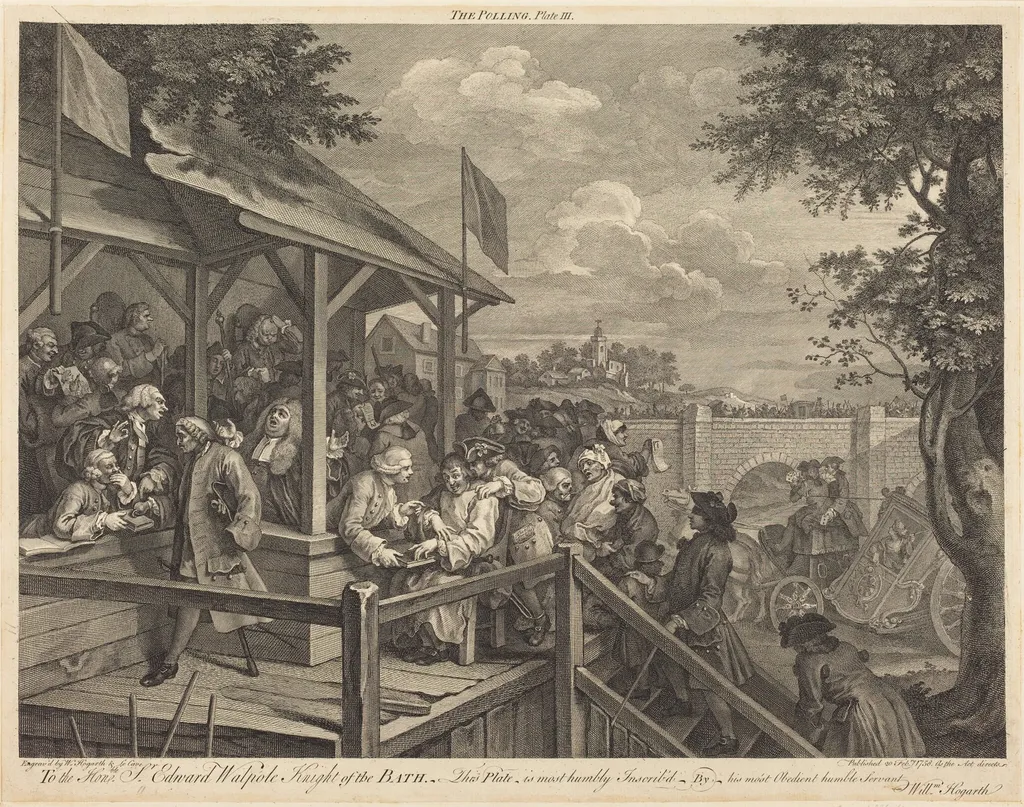
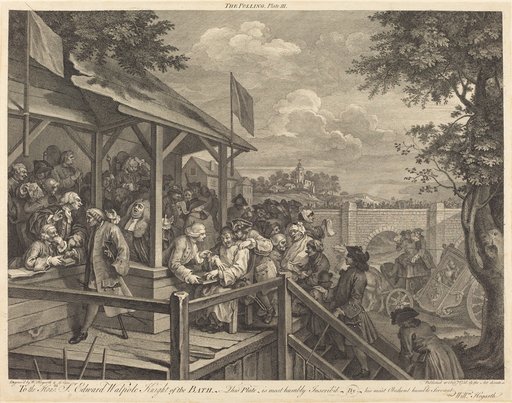
The Polling is an ink print by the Romanticist artist Francois Morellon de La Cave. It dates from 1758 and is held in the collection of the National Gallery of Art.
About this work
Overview
Created in 1758 by Francois Morellon de La Cave, this print is an etching and engraving depicting a public gathering on a wooden balcony. The composition captures a dense crowd engaged in conversation and activity, with figures leaning over railings, seated indoors, and holding documents. The scene is framed by a fence below, a distant village, and a flagpole, all rendered under a muted sky.
Subject & Meaning
The image portrays a civic moment, likely a local election or public announcement, where citizens gather to receive or discuss official information. The variety of postures and gestures suggests lively debate and active participation. The presence of papers and raised voices implies the transmission of news or votes, reflecting the growing role of public engagement in 18th-century political life.
Technique & Style
The work was produced through etching and engraving on metal, allowing for intricate linear detail. Fine, deliberate strokes define individual faces, clothing folds, and architectural elements. The density of lines creates texture and depth without color, relying on contrast and precision to convey movement and volume characteristic of printmaking of the period.
History & Provenance
The print was made during a time when printed imagery increasingly circulated political and social commentary across Europe. Morellon de La Cave, known for his topographical and genre scenes, likely produced this as part of a series documenting public life. Its survival suggests it was collected or distributed among literate urban audiences interested in contemporary events.
Context
In mid-18th-century France, public assemblies and civic rituals were becoming more visible, even as political power remained centralized. This scene mirrors the tension between emerging participatory culture and institutional control. The flagpole and fence symbolize authority and separation, while the crowd’s energy hints at the rising influence of public opinion.
Legacy
The print stands as a record of everyday political engagement before widespread suffrage. Its detailed observation of crowd behavior offers insight into how information was shared and contested in pre-revolutionary society. Though not widely known today, it contributes to the visual archive of civic life in Enlightenment Europe.
Own this work as a print
Artist & collection

 Southwark Fair
 Southwark Fair
 Vauxhall Gardens shewing the Grand Walk at the Entrance of the Garden and the Orchestra with Musick Playing
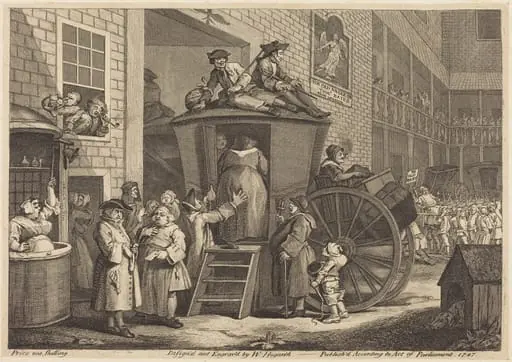 The Stage-coach, or the Country Inn Yard
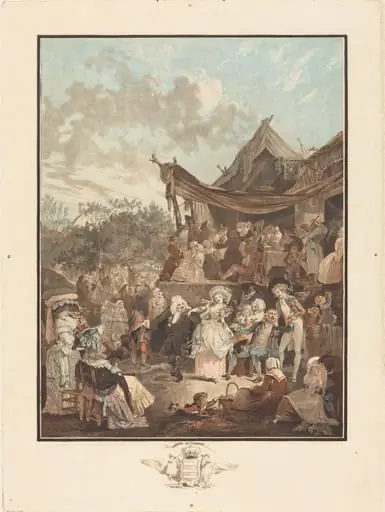 Le Menuet de la mariee (The Bride's Minuet)
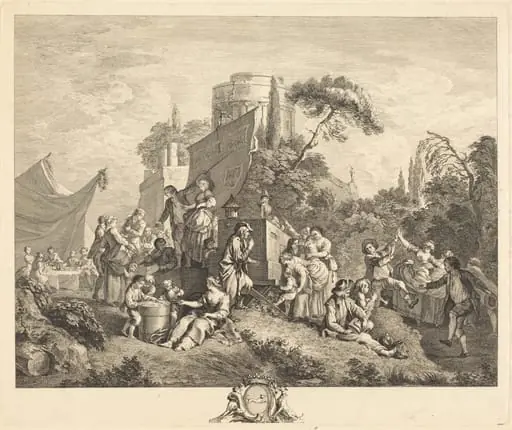 Village Fair
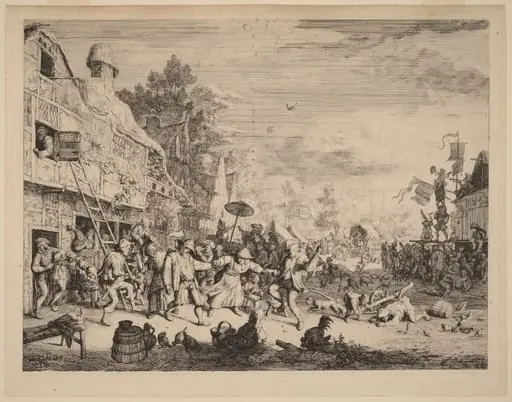 Village Festival
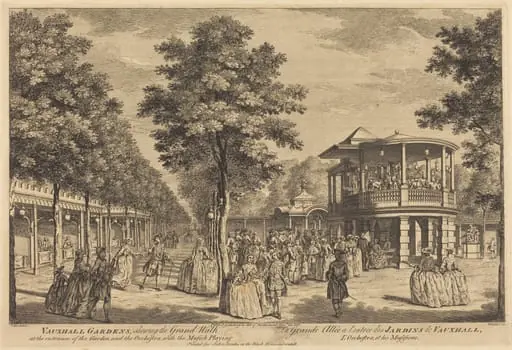 Vauxhall Gardens shewing the Grand Walk at the Entrance of the Garden and the Orchestra with Musick Playing
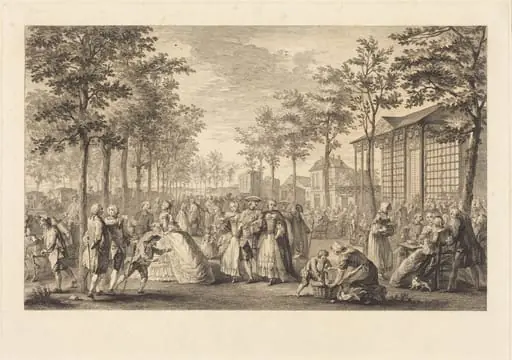 La promenade des remparts de Paris