Artwork
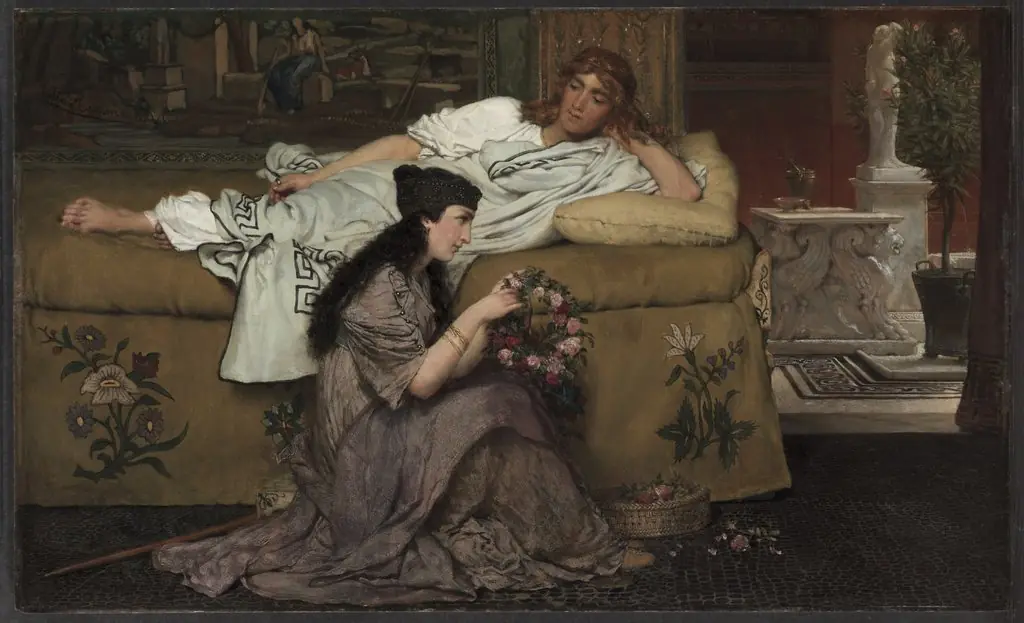
Sappho and Alcaeus
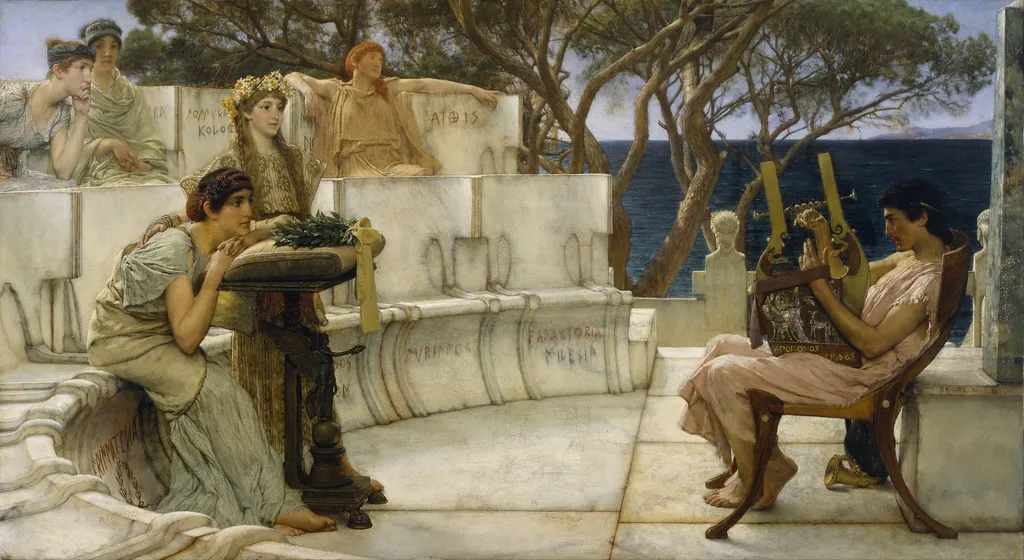
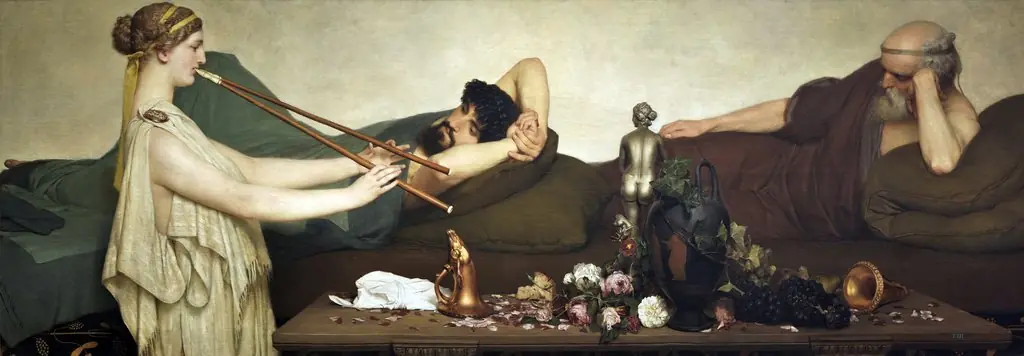
Sappho and Alcaeus is an oil painting by the Aestheticist artist Lawrence Alma-Tadema. It dates from 1891 and is held in the collection of the Walters Art Museum.
About this work
Overview
Sappho and Alcaeus is a painting created by Lawrence Alma-Tadema in 1881, executed in oil on panel. It is part of the collection at the Walters Art Museum in Baltimore.
Subject & Meaning
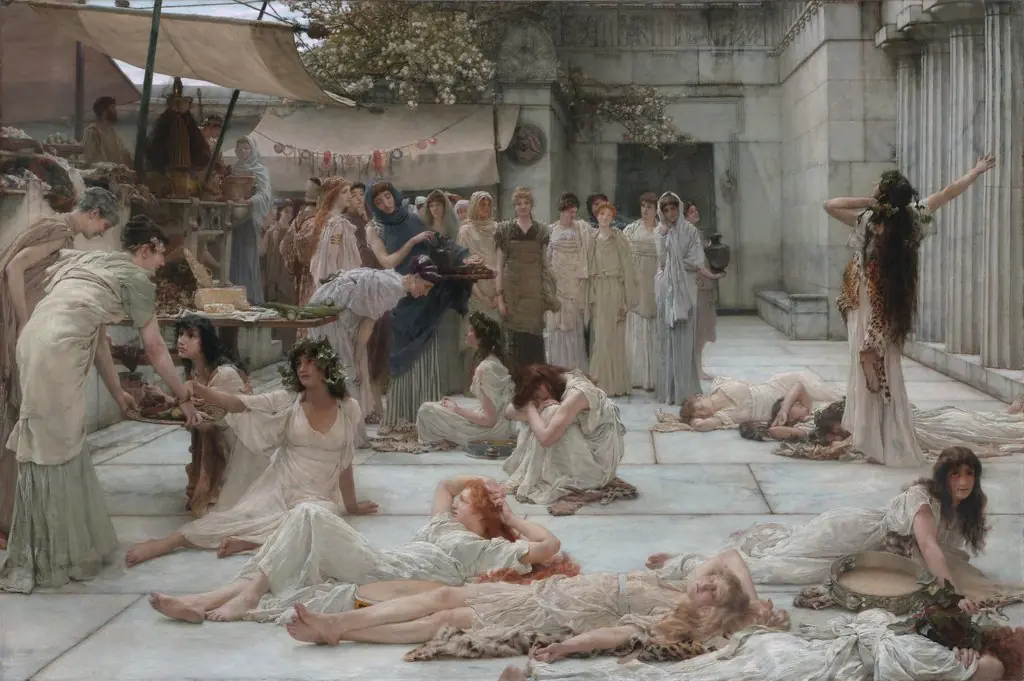
The painting depicts a serene scene of two prominent female figures from ancient Greek poetry, Sappho and Alcaeus, in a leisurely setting. Sappho, identifiable by her flower crown, is seated at a table, engaged with Alcaeus, who plays a stringed instrument, dressed in a distinctive pink attire. The interaction suggests a moment of poetic inspiration or exchange.
Technique & Style
Alma-Tadema's characteristic attention to historical detail and realism is evident in the intricate rendering of textures, from the stone patio to the subjects' attire. The use of oil on panel allows for vivid coloration, notably in the contrast between Sappho's white dress and Alcaeus's pink gown, set against a backdrop of blue sky and water.
History & Provenance
Created in 1881, the painting's history prior to its acquisition by the Walters Art Museum is not detailed here. It is known to be part of the museum's collection in Baltimore.
Context
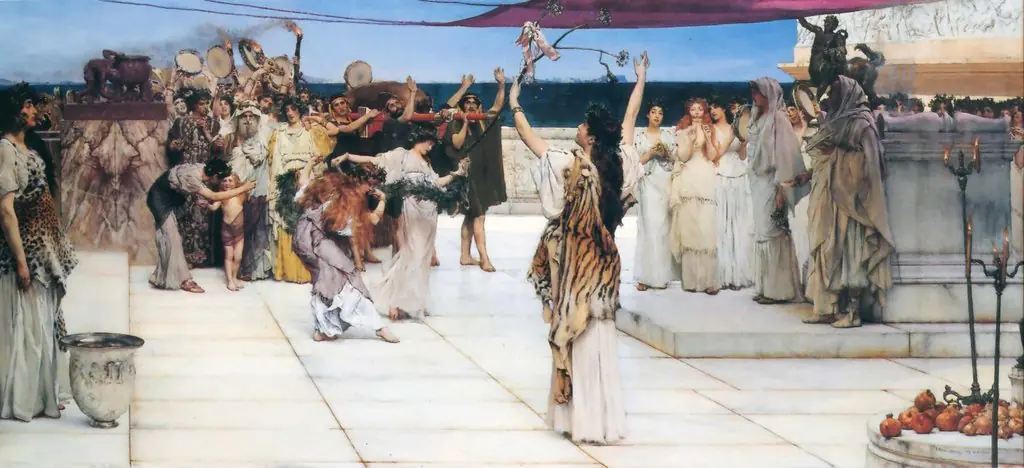
Painted during the late 19th century, Sappho and Alcaeus reflects Alma-Tadema's fascination with classical antiquity, a common theme among his contemporaries. The scene blends historical figures with a romanticized vision of ancient Greek life.
Legacy
As part of Alma-Tadema's oeuvre, the painting contributes to the artist's reputation for meticulous, historically inspired works. Its presence in the Walters Art Museum makes it accessible for study and appreciation of late 19th-century historical painting techniques and themes.
Artist & collection
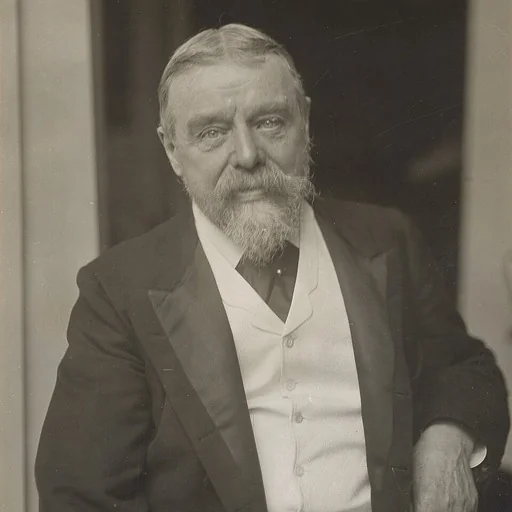
Artist
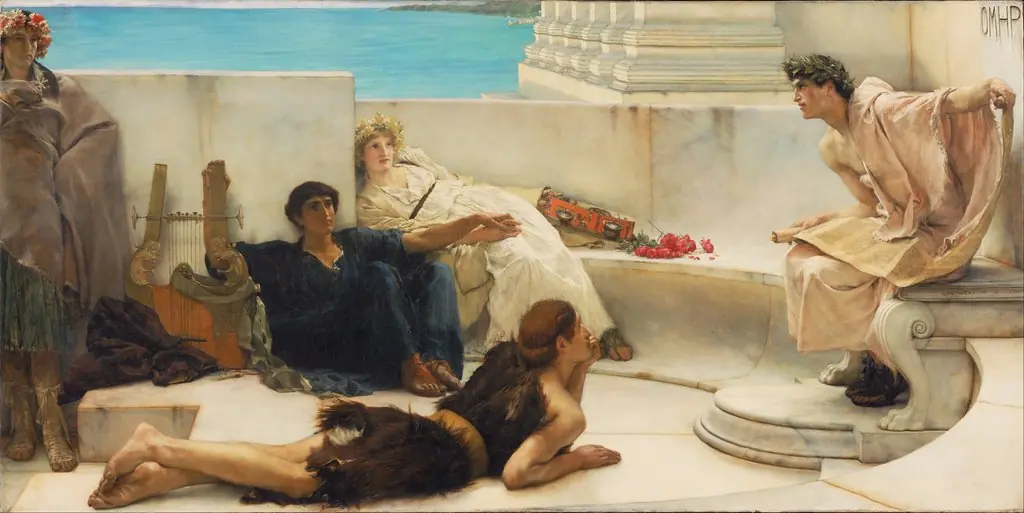
Sir Lawrence Alma-Tadema ( AL-mə TAD-ay-mə; born Lourens Alma Tadema, Dutch:; 8 January 1836 – 25 June 1912) was a Dutch painter who later settled in the United Kingdom, becoming the last officially recognised denizen in 1873.