Artwork
Cephalus Hiding the Jewels
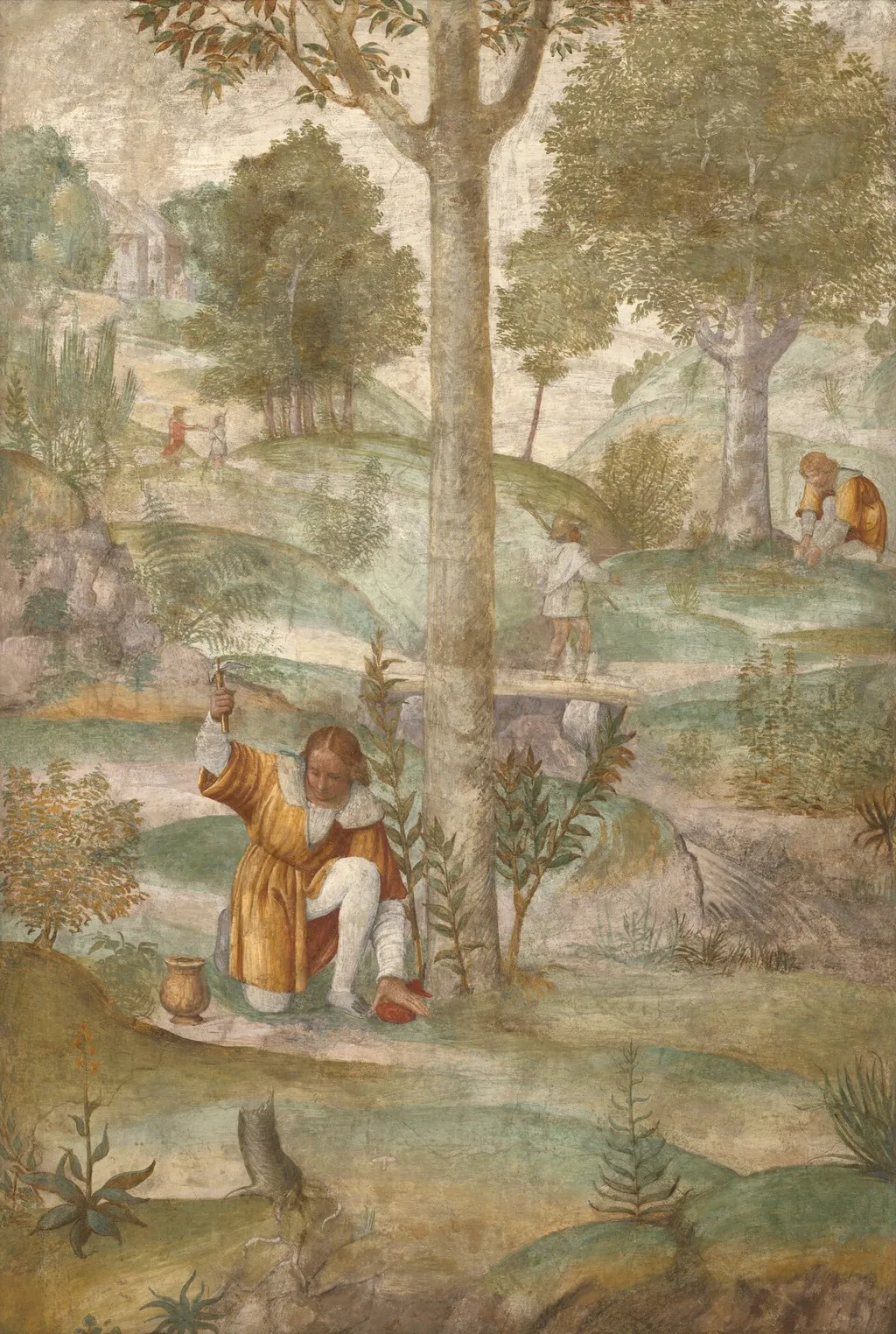
Cephalus Hiding the Jewels is a fresco painting by the Mannerist artist Luini Bernardino. It dates from 1521 and is held in the collection of the National Gallery of Art.
About this work
History & Provenance
Originally commissioned around 1522 for either the Casa Rabia in Milan or the Villa La Pelucca near Monza, the work entered the collection of the Samuel H.
The fresco Cephalus Hiding the Jewels was created by Bernardino Luini around 1520‑1522, likely commissioned c. 1522 by the Milanese patron Gerolamo Rabia for either his town residence, the Casa Rabia, or his country estate, La Pelucca near Monza.[1] After remaining in situ until the early nineteenth century, the work entered the collection of Michele Cavaleri in Milan and was sold on 13 April 1873 to the financier Enrico (Henri) Cernuschi.[1] It subsequently passed through the hands of Parisian dealers Charles Sedelmeyer (by 1897) and Rodolphe Kann (by 1900), whose estate sold it to Duveen Brothers in 1907.[1] The Samuel H. Kress Foundation acquired the fresco from Duveen in 1942 and donated it to the National Gallery of Art in 1943.[1][2]
The fresco Cephalus Hiding the Jewels is currently held by the National Gallery of Art in Washington, D.C., where it resides within the Samuel H. Kress Collection. Originally commissioned around 1522 for either the Casa Rabia in Milan or the Villa La Pelucca near Monza, the work entered the collection of the Samuel H. Kress Foundation in 1942 before being gifted to the museum in 1943. Prior to its arrival in the United States, the painting passed through several prominent European collections, including those of Enrico Cernuschi in Paris, Rodolphe Kann, and the dealer Duveen Brothers. The source material details this ownership trajectory but does not record specific exhibition histories for the work.
Legacy
After its removal from the original Milanese setting in the late nineteenth century, the fresco entered a series of prominent private collections, including those of Cernuschi, Duveen and the Kress Foundation, before being gifted to the National Gallery of Art in 1943. Its passage through these collections brought renewed scholarly attention, documented in early 20th‑century studies such as Shapley’s catalogue, and helped establish Luini as a key figure of Lombard Renaissance art. The work’s status as a well‑preserved mythological fresco has made it a reference point for discussions of fresco technique and narrative composition in the period, influencing both academic research and public exhibitions of Italian Renaissance painting.
Overview
Bernardino Luini's fresco, Cephalus Hiding the Jewels, created around 1521, depicts a scene from classical mythology. The painting features a man kneeling within a tranquil forest setting, engaged in the act of concealing an unseen object. Rendered with soft, earthy tones, the work captures a moment of quiet focus amidst a natural landscape populated by other figures.
Subject & Meaning
The central figure, Cephalus, kneels in a verdant woodland, meticulously covering a small, hidden item with foliage. Dressed in a brown tunic and white trousers, he is accompanied by a jug, while other individuals are visible in the background, engaged in various activities. This focused gesture suggests a moment of secrecy or preservation, central to the mythological narrative from which the scene is drawn.
Technique & Style
Executed as a fresco, the painting demonstrates Luini's approach to wall decoration. The artist employed a palette of subdued, natural colors, including earthy greens, warm browns, and muted blues, to evoke a sense of calm within the forest environment. This soft coloration, combined with the detailed depiction of the natural setting, contributes to the serene and contemplative atmosphere of the composition.
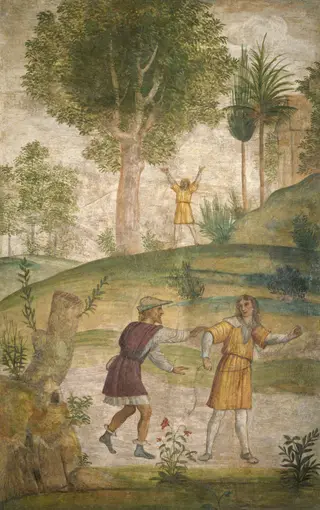
Own this work as a print
Artist & collection
Artist
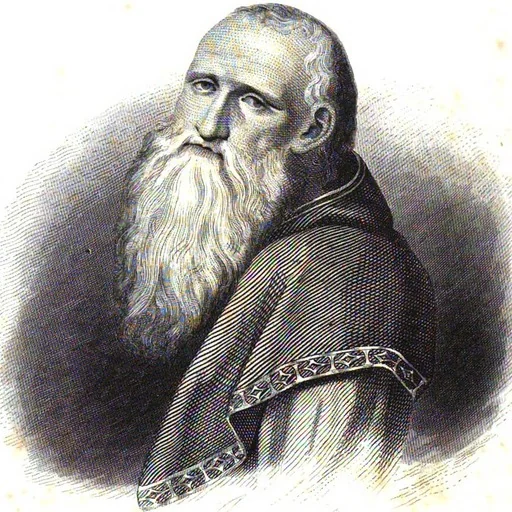
Bernardino Luini (c. 1480/82 – June 1532) was a north Italian painter from Leonardo's circle during the High Renaissance. Both Luini and Giovanni Antonio Boltraffio were said to have worked with Leonardo directly; he…

 Jahreszeiten mit Jagddarstellungen: Herbst (Jäger mit Hasen- und Hirschjagd) und Winter (Jäger mit Saujagd)
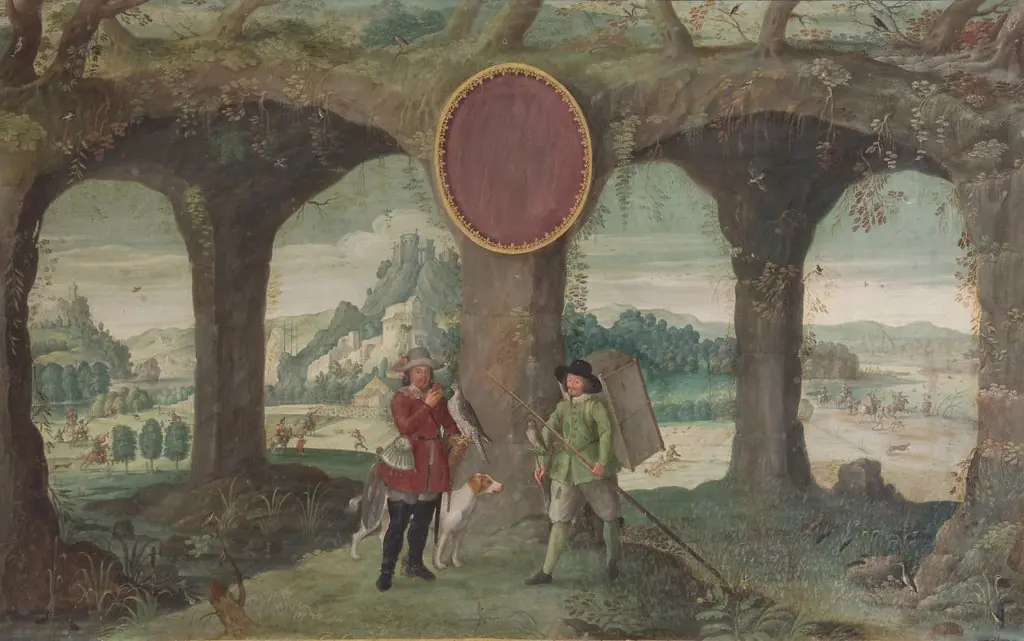 Jahreszeiten mit Jagddarstellungen: Frühling (Falkner mit Falkenbeize) und Sommer (Vogelsteller mit Vogelfang und Entenjagd)
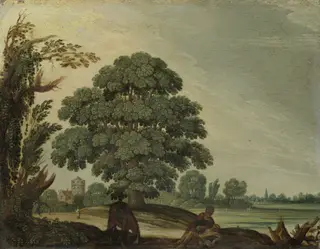 Landscape with the Good Samaritan
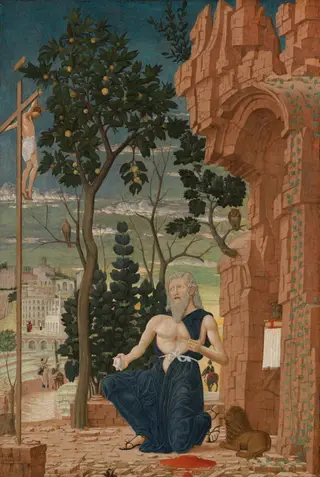 Saint Jerome in the Wilderness
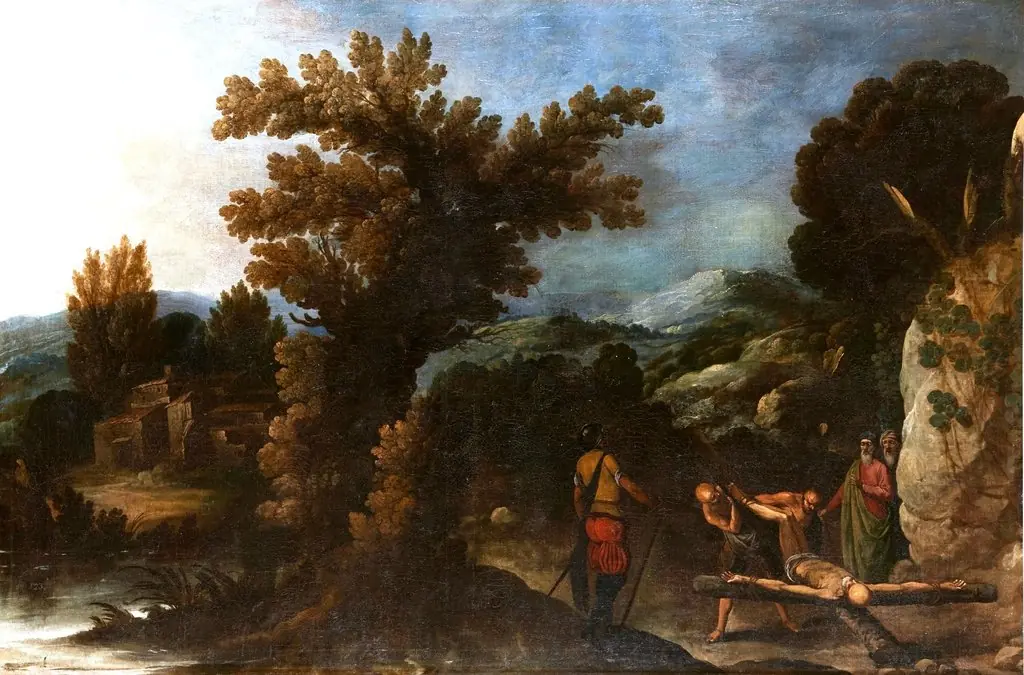 Paisaje con la crucifixión de San Pedro
 Landscape with the Good Samaritan
 Penitent saint Jerome
 Landscape with Hunters