Artwork
Au Paradis (In the Balcony)
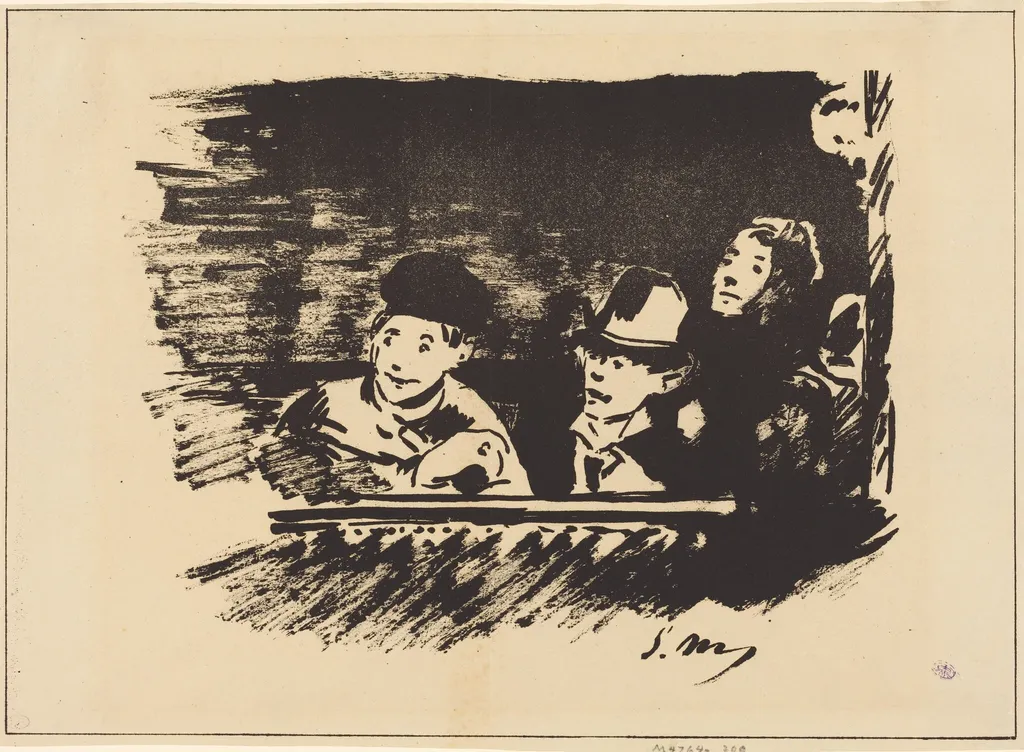
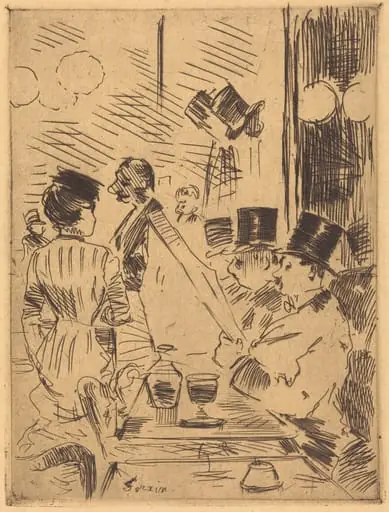
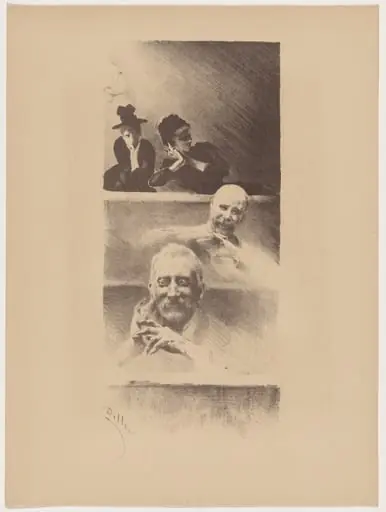
Au Paradis (In the Balcony) is an ink print by the Romanticist artist Édouard Manet. It dates from 1858 and is held in the collection of the National Gallery of Art.
About this work
Overview
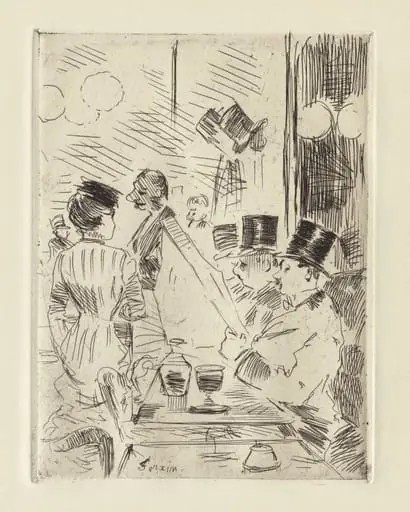
Au Paradis (In the Balcony) is a transfer lithograph executed by the French painter Edouard Manet in 1858. The work presents a nocturnal balcony scene rendered in a loose, sketch‑like manner, emphasizing the immediacy of the moment rather than detailed finish.
Subject & Meaning
The composition depicts three figures gathered on a balcony at night. Two of the individuals are clearly visible: one wears a hat and coat, the other a lighter hat, while the third is largely concealed in shadow. The contrast between the illuminated faces and the surrounding darkness draws attention to their expressions and the intimacy of the encounter.
Technique & Style
Manet employed the transfer lithography process, allowing him to reproduce rapid, gestural lines directly onto the stone. The resulting print is characterized by brisk, sketchy strokes that convey movement and spontaneity, while the tonal contrast between the bright facial features and the deep night sky heightens the visual drama.
History & Provenance
Created in the late 1850s, the lithograph belongs to the early period of Manet’s career, preceding his more famous oil paintings. Its provenance traces back to the artist’s own print series, though specific ownership records for this particular impression are limited.
Context
The work emerges at a time when French artists were experimenting with new print technologies to capture fleeting moments, a practice that anticipated the later Impressionist focus on light and atmosphere. Manet’s choice of a night scene on a balcony reflects contemporary interest in urban leisure spaces.
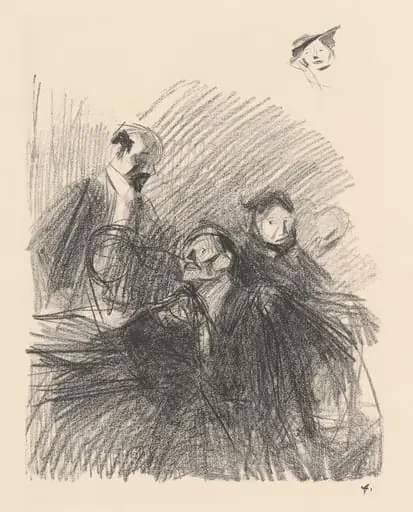
Own this work as a print
Artist & collection
Artist
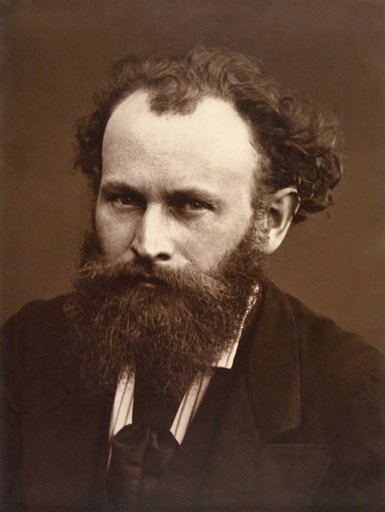
Édouard Manet was a French modernist painter. He was one of the first 19th-century artists to paint modern life, as well as a pivotal figure in the transition from Realism to Impressionism.

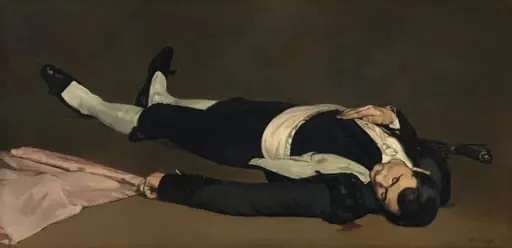
- Scène d'audience (les deux avocats) (Scene of a Hearing (The Two Lawyers))
 Enfant Dessinant (Child Drawing)
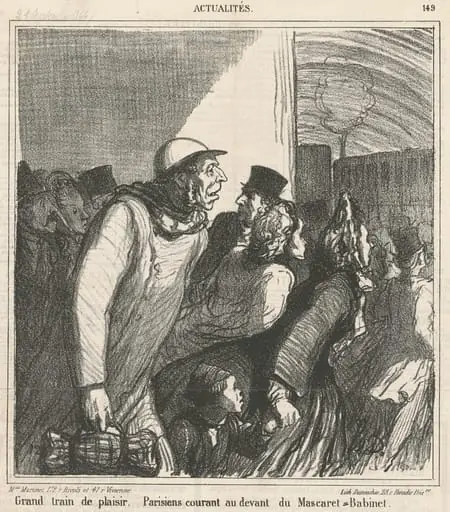 Grand train de plaisir
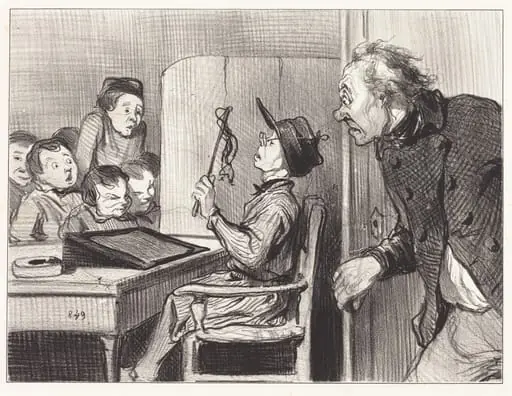 Attends... j'te vas en donner... du maitre d'école
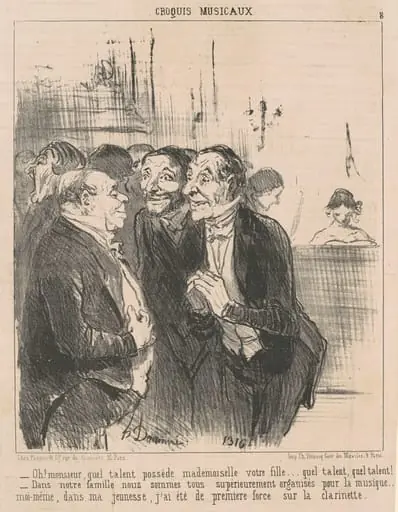 Oh! Monsieur, quel talent possède ...
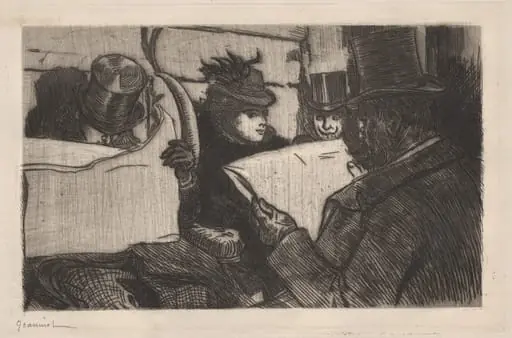 Evening Train (Le Train du Soir)
 The Café of the New Athens
 The Old Smith's Story
 Le café de la Nouvelle Athènes (The Cafe of the New Athens)
 In Camera
 Au théâtre
 Miss May Belfort