Artwork
Untitled
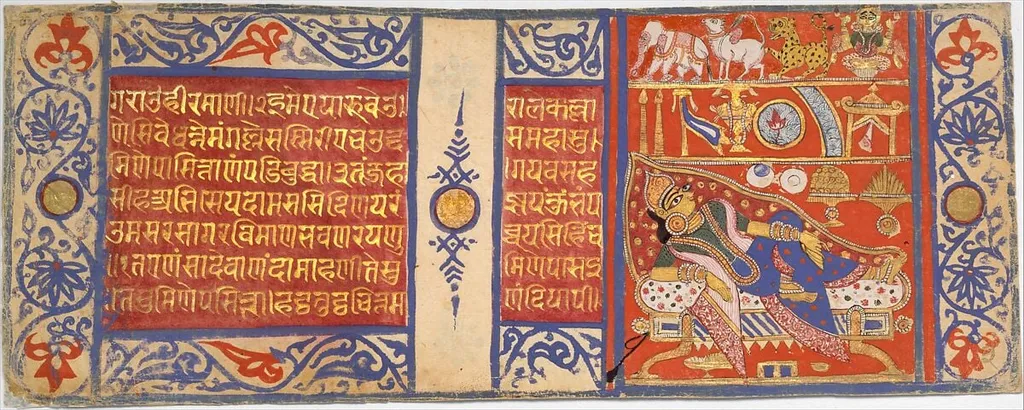
Untitled is a watercolor painting by the Mughal Painting artist Master of the Jaunpur Kalpasutra. It dates from 1465 and is held in the collection of the Metropolitan Museum of Art.
About this work
Subject & Meaning
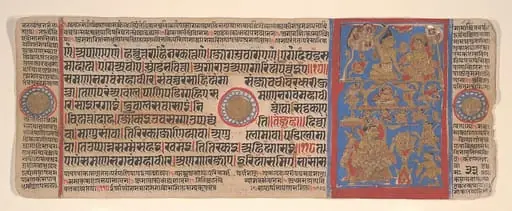
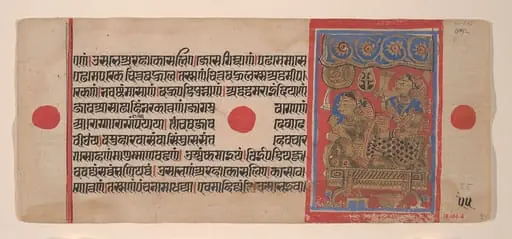
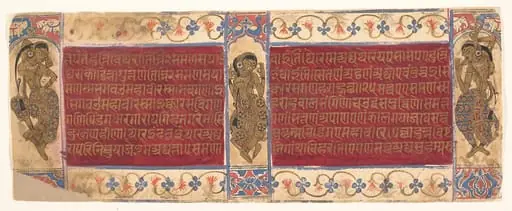
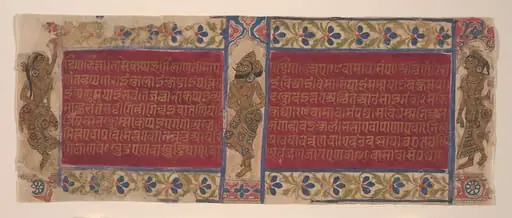
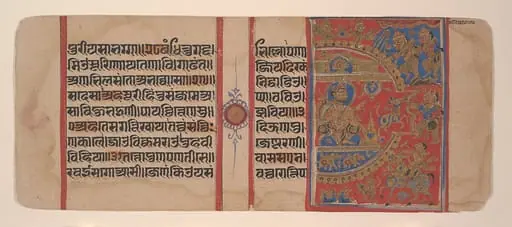
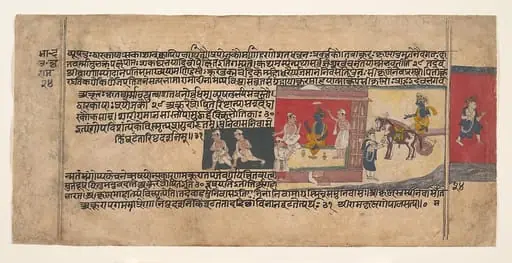
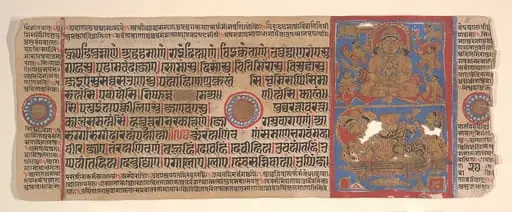
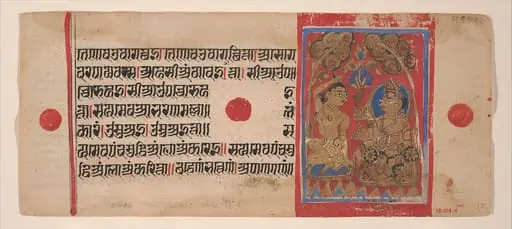
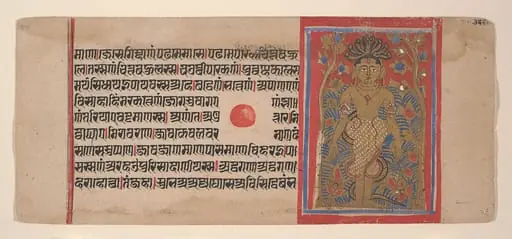
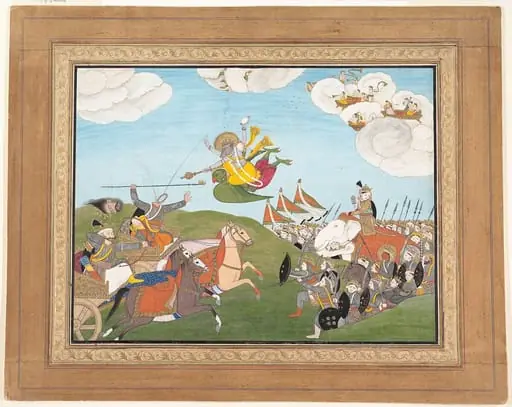
The work, titled Untitled, portrays an elephant and a woman as its central figures, situated within a religious framework.
The work, titled Untitled, portrays an elephant and a woman as its central figures, situated within a religious framework. According to the catalogue entry, the painting belongs to the religious genre, suggesting that the depicted subjects carry iconographic significance related to devotional themes of the period. The combination of these motifs functions symbolically, reflecting traditional associations of elephants with strength and the feminine presence within spiritual narratives, as observed in Indian manuscript traditions of the mid-fifteenth century.
Technique & Style
Created in 1465 by the Master of the Jaunpur Kalpasutra, this work is an opaque watercolour painting executed on paper. The piece measures 11.8 cm in height and 29.2 cm in width. Stylistically, the composition features depictions of an elephant and a woman, consistent with its classification as a religious genre painting originating from India.
The application of opaque pigments on a paper support characterises the technical approach of this manuscript illumination tradition.
History & Provenance
The painting was created in India in 1465 by the Master of the Jaunpur Kalpasutra, employing opaque watercolour on paper. Its iconography includes an elephant and a woman, aligning with its classification as a religious work. The piece entered the collection of the Metropolitan Museum of Art, where it remains, with the museum recording its inception as 1465 and its dimensions as 11.8 × 29.2 cm. No documentation of a specific commission or subsequent ownership transfers beyond its acquisition by the museum is provided in the sources, and no inventory or accession number or exhibition history is recorded.
Overview
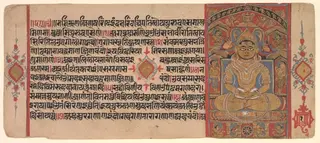
Created in 1465 by the Master of the Jaunpur Kalpasutra, this opaque watercolor on paper is a folio from a Jain manuscript tradition. The composition depicts a group of women gathered within a garden setting, distinguished by the presence of elephants in the background. The artist employs a vibrant palette, though the pigments show signs of fading consistent with the work's fifteenth-century origin.
Visual interest is generated through the meticulous rendering of the figures' attire and jewelry, characterized by delicate linear work and intricate geometric patterns. The painting exemplifies the stylistic synthesis of the Jaunpur school, which integrated local Hindu artistic conventions with the specific iconographic requirements of Jain religious texts. As a product of the mid-15th century, this folio represents a critical moment in the development of Indian manuscript illumination, bridging earlier regional styles with the emerging Mughal aesthetic.
The work serves as a visual narrative element within the Kalpasutra, illustrating scenes of courtly life and divine presence that were central to Jain devotional practice.
Context
This painting originally served as an illustration within a 15th-century Indian manuscript. Its creation by the Master of the Jaunpur Kalpasutra places it within a specific regional artistic tradition. The integration of elements from both Hindu and Jain belief systems within the same scene highlights the cultural and religious exchange prevalent in India during this historical period, where diverse spiritual narratives often coexisted.
Artist & collection