Artwork
Self-Portrait on Yellow Ground with Cigarette
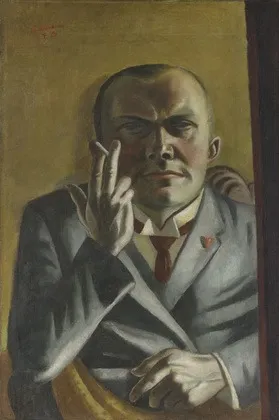
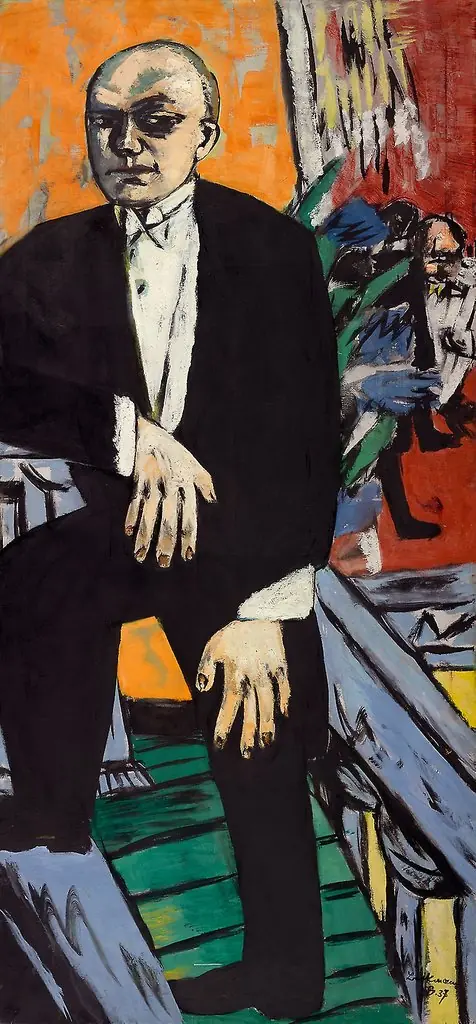
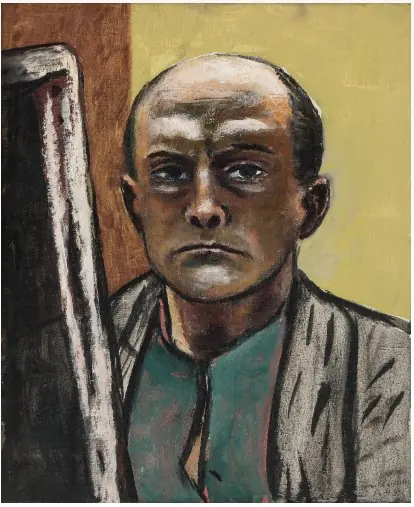
Self-Portrait on Yellow Ground with Cigarette is an oil painting by the German Expressionist artist Max Beckmann. It dates from 1923 and is held in the collection of the Museum of Modern Art.
About this work
Overview
Painted in 1923, this oil on canvas self-portrait by Max Beckmann presents the artist seated in a chair, cigarette in hand, against a striking yellow field.
Painted in 1923, this oil on canvas self-portrait by Max Beckmann presents the artist seated in a chair, cigarette in hand, against a striking yellow field. Though associated with German Expressionism early in his career, Beckmann had by this time shifted toward a more restrained aesthetic. The work reflects his engagement with New Objectivity, emphasizing psychological presence over emotional excess.
Subject & Meaning
Beckmann portrays himself with unflinching directness, his gaze fixed on the viewer. The cigarette, held near his face, suggests contemplation or fatigue. His formal attire, gray suit, white shirt, red tie, contrasts with the flat, luminous background, isolating him in a space that feels both intimate and alienating. The image conveys introspection, not self-aggrandizement, reflecting the artist’s postwar disillusionment and search for personal clarity.
Technique & Style
Beckmann employs controlled brushwork and muted tones to structure the figure, while the yellow ground is applied in even, unmodulated layers. The suit and tie are rendered with subtle gradations, but the face and hands are rendered with sharper definition, drawing attention to expression and gesture. There is no visible impasto; instead, the surface is smooth, reinforcing the painting’s detached, observational tone.
History & Provenance
Created shortly after Beckmann’s return to Germany following World War I, the painting emerged during a period of intense personal and artistic reevaluation. It was likely painted in Frankfurt, where he taught at the Städelschule. The work remained in his possession until his emigration in 1937, after which it entered a private collection in the United States, later acquired by a major museum.
Context
In the early 1920s, German art moved away from the fervor of Expressionism toward New Objectivity, a movement that sought clarity and critical distance amid social upheaval. Beckmann’s self-portrait aligns with this shift, rejecting romanticized emotion in favor of psychological realism. His imagery reflects the broader cultural mood of uncertainty, where identity and authority were being questioned across society.
Legacy
This portrait stands as a defining image of Beckmann’s middle period, illustrating his transition from expressive intensity to a more analytical mode. It influenced later generations of figurative painters who valued psychological depth over stylistic flourish. Though not widely exhibited during his lifetime, it has since become a key reference in studies of modern German portraiture and the aesthetics of self-representation.
Artist & collection
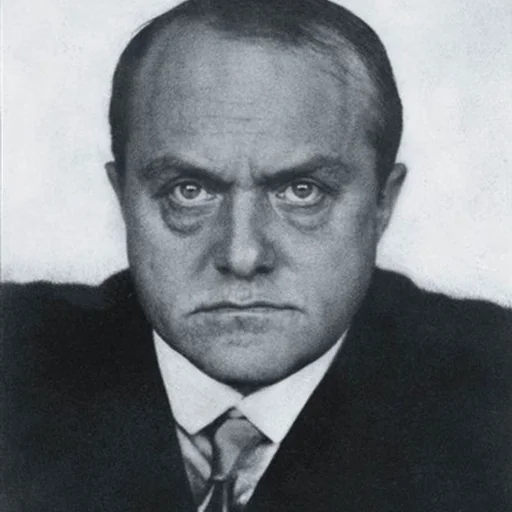
Artist
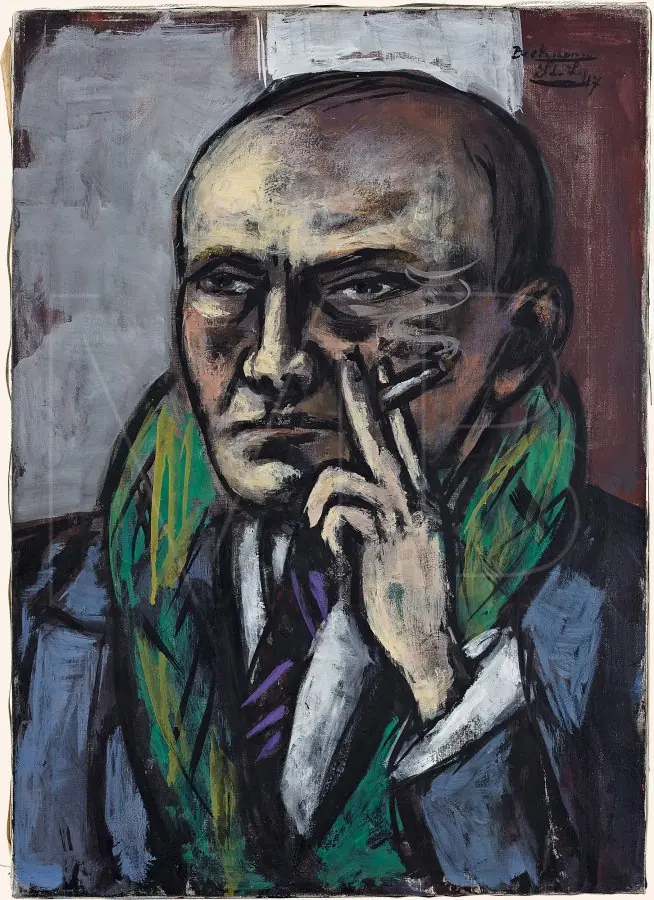
Max Carl Friedrich Beckmann (February 12, 1884 – December 27, 1950) was a German painter, draftsman, printmaker, sculptor, and writer.