Artwork
Mary Rose Tudor, sister of Henry the Eighth of England
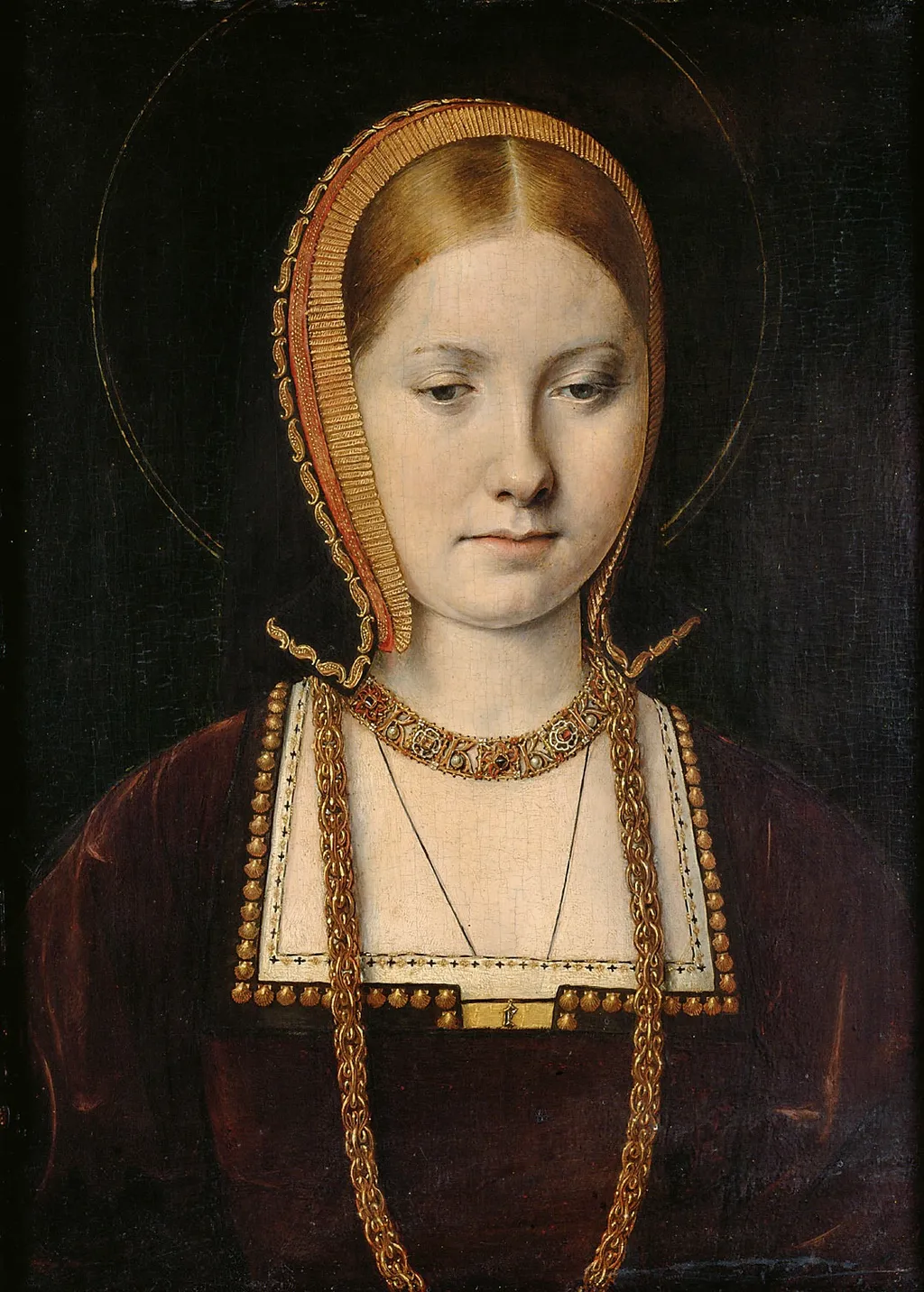
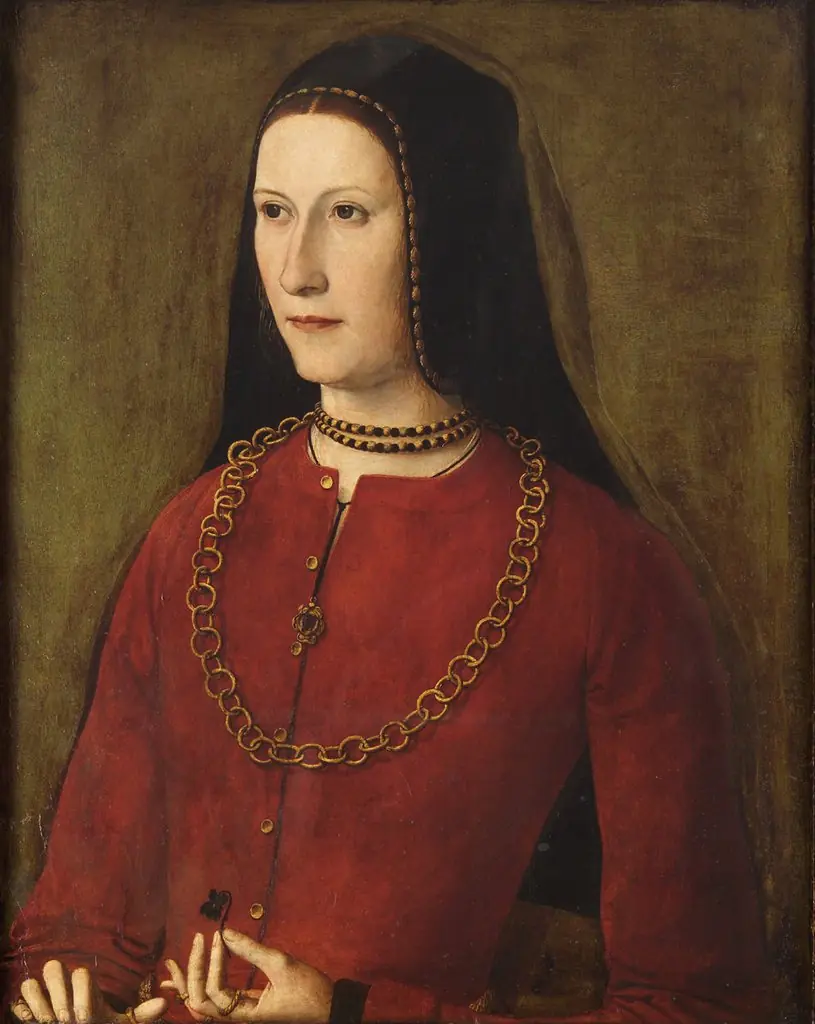
Mary Rose Tudor, sister of Henry the Eighth of England is an oil painting by the Northern Renaissance artist Michael Sittow. It dates from 1514 and is held in the collection of the Kunsthistorisches Museum.
About this work
Subject & Meaning
Created by Michael Sittow in 1514, the work identifies the sitter as the primary subject without additional allegorical figures or complex narrative scenes.
The painting depicts Mary Tudor, the sister of King Henry VIII of England, serving as a formal portrait of the royal figure. Created by Michael Sittow in 1514, the work identifies the sitter as the primary subject without additional allegorical figures or complex narrative scenes. As a portrait genre piece, the image functions to represent the identity and status of Mary Tudor within the context of Renaissance court art.
The Kunsthistorisches Museum holds the work, which focuses exclusively on the individual likeness rather than broader symbolic iconography.
Technique & Style
The portrait of Mary Rose Tudor is executed in oil paint on a wooden panel, a technique characteristic of Northern Renaissance panel painting. The support is a small-scale panel measuring 28.7 cm in height by 21 cm in width, consistent with the intimate format favored for courtly portraits of the period. The work is classified as a painting in the portrait genre, produced in 1514 by Michael Sittow, a painter associated with the courts of Renaissance Europe.
No specific information is available in the sourced material regarding the handling of the brushwork, the condition of the panel, or particular stylistic qualities such as color palette or modeling. The sources confirm only the medium (oil paint), the support (panel), and the modest dimensions, without elaborating on the work's formal characteristics or present state of preservation.
History & Provenance
The portrait of Mary Rose Tudor was painted by Michael Sittow in 1514, as indicated by the artist’s inscription and date on the panel. The work entered the collection of the Kunsthistorisches Museum in Vienna, where it remains held. Its exhibition history includes inclusion in Michel Sittow: Estonian Painter at the Courts of Renaissance Europe and The Tudors: Art and Majesty in Renaissance England, confirming its status as a documented portrait of Mary Tudor from the early sixteenth century.
The portrait is held in the collection of the Kunsthistorisches Museum, Vienna.
It is recorded there with accession details aligned to the museum's holdings of Michael Sittow's works. The painting has been exhibited in two major shows: Michel Sittow: Estonian Painter at the Courts of Renaissance Europe and The Tudors: Art and Majesty in Renaissance England.
Legacy
Mary Rose Tudor, depicted in Michael Sittow's 1514 portrait, established a lasting visual archetype of Tudor royalty. The work's presence in major Renaissance exhibitions, including Michel Sittow: Estonian Painter at the Courts of Renaissance Europe and The Tudors: Art and Majesty in Renaissance England, reinforced its symbolic importance. Its inclusion in the Kunsthistorisches Museum's collection since inception cemented its legacy as a key representation of the era's artistic and political narratives.
Overview
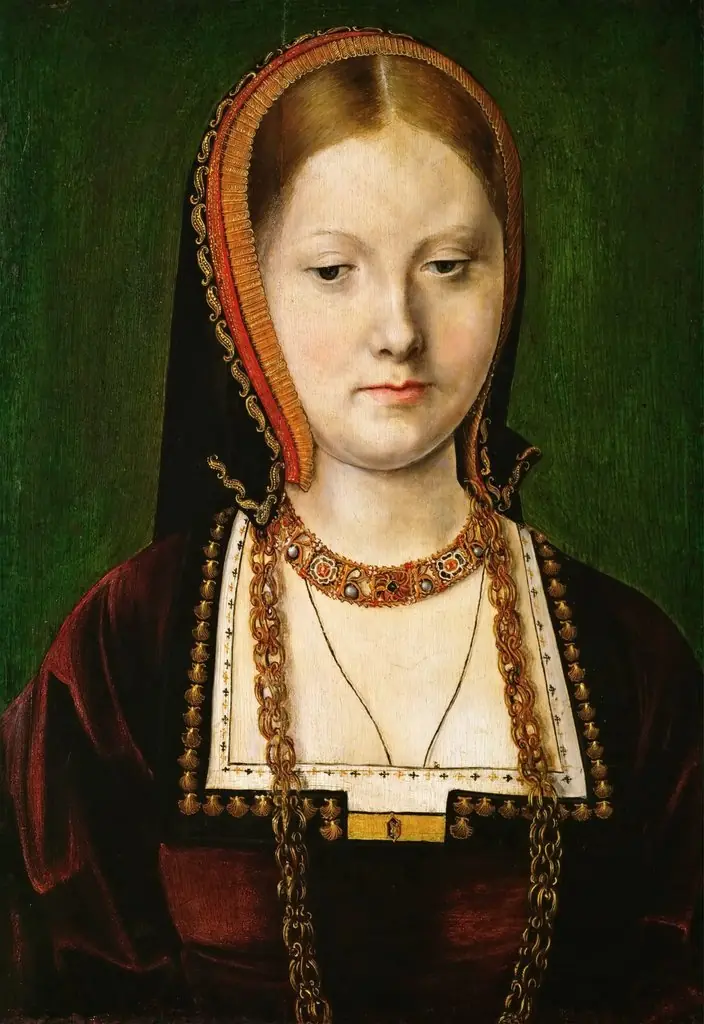
Michael Sittow’s 1514 oil-on-panel portrait presents Mary Tudor, the sister of Henry VIII. Executed in the Northern Renaissance style, the work captures the sitter with a solemn gaze, red hair divided centrally, and a dark gown trimmed in gold, complemented by a white collar and a subtle halo behind her head.
Context
Created during a period of dynastic alliances between England, Spain, and the Holy Roman Empire, the portrait reflects the cross‑cultural networks that shaped courtly art. Sittow’s experience in Spain and the Low Countries informed his synthesis of Northern detail with the courtly elegance favored by his aristocratic patrons.
Artist & collection
Artist
Michael Sittow (c. 1469 – 1525), also known as Master Michiel, Michel Sittow, Michiel, Miguel Sithium, and several other variants, was a painter from Reval (Tallinn), now capital of Estonia, who was trained in the…

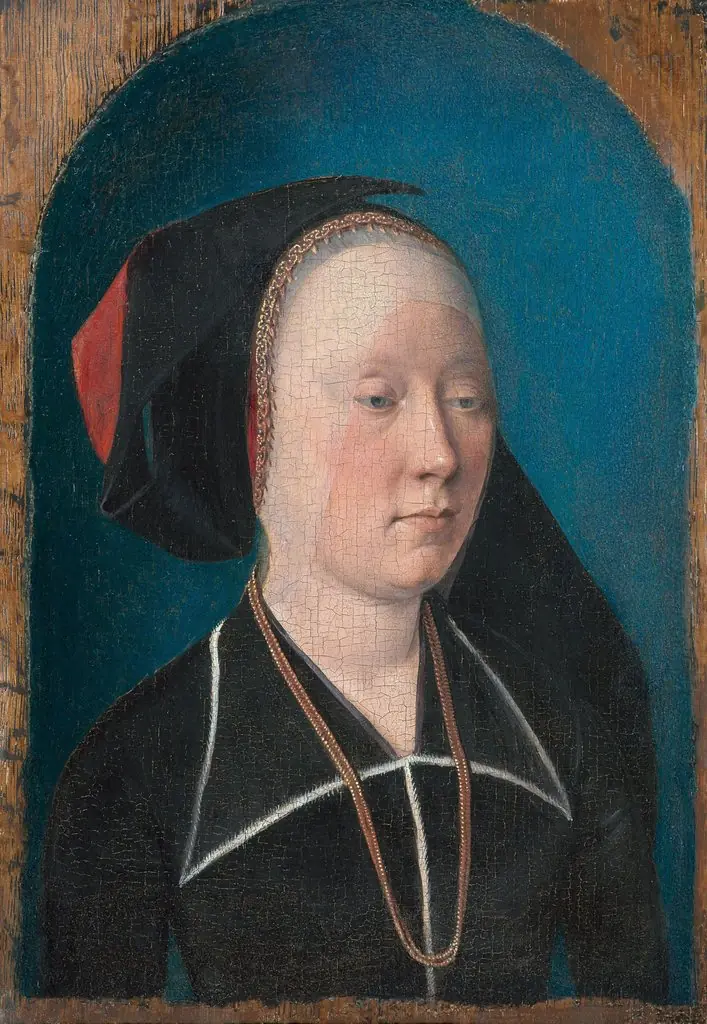
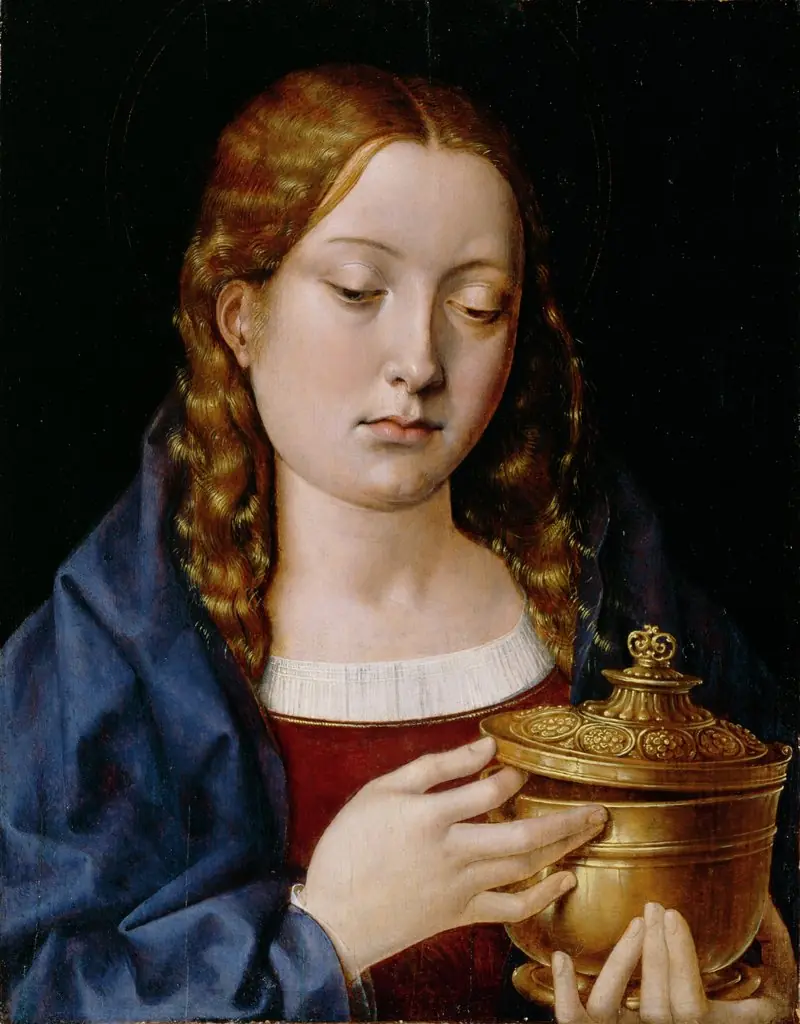
- Mary Rose Tudor (1496-1533), Schwester Heinrichs VIII. von England (?)
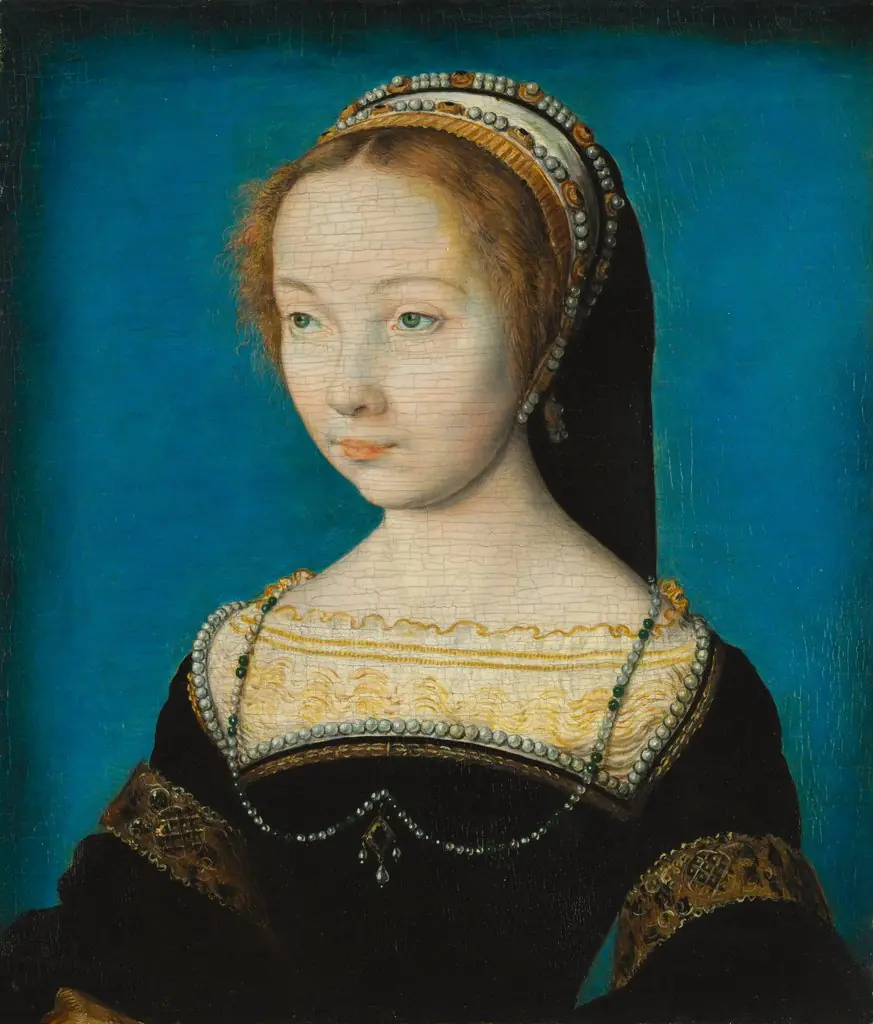 Portrait of a Woman
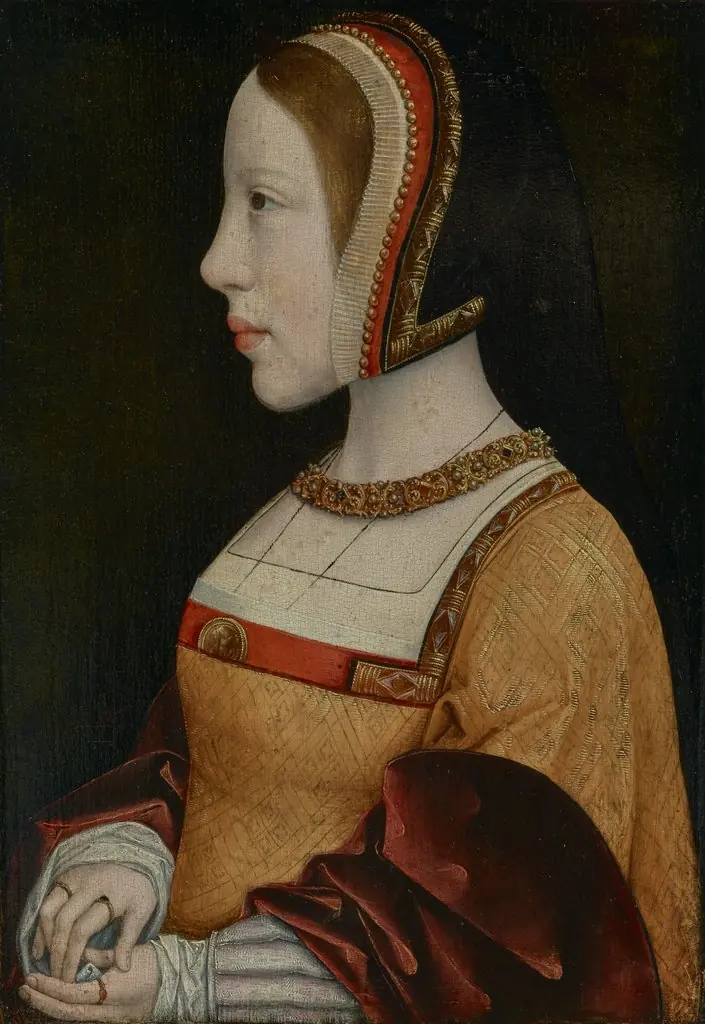 Portrait of Isabella of Austria (1501–1526)
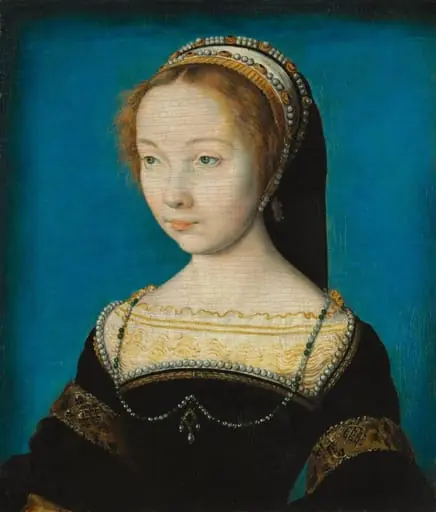 Portrait of a Woman
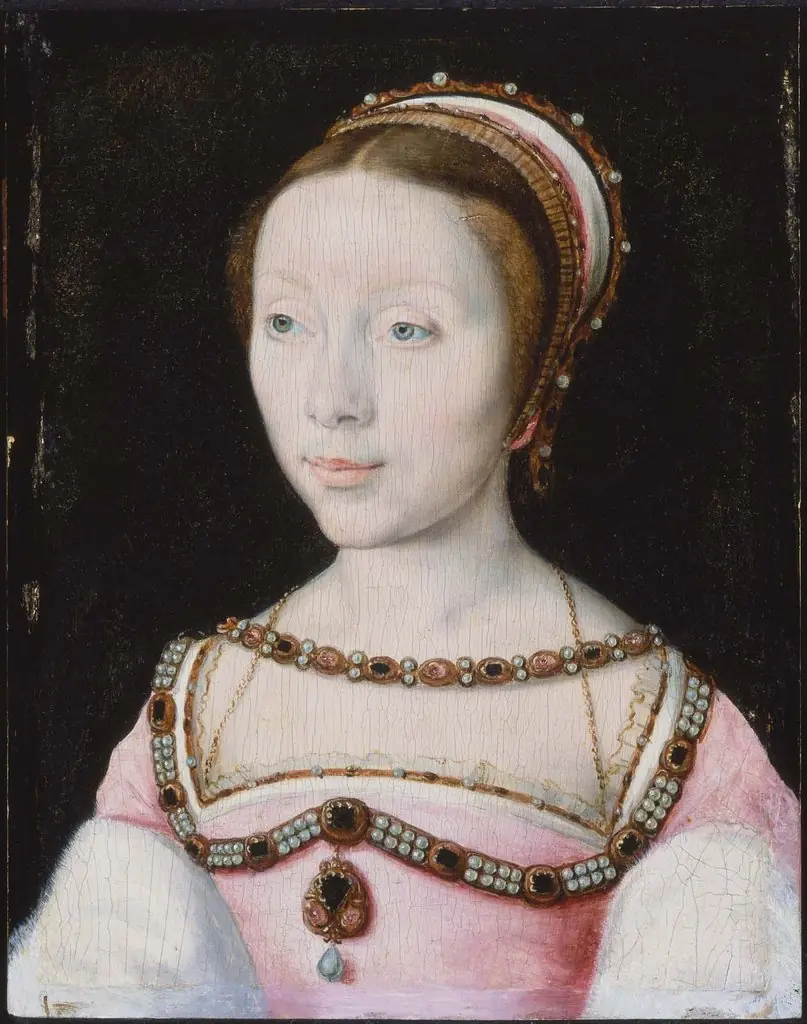 Françoise de Longwy
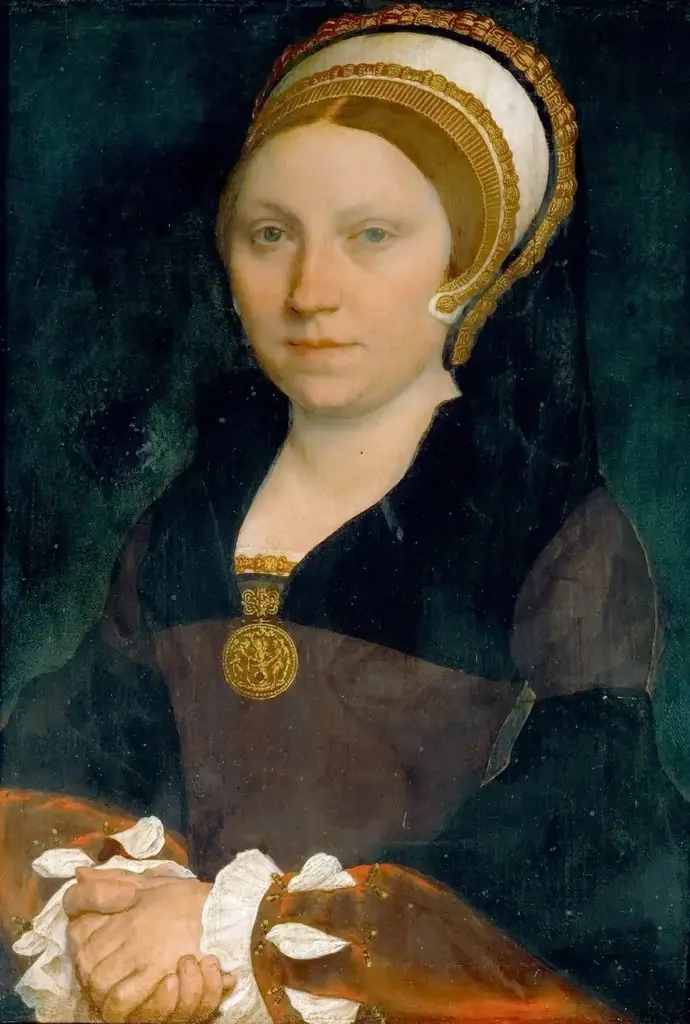 Portrait of an English lady
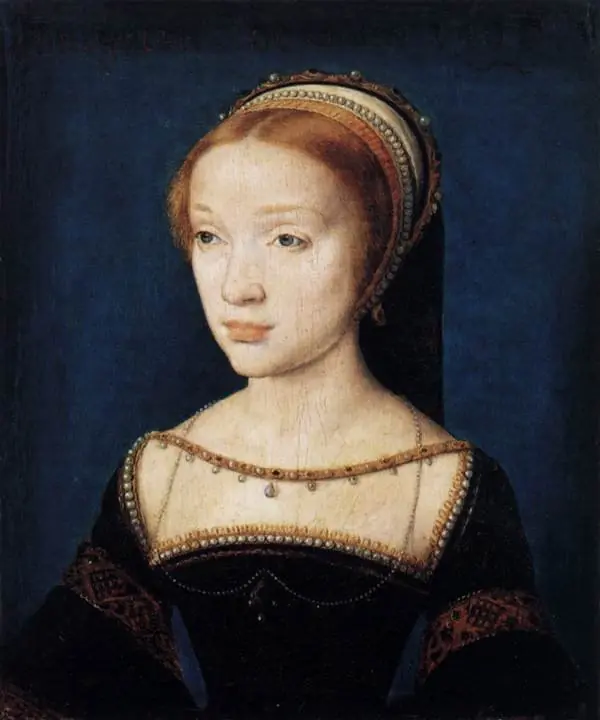 Jacqueline de Rohan
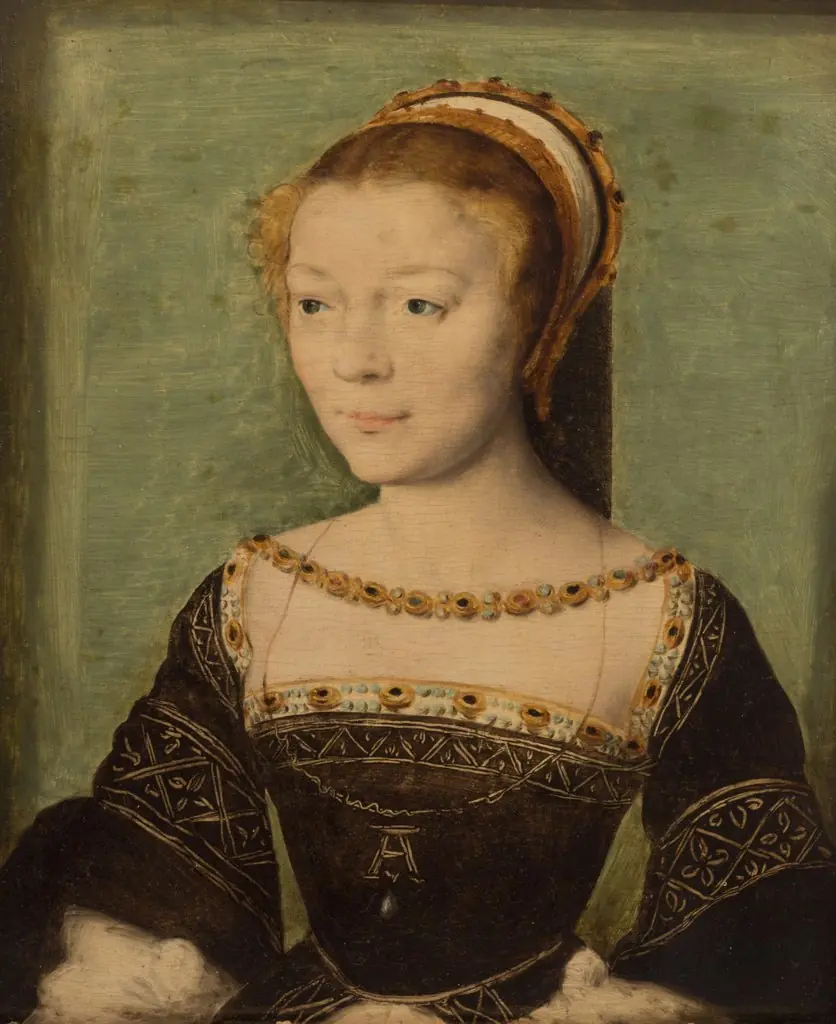 Anne de Pisseleu (1508–1576), Duchesse d'Étampes
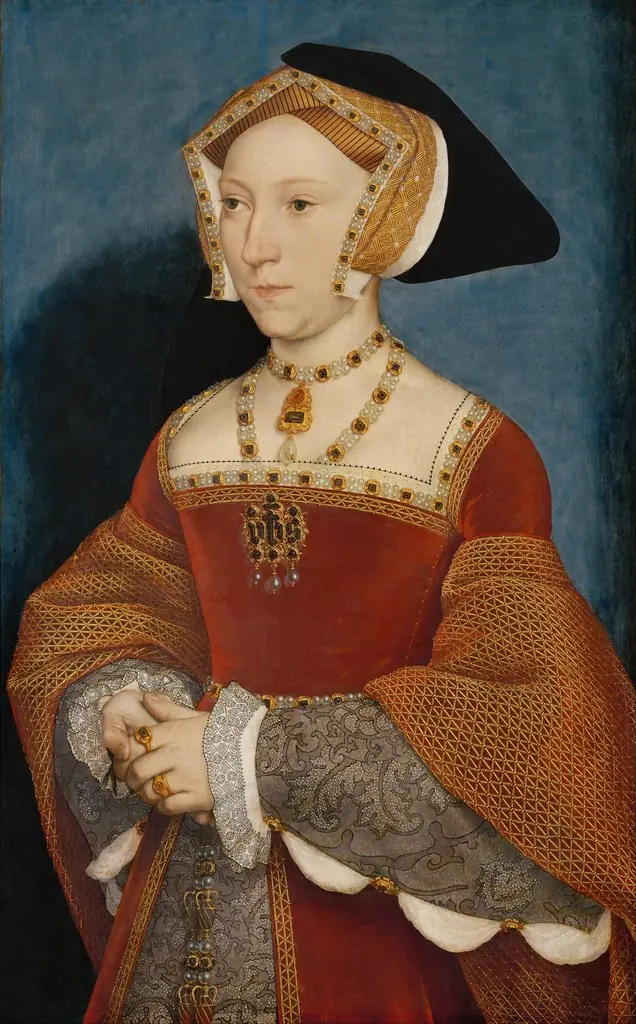 Jane Seymour
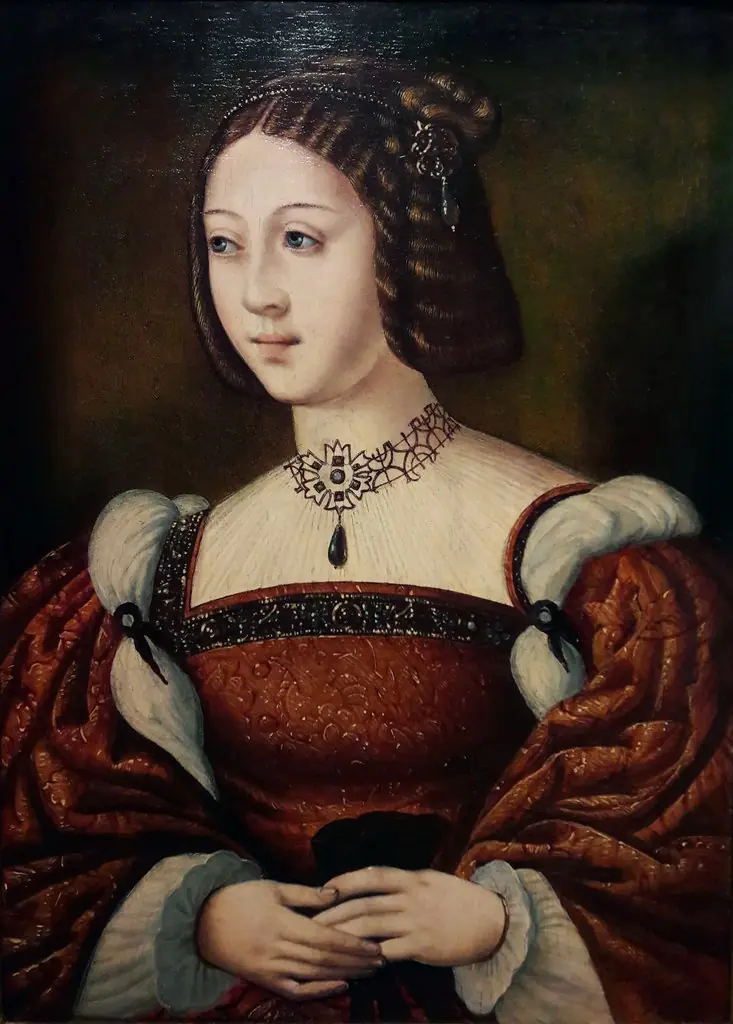 Portrait of Isabella of Portugal (1503-1539).
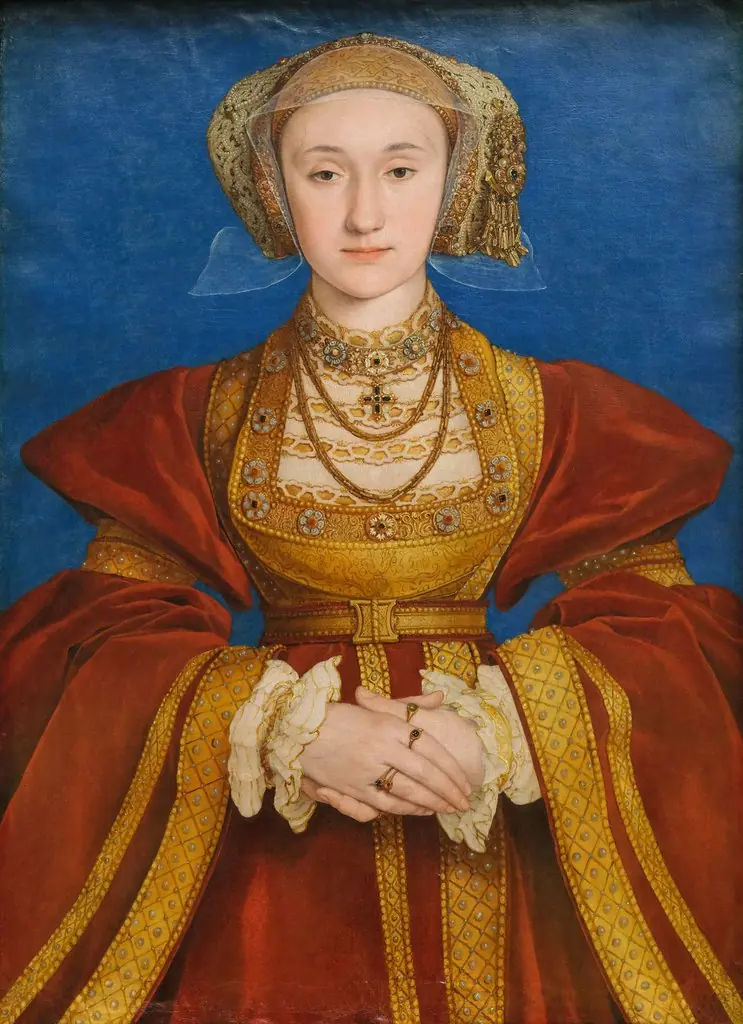 Betrothal portrait of Anne of Cleves
 Portrait of a woman