Artwork
The Japanese Footbridge and the Water Lily Pool, Giverny
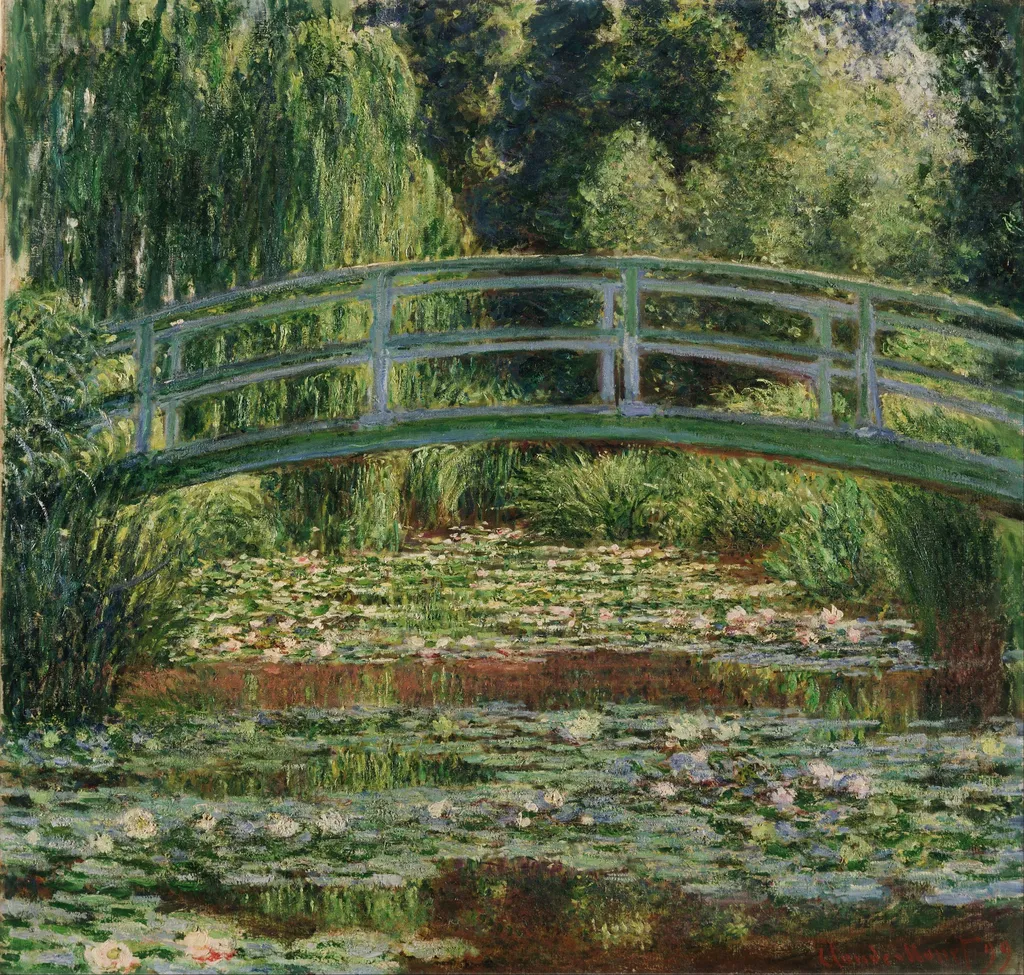
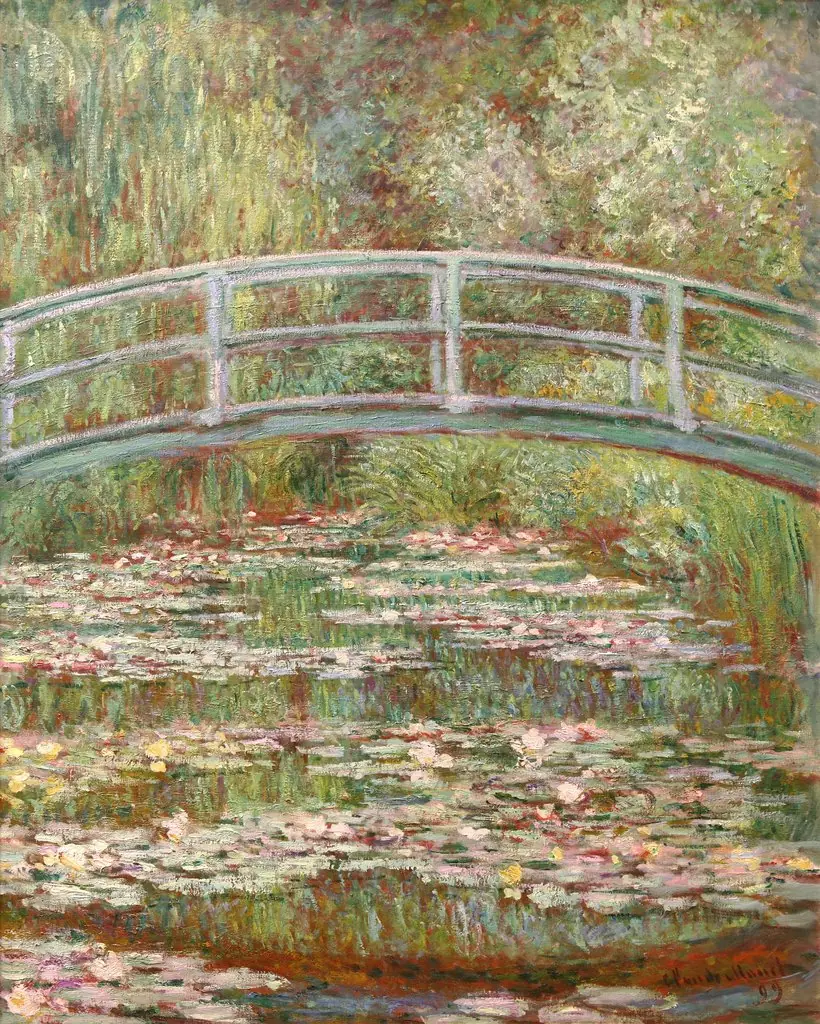
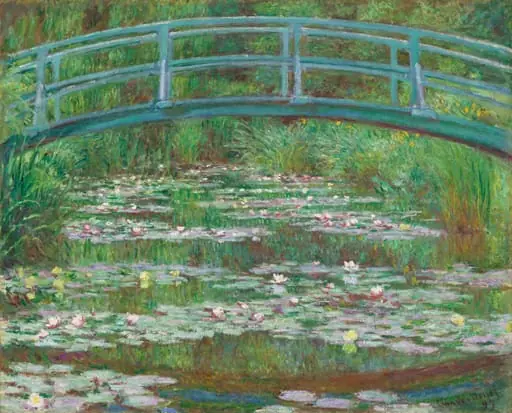
The Japanese Footbridge and the Water Lily Pool, Giverny is an oil painting by the Impressionist artist Claude Monet. It dates from 1900 and is held in the collection of the Philadelphia Museum of Art.
About this work
Overview
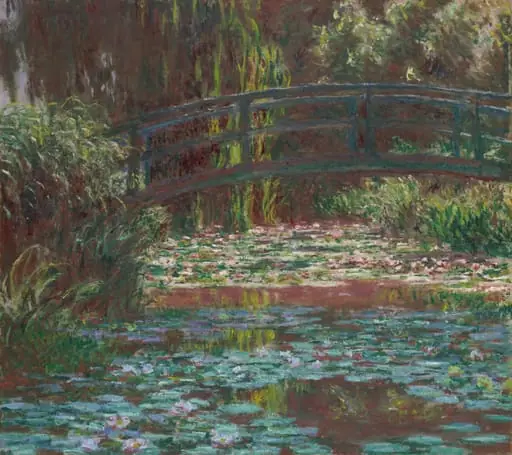
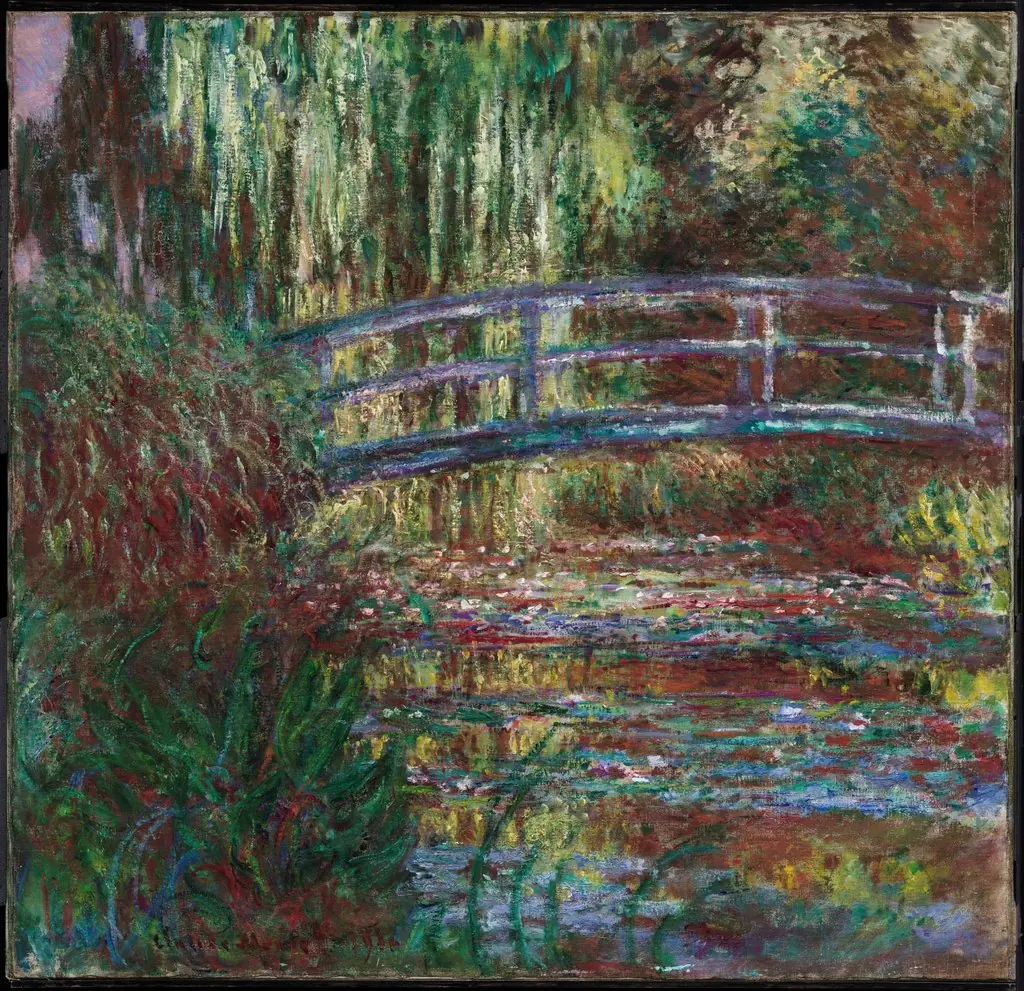
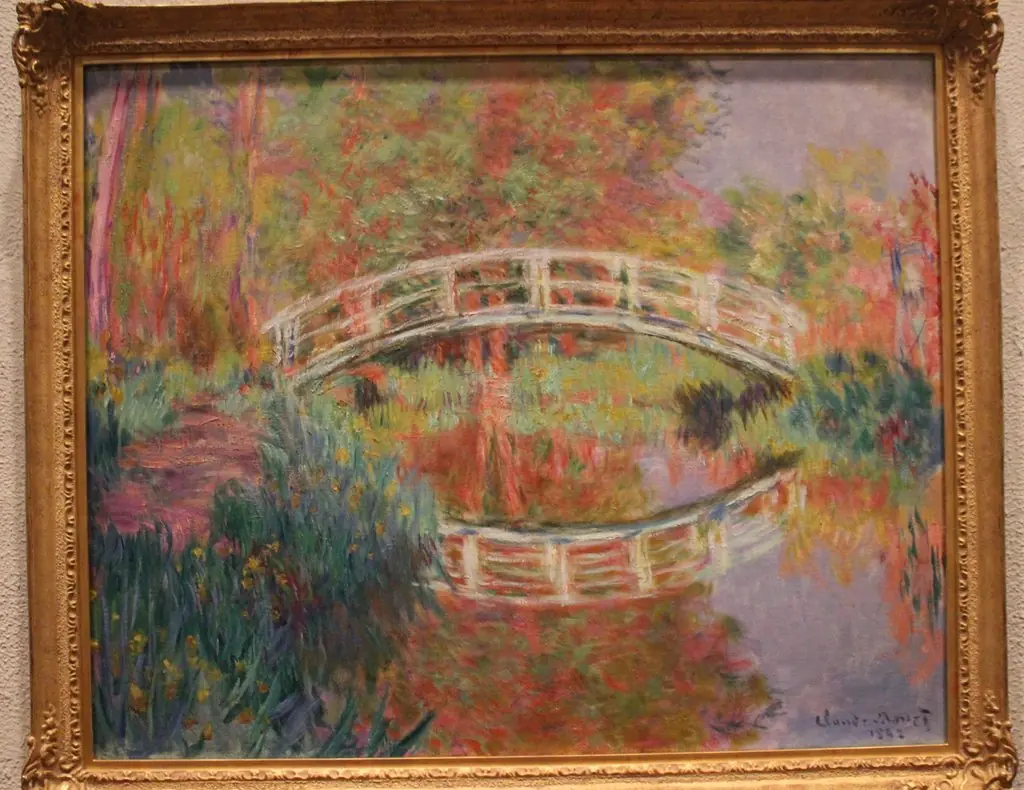
Painted in 1900, this oil work by Claude Monet depicts a tranquil scene from his garden in Giverny. It captures the arched wooden footbridge spanning a pond dense with water lilies, framed by overhanging foliage. The composition emphasizes harmony between natural forms and the artist’s intimate observation of light and color in his own landscape.
Subject & Meaning
The painting centers on a modest bridge and the pond it crosses, both elements Monet cultivated himself. Rather than portraying grandeur, it invites quiet contemplation of nature’s subtle rhythms. The water lilies, recurring throughout his late work, suggest transience and reflection, echoing his fascination with fleeting atmospheric effects and the passage of time.
Technique & Style
Monet applied paint in loose, layered brushstrokes that blend color rather than define form. Greens dominate the palette, modulated with muted blues and browns to suggest shadow and depth. The surface is textured and dynamic, with no hard outlines, light is rendered through color variation alone, embodying the core principles of Impressionism.
History & Provenance
Created during Monet’s most prolific period at Giverny, the painting was part of a series documenting his water garden. It entered the Philadelphia Museum of Art’s collection in 1952 through the John G. Johnson bequest, a significant assembly of European art assembled by the Philadelphia lawyer and collector.
Context
Monet painted this scene during a time when he increasingly turned inward, focusing on his garden as both subject and sanctuary. The Japanese bridge, inspired by prints he collected, symbolized his interest in Eastern aesthetics. This body of work marked a shift from external landscapes to immersive, almost abstract studies of light on water.
Legacy
This painting contributes to a body of work that redefined landscape painting by prioritizing sensory experience over narrative. Its emphasis on atmosphere and surface texture influenced later abstract movements. Though rooted in observation, its emotional resonance lies in its quiet repetition, each version a meditation on perception itself.
Own this work as a print
Artist & collection
Artist
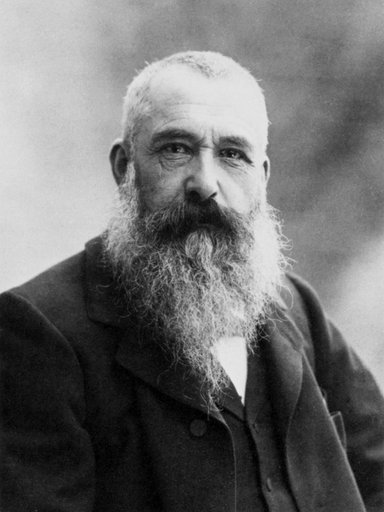
Oscar-Claude Monet was a French painter and founder of Impressionism who is seen as a key precursor to modernism, especially in his attempts to paint nature as he perceived it.