Artwork
Tenjin Traveling to China
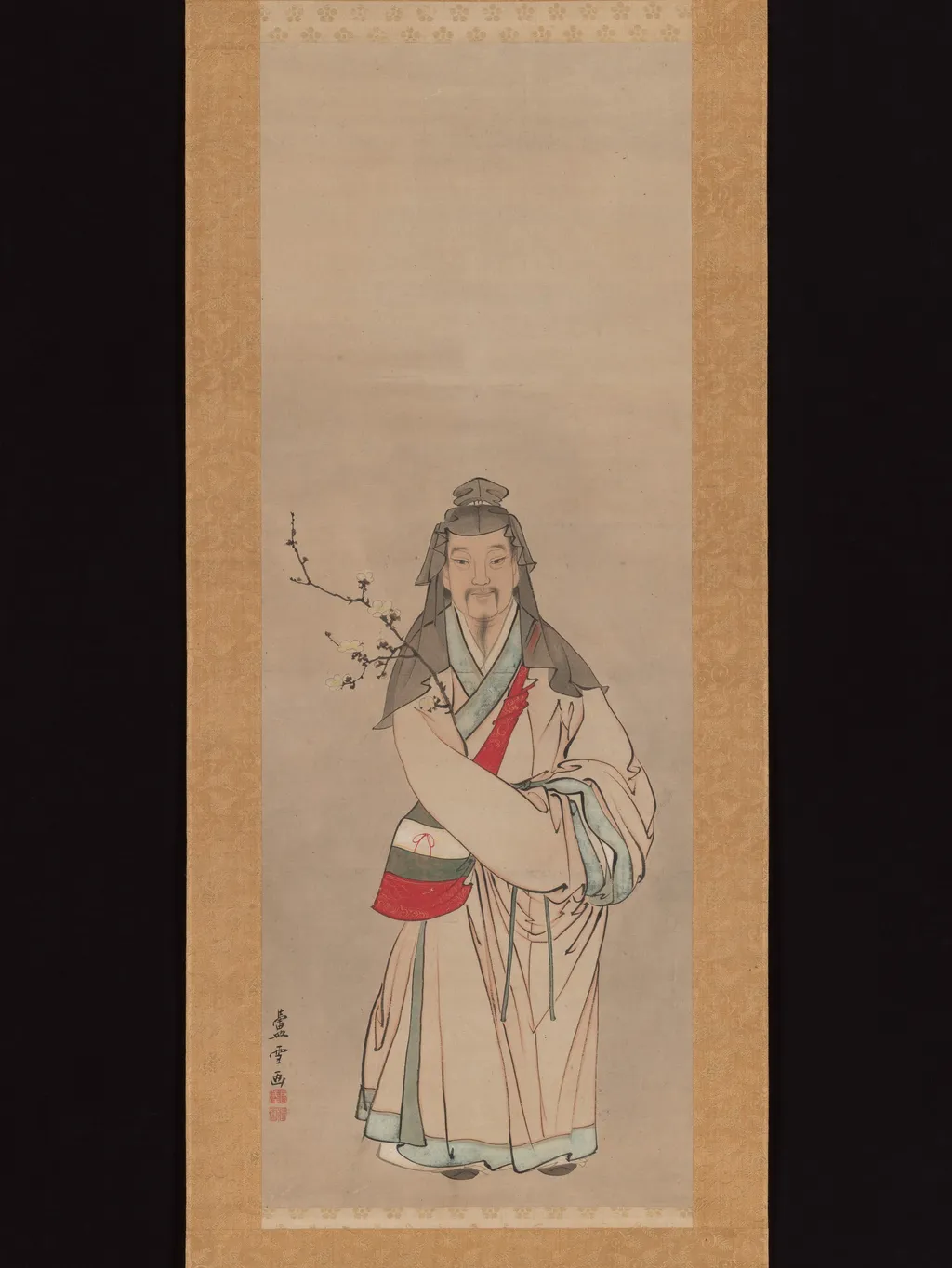
Tenjin Traveling to China is an unspecified painting by the Ukiyo-e artist Nagasawa Rosetsu. It dates from 1794 and is held in the collection of the Metropolitan Museum of Art.
About this work
History & Provenance
Its creation history is documented through stylistic analysis and archival records indicating production during Rosetsu's mature period in Kyoto.
The work titled Tenjin Traveling to China was created in 1787 by Nagasawa Rosetsu in Japan. It entered the collection of the Metropolitan Museum of Art, where it remains on view.
The painting was commissioned by an unidentified patron seeking a depiction of the legendary Chinese envoy Tenjin.
Its creation history is documented through stylistic analysis and archival records indicating production during Rosetsu's mature period in Kyoto.
The painting Tenjin Traveling to China by Nagasawa Rosetsu (1754–1799) is held by the Metropolitan Museum of Art. It entered the collection with the accession number 1983.596. The work has been part of exhibitions at the museum, including the 1983 exhibition "Japanese Paintings of the Edo Period" and the 2014 exhibition "Japan’s Golden Age: Paintings by the Rinpa Masters".
Overview
Created in 1794 by the Edo‑period painter Nagasawa Rosetsu, “Tenjin Traveling to China” is a modestly sized work in the collection of the Metropolitan Museum of Art. The composition presents a solitary figure in traditional attire, set against a muted, light‑brown backdrop that emphasizes the quiet atmosphere of the scene.
Subject & Meaning
The central figure is a man bearing a slender branch adorned with small white blossoms, his calm expression and relaxed pose suggesting a contemplative journey. The inclusion of the branch, a common symbol of purity and transience in Japanese visual culture, hints at the scholarly or spiritual undertones associated with the deity Tenjin, traditionally linked to learning and travel.
Technique & Style
Rosetsu employs a restrained brushwork that balances delicate line with subtle washes of ink and muted pigments. The figure’s robe, highlighted by a red sash, and the simple hat are rendered with precise, economical strokes, while the background’s uniform tone creates depth without elaborate detail, reflecting the artist’s preference for understated elegance in everyday subjects.
Own this work as a print
Artist & collection

Artist
Nagasawa Rosetsu (長沢芦雪; 1754–1799) was a Japanese painter during the Edo period. A disciple of the Maruyama School, he was known for his versatile artistic style. He was born to the family of a low-ranking samurai. He…

 Gyoran Kannon
 Bandō Mitsugorō II as Shinbei in the Kabuki Play "Sukeroku"
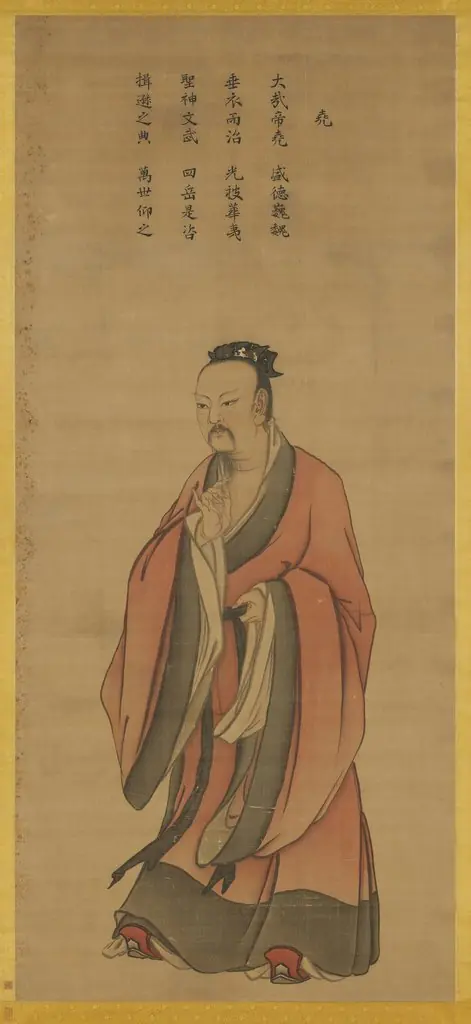 帝堯立像
帝堯立像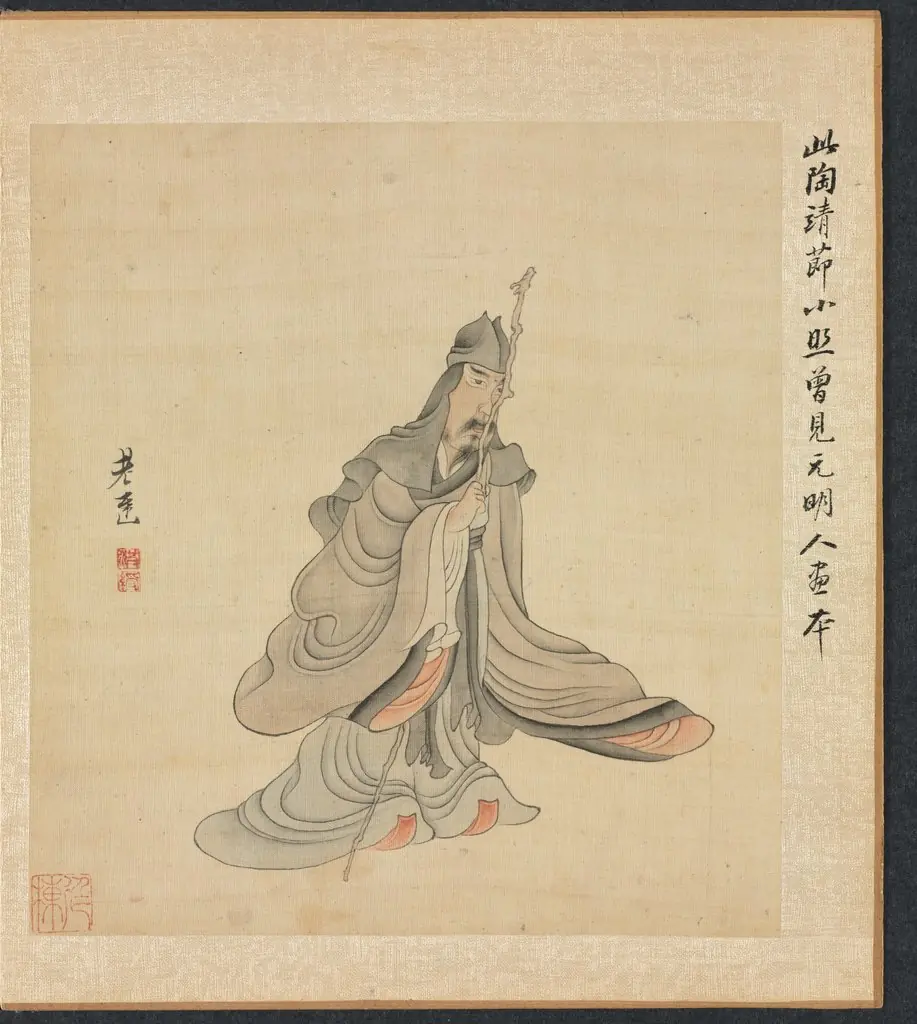 Paintings after Ancient Masters: Portrait of Tao Yuanming
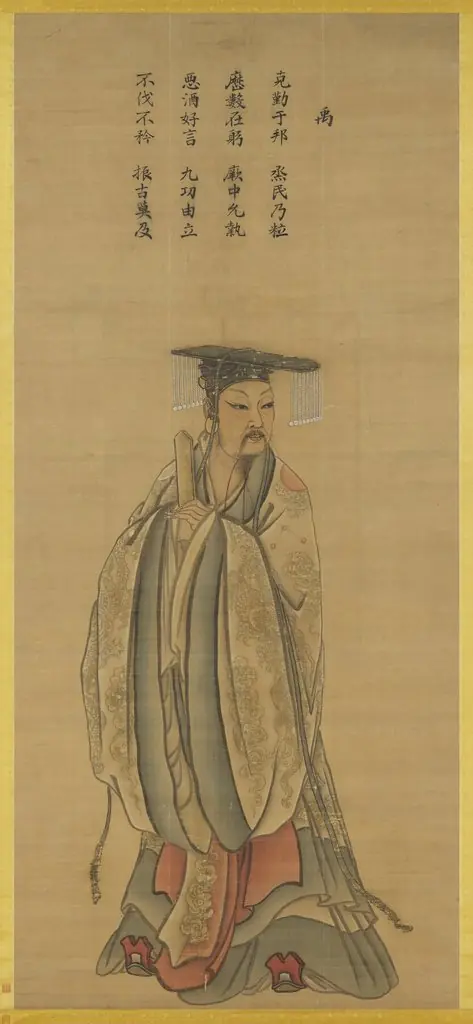 夏禹王立像 軸
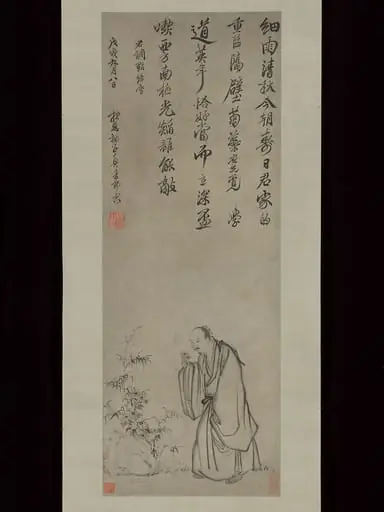 清 佚名 仿張風 摘菊圖 軸|Plucking Chrysanthemums
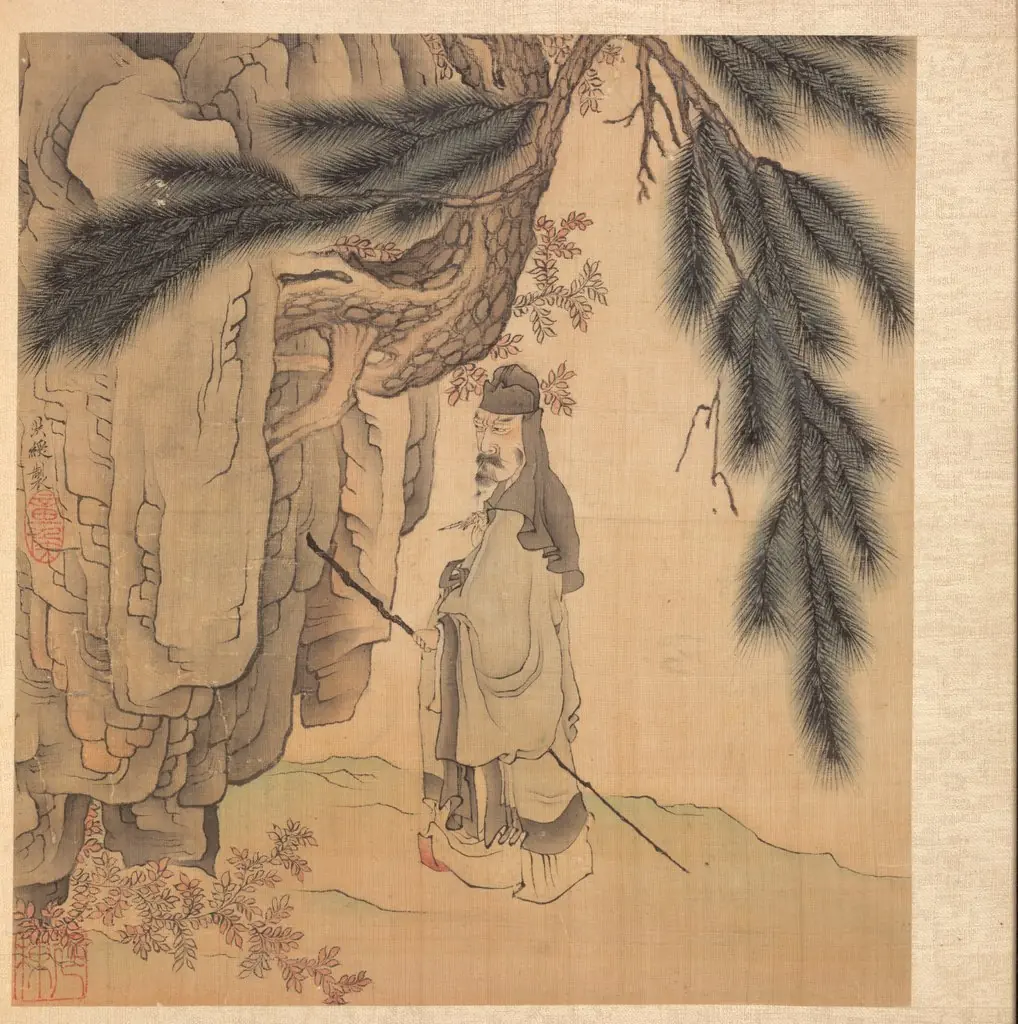 Paintings after Ancient Masters: Scholar with Staff and Brush
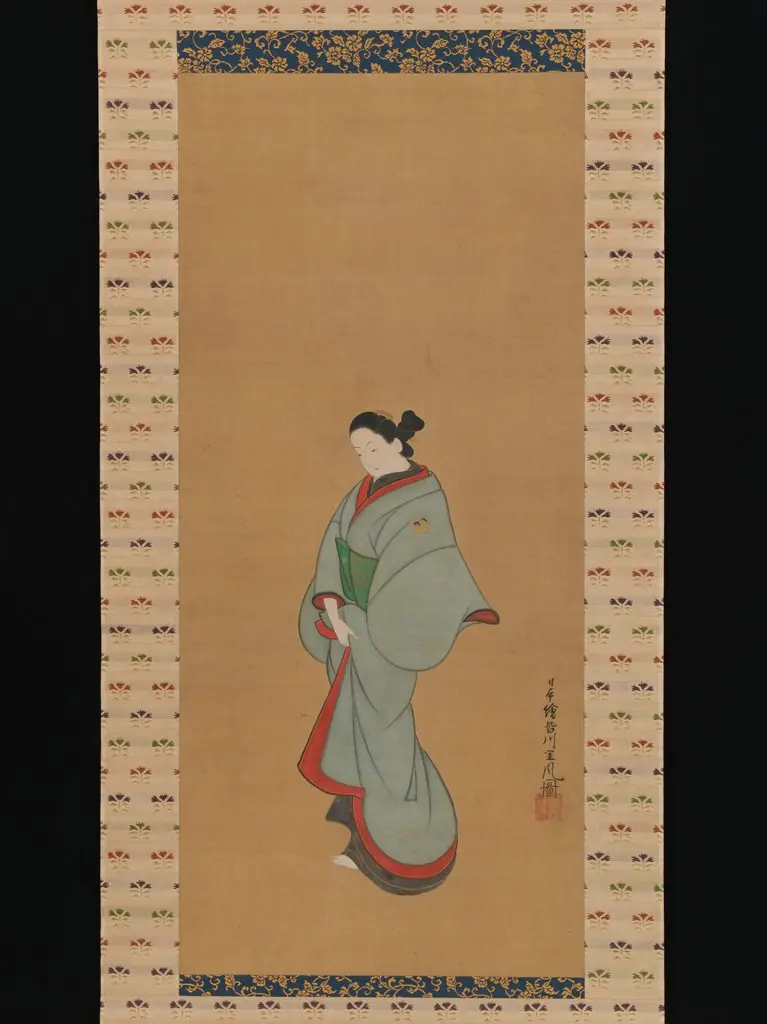 Standing Woman
 Untitled
 Paintings after Ancient Masters: Scholar with Staff and Brush