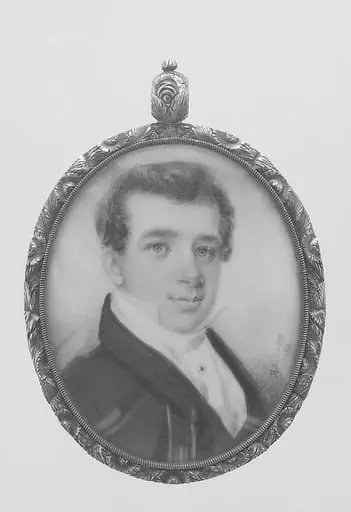
Artwork
Stephen Salisbury
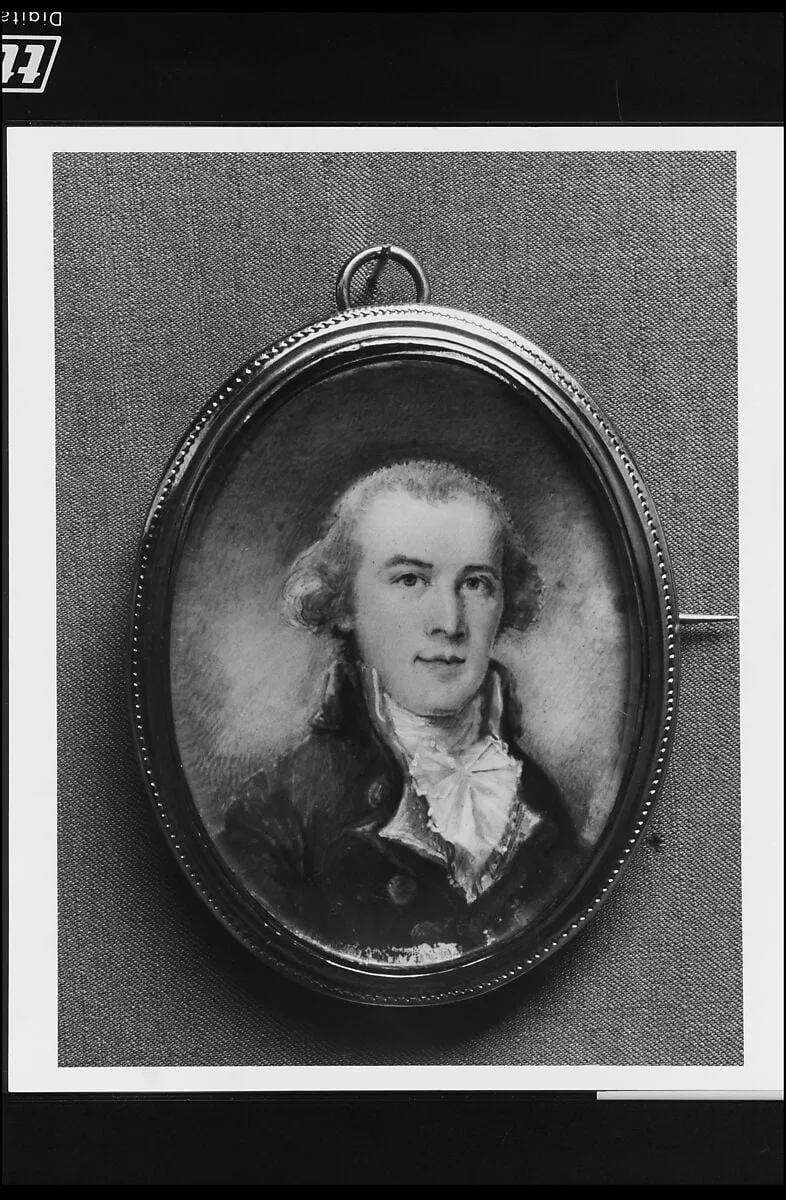
Stephen Salisbury is a watercolor painting by the American Folk Art artist Nathaniel Hancock. It dates from 1795 and is held in the collection of the Metropolitan Museum of Art.
About this work
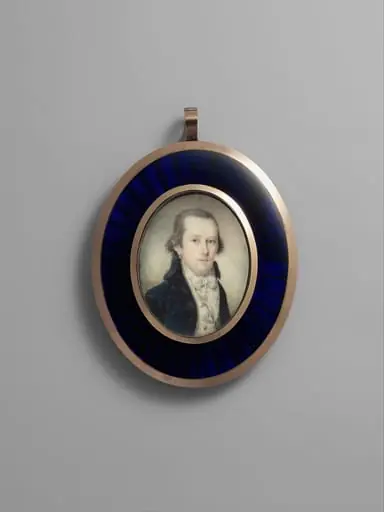
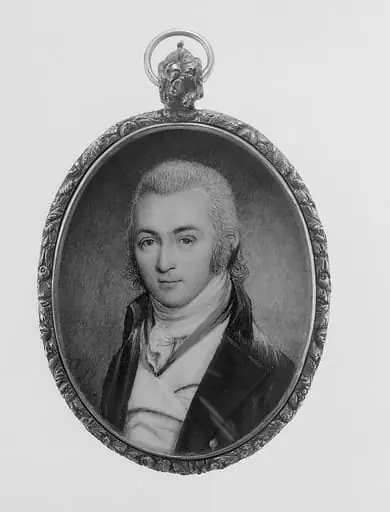
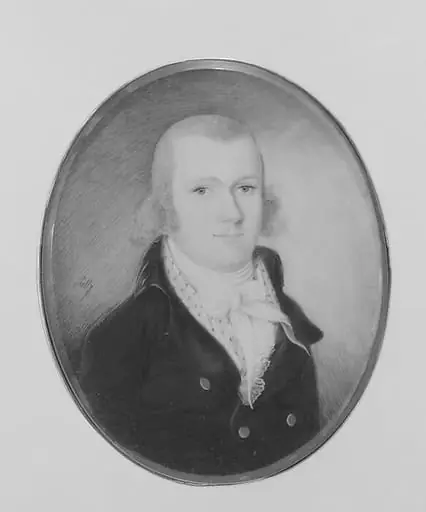
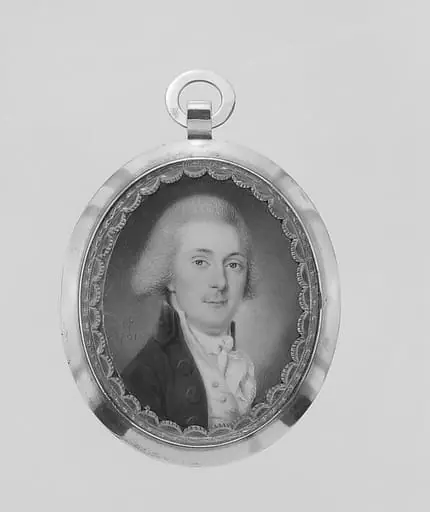
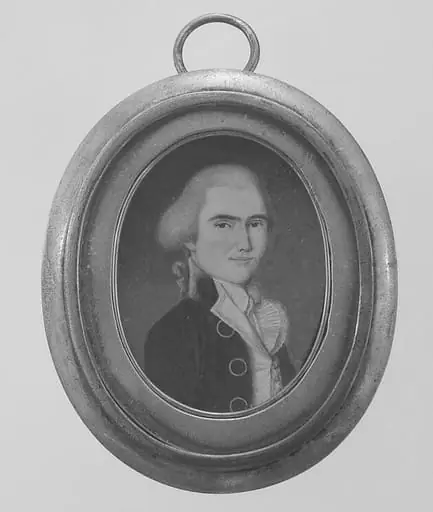
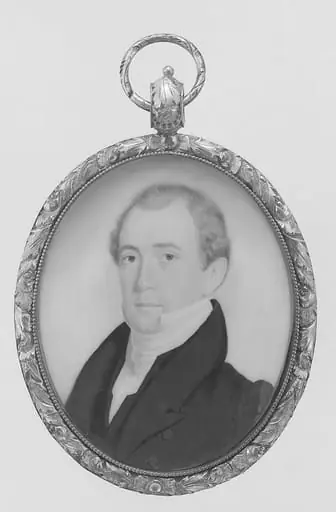
A man in a dark coat looks straight out, his face lit against a pale ground, features built from tiny strokes of watercolor down to the faint stubble. Painted in 1795 on ivory rather than the usual oil on canvas, this miniature was made to be held in the hand or worn as jewelry.
Subject & Meaning
The depiction serves to document an early American figure, preserving his likeness for contemporary and future audiences.
The work is a portrait that depicts Stephen Salisbury I, a man identified in the records as the subject of the painting. By rendering him in watercolor on ivory, the artist provides a visual record of his appearance and social standing, situating the image within the genre of portraiture and the American Wing’s collection at the Metropolitan Museum of Art. The depiction serves to document an early American figure, preserving his likeness for contemporary and future audiences.
Technique & Style
Executed in 1790, this portrait of Stephen Salisbury I utilizes watercolor applied to an ivory support. The work is classified as a miniature painting, characterized by its diminutive scale, measuring approximately 4.4 by 3.3 units. Attributed to the artist Nathaniel Hancock, the piece demonstrates the formal qualities typical of late eighteenth-century American portraiture on ivory, where the translucent nature of the watercolor medium interacts with the smooth, luminous surface of the ivory to create a refined finish.
The composition focuses strictly on the bust-length depiction of the male subject, adhering to the conventions of the genre within the collection of the Metropolitan Museum of Art.
History & Provenance
The portrait of Stephen Salisbury I was executed in 1790 by Nathaniel Hancock as a watercolor on ivory. The work is attributed to Hancock and portrays the subject as a man, fitting the portrait genre. It entered the collection of the Metropolitan Museum of Art, where it is housed in The American Wing, and has remained there since its acquisition.
The painting’s inception is recorded as 1790, and its dimensions are noted as 4.4 × 3.3 units. No documentation of a specific commission survives, but the work is recognized as an early American portrait in the museum’s holdings.
The watercolor on ivory portrait of Stephen Salisbury by Nathaniel Hancock is held in the collection of the Metropolitan Museum of Art, where it is classified within The American Wing. According to Wikidata records, the work has been part of the Metropolitan Museum of Art's holdings and is located there. The portrait, executed in 1790, depicts Stephen Salisbury I and is catalogued as a portrait genre work.
No specific accession number is provided in the available sources, and no exhibition history beyond its inclusion in the museum's collection is documented.
Context
Attributed to Nathaniel Hancock, the 1790 watercolor portrait of Stephen Salisbury I occupies a distinct position in early American portraiture. Documented in the Metropolitan Museum of Art’s American Wing, the work exemplifies Federal‑era depictions of New England elites and reflects the limited but growing network of professional painters in the young republic. Scholarship highlights its technical modestness yet emphasizes its value as a visual record of colonial‑era merchant class identity.
The painting’s inclusion in a major institutional collection underscores its recognized significance within the historiography of American art, situating Hancock as a precursor to later portraitists who chronicled the nation’s emerging elite.
Overview
This miniature portrait depicts Stephen Salisbury, a subject whose gaze directly engages the viewer. Rendered with a softly illuminated face against a light background, the artwork was designed for intimate viewing. Its small scale suggests it was intended to be held or incorporated into personal adornment, a common practice for such delicate works.
Artist & collection

Artist
Nathaniel Hancock's origins and training remain obscure, but his presence as a painter first surfaces in Boston newspaper advertisements from December 1789, when he announced his return to the city and opened a studio…