Artwork
St James and (?) St Andrew with angels
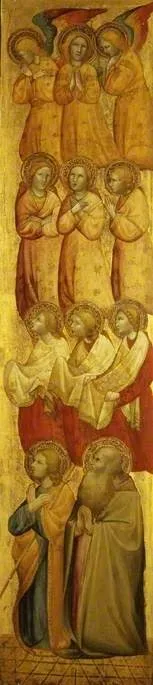
St James and (?) St Andrew with angels is an unspecified painting by the Italo Byzantine artist Olivuccio di Ciccarello. It dates from 1400 and is held in the collection of the Fitzwilliam Museum.
About this work
Overview
The artist, active in central Italy from the late 14th to early 15th century, was a principal figure in the Ancona school of Gothic painting.
Painted around 1400 by Olivuccio di Ciccarello, this work features two apostles flanked by angels in a devotional composition. The artist, active in central Italy from the late 14th to early 15th century, was a principal figure in the Ancona school of Gothic painting. The piece reflects the enduring influence of Byzantine traditions while showing early signs of regional stylistic evolution. It is now part of the Fitzwilliam Museum’s collection in Cambridge.
Subject & Meaning
The two figures are identified as Saints James and Andrew, distinguished by attributes: James wears a pilgrim’s hat, signaling his association with the Camino de Santiago, while Andrew is marked by the X-shaped cross, or saltire, of his martyrdom. Angels, rendered with halos and delicate gestures, flank them as celestial attendants. The composition serves a liturgical purpose, inviting veneration and emphasizing the saints’ intercessory role in Christian devotion.
Technique & Style
The painting employs tempera and gold leaf on panel, characteristic of late medieval Italian practice. Figures are elongated and arranged hieratically, with flat, decorative backgrounds and rich red and gold tones that convey sacredness. While retaining Byzantine conventions in posture and drapery, subtle modeling in the faces and folds suggests a transition toward more naturalistic representation emerging in early 15th-century Italy.
History & Provenance
Created in the early 1400s, the painting likely originated as an altarpiece panel in a church or private chapel in the Marche region. Its documented history begins with its acquisition by the Fitzwilliam Museum, though earlier ownership records are sparse. The work survived intact through centuries, avoiding major alterations, which has preserved its original iconography and material integrity.
Context
Olivuccio worked during a period when Italian painting was shifting from rigid Byzantine models toward greater spatial and emotional expression. In Ancona, he synthesized local traditions with influences from neighboring regions like Umbria and the Adriatic coast. This painting exemplifies how smaller centers maintained distinct artistic identities even as Florence and Siena led broader stylistic revolutions.
Legacy
Though overshadowed by major Renaissance figures, Olivuccio’s work represents the vitality of provincial Gothic painting in early 15th-century Italy. His synthesis of Byzantine form with emerging naturalism influenced regional workshops. The survival of this panel offers insight into the devotional culture of smaller Italian communities, where traditional iconography remained central well into the Renaissance era.
Artist & collection
Artist
Olivuccio di Ciccarello (died 1439) was an Italian painter. Little is known of his life. He was a native of Camerino and was active from 1388 until his death. In 2002 works formerly attributed to an obscure painter…

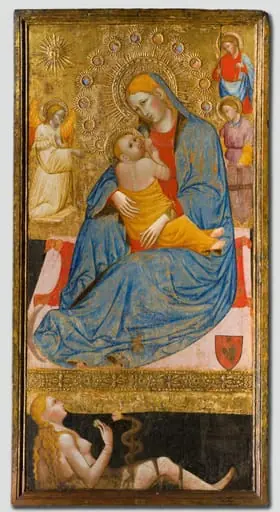
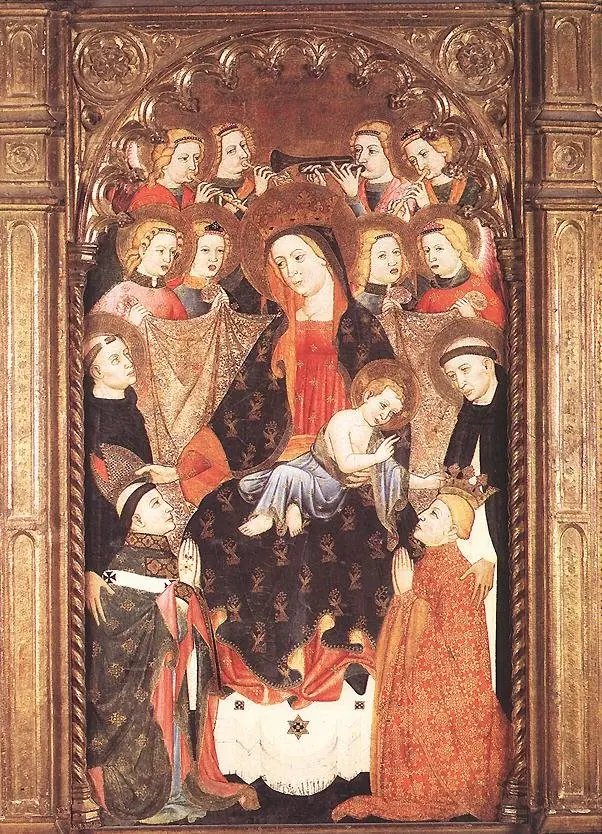 Virgin and Child with Angels and Saints
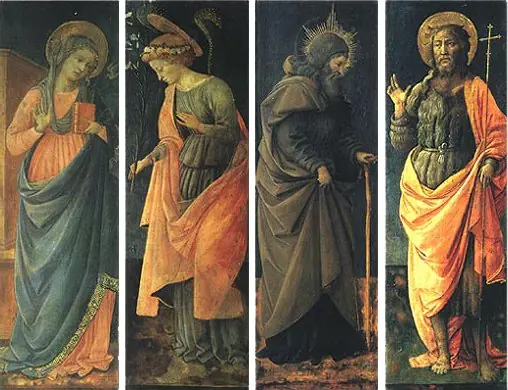 The Annunciation, Saints Anthony Abate, John the Baptist
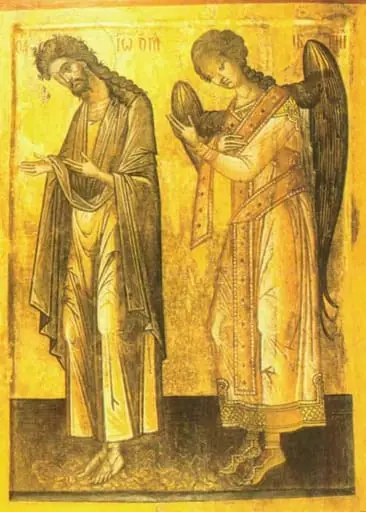 Sfântul Ioan Botezătorul și Arhanghelul Gavriil
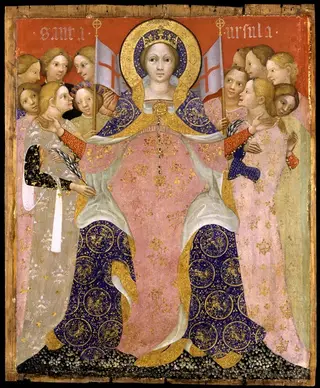 St Ursula
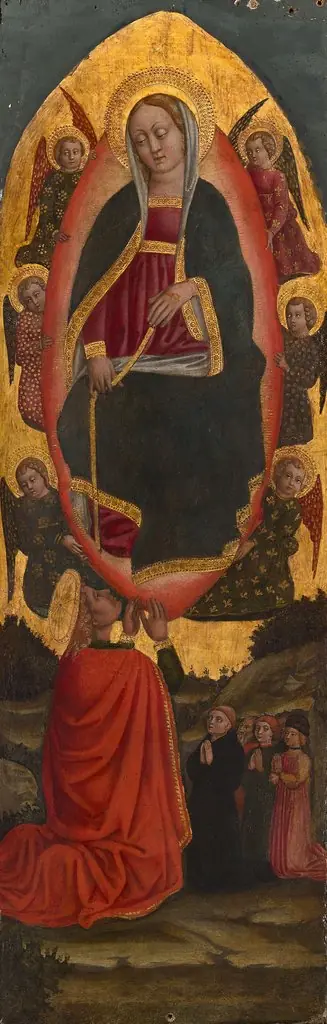 The Assumption of the Virgin with Saints from an Augustinian altarpiece
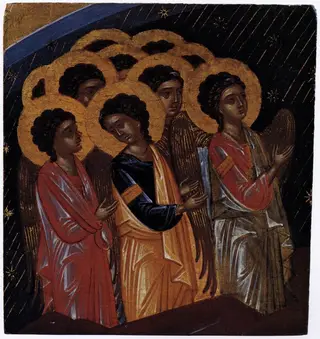 Angelic Choir of the Nativity
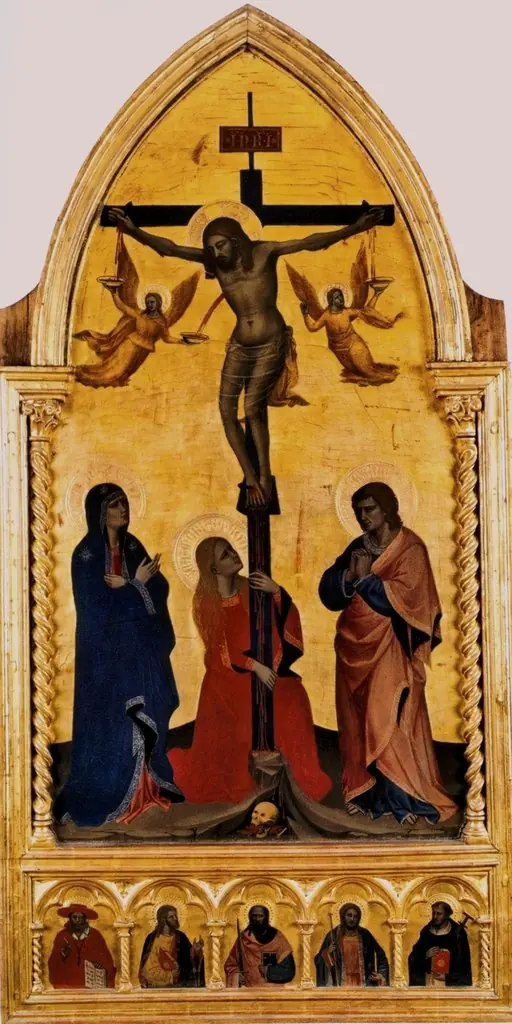 Crucifixion
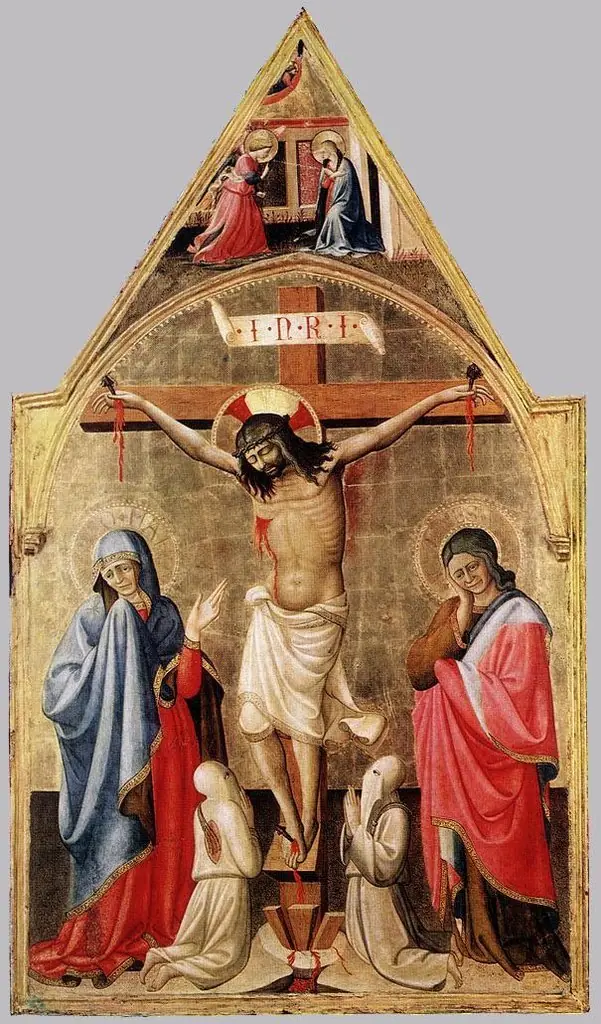 Crucifixion with Mary and St John the Evangelist
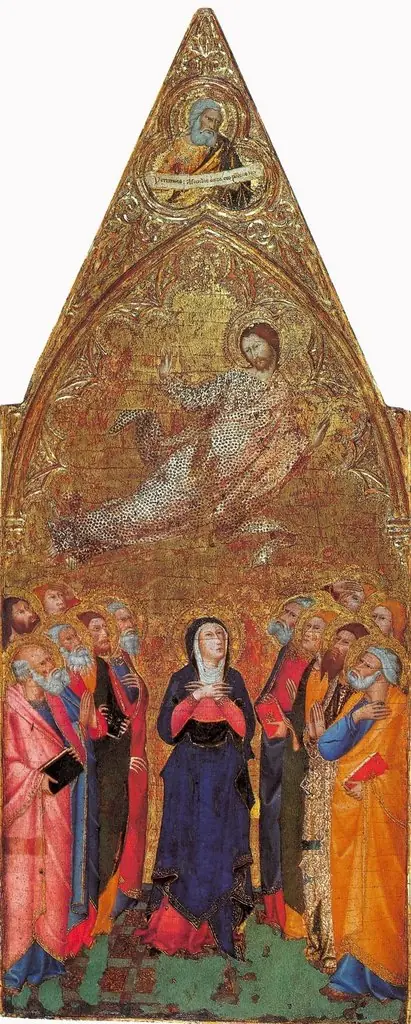 Ascension
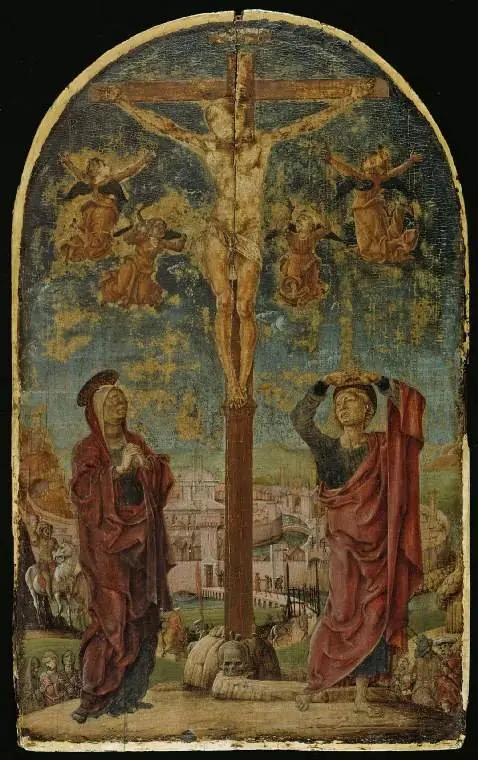 The Crucifixion
- Saints and Angels