Artwork
Madonna with the Long Neck
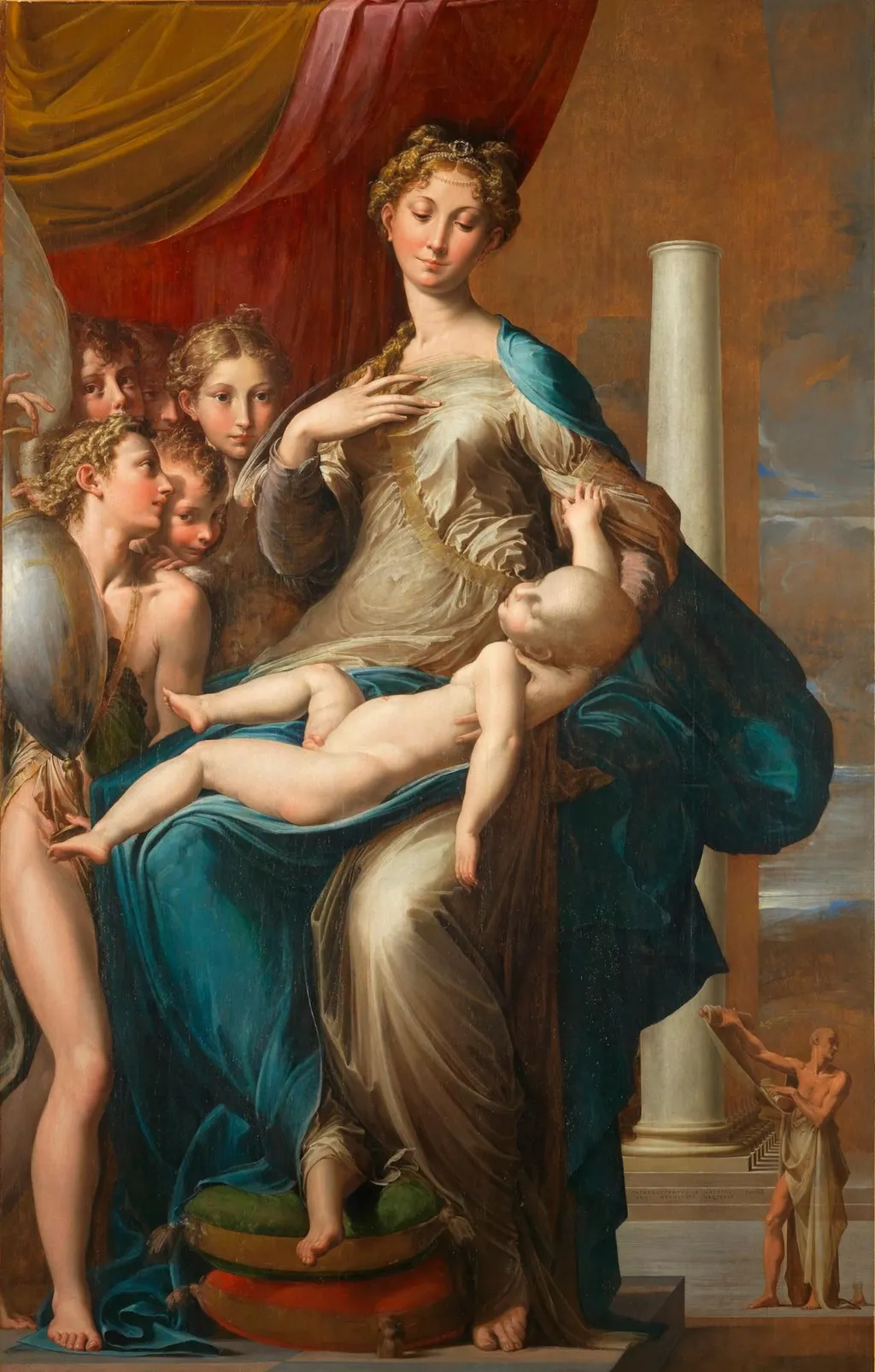
Madonna with the Long Neck is an oil painting by the Mannerist artist Parmigianino. It dates from 1530 and is held in the collection of the Uffizi Gallery.
About this work
Ferdinando de’ Medici bought it in 1698 and the Uffizi has shown it since 1948.
This is a painting of the Madonna holding the Christ Child with angels. Parmigianino used oil paint in a way that feels a little stretched and soft. The painting was started in 1534 for a chapel in Parma but never finished.
Its long neck and graceful figures show a style called Mannerism. The artist left Parma before it was done. Ferdinando de’ Medici bought it in 1698 and the Uffizi has shown it since 1948.
Look up the artist Parmigianino.
Overview
Madonna with the Long Neck is an Italian Mannerist oil painting on panel by Parmigianino, created circa 1534 to 1540. Measuring 219 by 132 centimeters, the work depicts the Virgin Mary with the Christ Child and angels, alongside an enigmatic scene featuring a column and a small prophet. Commissioned for a funerary chapel in Parma, the painting remained unfinished at the artist's death in 1540. It is widely regarded as one of the most significant and representative works of Italian Mannerism, deliberately breaking with classical Renaissance harmony in favor of unorthodox composition and elongated proportions. Acquired by Ferdinando de' Medici in 1698, the painting has been on display at the Uffizi Gallery in Florence since 1948.
Subject & Meaning
The painting shows the Virgin Mary seated on a high pedestal, holding the large, sleeping Christ Child across her lap. To her left, a jostling crowd of six angels adores the infant, while the lower right corner features the emaciated figure of a prophet, likely Saint Jerome, holding a scroll. Saint Jerome's presence was requested by the commissioner due to his connection to the adoration of the Virgin. The Christ Child lies in a deep sleep reminiscent of death, and an angel holding a silver vase displays the faint reflection of a crucifix, foreshadowing the Passion. The prominent, capital-less column in the background may reference the Temple of Solomon or the Marian hymn Collum tuum ut colonna from the Song of Songs, which directly informs the emphasis on the Virgin's elongated neck. The Virgin's gesture, with one hand on her chest, and her clinging drapery lend the religious scene a subtle, sensual undertone. The overall composition, with the sleeping child and mourning figures, evokes the iconography of a pieta.
Technique & Style
Executed in oil on a wooden panel, the painting features Parmigianino's signature smooth, polished brushwork and a palette of cool blues, warm ochres, and creamy flesh tones. Soft light falls from the left, modeling rounded forms and creating gentle shadows. The work is a quintessential example of the Mannerist figura serpentinata, characterized by elongated proportions and twisted poses. The Virgin's neck is famously swan-like, and her slender hands and long fingers are echoed in the exaggerated limbs of the angels and the oversized body of the Christ Child, who lies precariously as if about to fall. The artist deliberately abandoned the classical solution of perfect harmony, instead cramming the angels into a narrow left corner and leaving the right side wide open, where the tiny prophet reaches only to the Virgin's knee. Her right foot rests on cushions that appear inches from the picture plane, yet the foot projects beyond it, breaking the conventions of a framed canvas. The Virgin's drapery clings like wet fabric, emphasizing her form rather than concealing it, and her state between sitting and standing defies logical spatial placement.
History & Provenance
Elena Baiardi Tagliaferri commissioned the painting on December 23, 1534, for the funerary chapel of her deceased husband, Francesco Tagliaferri, in the church of Santa Maria dei Servi in Parma. Elena was the sister of the cavalier Francesco Baiardo, a friend and patron of Parmigianino. The contract stipulated a fee of thirty-three scudi paid in advance, with a five-month deadline before Pentecost of 1535, backed by the mortgage of the artist's house. The deadline was vastly exceeded, and the work remained incomplete when Parmigianino departed for Casalmaggiore in 1540, where he died. Francesco Baiardo subsequently took possession of the artist's workshop, inventorying twenty-two paintings and 495 drawings. The canvas was finally placed in the chapel in 1542, as indicated by a now-lost stela. An inscription on the right step, FATO PRAEVENTUS F. MAZZOLI PARMENSIS ABSOLVERE NEQUIVIT, was added to justify its unfinished state due to force majeure. Cardinal Leopold de' Medici attempted to purchase the work in 1674 without success. Ferdinando de' Medici successfully acquired it in 1698 and transported it to Florence. During the Napoleonic confiscations of 1799, the painting was taken to Paris, remaining there until 1815. After its return, it was housed in the Galleria Palatina before moving to the Uffizi Gallery in 1948.
Context
Parmigianino, a pupil of Correggio, absorbed his master's figural elegance but rejected his coloristic approach, forging a distinctly anti-classical aesthetic. The painting's deliberate distortions and irrational space were celebrated in intellectual circles of the time as a conscious departure from the naturalistic beauty established by High Renaissance masters. Art historian E. H. Gombrich argued that by seeking to create something new and unexpected at the expense of natural beauty, Parmigianino and his contemporaries were perhaps the first modern artists. The work's unfinished state, particularly visible in the right background and the face of an angel below the Virgin's right elbow, has long fascinated scholars. Recent restorations revealed that the middle angel in the bottom row originally looked down at the Christ Child but now looks at the vase held by the adjacent angel. The angel facing the viewer resembles Parmigianino's Antea portrait. Medical scientist Vito Franco of the University of Palermo controversially diagnosed the Virgin's model with Marfan syndrome due to her elongated fingers, though this hypothesis is contested given the stylistic elongation common to the artist's other models. Additionally, the enigmatic oval vase has been linked to alchemy, an interest that consumed Parmigianino in his final years, or to poetic metaphors comparing a woman's neck and shoulders to a perfectly crafted vessel.
Legacy
The Madonna with the Long Neck endures as Parmigianino's most famous or even notorious painting, and a cornerstone of Mannerist art history. Its reputation rests on its radical rejection of Renaissance harmony in favor of an artificial, elegant, and deeply melancholic visual language. As Rolf Tomann observed, the painting invites the viewer into an elegantly appearing but deep, entangled, and melancholic world of consciously illogical, irreal, and enchanted spaces. The work's influence extends into modern cultural discourse, notably included in the French historian Paul Veyne's personal museum of ideal artworks. It continues to feature in contemporary literature, such as Wolf Haas's 2025 novel Wackelkontakt, in which a protagonist writes her dissertation on the painting. Today, it hangs in Room XXIX of the Uffizi alongside Parmigianino's Madonna di San Zaccaria and other Emilian Mannerist works, maintaining its status as a vital subject for art historical scholarship and a touchstone for the Mannerist movement.
Own this work as a print
Artist & collection

Artist
Girolamo Francesco Maria Mazzola (11 January 1503 – 24 August 1540), also known as Francesco Mazzola or, more commonly, as Parmigianino (UK: US: Italian:; "the little one from Parma"), was an Italian Mannerist painter…

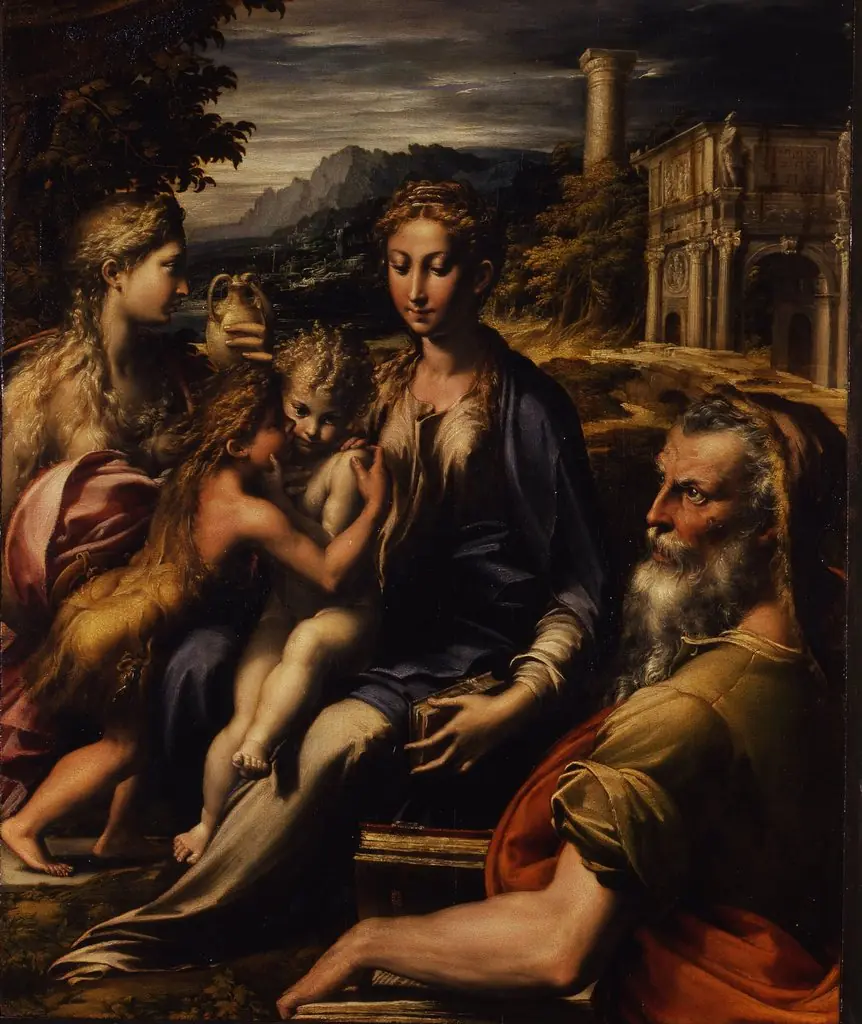
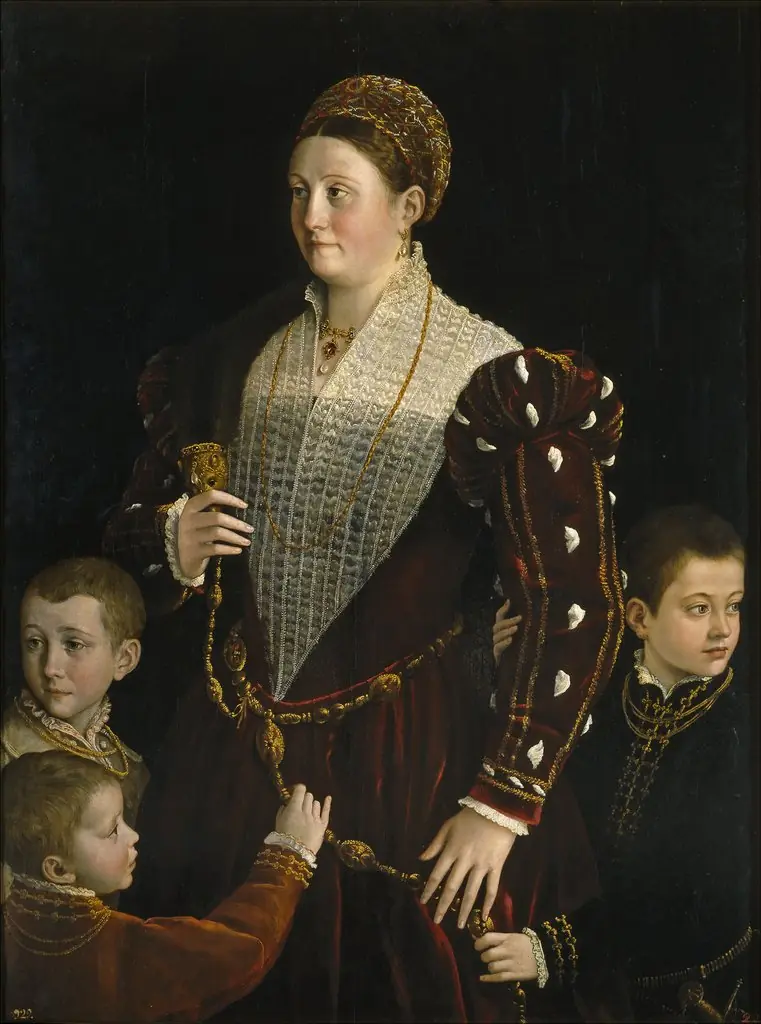
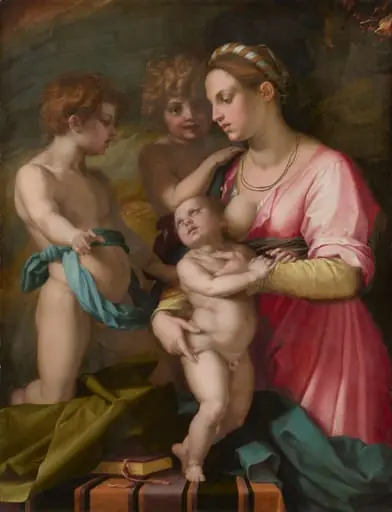 Charity
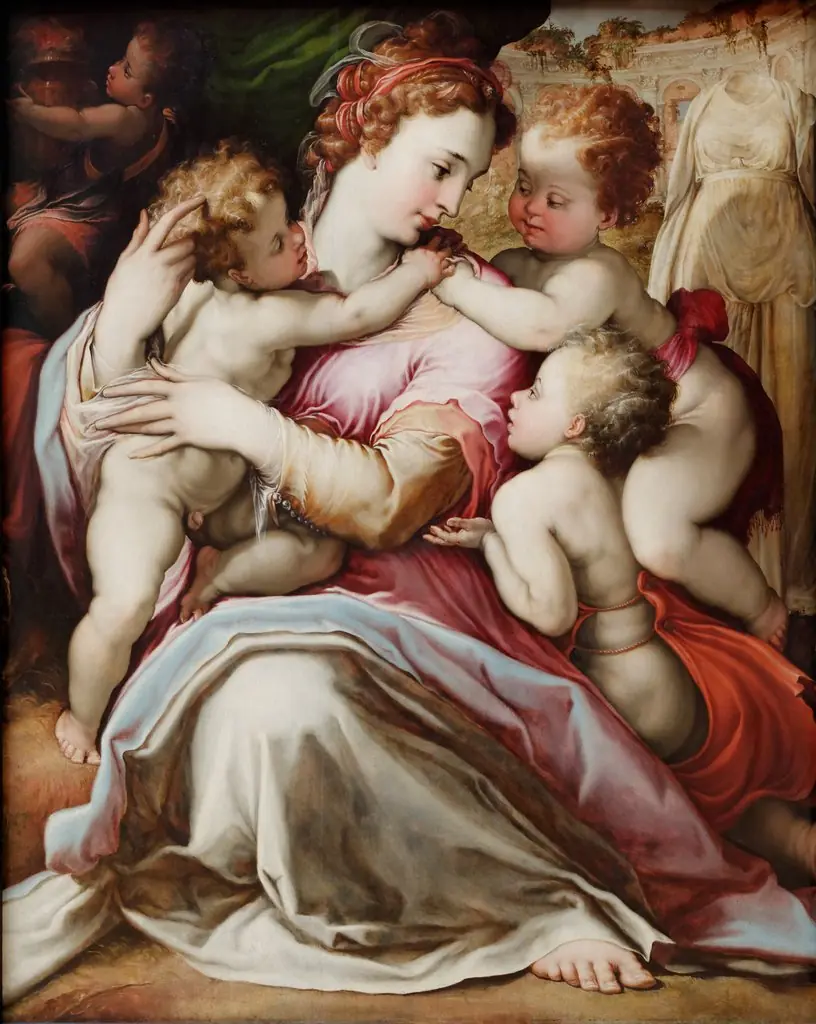 Caritas
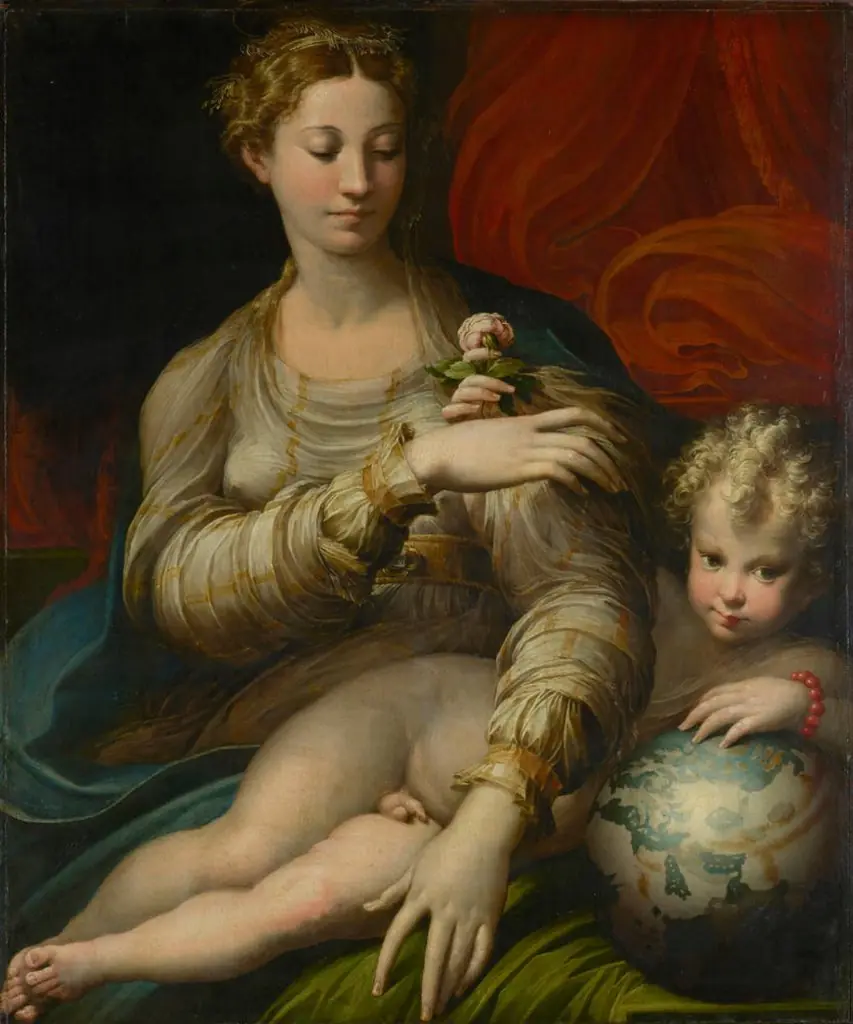 Madonna of the rose
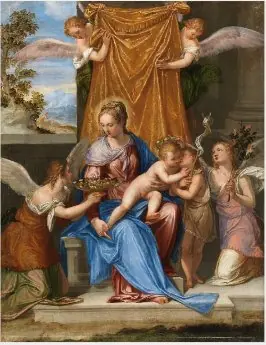 The Virgin and Child with Saint John the Baptist and Angels
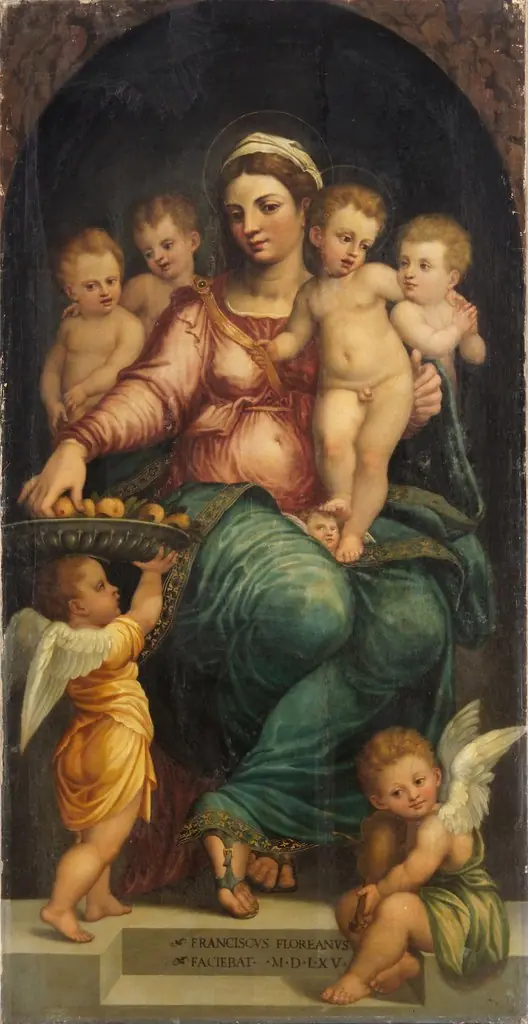 Madonna mit Kind, von Engeln umgeben
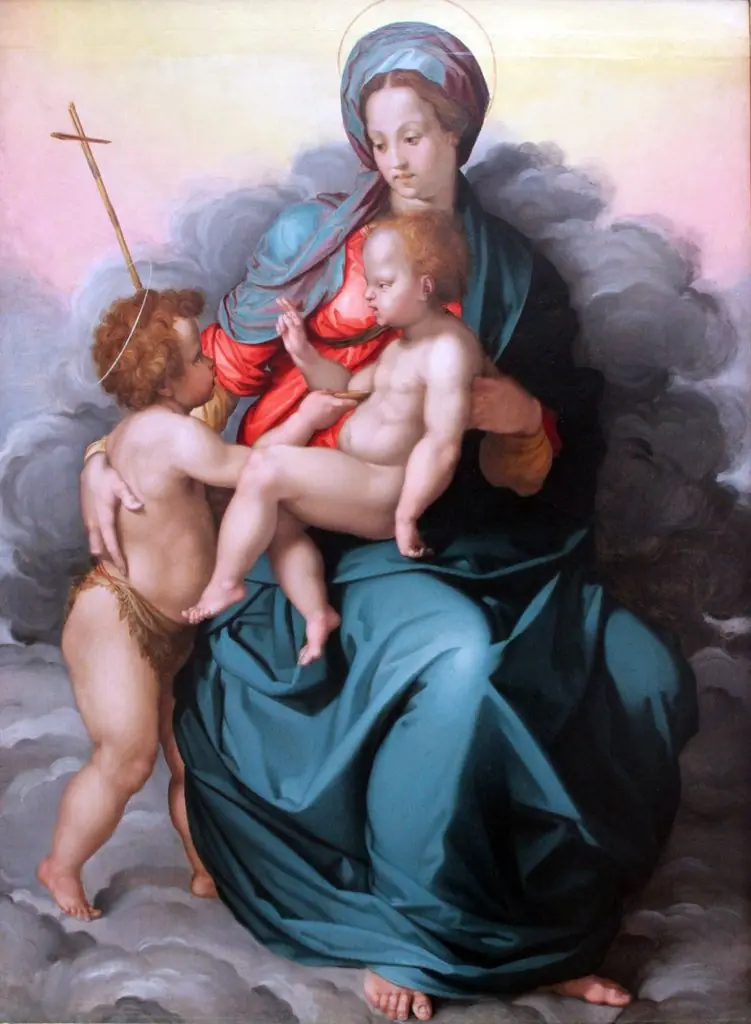 Madonna with Child and Saint John the Baptist on clouds
 Allegory of Providence
 Mystic Marriage of St. Catherine
 Maria mit dem Kinde und dem Johannesknaben
 Charity
 Holy Family with St John the Baptist
- Madonna with the Fish