Artwork
Saint Barbara
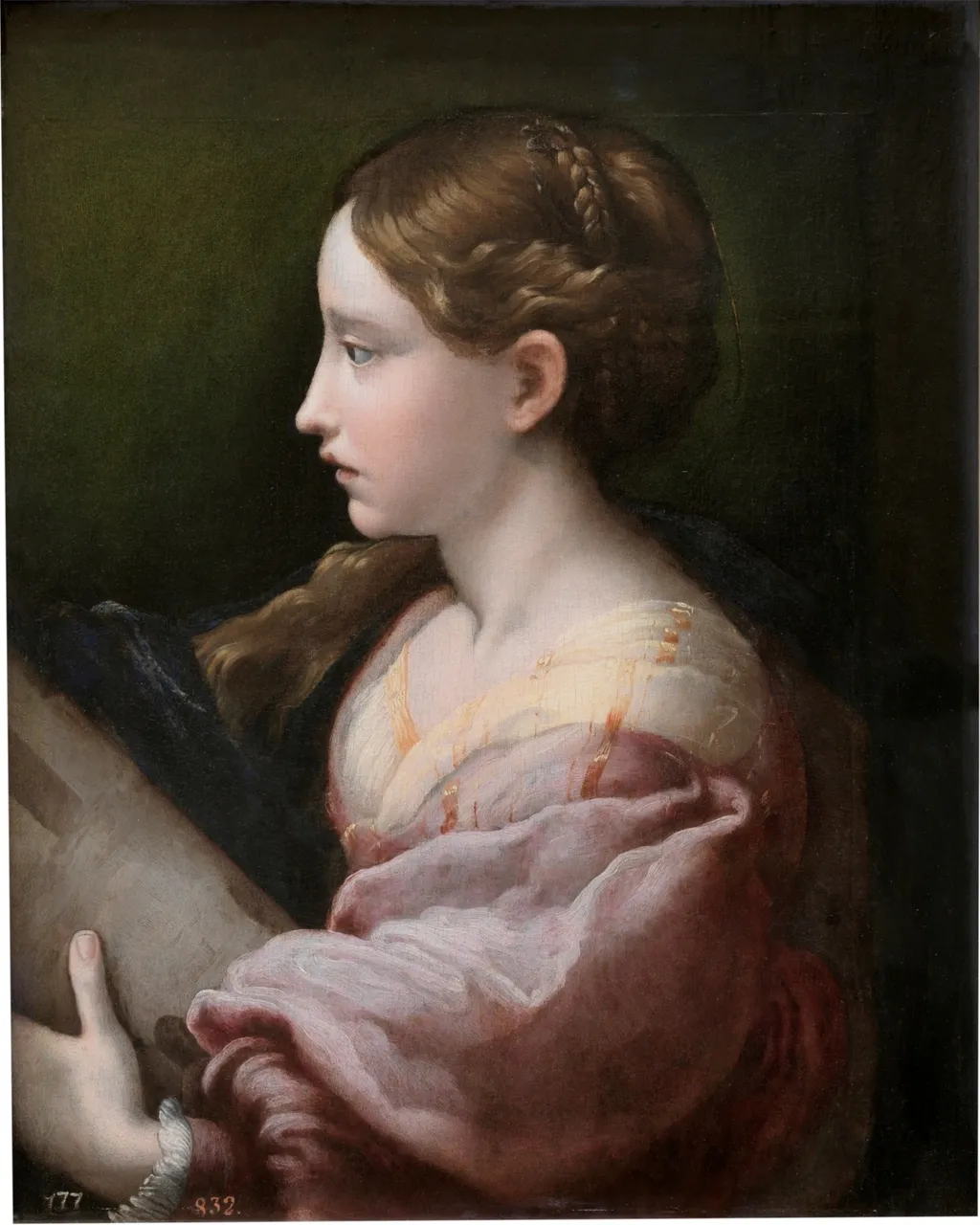
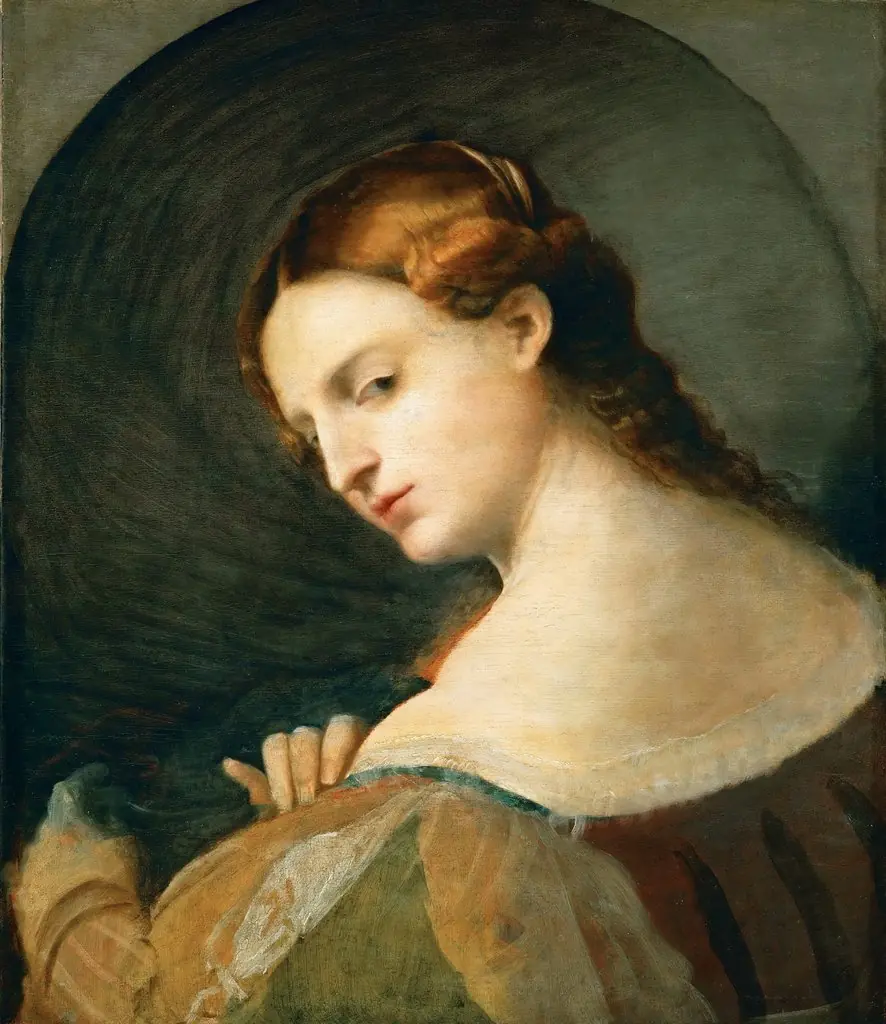
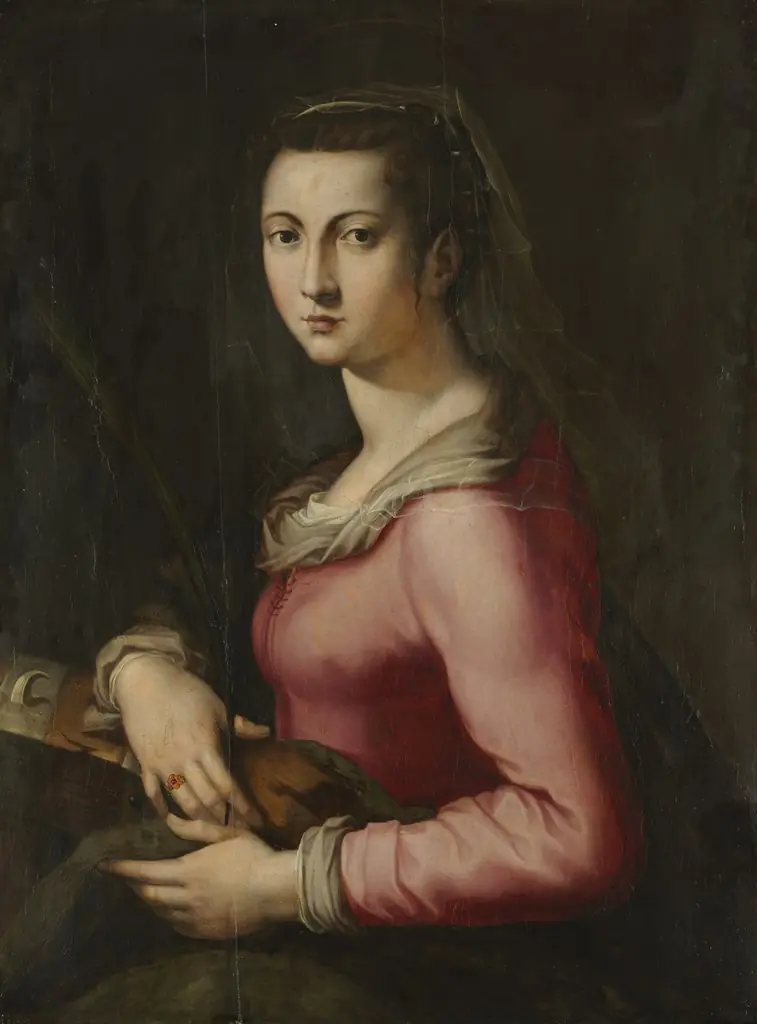
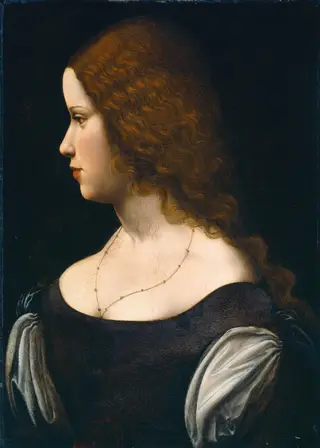
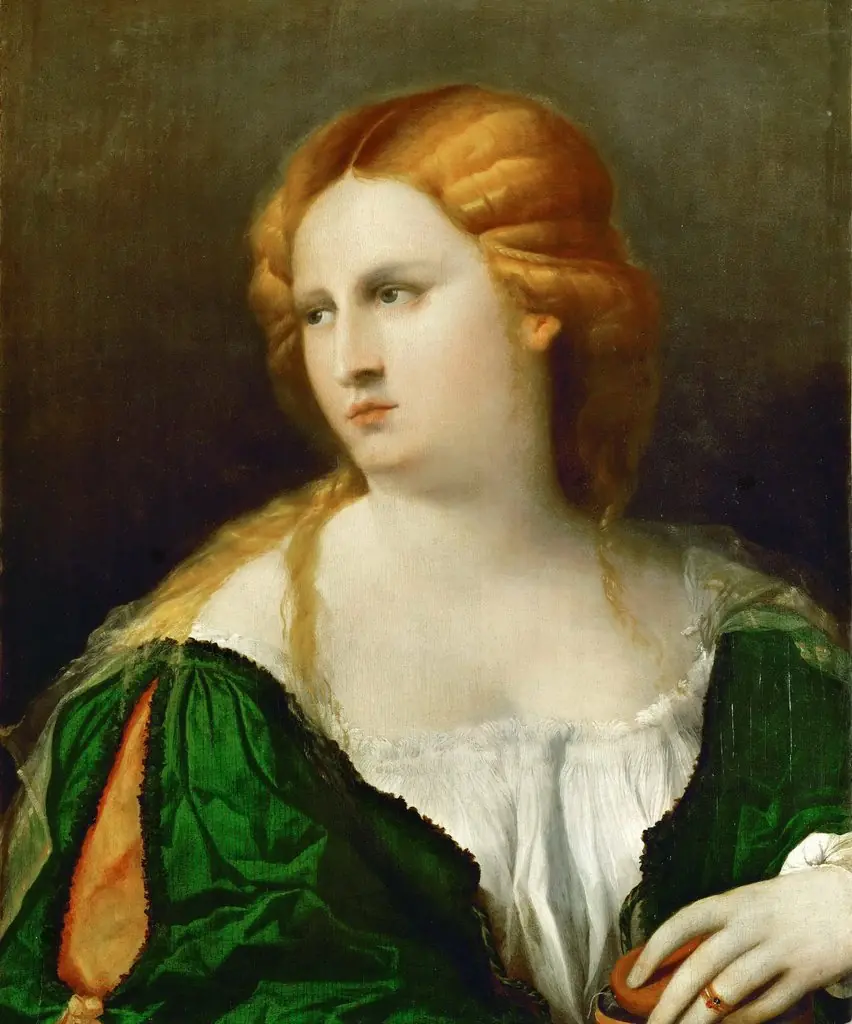
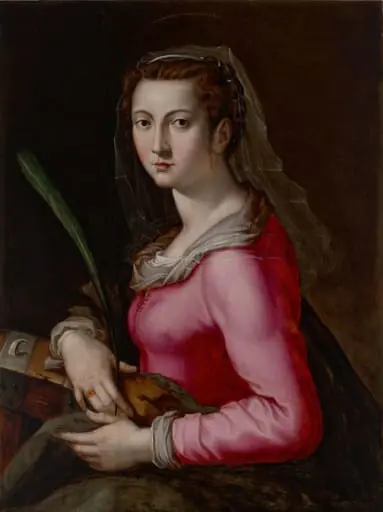
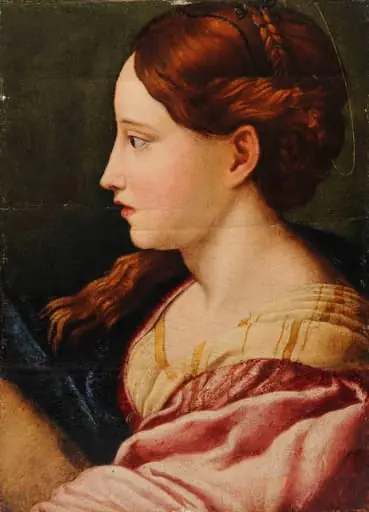
Saint Barbara is an oil painting by the High Renaissance artist Parmigianino. It dates from 1522 and is held in the collection of the Museo del Prado.
About this work
Parmigianino painted Saint Barbara with oil paints around 1523. The work shows a woman with a tower and a palm branch. Her calm face stands out against the dark background.
Parmigianino was only about 19 when he made this. The style is loose but full of energy. It’s one of his early works still in good shape.
Look up Parmigianino next.
Subject & Meaning
Parmigianino departs from conventional iconographic models, presenting the saint less as a devotional figure than as an idealized secular portrait.
The painting depicts Saint Barbara of Nicomedia, a Christian martyr venerated in Catholic tradition. According to legend, Barbara was a beautiful young woman who converted to Christianity against her father's wishes; he imprisoned her in a tower and ultimately killed her, only to be struck by lightning shortly afterward. Her usual attribute, the tower of her imprisonment, appears in the work held in her left hand.
Parmigianino departs from conventional iconographic models, presenting the saint less as a devotional figure than as an idealized secular portrait. She appears in strict profile against a dark green-to-black background, her pale pink flesh rendered with loose, fluid brushwork. The halo is barely visible, indicated only by a delicate golden line. This unconventional treatment reflects the Neoplatonic idea that external beauty mirrors divine virtue, and that contemplating such grace could elevate the viewer's mind toward heavenly spheres.
Technique & Style
Parmigianino's Saint Barbara is an oil painting on a small panel support measuring 48 by 39 cm. Executed around 1522 or 1523, the work belongs to the High Renaissance and exhibits the artist's early Mannerist style. The saint is depicted as a half-length profile bust against a dark green to black background, her pale pink flesh painted with loose, sweeping brushwork. She wears a voluminous pink sleeve with a white neckline accented by ribbons and golden reflections, rendered in the fluid, frayed brushstrokes characteristic of the painter's modern approach. Her attribute, the tower, is shaded in her left hand, while her halo is now barely visible, originally indicated only by a delicate gold line. Minor proportional errors in the anatomy reflect the artist's youthful phase.
The painting's current format does not match its original state; the panel was enlarged on all four sides, likely to suit its display location in the royal collection in Madrid.
History & Provenance
The work titled Saint Barbara is attributed to Parmigianino and was created around 1522-1523, as indicated by dated sources and stylistic analysis. It is an oil-on-panel painting measuring 48 cm by 39 cm, depicting the martyr Saint Barbara. The painting entered the collection of Princess Giulia d'Este, who acquired it in 1624 for Cardinal Alessandro d'Este, and later appeared in the Muselli collection in Verona in 1662. It was recorded in Spain in 1686 at the Real Alcázar de Madrid and subsequently listed in the inventory of the Palacio Real de la Granja de San Ildefonso from 1746. Since 1854 the work has been part of the Museo del Prado's collection, where it remains on display. Over time, the painting underwent physical modification, including expansion along all four edges to suit its display location in the royal Spanish collection. The painting is held in the Museo del Prado in Madrid, where it has been located since 1854. Prior to its arrival at the Prado, it appeared in the 1686 inventory of the Real Alcázar in Madrid and was recorded in the 1746 inventory of the Palacio Real de la Granja de San Ildefonso. Historical records suggest the work was acquired in 1624 for Cardinal Alessandro d'Este and listed in the 1662 Muselli collection in Verona. While the original work resides in Madrid, documented copies exist in other institutions. These include versions held by the Mauritshuis in The Hague (inventory 354), Pomona College in Claremont, and Chatsworth House in England (inventory 508).
Context
Critics universally attribute the work to Parmigianino, dating it to his early period based on stylistic affinities with the Bardi Altarpiece and his depictions of Saints Apollonia and Lucy. Scholars characterize the panel as one of the artist's earliest small-scale works, noting that minor anatomical disproportions confirm its juvenile status. The painting diverges from traditional iconography by presenting the martyr in a strict profile reminiscent of secular ideal portraits, a choice linked to Neoplatonic theories equating external beauty with divine virtue. Art historians have identified a drawing in the Musée Bonnat as a potential preparatory study, despite some critical reservations regarding its quality. The composition's fluid brushwork and specific handling of light anticipate the artist's mature Mannerist style.
Legacy
The painting exerted quiet influence through its elegant profile portraiture of a saint, shaping later depictions of female martyrs in mannerist art. Its unconventional composition, presenting Saint Barbara with a tower attribute in a profane yet idealized manner, demonstrated a shift toward subjective interpretation of sacred subjects, inspiring reinterpretations of her legend across European collections. The work's journey from the Muselli collection in Verona (recorded 1662) to Spanish royal palaces (Alcázar de Madrid, 1686; La Granja, 1746) cemented its reputation as a prized piece of Parmigianino's early output, later entering the Museo del Prado's permanent holdings in 1854. Its stylistic innovations, including nuanced rendering of fabric and psychological depth in the saint's expression, were noted by contemporaries and remain cited in art historical discourse on the artist's development.
Own this work as a print
Artist & collection

Artist
Girolamo Francesco Maria Mazzola (11 January 1503 – 24 August 1540), also known as Francesco Mazzola or, more commonly, as Parmigianino (UK: US: Italian:; "the little one from Parma"), was an Italian Mannerist painter…