Artwork
Lady in Blue
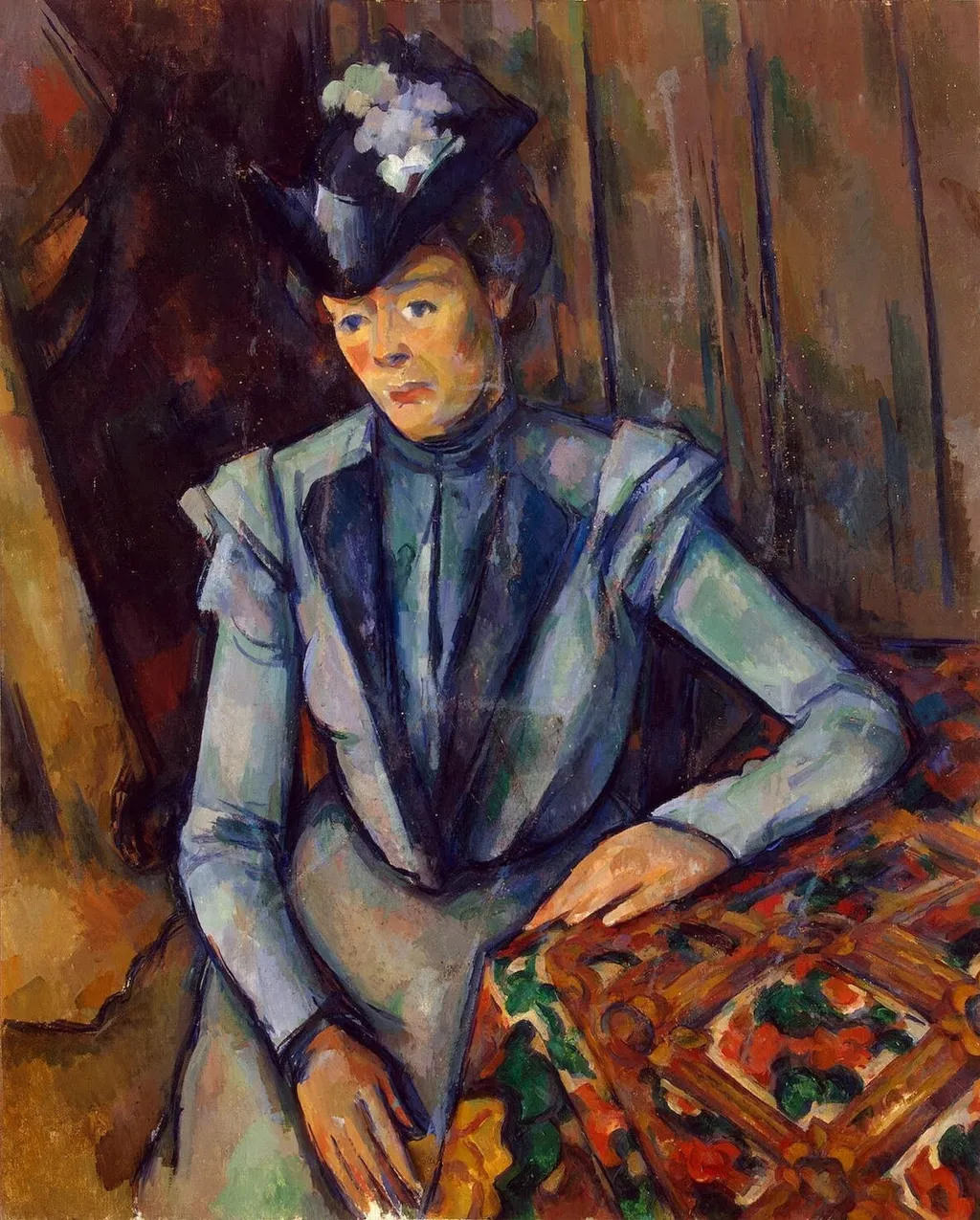
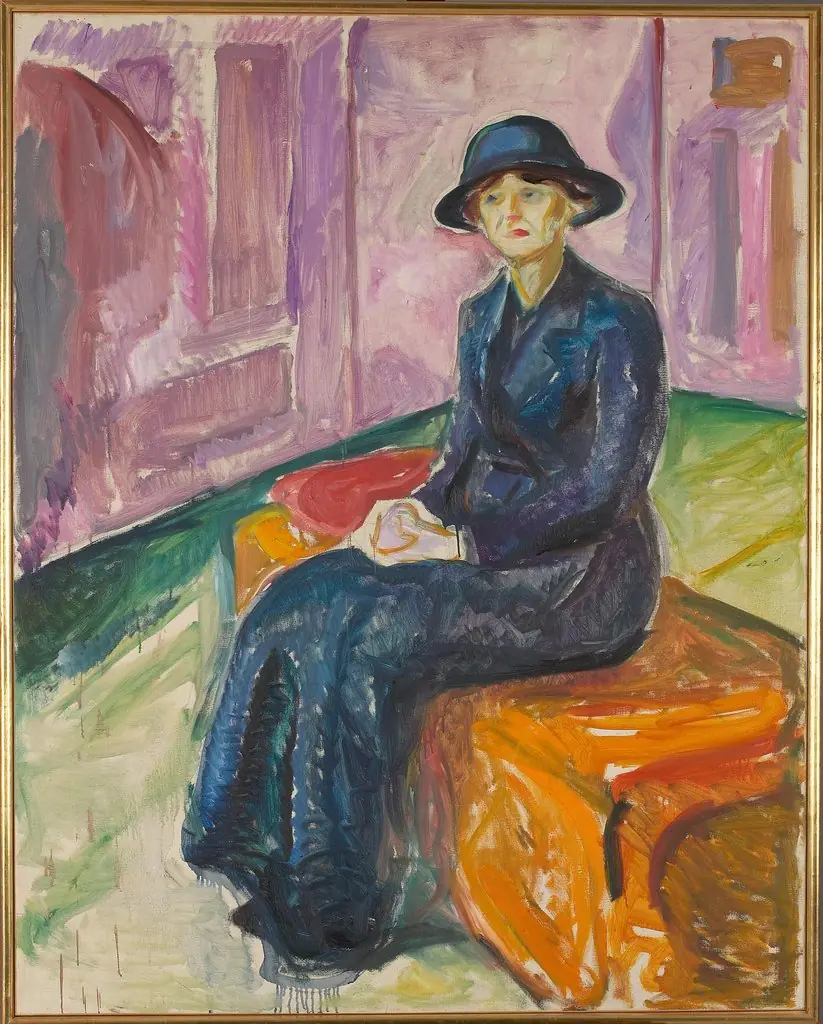
Lady in Blue is an oil painting by the Post-Impressionist artist Paul Cézanne. It dates from 1904 and is held in the collection of the Hermitage Museum.
About this work
Technique & Style
Handling shows Cézanne’s late method of building form through discrete, directional brushstrokes that integrate contour and color mass.
The work is an oil painting on canvas executed about 1904, measuring 90 cm in height and 73.5 cm in width.
Stylistically, the composition emphasizes bold, simplified forms and a restricted yet resonant palette dominated by blues, with accents that anticipate Fauvist and Cubist color strategies. The figure’s silhouette and planar treatment reduce volumetric illusion in favor of constructive structure, while the costume and setting are rendered through broad, contiguous color areas rather than fine gradations. Handling shows Cézanne’s late method of building form through discrete, directional brushstrokes that integrate contour and color mass.
Condition and support details are not specified in the sources provided.
History & Provenance
Lady in Blue was painted by Paul Cézanne in 1904 and is considered one of his final portraits of a woman. The work is documented as part of the collection of Sergei Shchukin before entering the Hermitage Museum, Saint Petersburg, where it remains. Shchukin, a prominent Russian collector, acquired the painting during Cézanne’s lifetime. Its creation followed the sale of the Jas de Bouffan estate, when the artist worked in Aix-en-Provence; some scholars identify the sitter as Madame Brémond, Cézanne’s governess, who posed in his studio on rue Boulegon. The painting is held in the State Hermitage Museum, Saint Petersburg, with accession details recorded as 90 × 73.5 cm oil on canvas, dated 1904. It was exhibited in 1926 in Moscow, in 1956 in Leningrad as part of a French art survey from the 12th to the 20th century, and in 1965 in Bordeaux in a show of masterpieces from the Hermitage and Moscow collections. It traveled to Paris in 1965-66 for a display of works from Leningrad and Moscow museums, and appeared in New York, Houston, and Paris again in 1977-78 and 1978 respectively. A further presentation occurred in Tokyo in 1982.
Context
Executed around 1904, this work stands as one of Paul Cézanne's final portraits of a woman. Scholars identify the sitter as Madame Brémond, the artist's governess, who likely posed in his Aix-en-Provence studio following the sale of his family estate. The painting is frequently cited for its advanced formal qualities, specifically its use of tone, shape, and color to construct form rather than relying on traditional line.
Art historical analysis positions the work as a significant precursor to both Fauvism and Cubism due to these structural innovations. Its influence extended to later generations, notably inspiring the Cubist Fernand Léger to create a homonymous work in 1912. The painting has been featured in numerous international exhibitions since the 1920s, reinforcing its status within the Post-Impressionist canon.
Legacy
Lady in Blue has been recognized for its pivotal role in the development of early 20th-century modernism, particularly as a precursor to Fauvism and Cubism through its bold color fields, simplified forms, and expressive treatment of space. Art historians note that the painting’s departure from traditional representation influenced subsequent avant-garde movements, with its stylistic innovations cited in multiple scholarly sources. The work continues to be celebrated for its psychological depth and compositional experimentation, contributing to Cézanne’s reputation as a foundational figure in the transition from Impressionism to Cubism. Its inclusion in major exhibitions across Europe and the United States since the mid-20th century has reinforced its standing in art historical narratives, though its attribution to the sitter remains debated, with some sources identifying the model as Cézanne’s governess, Madame Brémond, while others leave the identity unconfirmed.
Artist & collection

Artist
Paul Cézanne ( say-ZAN, UK also siz-AN, US also say-ZAHN; French: ; Occitan: Pau Cesana; 19 January 1839 – 22 October 1906) was a French Post-Impressionist painter whose work introduced new modes of representation,…

 Harlequin
 The Card Players
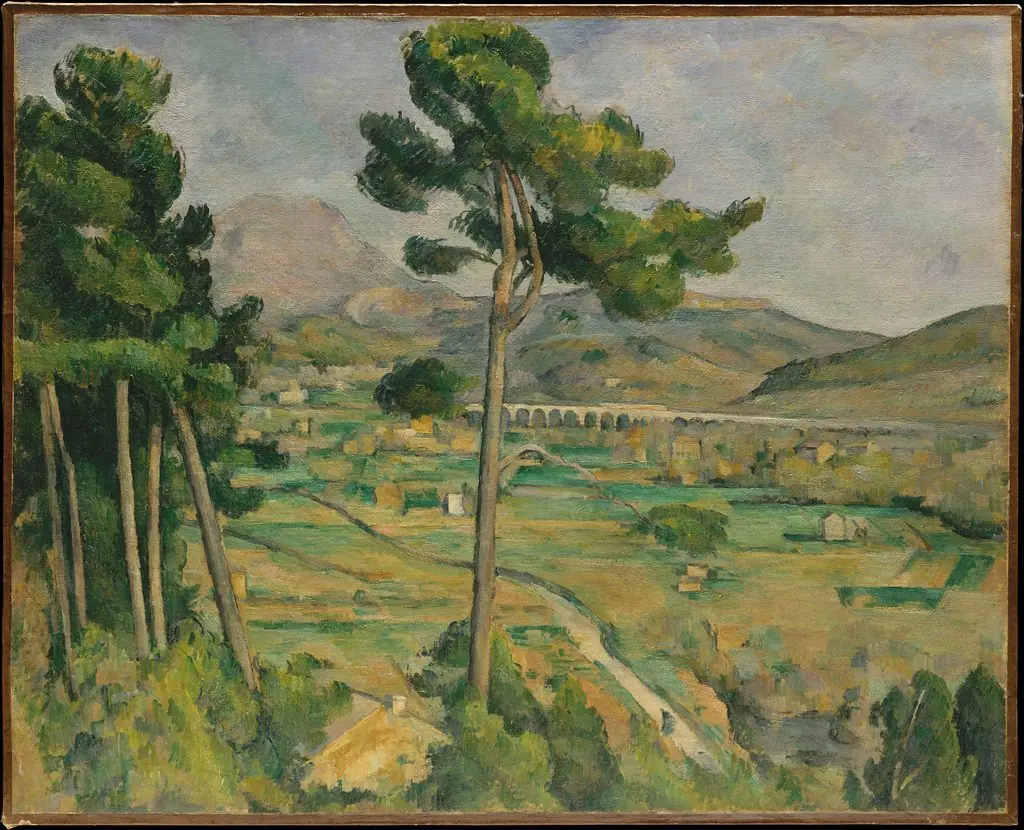 Mont Sainte-Victoire and the Viaduct of the Arc River Valley
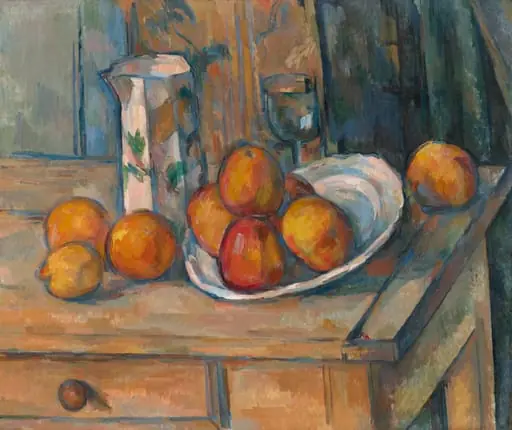 Still Life with Milk Jug and Fruit
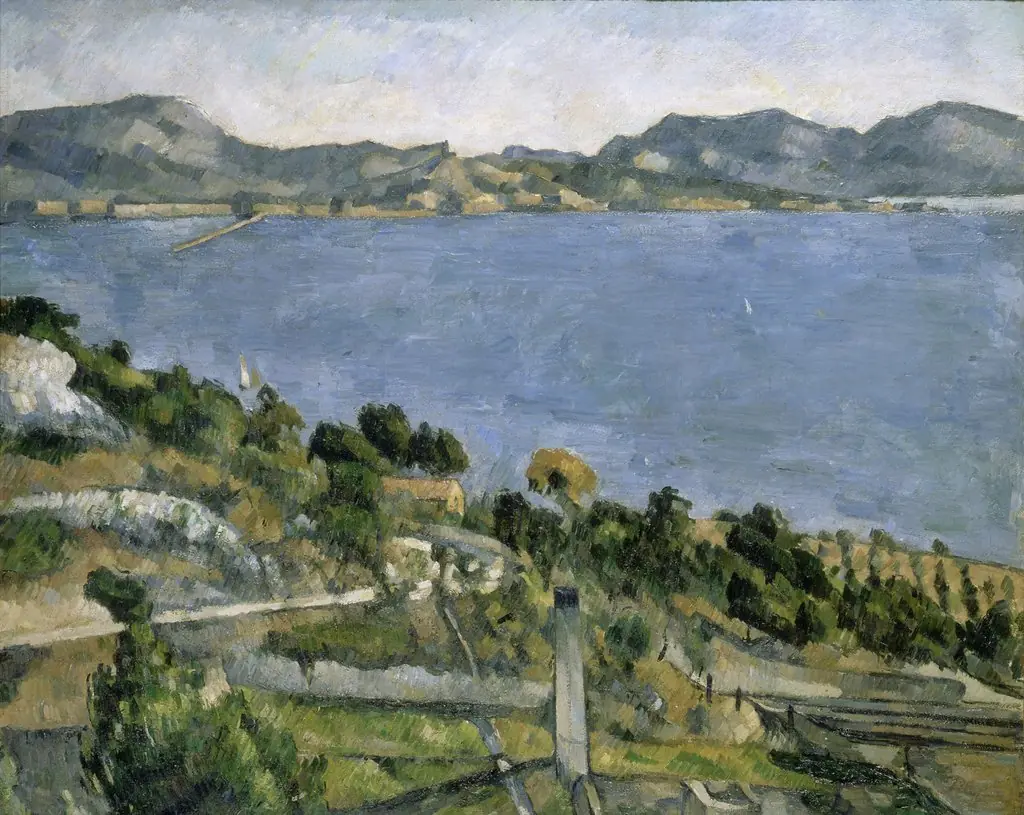 Le Golfe de Marseille vu de l'Estaque (The Gulf of Marseille Seen from L'Estaque)
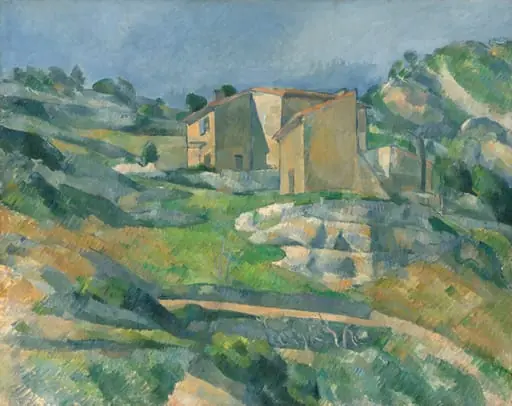 Houses in Provence: The Riaux Valley near L'Estaque
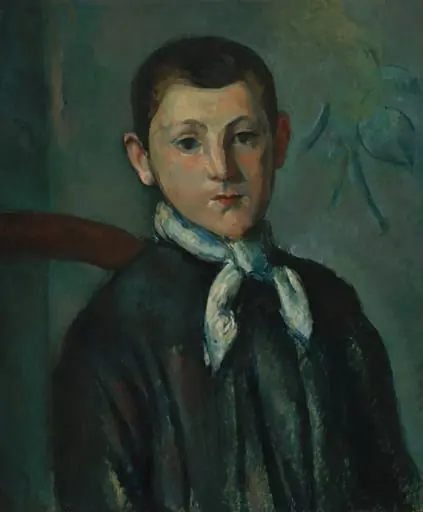 Louis Guillaume
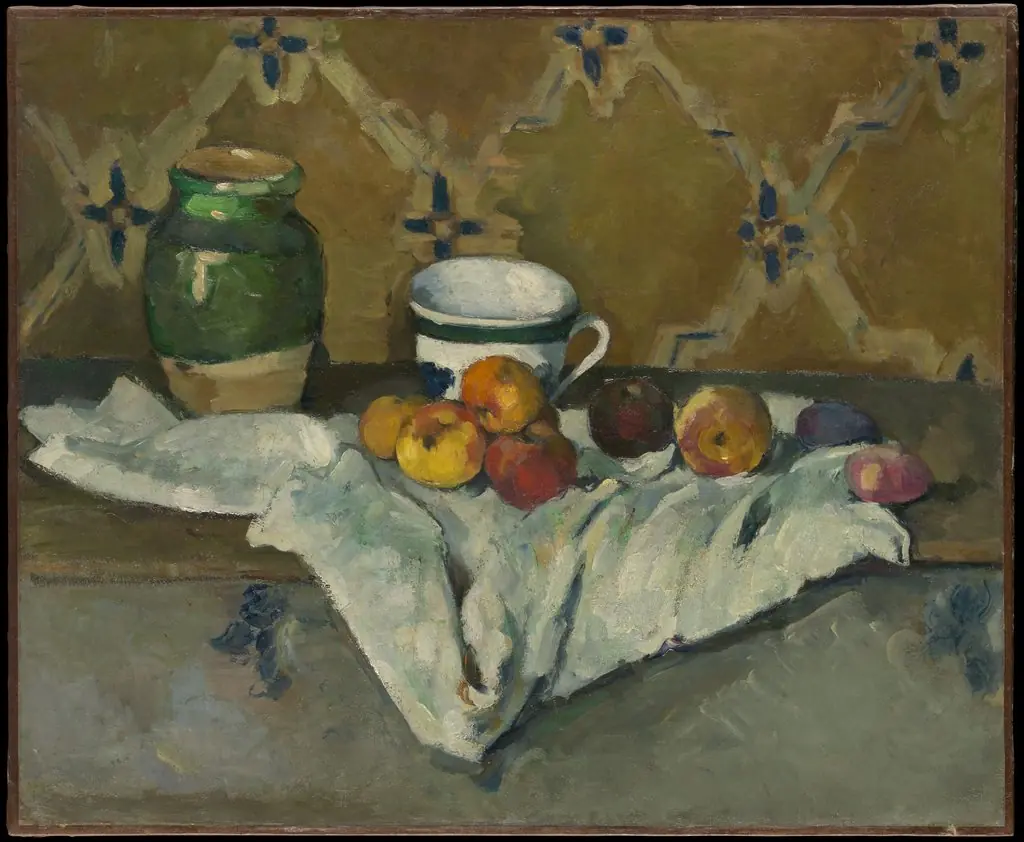 Still Life with Jar, Cup, and Apples
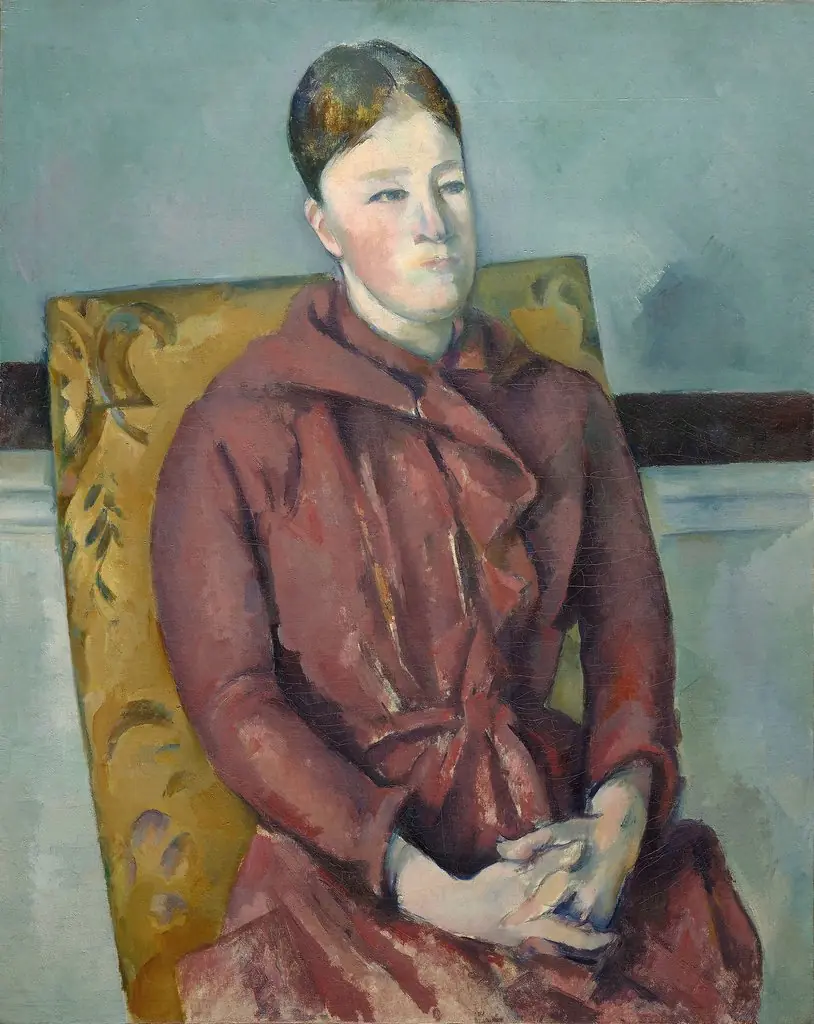 Madame Cézanne in a Yellow Chair
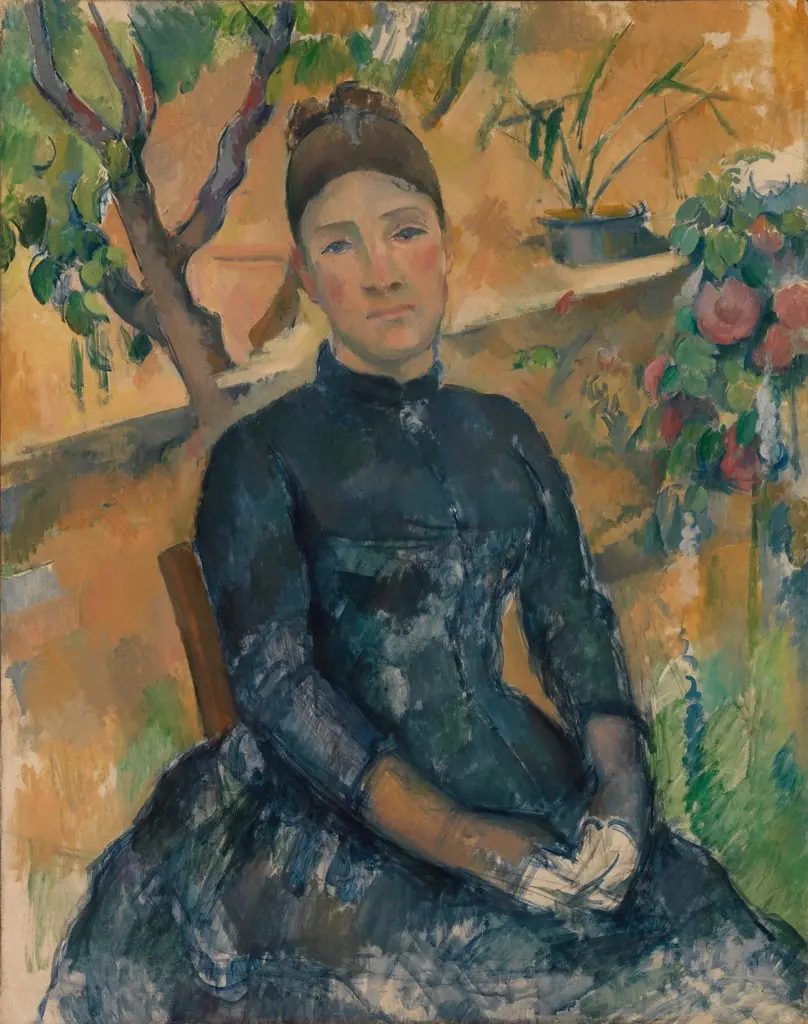 Madame Cézanne (Hortense Fiquet, 1850–1922) in the Conservatory
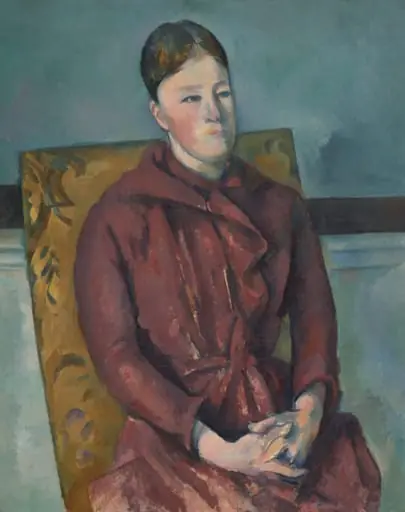 Madame Cezanne in a Yellow Chair
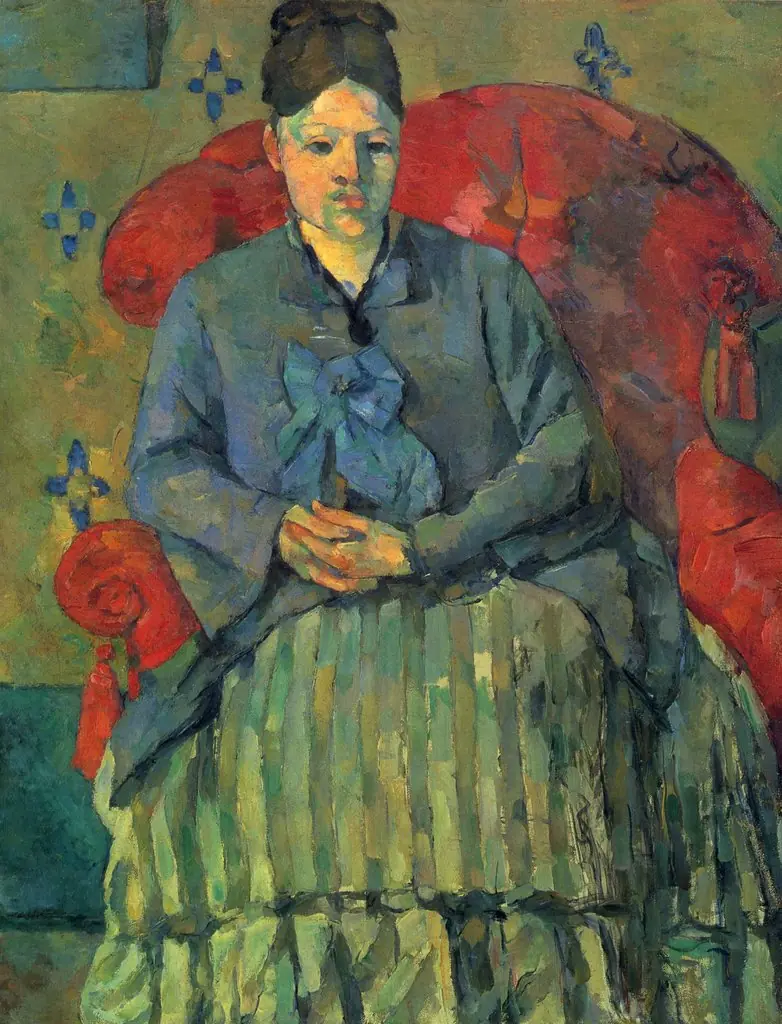 Madame Cézanne à la jupe rayée (Madame Cézanne in a Red Armchair)
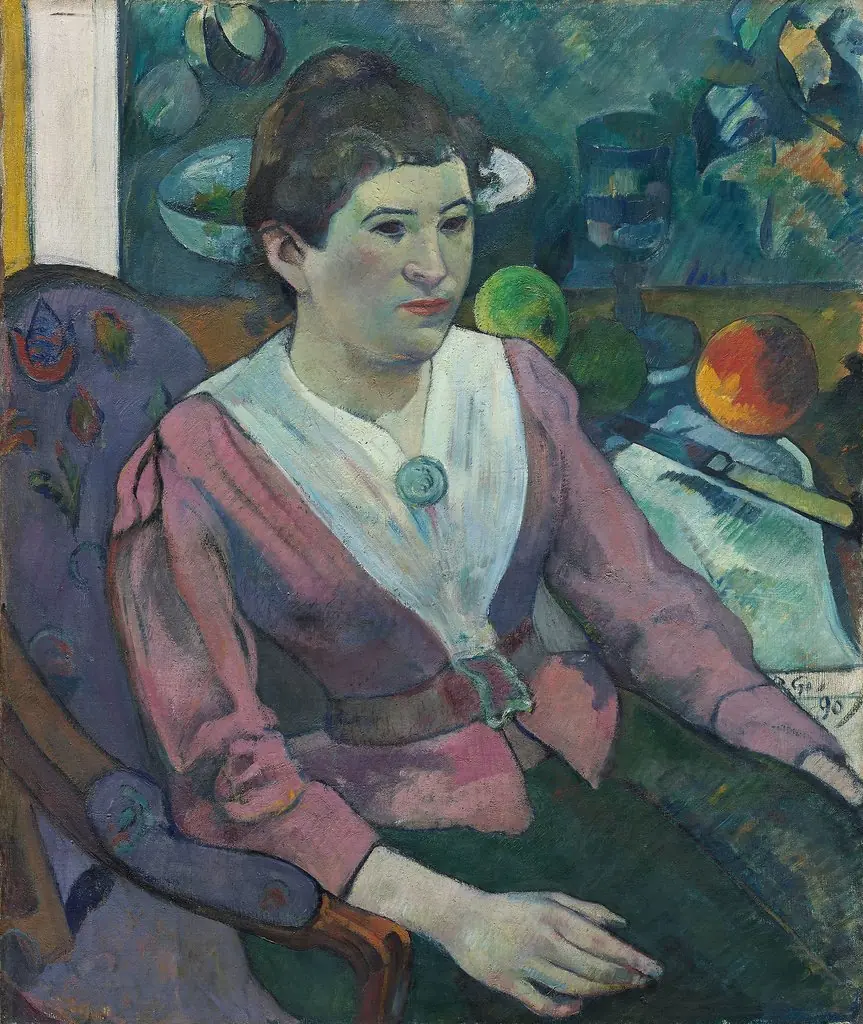 Woman in Front of a Still Life by Cézanne
 Woman in Front of a Still Life by Cezanne
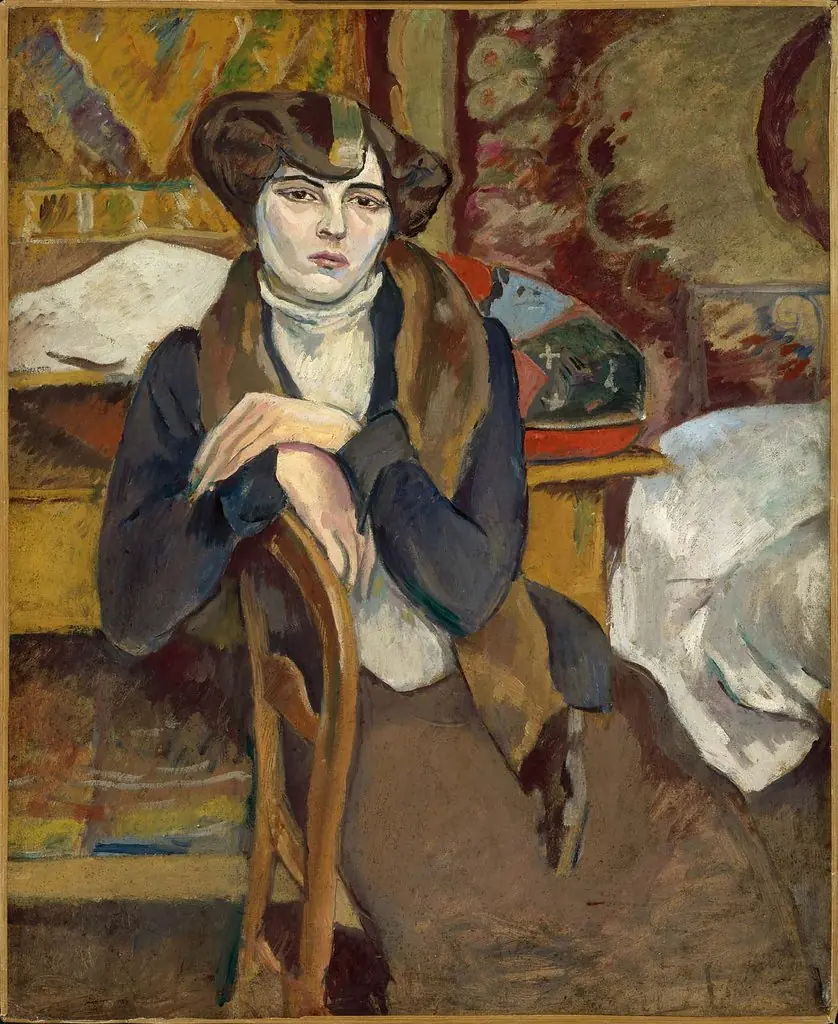 La Mélancolique
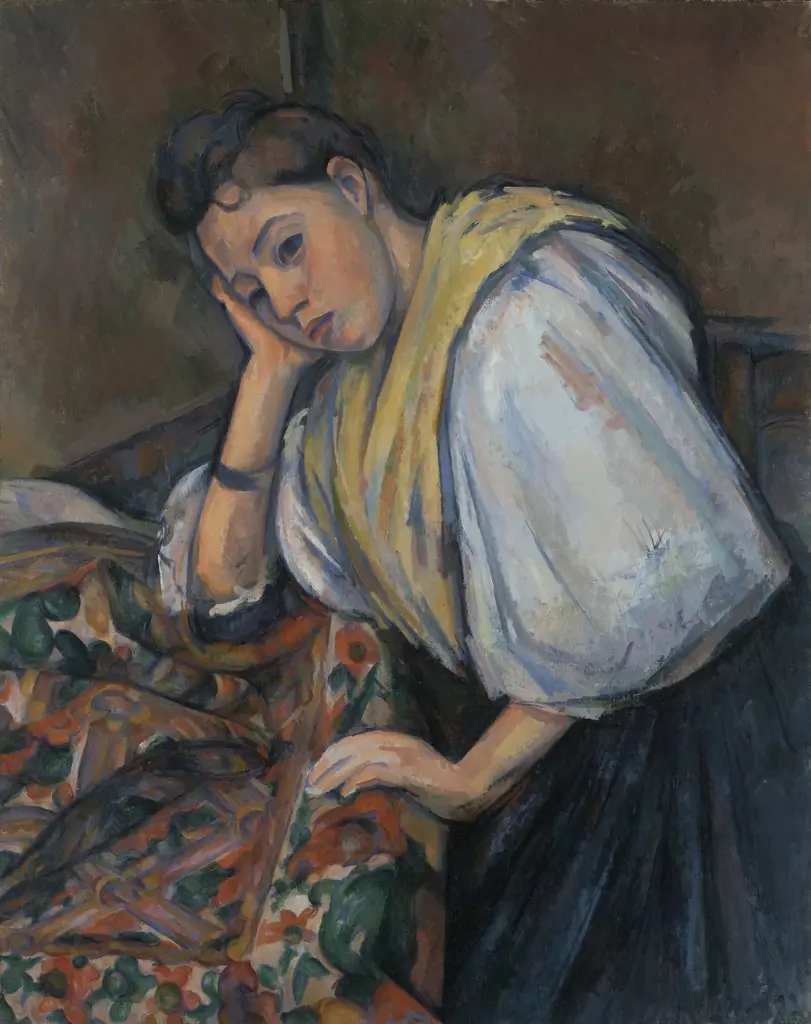 Young Italian Woman at a Table
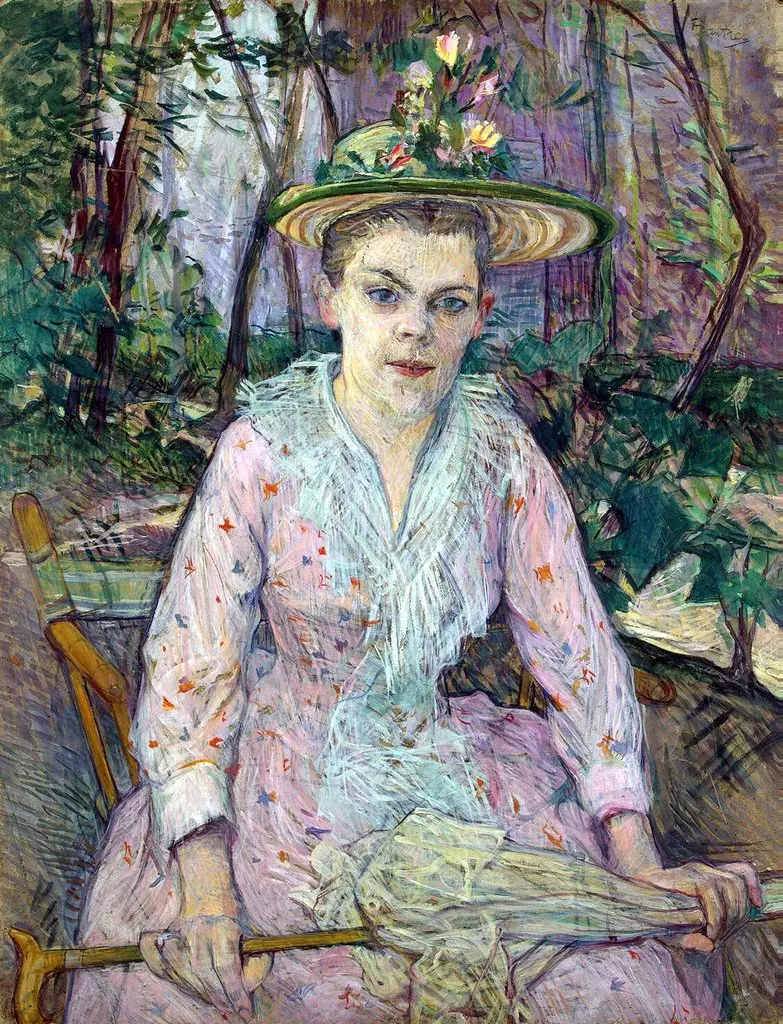 Woman with a parasol
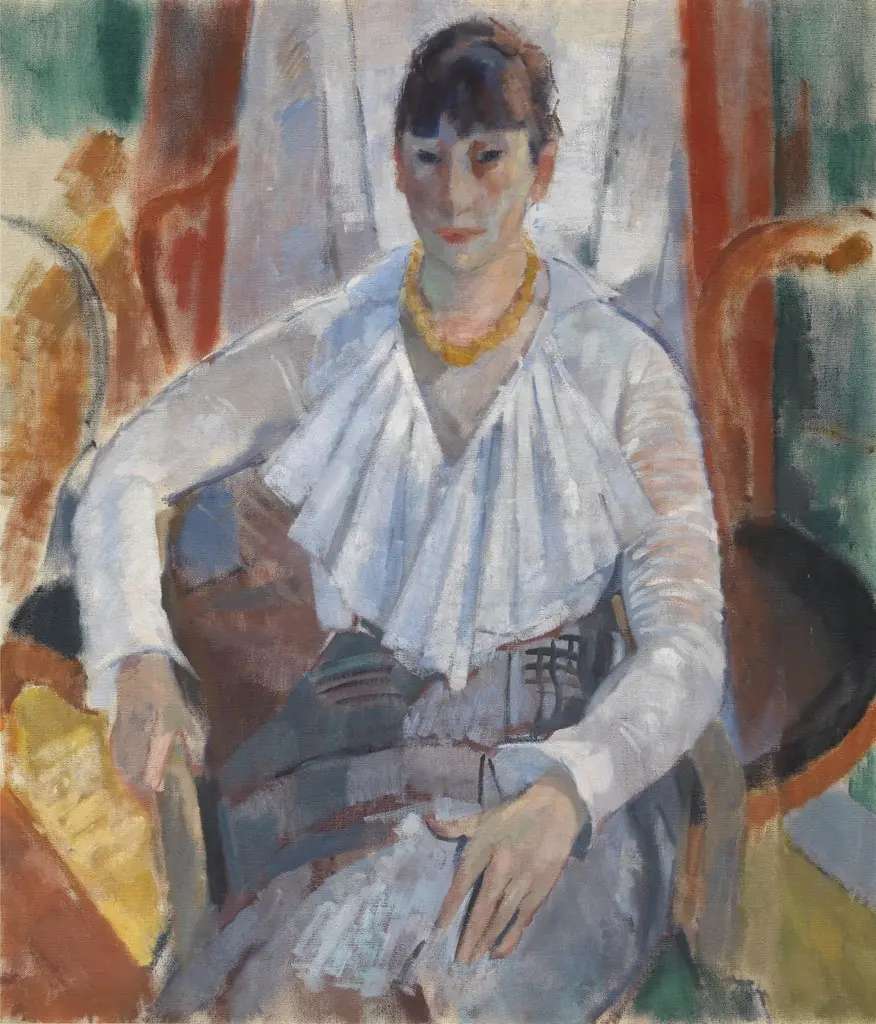 Woman in White
 Seated on a Suitcase
- Madame Cézanne in Blue