Artwork
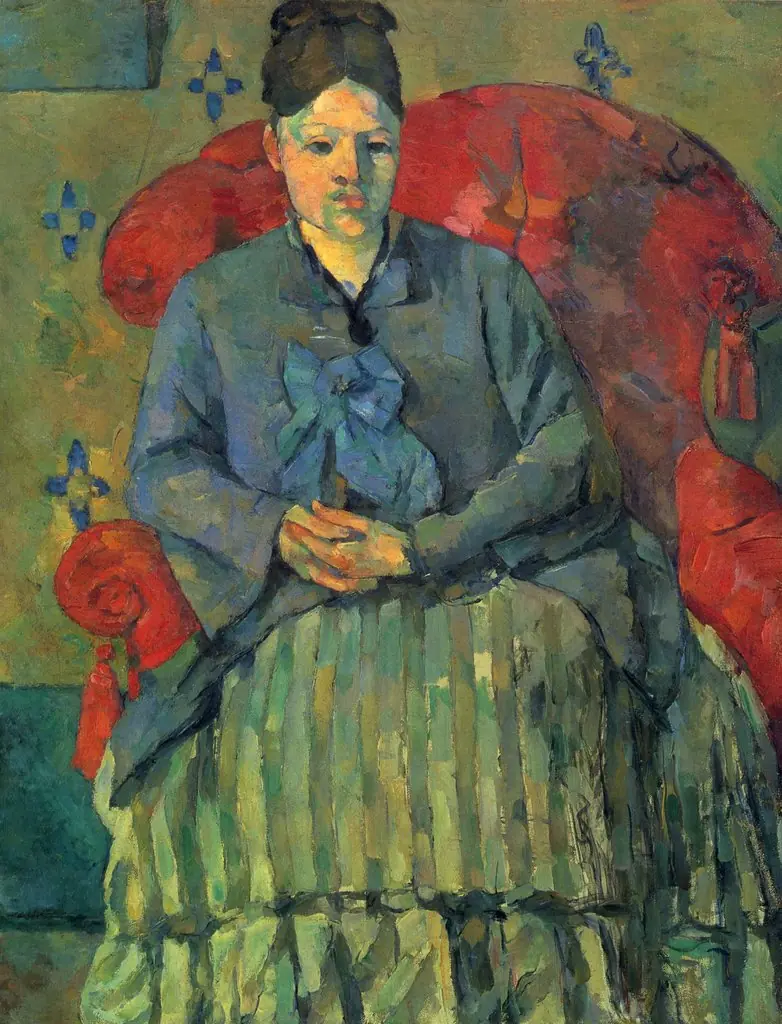
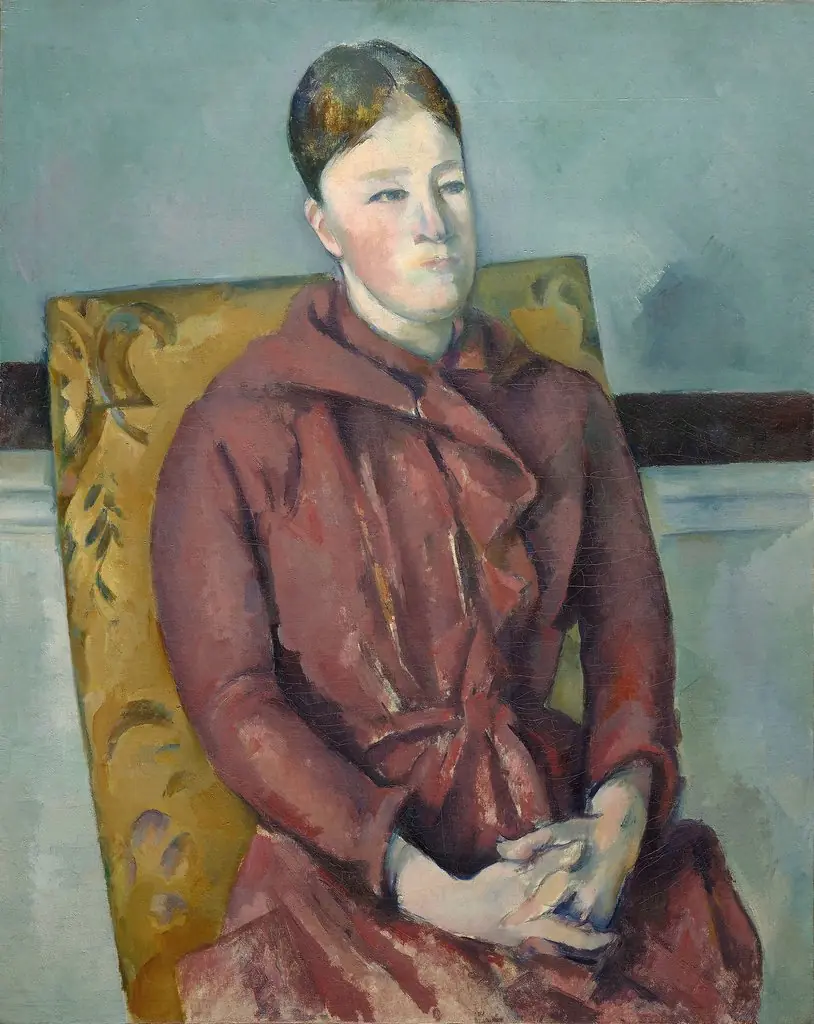
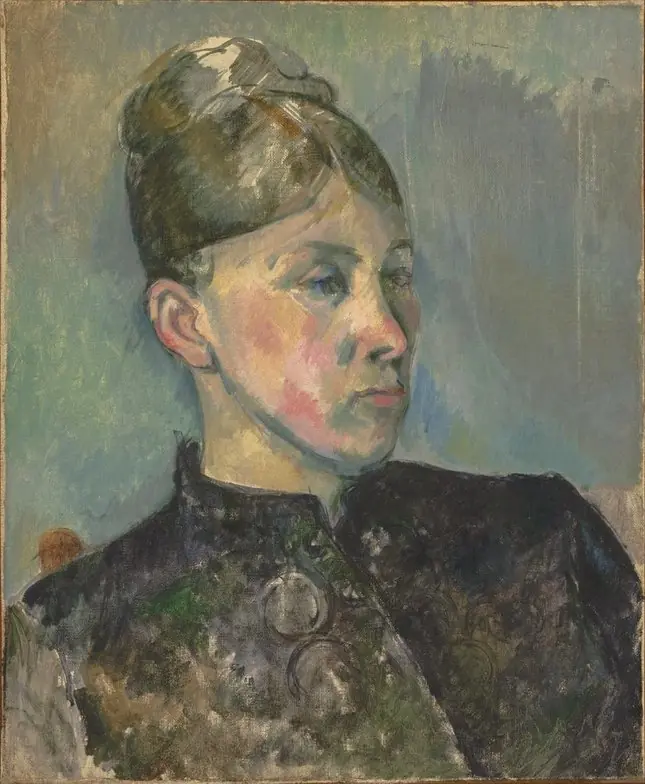
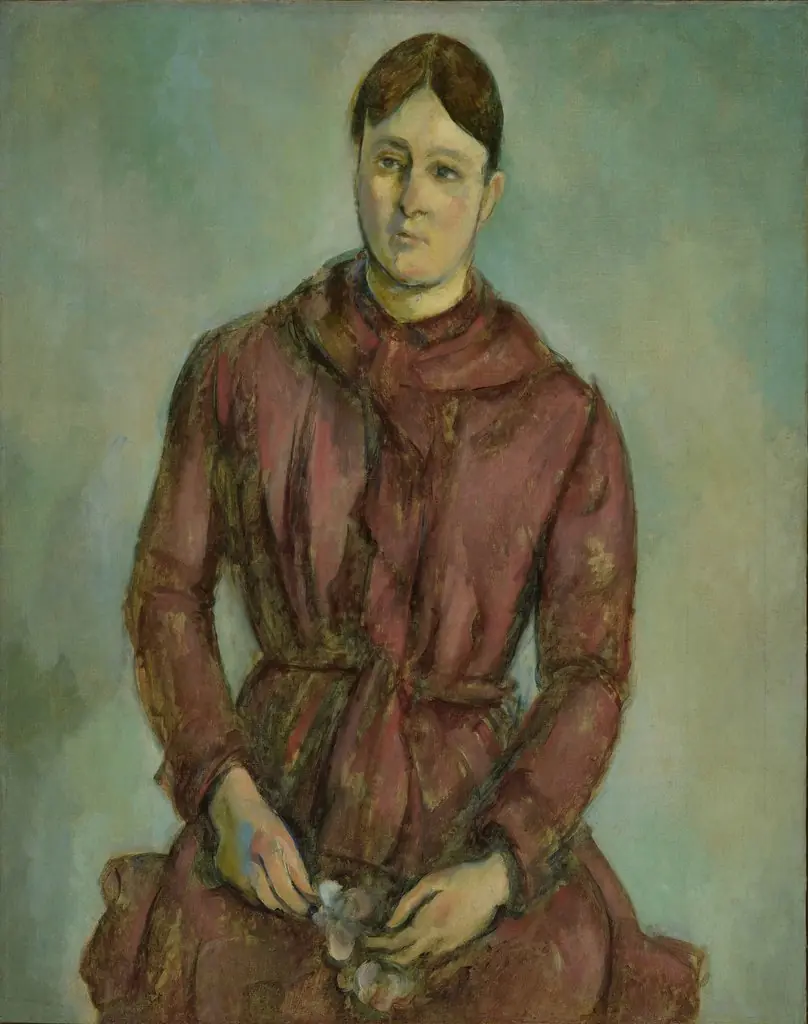
Madame Cézanne (Hortense Fiquet, 1850–1922) in the Conservatory
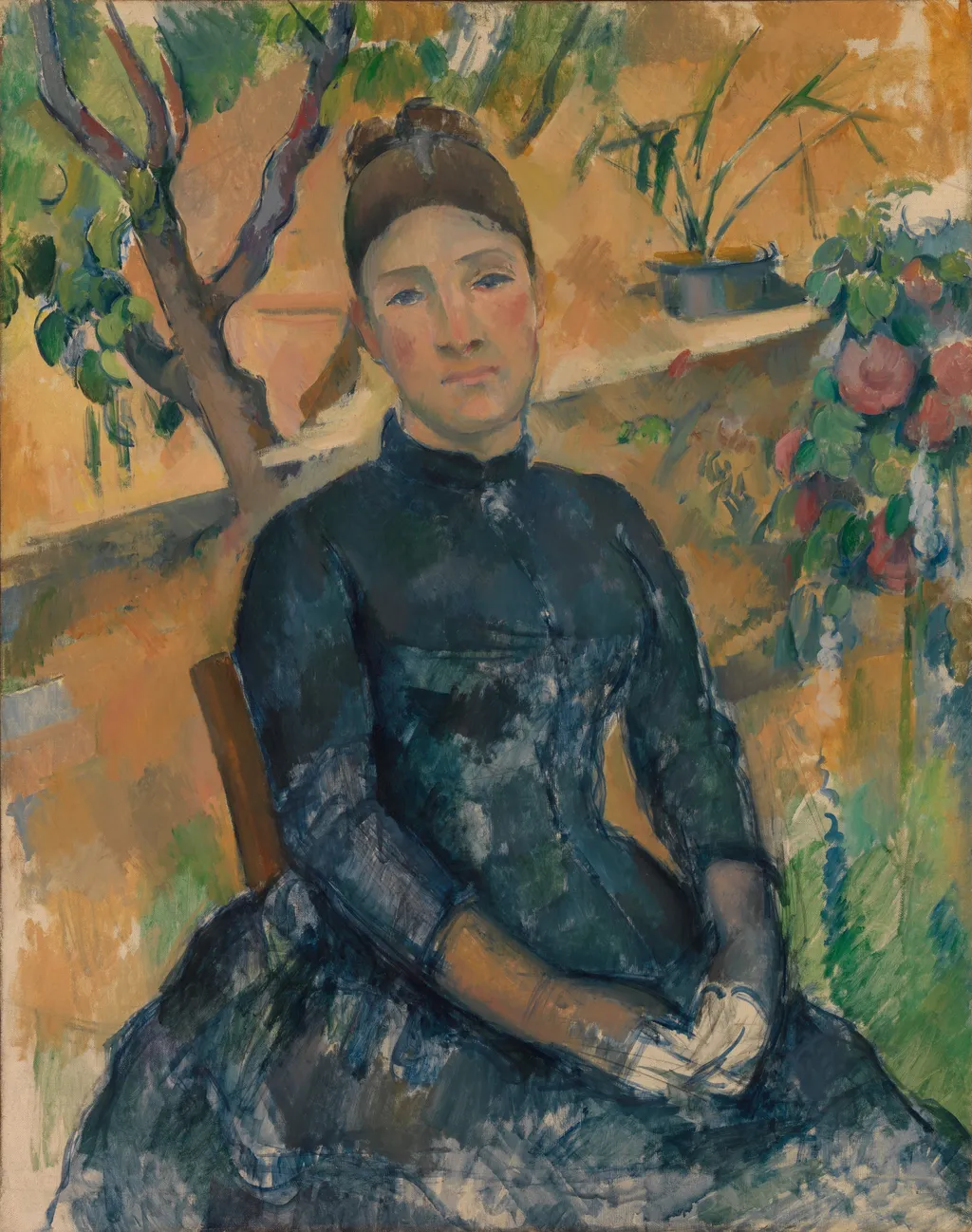
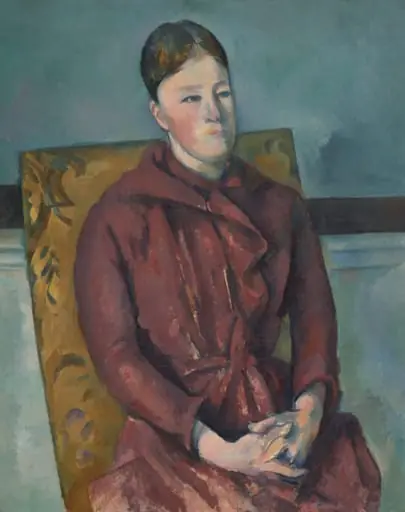
Madame Cézanne (Hortense Fiquet, 1850–1922) in the Conservatory is an oil painting by the Post-Impressionist artist Paul Cézanne. It dates from 1896 and is held in the collection of the Metropolitan Museum of Art.
About this work
Technique & Style
The painting’s condition shows stable, even craquelure consistent with age and original oil technique, with no major losses or overpaint reported.
Executed in oil on canvas in 1891, Cézanne’s portrait employs a restrained yet deliberate handling. The brushwork combines flat, schematic passages with localized, directional strokes, particularly in the face and hands, where parallel hatching modulates form and light. The palette remains subdued, anchored by muted greens and ochres in the conservatory setting, while the figure’s attire, dark dress with subtle violet accents, anchors the composition.
Formal qualities include a compressed, vertical format that emphasizes Hortense’s frontal presence, framed by the geometric structure of the glasshouse behind her. The painting’s condition shows stable, even craquelure consistent with age and original oil technique, with no major losses or overpaint reported.
Legacy
The work is part of the Metropolitan Museum of Art's holdings, a testament to its enduring scholarly and curatorial interest. Its provenance includes ownership by Ivan Morozov and inclusion in the State Museum of Modern Western Art, reflecting its circulation among major collections. It also appeared in the collection of Stephen Carlton Clark, highlighting its relevance to early American art patronage.
As a portrait of Hortense Fiquet, it provides a documented view of Cézanne's model and wife, contributing to scholarship on his personal subjects.
Overview
Madame Cézanne (Hortense Fiquet, 1850–1922) in the Conservatory, painted by Paul Cézanne in 1896, is an oil portrait of the artist's wife. This work exemplifies Cézanne's Post-Impressionist style, characterized by a distinctive approach to form and color that influenced subsequent avant-garde movements. The painting is held in the collection of The Metropolitan Museum of Art, representing a key period in the artist's career.
Subject & Meaning
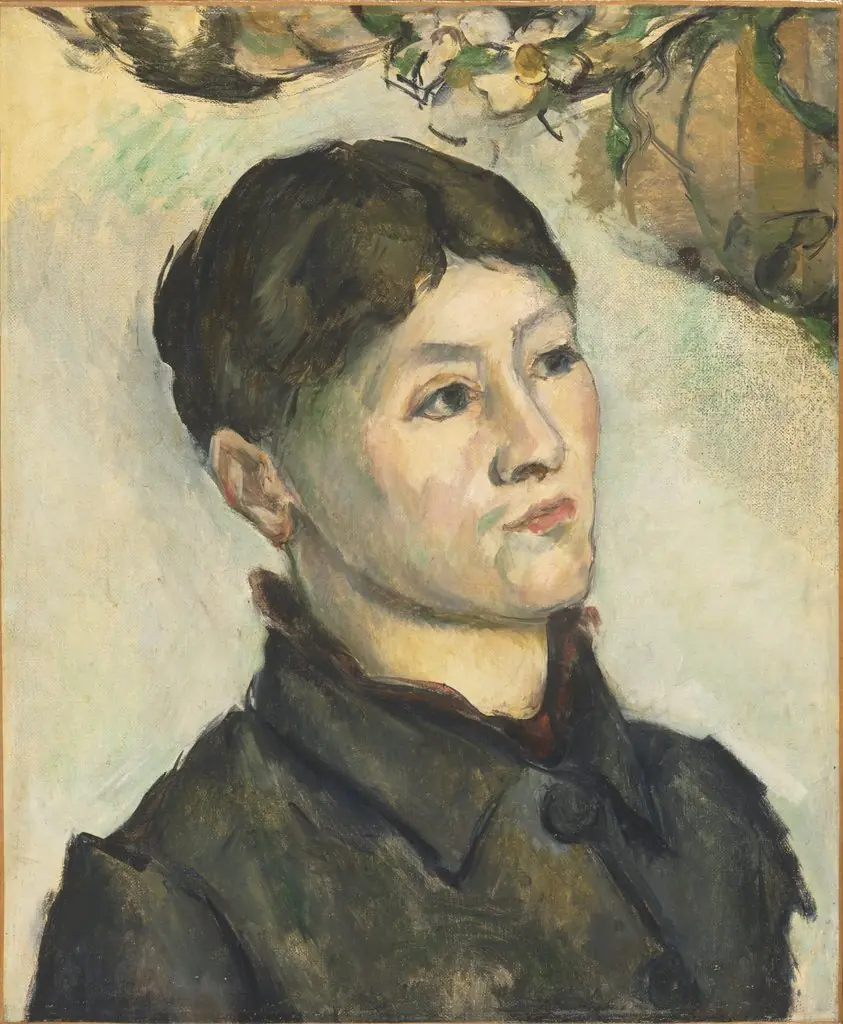
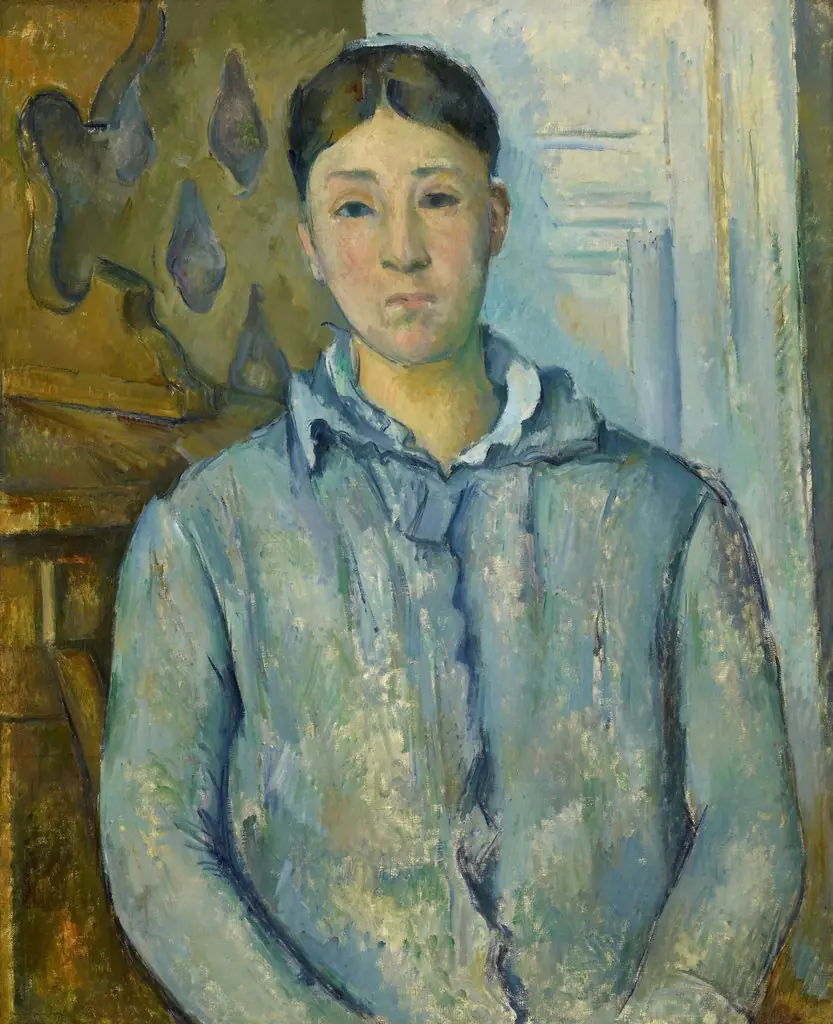
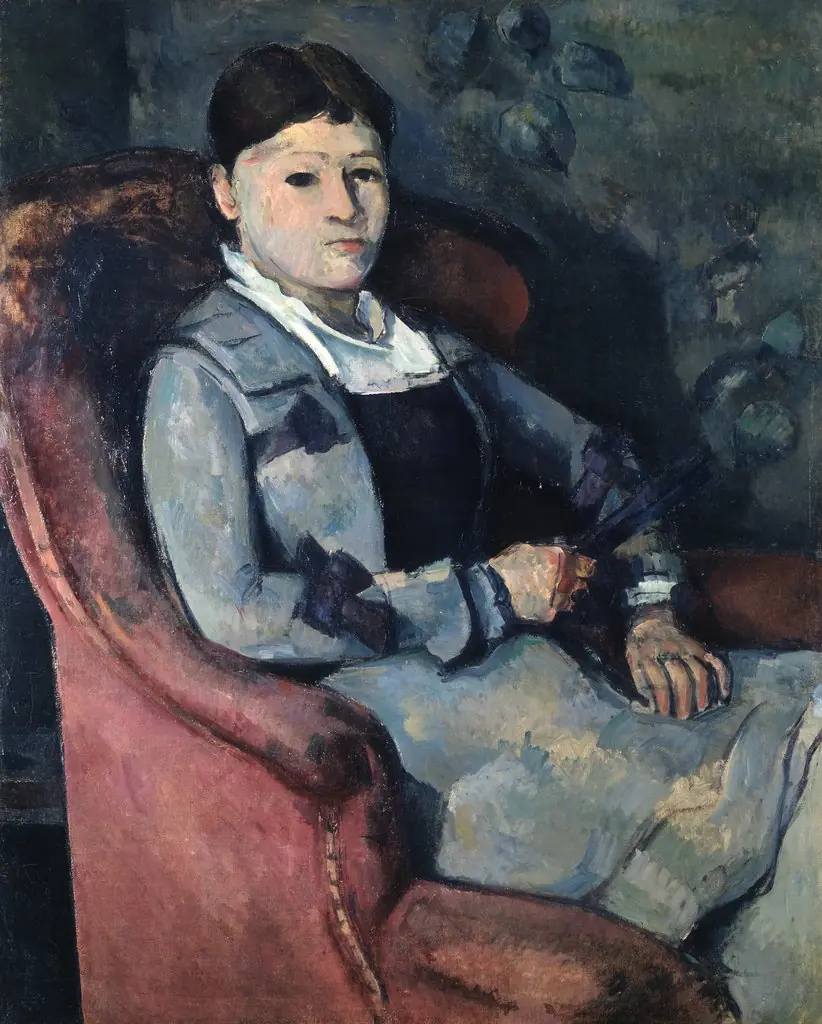
The painting presents Marie-Hortense Fiquet, Cézanne's spouse, seated in a dark garment, her hands resting calmly in her lap. She gazes forward with a composed expression, her head slightly inclined. Behind her, the vibrant interior of a conservatory unfolds, with warm orange walls contrasting with lush green foliage. This setting provides a dynamic backdrop to her serene presence, highlighting the interplay between figure and environment.
Context
As a leading figure of Post-Impressionism, Paul Cézanne played a pivotal role in the transition from the fleeting impressions of Impressionism to the more structured compositions of early 20th-century modern art. His analytical approach to form and space, evident in portraits like this, laid foundational groundwork for movements such as Cubism. This work thus stands as an important example of his innovative vision, influencing generations of artists.
Own this work as a print
Artist & collection

Artist
Paul Cézanne ( say-ZAN, UK also siz-AN, US also say-ZAHN; French: ; Occitan: Pau Cesana; 19 January 1839 – 22 October 1906) was a French Post-Impressionist painter whose work introduced new modes of representation,…

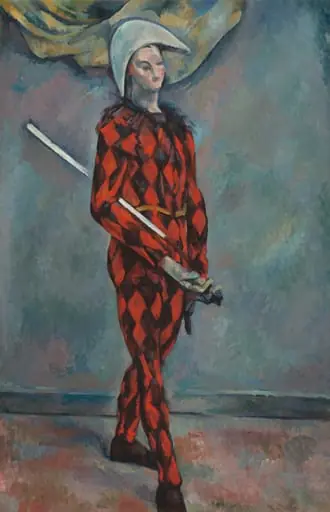 Harlequin
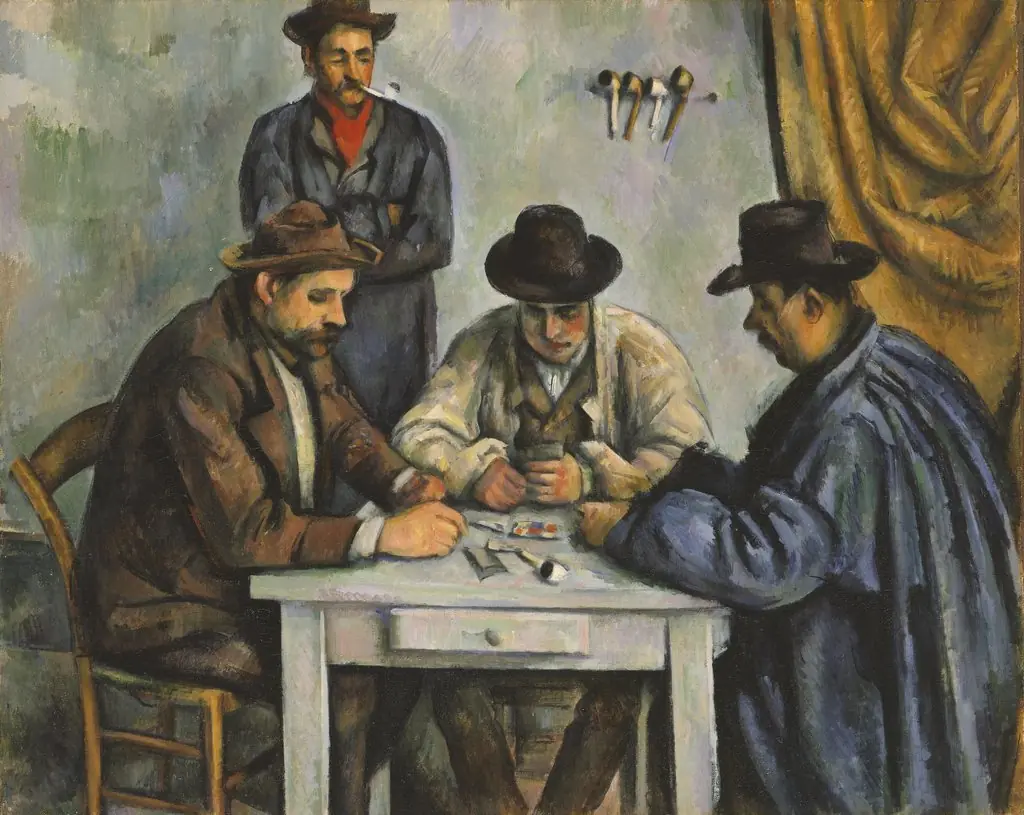 The Card Players
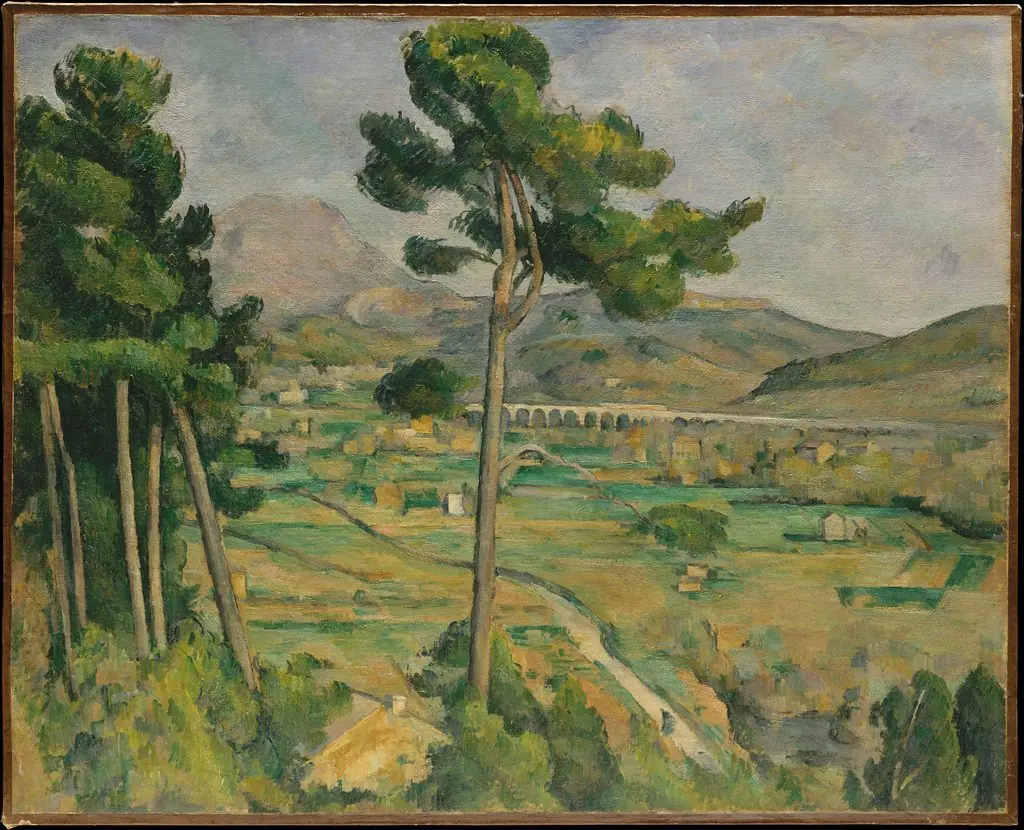 Mont Sainte-Victoire and the Viaduct of the Arc River Valley
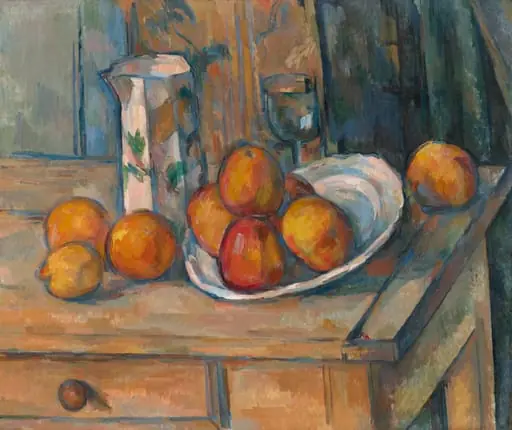 Still Life with Milk Jug and Fruit
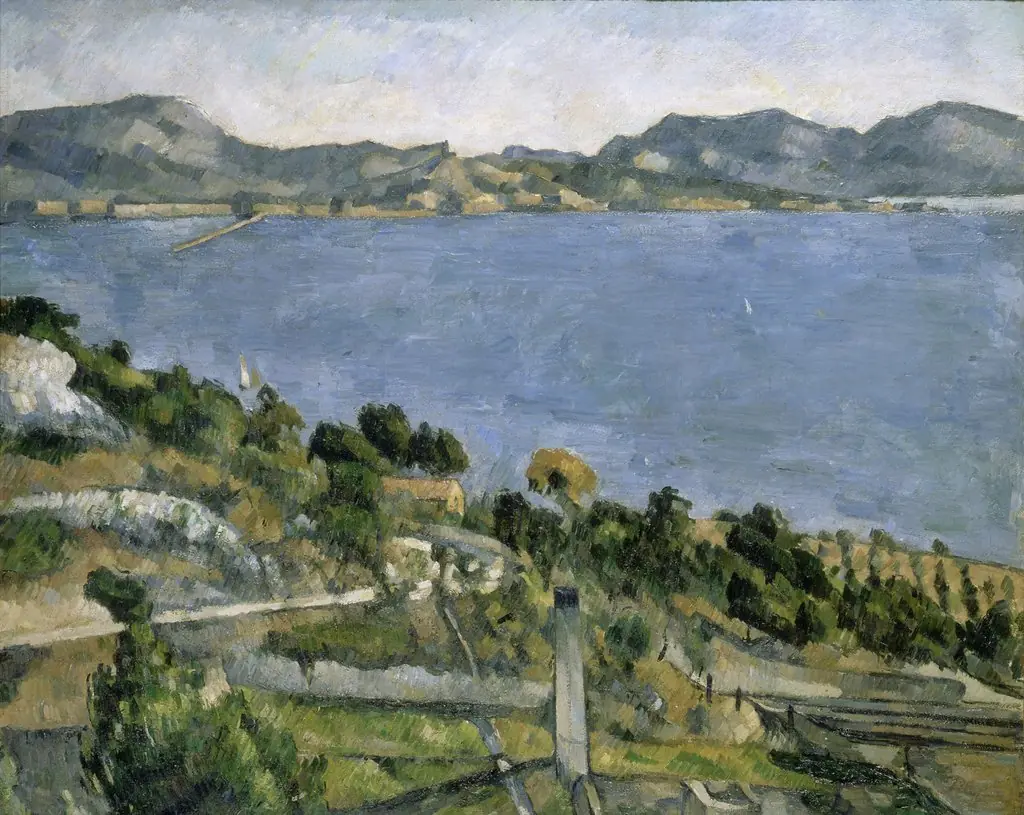 Le Golfe de Marseille vu de l'Estaque (The Gulf of Marseille Seen from L'Estaque)
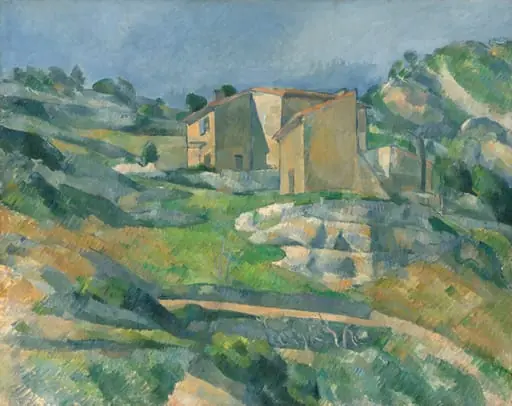 Houses in Provence: The Riaux Valley near L'Estaque
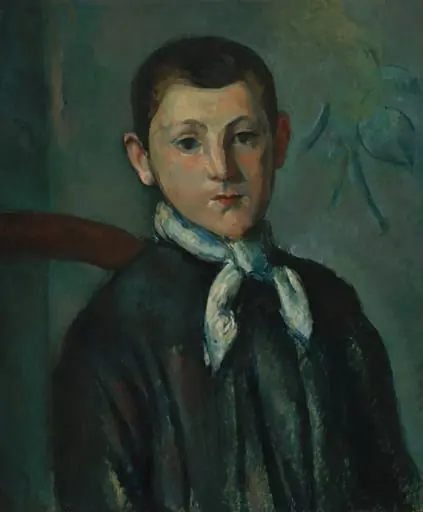 Louis Guillaume
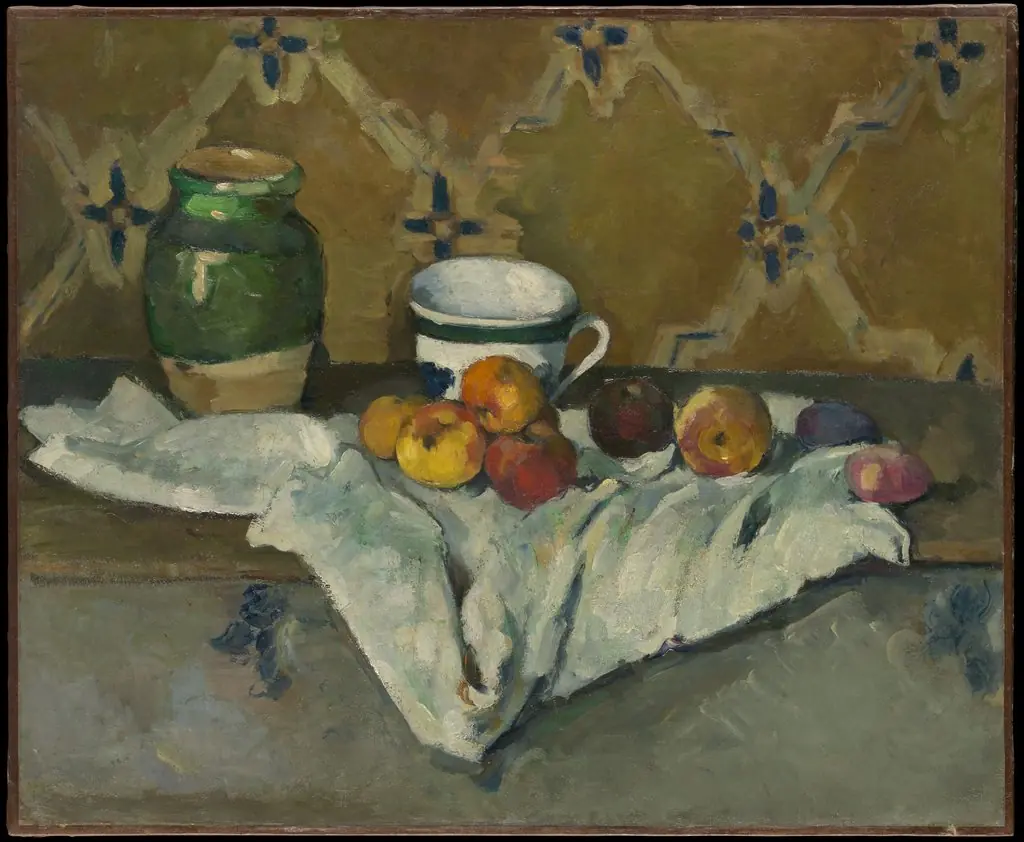 Still Life with Jar, Cup, and Apples