Artwork
The Eternal Feminine
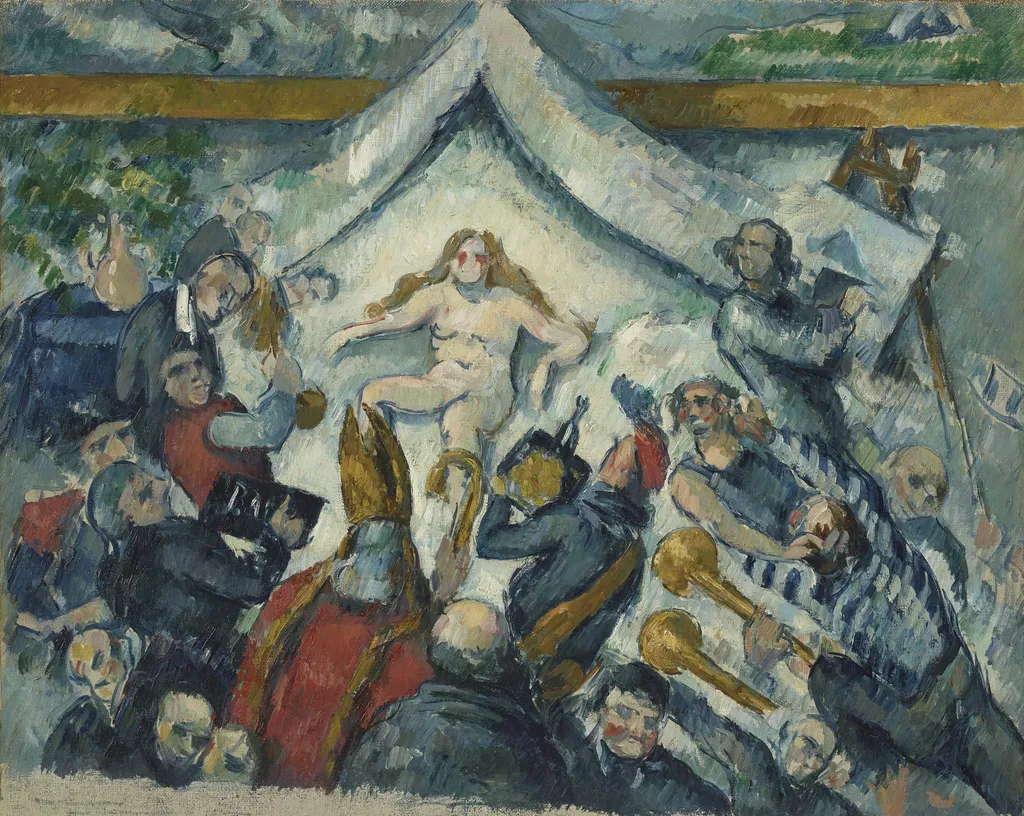
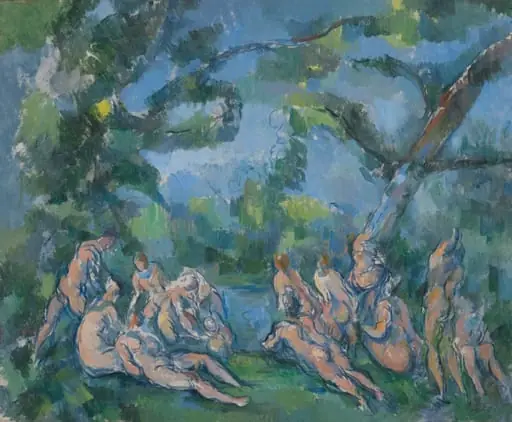
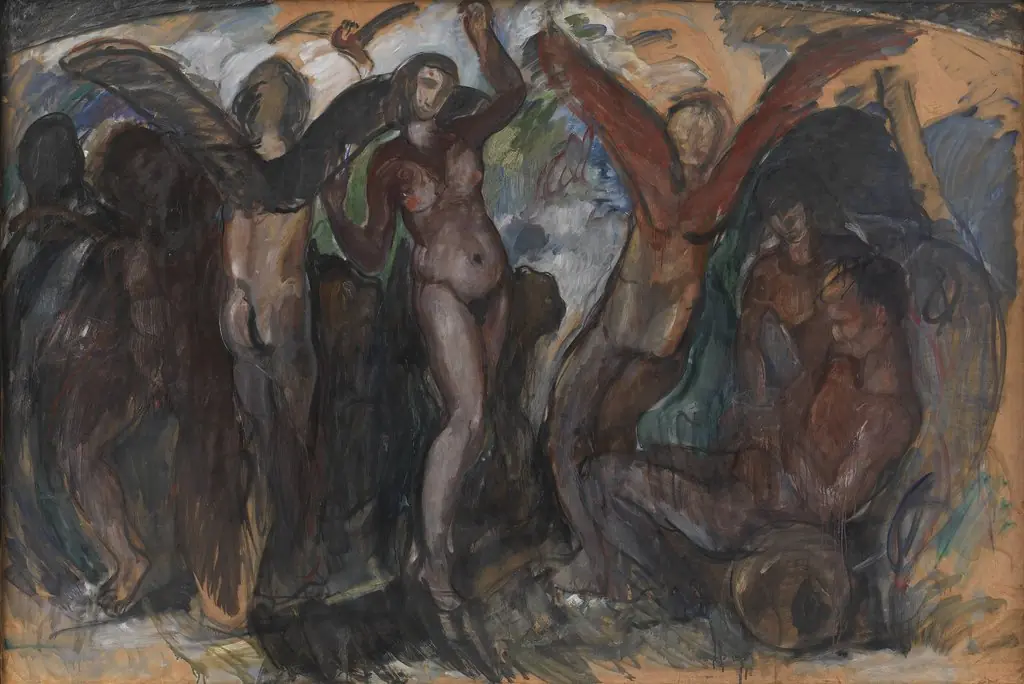
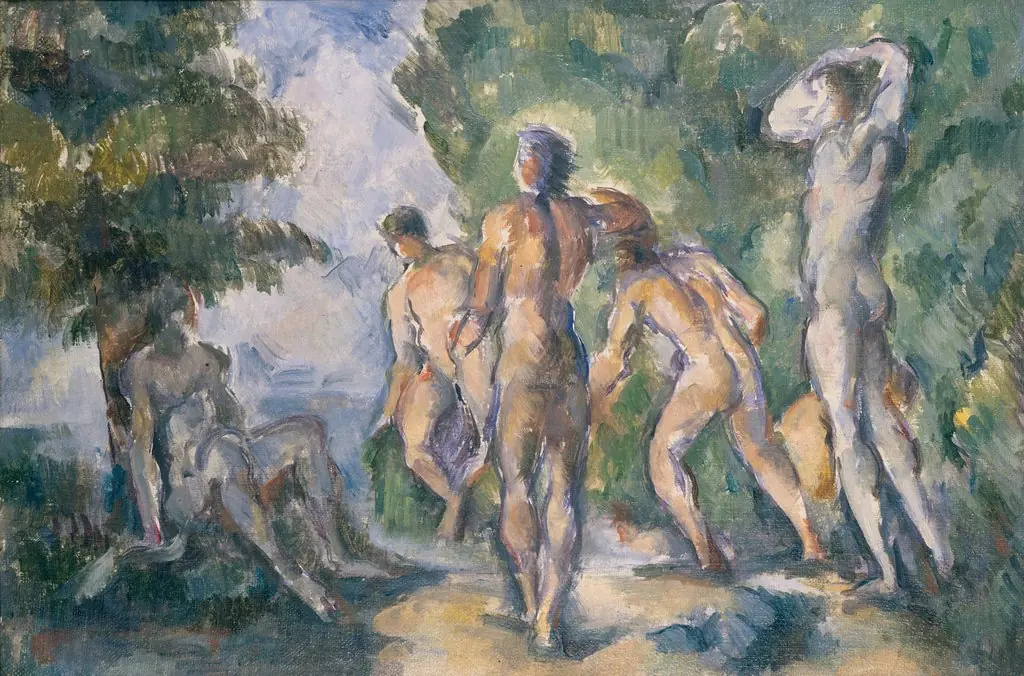
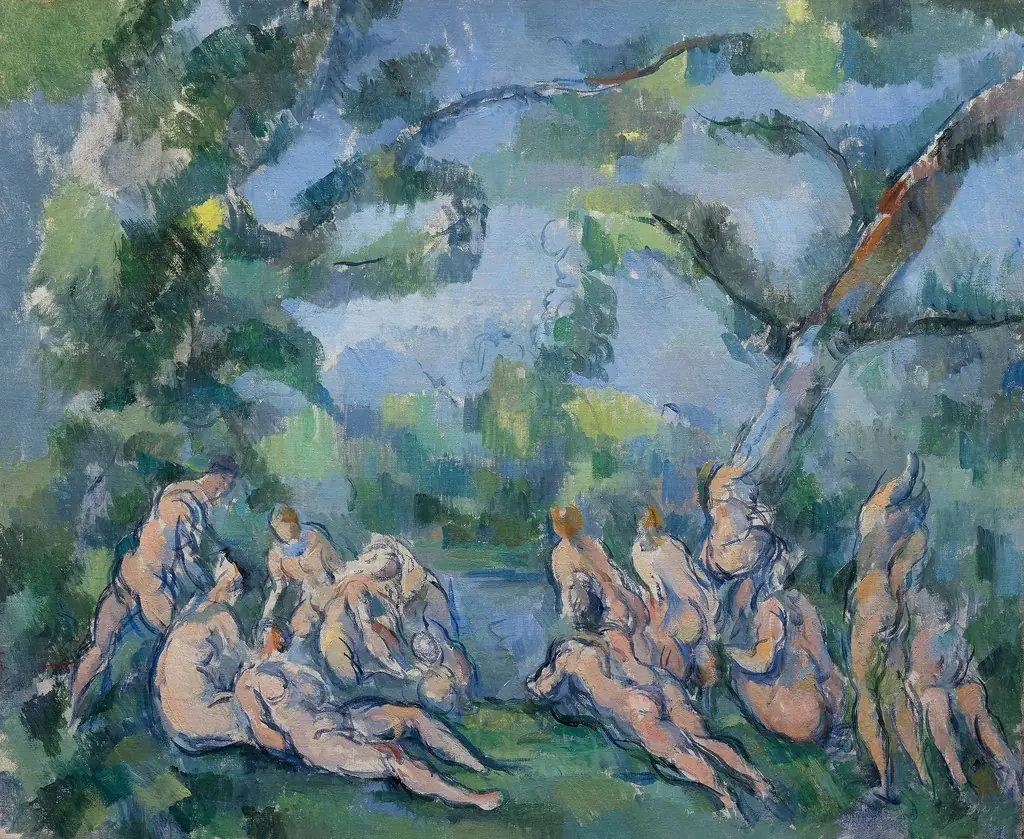
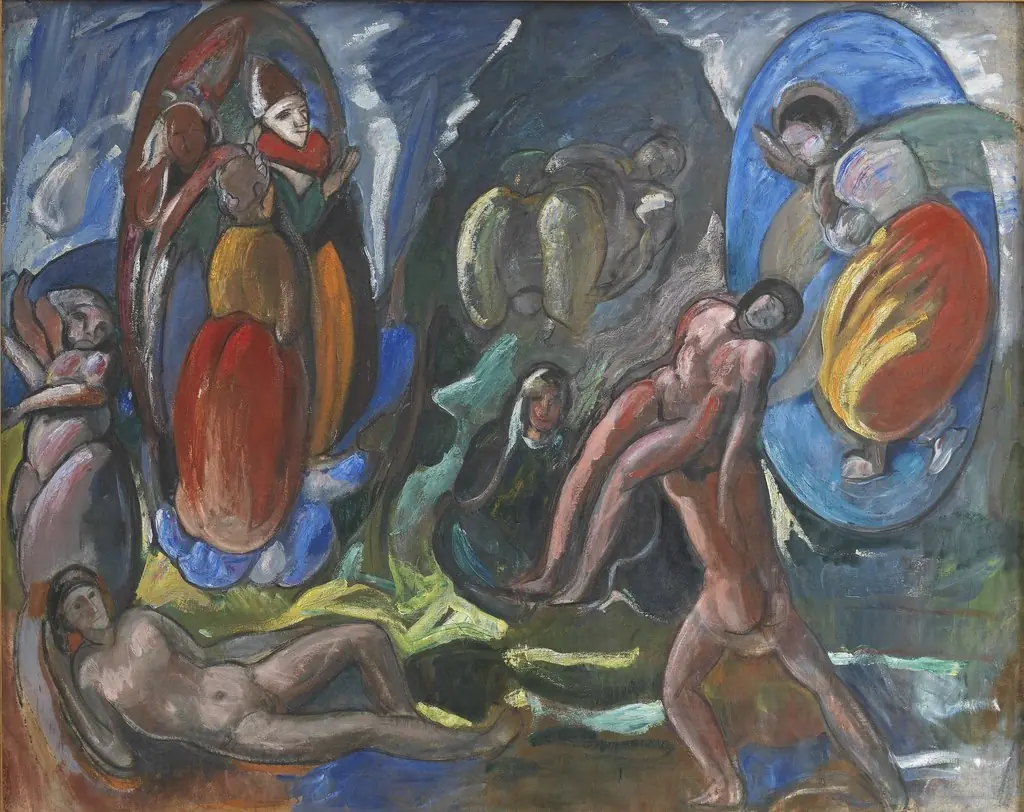
The Eternal Feminine is an oil painting by the Post-Impressionist artist Paul Cézanne. It dates from 1889 and is held in the collection of the J. Paul Getty Museum.
About this work
Overview
The scene, set against a quiet landscape of trees and water, avoids narrative clarity, instead emphasizing formal relationships between figures and color.
Painted in 1877, The Eternal Feminine is an oil-on-canvas work by Paul Cézanne that presents a group of men gathered around a central nude woman. The scene, set against a quiet landscape of trees and water, avoids narrative clarity, instead emphasizing formal relationships between figures and color. Its ambiguous symbolism and unconventional composition mark it as a pivotal moment in Cézanne’s artistic evolution.
Subject & Meaning
The central figure, a nude woman seated with crossed legs, is surrounded by men in dark attire, some holding tools or instruments. Their professions, writer, lawyer, artist, are suggested but not defined. The image draws loosely from traditions of deified femininity in Christian and pagan art, yet resists clear allegory. The woman’s stillness contrasts with the active postures of the men, suggesting contemplation rather than narrative.
Technique & Style
Cézanne employs visible, deliberate brushstrokes to build form through color modulation rather than line. Warm tones in the woman’s skin stand against the cooler, darker garments of the men, creating spatial tension. The landscape background is rendered with loose, atmospheric strokes, unifying the scene while preserving its ambiguity. The composition avoids perspective orthodoxy, favoring structural balance over realism.
History & Provenance
The painting was likely begun during Cézanne’s early period in Paris, when he was engaging with contemporary themes and historical references. It remained in his possession until his death, suggesting personal significance. After his death, it entered a private collection and later found its way into a public museum, where it is now studied for its transitional role in his oeuvre.
Context
In the 1870s, Cézanne was navigating between academic traditions and emerging modernist concerns. The painting reflects his dialogue with Delacroix’s colorism and Courbet’s realism, while rejecting their narrative clarity. It also responds to the era’s fascination with mythic femininity, yet subverts it by omitting idealization and embracing psychological ambiguity.
Legacy
The Eternal Feminine is recognized as a critical step in Cézanne’s move toward structural abstraction. Its rejection of conventional storytelling and emphasis on color relationships influenced later modernists, including Picasso and Matisse. Though not widely exhibited in his lifetime, it now stands as a quiet but decisive pivot in the transition from 19th-century figuration to 20th-century formal innovation.
Own this work as a print
Artist & collection

Artist
Paul Cézanne ( say-ZAN, UK also siz-AN, US also say-ZAHN; French: ; Occitan: Pau Cesana; 19 January 1839 – 22 October 1906) was a French Post-Impressionist painter whose work introduced new modes of representation,…

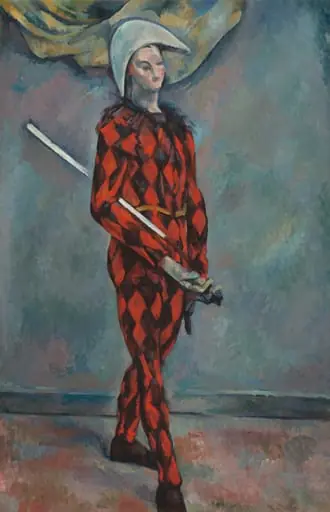 Harlequin
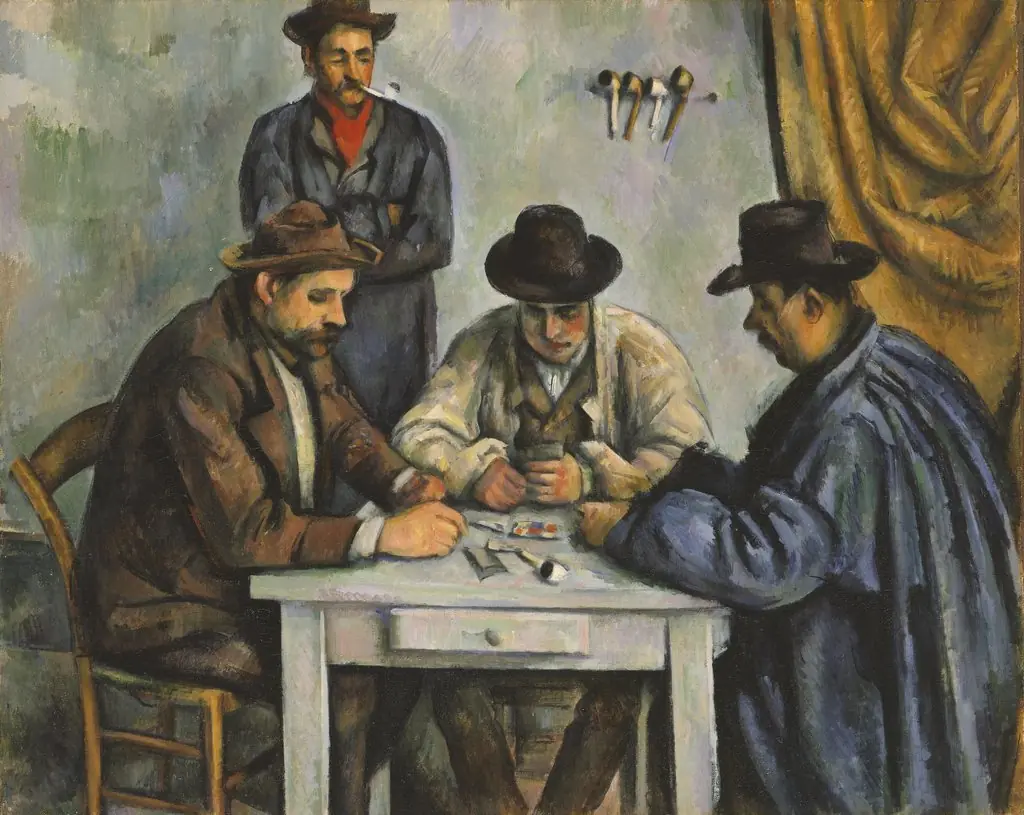 The Card Players
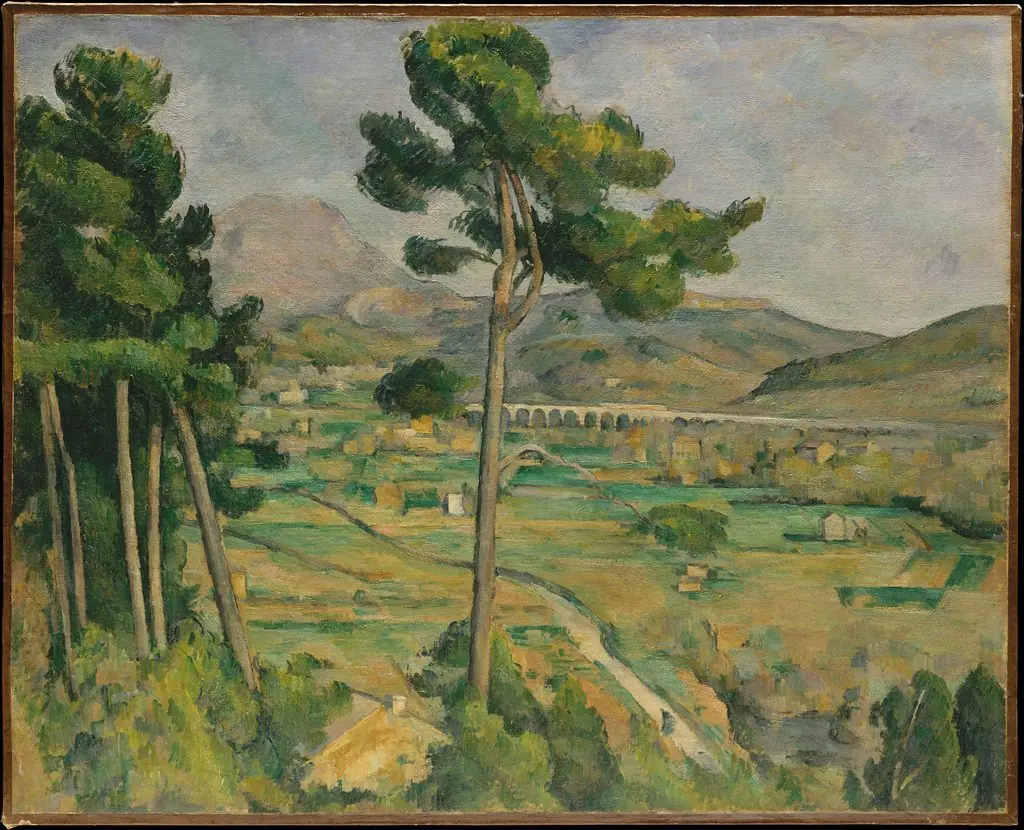 Mont Sainte-Victoire and the Viaduct of the Arc River Valley
 Still Life with Milk Jug and Fruit
 Le Golfe de Marseille vu de l'Estaque (The Gulf of Marseille Seen from L'Estaque)
 Houses in Provence: The Riaux Valley near L'Estaque
 Louis Guillaume
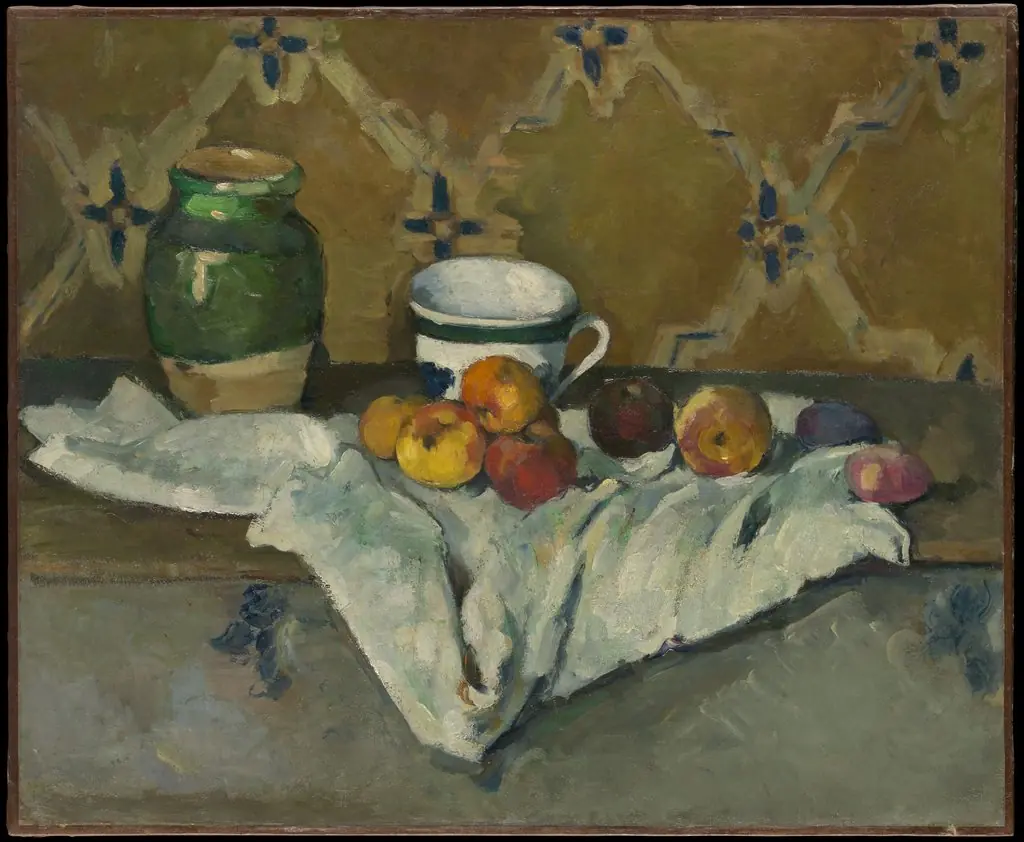 Still Life with Jar, Cup, and Apples