Artwork
Cydippe with the Apple of Acontius
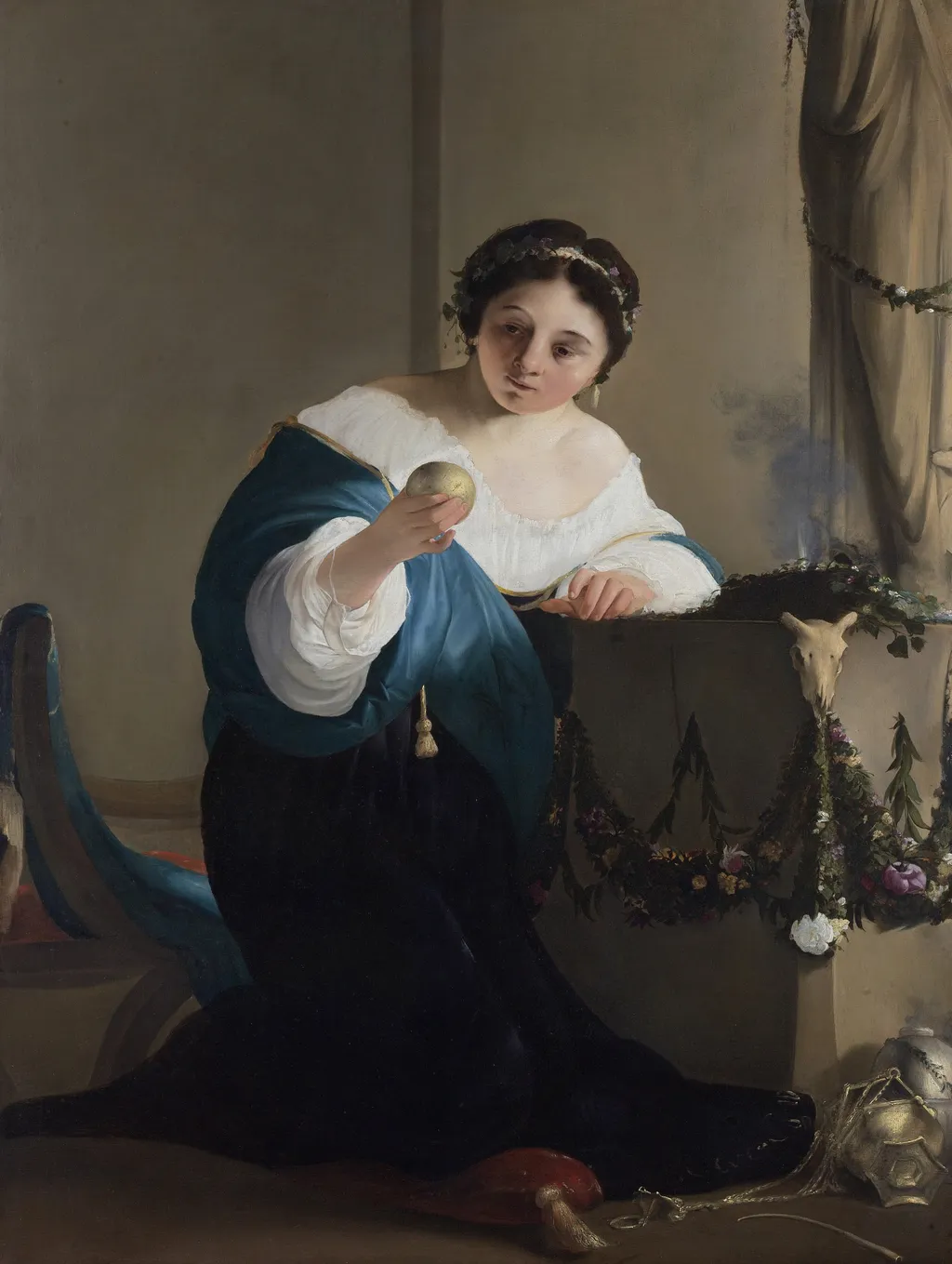
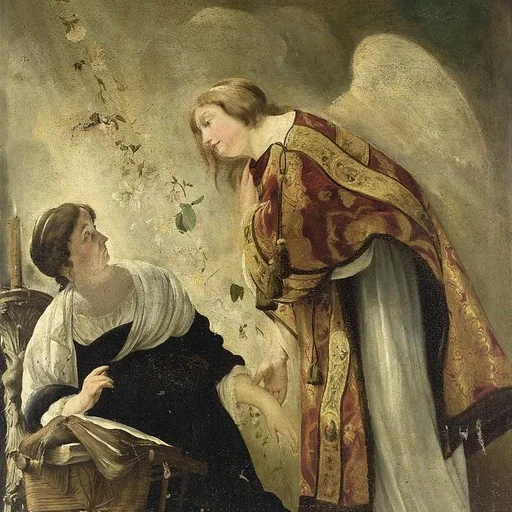
Cydippe with the Apple of Acontius is an oil painting by the Early Baroque Italian artist Paulus Bor. It dates from 1650 and is held in the collection of the Rijksmuseum.
About this work
Subject & Meaning
The composition emphasizes the moment of revelation, with the altar and flower framing the apple as the central emblem of fateful disclosure.
The painting depicts the classical myth of Cydippe with the Apple of Acontius, a story from ancient Greek lore in which the inscribed apple triggers a vow of love. In the scene, a young woman stands before an altar holding a blooming flower and an apple bearing an inscription, her gesture evoking both surprise and recognition. The apple serves as the symbolic catalyst of the narrative, its inscribed text setting in motion Cydippe’s eventual betrothal to Acontius.
The composition emphasizes the moment of revelation, with the altar and flower framing the apple as the central emblem of fateful disclosure.
Technique & Style
Executed in 1650, this work by Paulus Bor is an oil painting on canvas. The composition measures 151 cm in height and 113.5 cm in width. Stylistically, the piece is classified as a historiated portrait, depicting the figure of Cydippe alongside an altar and floral elements.
The application of oil paint on a woven support defines the material handling of the piece, which is held in the collection of the Rijksmuseum.
History & Provenance
Cydippe with the Apple of Acontius is an oil painting on canvas attributed to Paulus Bor, created in 1650.
The work belongs to the historiated portrait genre and portrays the figure Cydippe alongside an altar, a flower and an apple associated with Acontius.
According to the Rijksmuseum, the painting has been part of its collection and is displayed in Amsterdam. Its dimensions measure 151 cm by 113.5 cm, and it was included in the exhibition catalogue The Bentvueghels. A Notorious Art Society in Rome.
The painting Cydippe with the Apple of Acontius by Paulus Bor is held in the collection of the Rijksmuseum. Created in 1650, the work is executed in oil on canvas and measures 151 cm in height by 113.5 cm in width.
The artwork has been featured in the exhibition titled "The Bentvueghels. A Notorious Art Society in Rome."
Overview
Paulus Bor, a Dutch Golden Age artist, created "Cydippe with the Apple of Acontius" around 1650. This oil painting depicts a solitary female figure, Cydippe, holding an apple, rendered with a dramatic interplay of light and shadow. The work, now part of the Rijksmuseum's collection, reflects stylistic elements often associated with early Italian Baroque art, despite Bor's Dutch background and his membership in the Bentvueghels.
Own this work as a print
Artist & collection
Artist
Paulus Bor (Dutch:; c. 1601 – 10 August 1669) was a Dutch artist, representative of the "Golden Age", member of the art society "Bentvueghels".

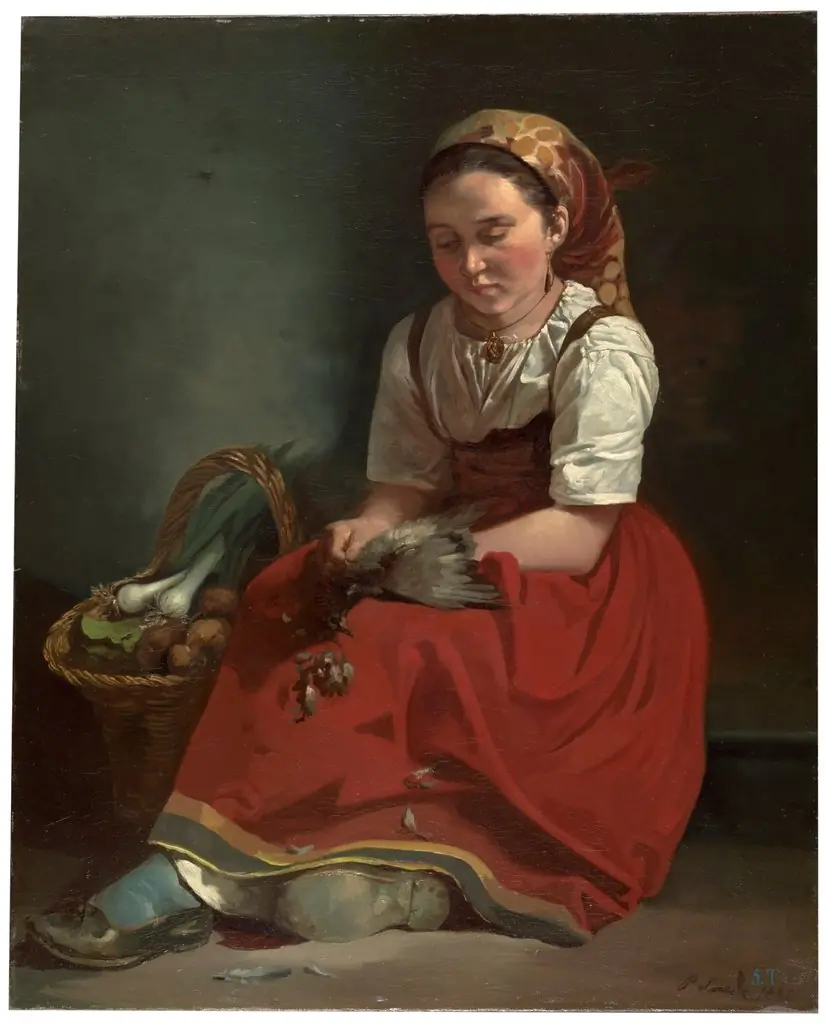 Una asturiana desplumando un pichón
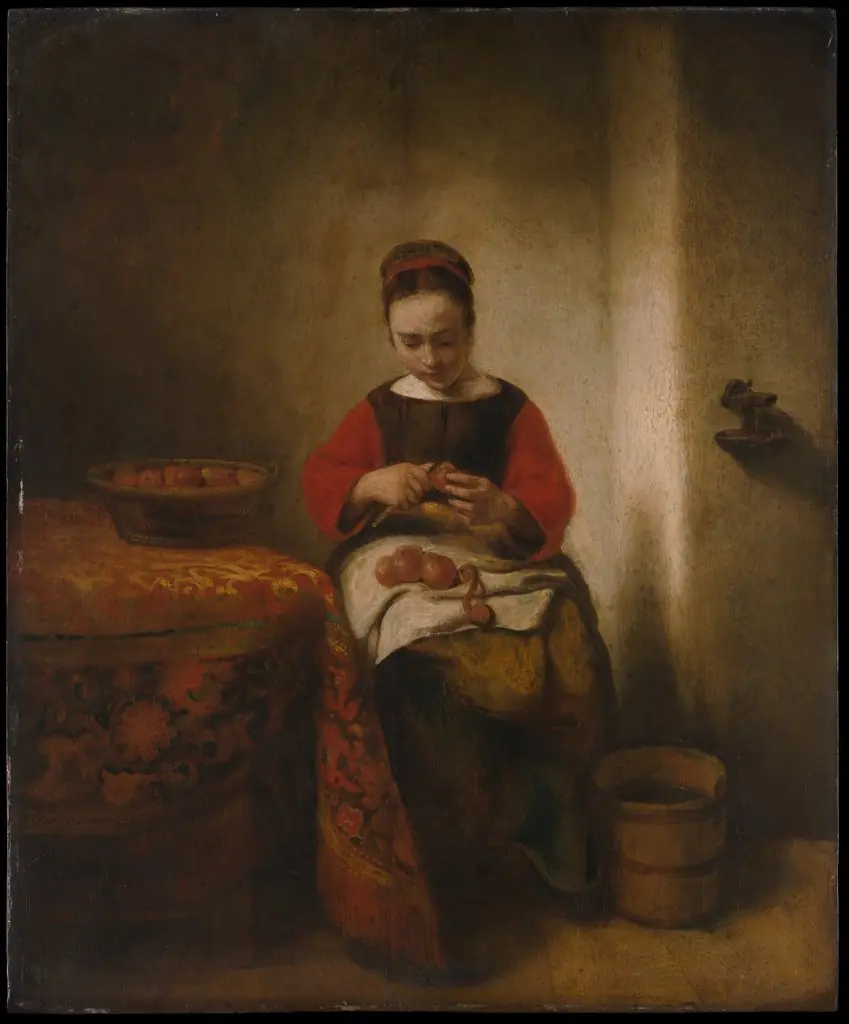 Young Woman Peeling Apples
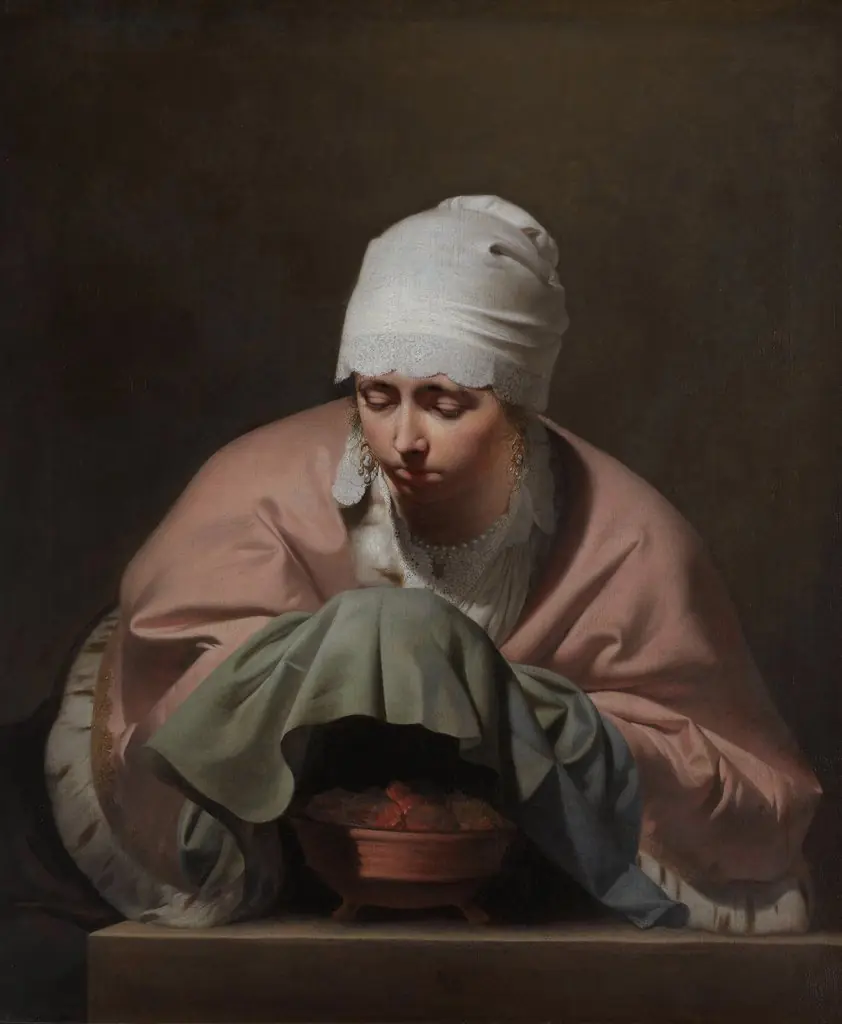 A Young Woman Warming her Hands over a Brazier: Allegory of Winter
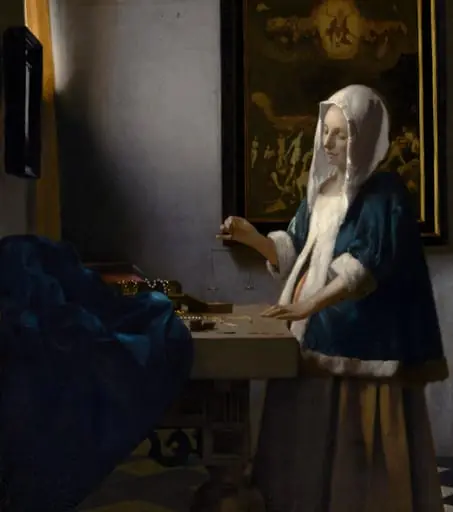 Woman Holding a Balance
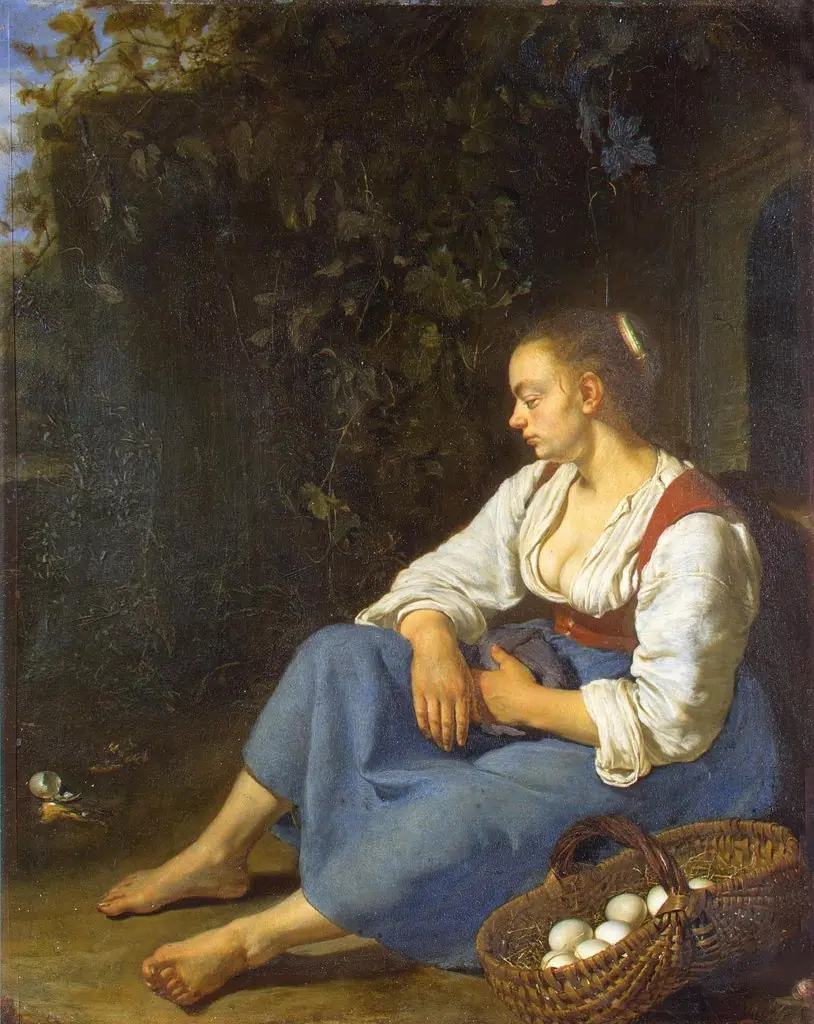 Broken Egg
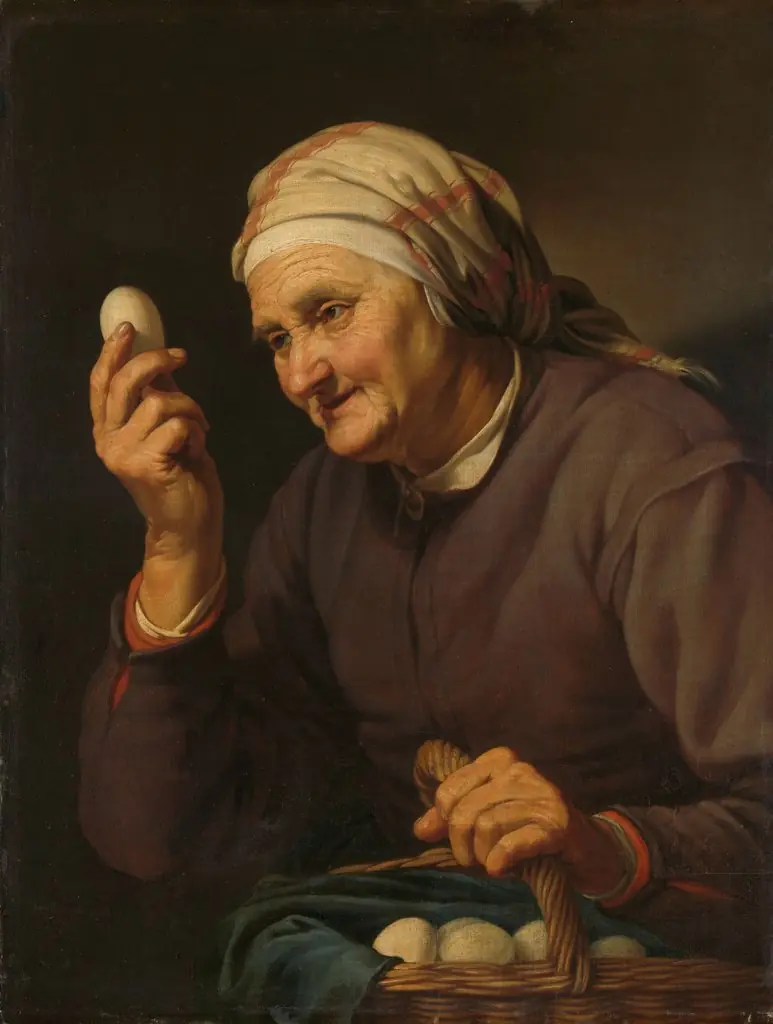 Old Woman Selling Eggs
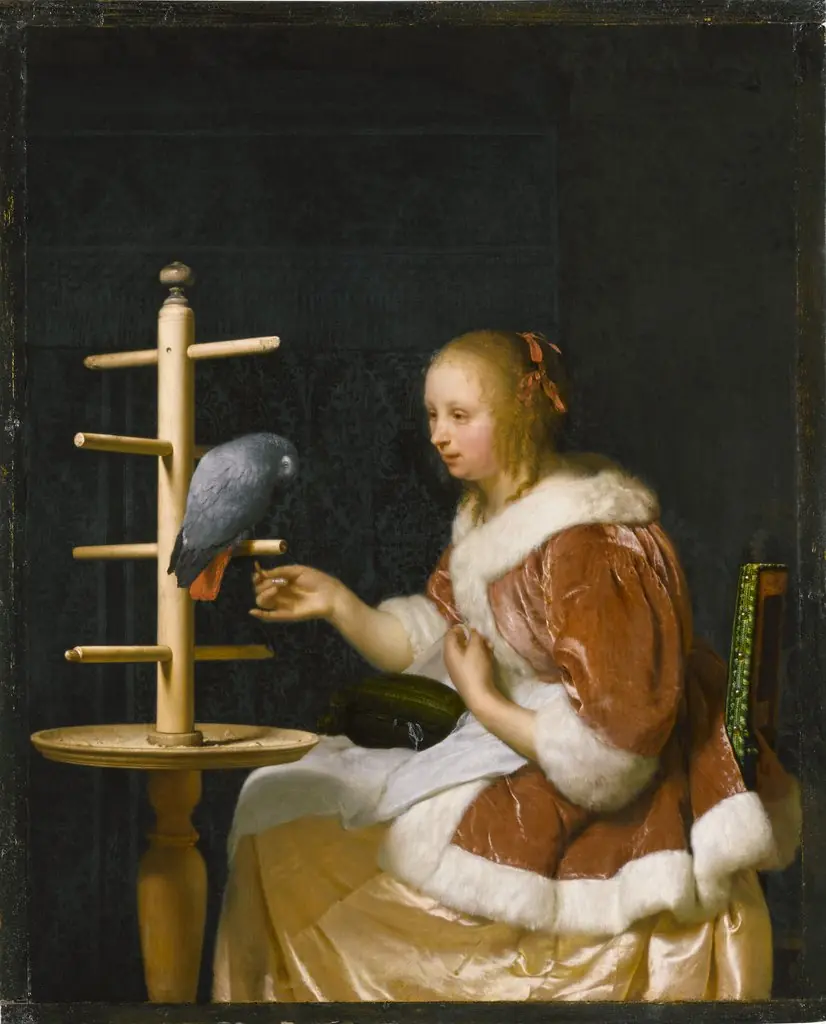 Woman feeding a Parrot
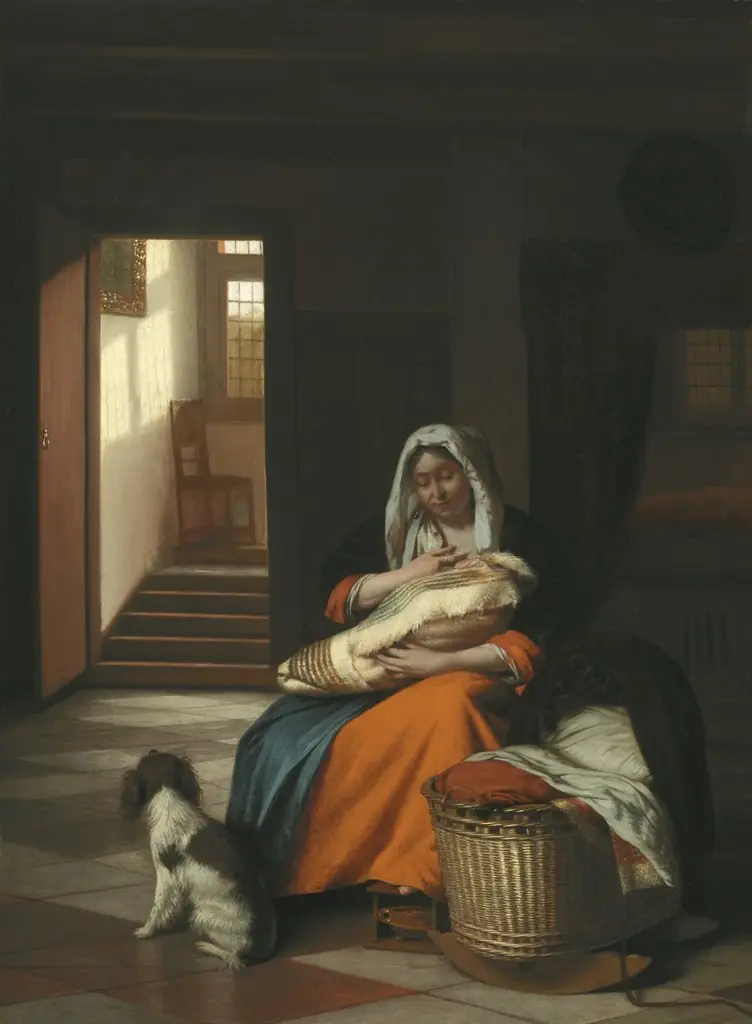 Woman nursing by a cradle with a dog at her feet
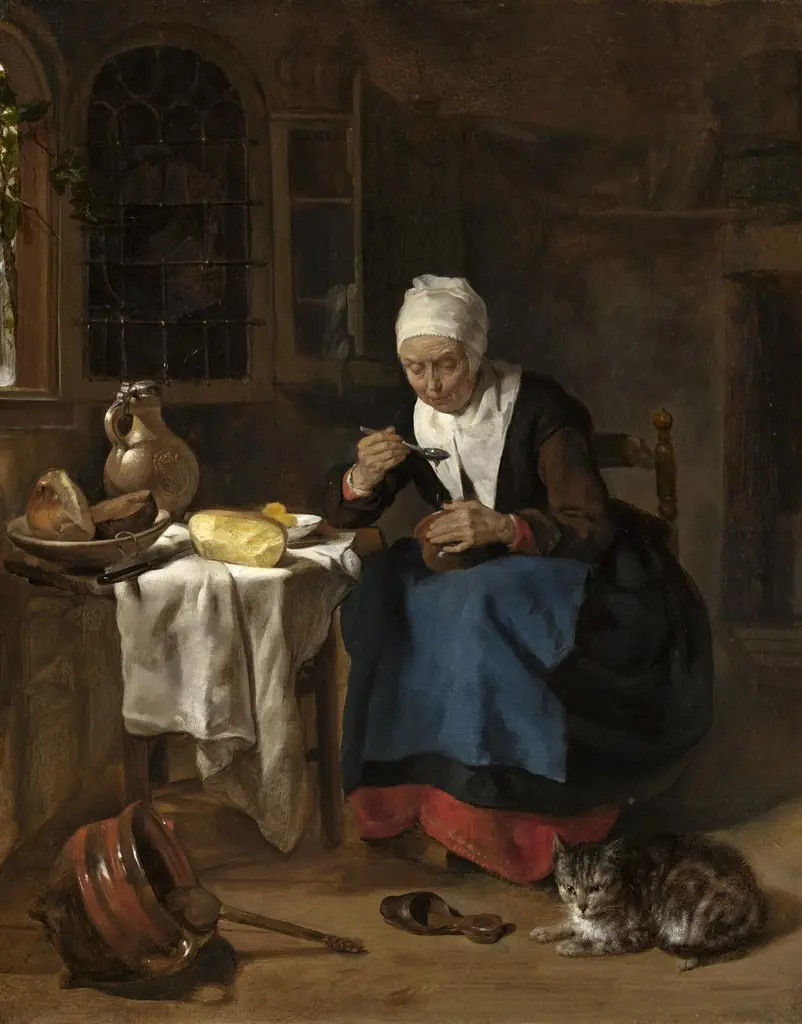 Old Woman Eating Porridge
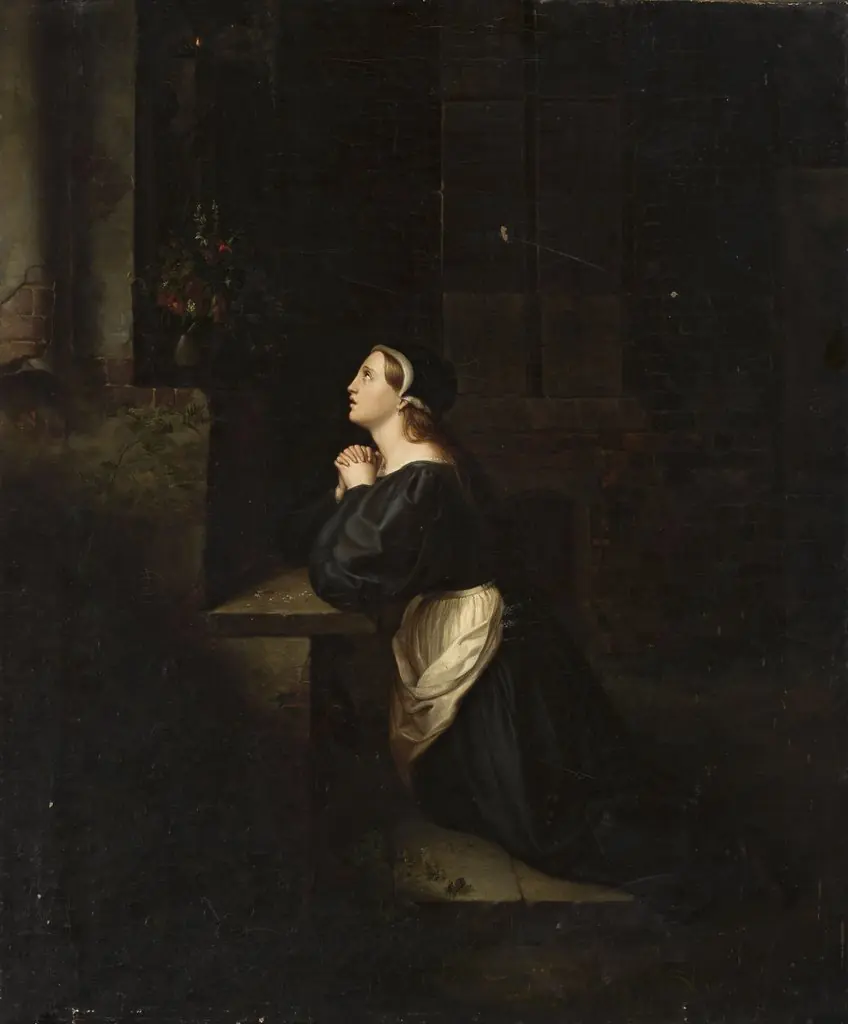 Prayer
 Grandmother with her granddaughter
- The Apple Peeler