Artwork
Bacchus
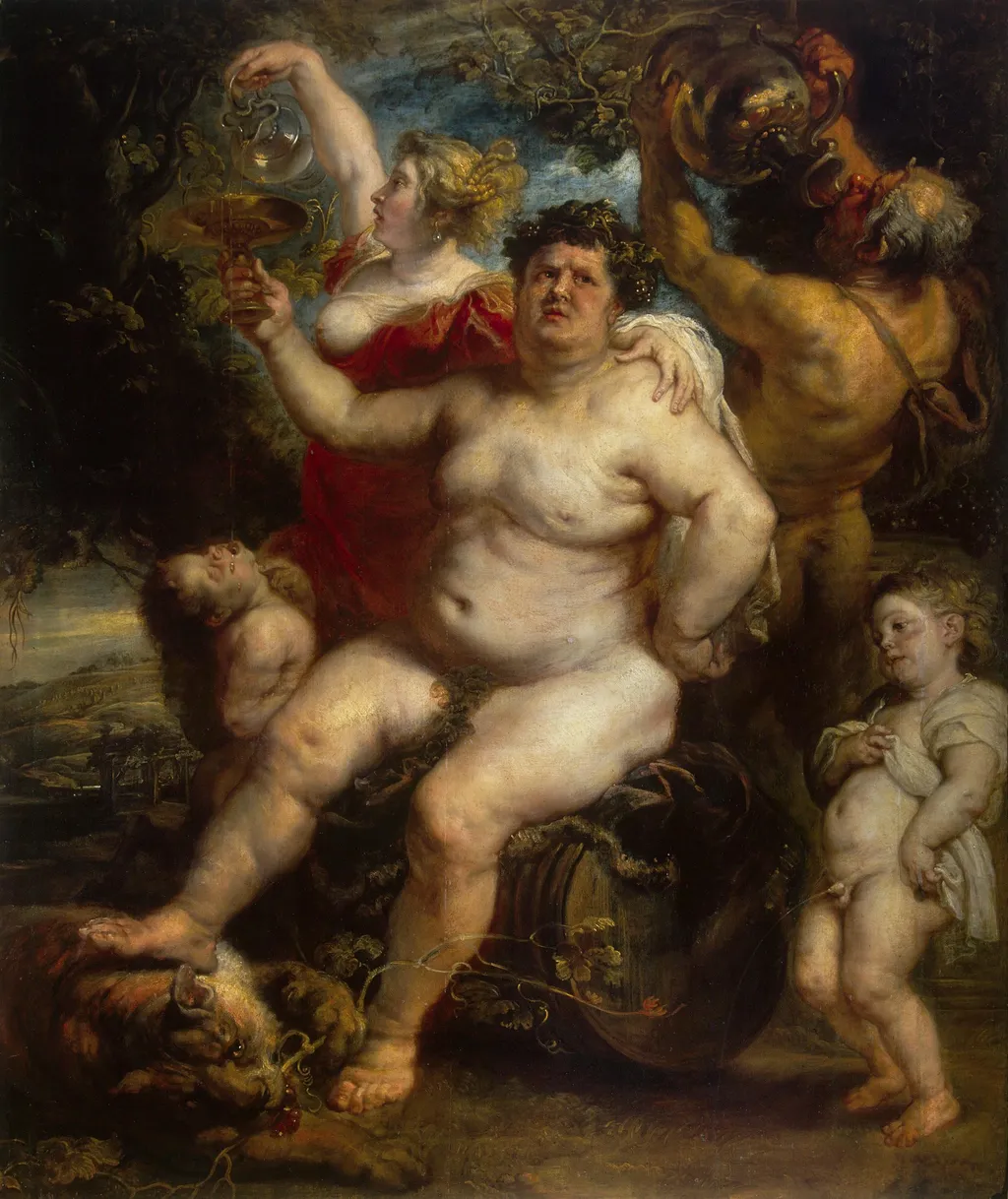
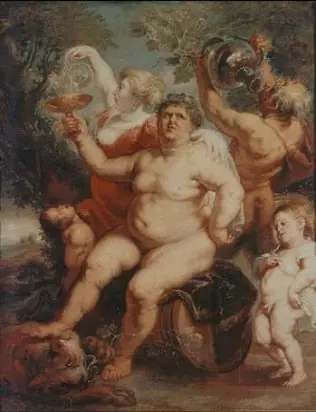
Bacchus is an oil painting by the Flemish Baroque painting artist Peter Paul Rubens. It dates from 1630 and is held in the collection of the Hermitage Museum.
About this work
The painting was bought by the State Hermitage Museum in 1772, and after a transfer to canvas in 1891 it remains on view in Saint Petersburg.
Peter Paul Rubens painted “Bacchus” around 1630, using oil paint on a panel that was later moved to canvas. The work shows the Roman god of wine, a popular subject for Rubens, and reflects his lively Baroque style.
The painting was bought by the State Hermitage Museum in 1772, and after a transfer to canvas in 1891 it remains on view in Saint Petersburg. An autograph copy also exists in the Uffizi in Florence.
If you’re curious about more of Rubens’s work, check out the museum.
Subject & Meaning
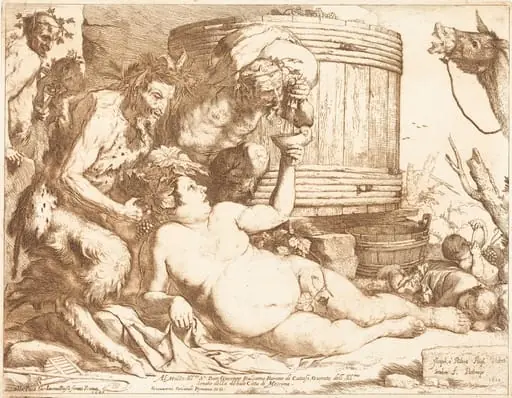
The painting depicts Bacchus, the Roman god of wine and fertility, portrayed as a corpulent, seated figure surrounded by symbolic companions. He rests on a wine barrel, with a satyr, a bacchante, and two putti in his entourage. The bacchante offers him wine from a golden cup, spilling some that the putti catches in his mouth, while a satyr drinks from a metal vessel and a child urinates nearby.
The work draws on earlier iconography, including a marble bust of Emperor Vitellius for Bacchus' head and motifs from Hans Vredeman de Vries' fountain paintings. The composition echoes Renaissance and Baroque interpretations of Bacchic revelry, though Rubens' version uniquely emphasizes earthly, unidealized physicality. It also references classical sources such as Mantegna's Bacchanalia and Titian's Bacchanal of the Andrians.
The painting reflects themes of autumn and October, associated with harvest and wine fermentation. A second version exists in the Uffizi Gallery in Florence.
Technique & Style
Peter Paul Rubens painted Bacchus as an oil work on canvas in 1630, a mythological composition now housed in the Hermitage Museum. The painting shows the god seated on a wine barrel, surrounded by a satyr, a bacchante, and two putti; his corpulent form rests on a tiger, while a bacchante pours wine from a golden cup. Rubens modeled Bacchus’s head on a Roman marble bust of Emperor Vitellius and drew compositional inspiration from Hans Vredeman de Vries’s fountain prints and works by Mantegna, Titian, and Baldung.
The canvas was transferred from panel to linen in 1891, and an autograph copy survives in the Uffizi Gallery in Florence.
History & Provenance
The painting Bacchus by Peter Paul Rubens was created around 1638–1640 in his studio shortly before his death. It remained in his possession until inherited by his nephew Philip Rubens, who sold it to Prince Richelieu. From there it entered the Crozat collection and was purchased in 1772 by the Hermitage Museum in Saint Petersburg as part of the complete Crozat collection.
The work was originally painted on panel but was transferred to canvas in 1891 by A. Sidorov. An autograph copy of the painting is now in the Uffizi Gallery in Florence. The Hermitage holds the original, which measures 191 cm by 161.3 cm and is executed in oil paint on canvas.
The painting is held by the Hermitage Museum in Saint Petersburg. It was purchased for the Hermitage in 1772 as part of the Crozat collection. The work retains its Hermitage provenance from that acquisition. An autograph copy by Rubens is now in the Uffizi in Florence.
Context
Bacchus, painted by Peter Paul Rubens around 1638–1640, depicts the Roman god of wine in a corpulent, seated form surrounded by a satyr, a bacchante, and two putti, drawing on motifs from Hans Vredeman de Vries' fountain, Mantegna's Bacchanalia, and Titian's Bacchanal of the Andrians. The work evolved from an earlier studio version left by Rubens after his death, passed to his nephew Philip Rubens, sold to Prince Richelieu, then acquired by the Crozat collection and purchased by the Hermitage Museum in 1772. A near-identical copy remains in the Uffizi Gallery in Florence.
The painting reflects Rubens' engagement with mythological themes common in Baroque art, often symbolizing autumn and wine harvest celebrations, and showcases his characteristic use of color and dynamic composition.
Legacy
The painting's posthumous history underscores its enduring value. It remained in Rubens's studio at his death, then passed through prominent collections: inherited by his nephew Philip Rubens, sold to Prince Richelieu, and later acquired by Louis Antoine Crozat before the Hermitage purchased it in 1772. An autograph copy now in the Uffizi Gallery attests to the composition's significance within Rubens's own workshop.
The work's distinctive portrayal of Bacchus as corpulent rather than youthful, alongside its refined color gradations and material textures, contributes to its scholarly recognition as a notable reinterpretation of mythological subject matter.
Overview
Peter Paul Rubens created the oil painting titled Bacchus between 1638 and 1640. The work depicts the Roman god of wine and exemplifies the artist’s mature Baroque approach. It is part of the Hermitage Museum’s collection in Saint Petersburg, where it has been displayed since its acquisition in the late eighteenth century.
Own this work as a print
Artist & collection
Artist
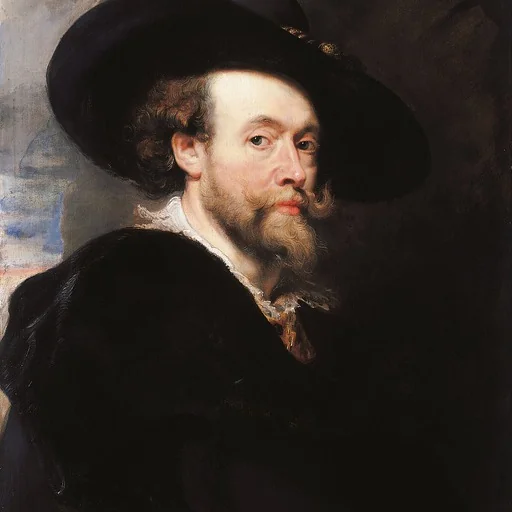
Sir Peter Paul Rubens ( ROO-bənz; Dutch:; 28 June 1577 – 30 May 1640) was a Flemish artist and diplomat.