Artwork
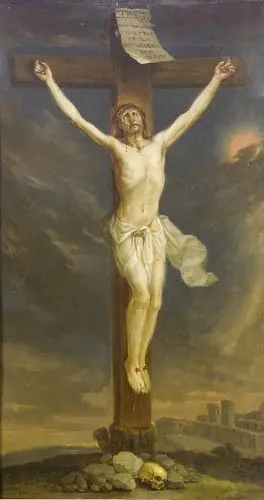
Christ dead on the cross
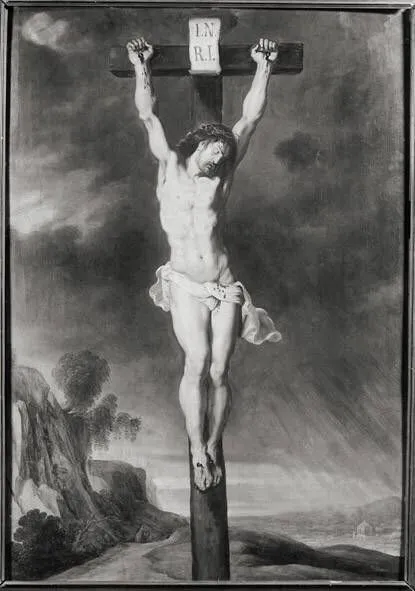
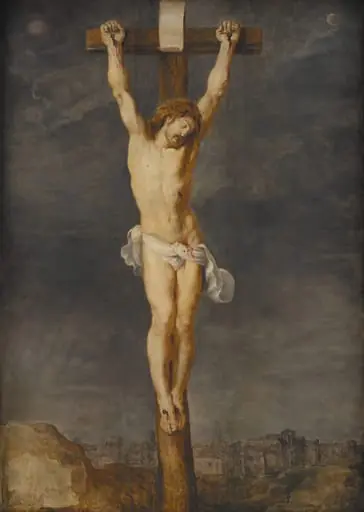
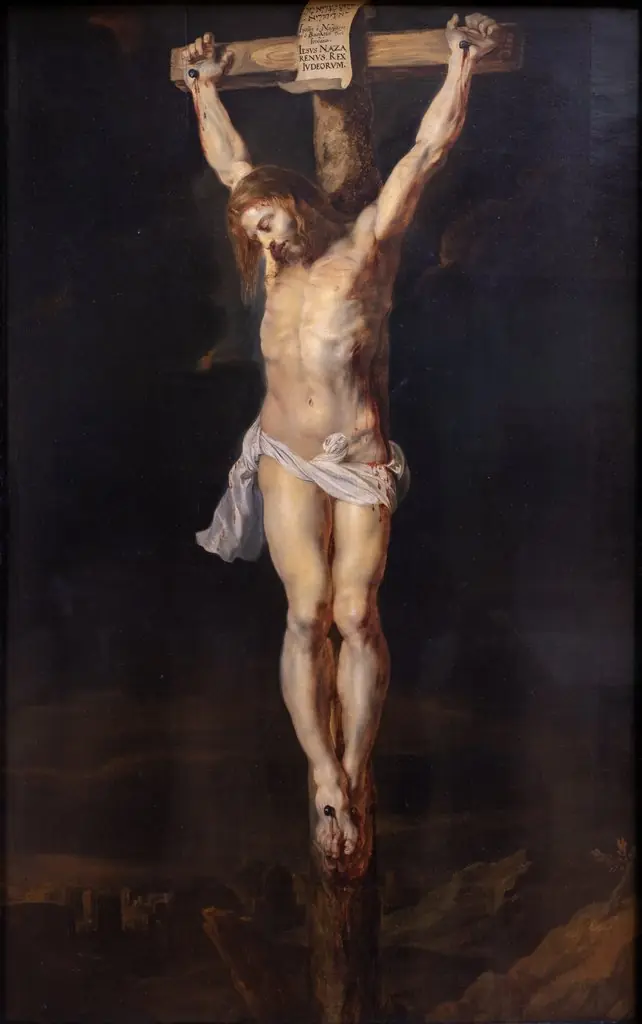
Christ dead on the cross is an unspecified painting by the Flemish Baroque painting artist Peter Paul Rubens. It dates from 1608 and is held in the collection of the Bavarian State Painting Collections.
About this work
Subject & Meaning
This visual treatment aligns with traditional iconography intended to evoke contemplation on the suffering and redemption associated with the event.
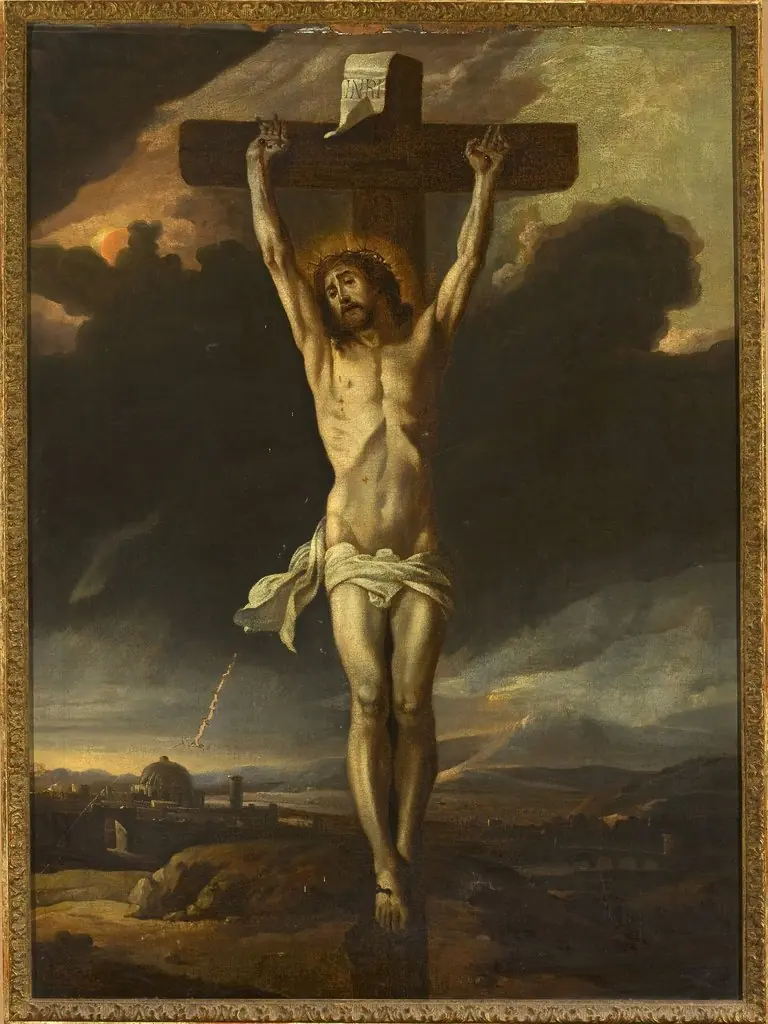
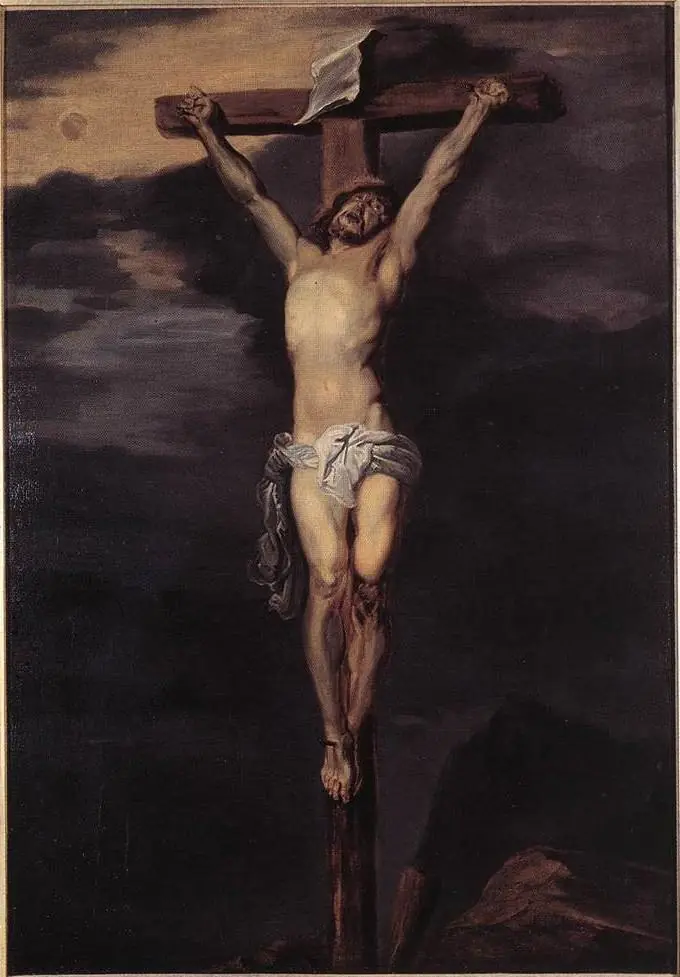
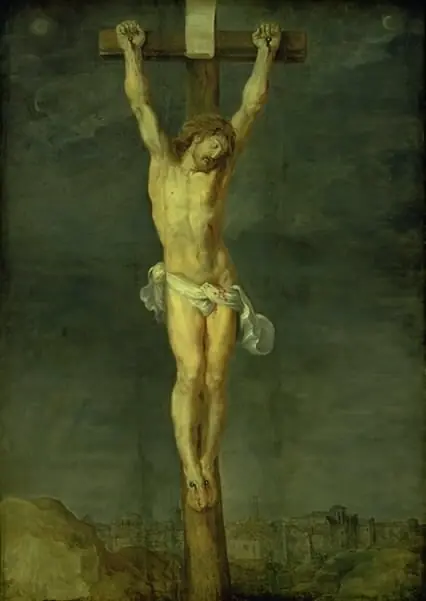
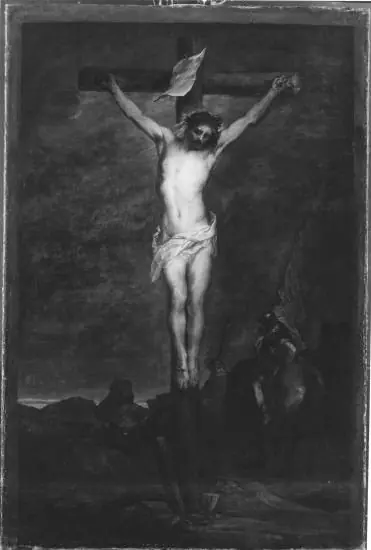
Peter Paul Rubens's 1608 painting depicts the crucifixion of Jesus Christ, presenting the central figure of Christian theology dead upon the cross. As a work of religious art, the composition focuses exclusively on the main subject of the crucifixion, capturing the moment of Christ's death. The imagery serves as a direct representation of the Passion narrative, emphasizing the physical reality of the sacrifice through the depiction of the lifeless body.
This visual treatment aligns with traditional iconography intended to evoke contemplation on the suffering and redemption associated with the event.
History & Provenance
Christ dead on the cross is a religious painting by Peter Paul Rubens created in 1608. The work was commissioned for the Jesuit Church in Antwerp before being acquired by the Bavarian State Painting Collections, where it remains on display at the Alte Pinakothek in Munich. Its dimensions are 106.6 cm by 74.9 cm.
The painting entered the collection of the Bavarian State Painting Collections in the 18th century, establishing a continuous ownership chain from its original religious context to its current institutional home.
The painting is housed in the Alte Pinakothek, part of the Bavarian State Painting Collections, with inventory number 2625. It has been displayed in exhibitions focusing on Rubens' religious works, including the 2008 exhibition "Rubens and the Passion" at the museum.
Context
Rubens' 1608 'Christ dead on the cross' entered the Alte Pinakothek's collection in Munich, establishing its enduring presence in European religious art. Scholarship identifies it as a pivotal example of Counter-Reformation visual rhetoric, where Rubens' dynamic composition and emotional realism shaped devotional practices across 17th-century Europe. The painting's provenance, documented through its inclusion in the Bavarian State Painting Collections, reflects evolving 19th-century acquisition strategies that prioritized canonical religious masterpieces, cementing its role in shaping art historical narratives of the period.
Overview
Created in 1608 by the Flemish painter and diplomat Peter Paul Rubens, this oil work portrays the crucifixion of Jesus Christ. Executed within the flourishing Flemish Baroque period, the canvas now belongs to the collection of Munich’s Alte Pinakothek, where it is displayed among other works of the era.
Technique & Style
Rubens employs a pronounced chiaroscuro, allowing a stark light to strike the body and delineate muscular form against a dark, storm‑laden background. This contrast creates a three‑dimensional effect that heightens the immediacy of suffering. The painter’s characteristic vigor, rich coloration, and dynamic arrangement reflect the dramatic expressiveness typical of Baroque art.
Artist & collection
Artist
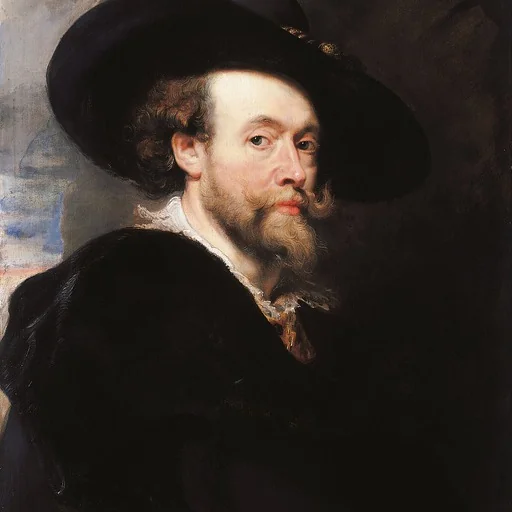
Sir Peter Paul Rubens ( ROO-bənz; Dutch:; 28 June 1577 – 30 May 1640) was a Flemish artist and diplomat.