Artwork
Democritus
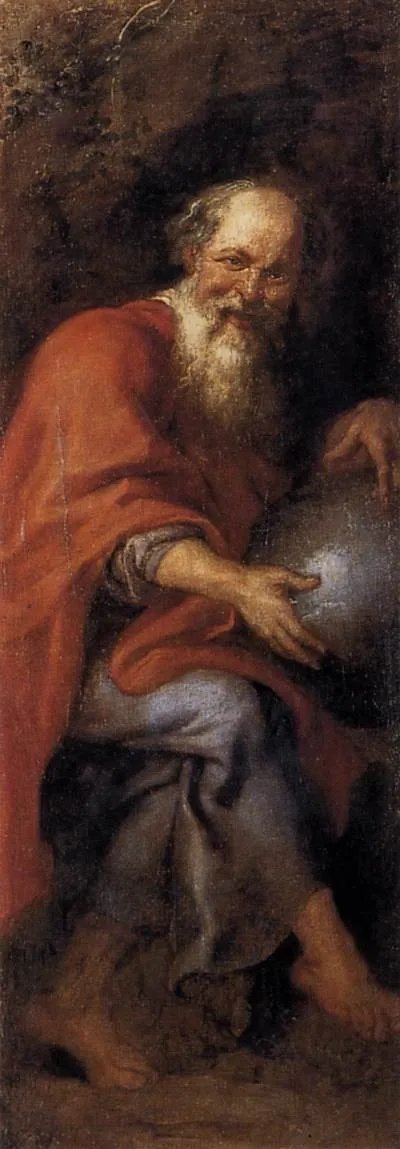
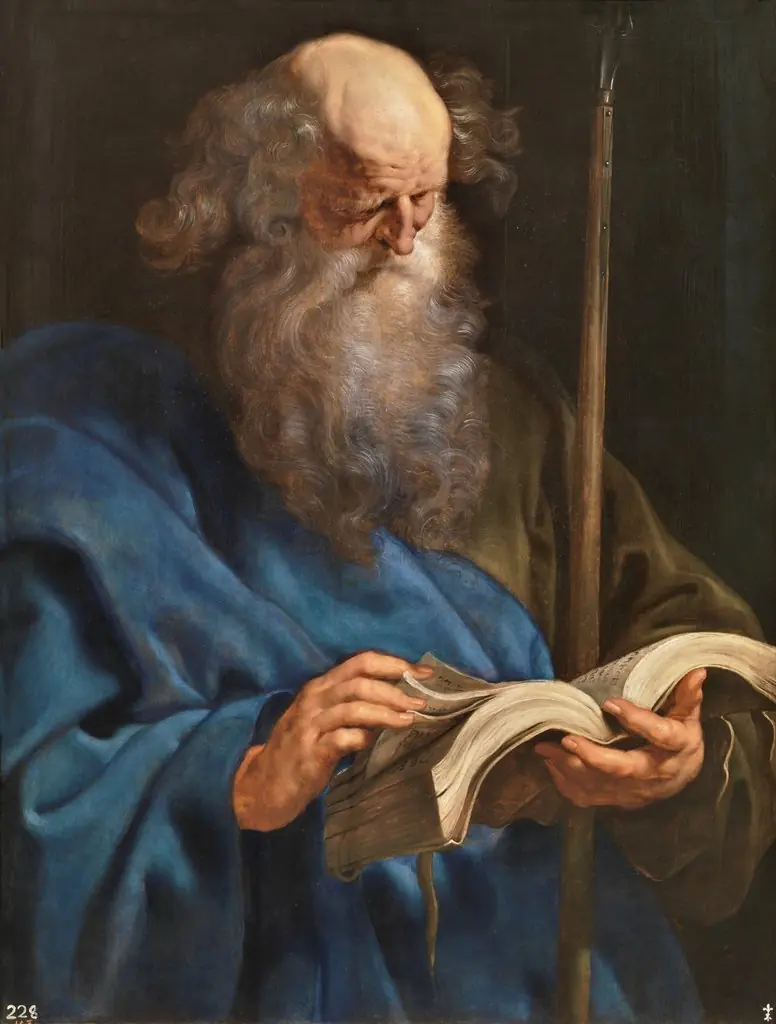
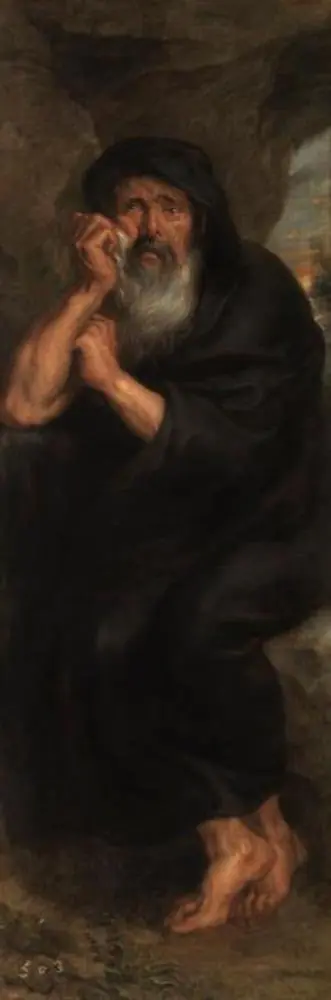
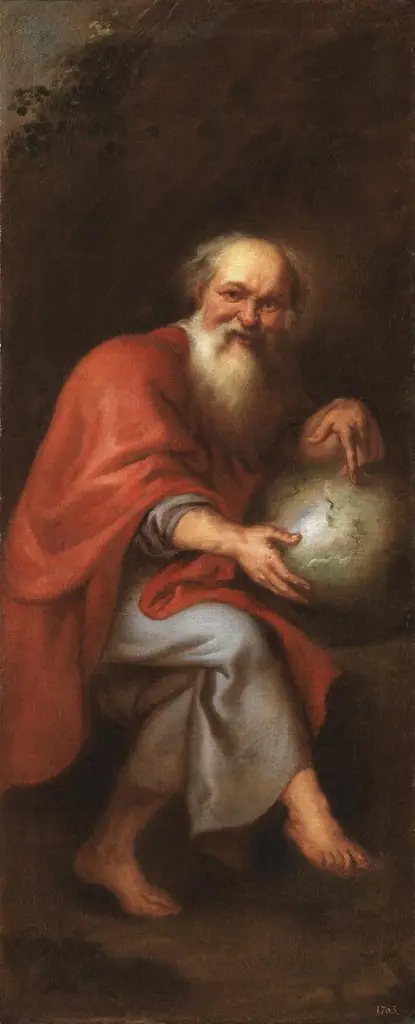
Democritus is an oil painting by the Flemish Baroque painting artist Peter Paul Rubens. It dates from 1637 and is held in the collection of the Museo del Prado.
About this work
Subject & Meaning
The work combines a serene expression with scientific attributes to suggest the harmony between wisdom and the material world.
The painting portrays the ancient Greek philosopher Democritus, identified by his characteristic smile, he was known as the 'laughing philosopher', and a terrestrial globe, alluding to his atomist theories and conception of a boundless universe. The work combines a serene expression with scientific attributes to suggest the harmony between wisdom and the material world. The figure is rendered in oil on canvas, measuring 180.5 cm by 66 cm, and was created by Peter Paul Rubens in 1637. It is part of the collection of the Museo del Prado in Madrid.
Technique & Style
Executed in oil on canvas, the work measures 180.5 cm by 66 cm. Rubens rendered Democritus with a contemplative yet smiling expression, accompanied by the symbolic terrestrial globe. The brushwork displays the rich coloration and fluid modeling characteristic of Rubens's mature work, while the composition combines naturalistic detail with a slightly idealized, almost allegorical presence.
History & Provenance
Peter Paul Rubens's portrait Democritus was created in 1637, executed in oil on canvas. The painting entered the Spanish royal collection and is now held by the Museo del Prado in Madrid. The available sources do not document a specific commissioner, an earlier ownership chain, intermediate custodial history, or an accession number for the work.
Overview
Peter Paul Rubens executed the oil painting Democritus in 1637. The work portrays a seated figure, identified as the ancient philosopher, clutching a luminous orb that dominates the composition. The painting is part of the Museo del Prado’s collection and exemplifies Rubens’ mature Baroque approach, combining vigorous color with dramatic lighting.
Context
Democritus illustrates Rubens’ ongoing engagement with classical antiquity, a theme he explored in numerous commissions for aristocratic patrons. The work aligns with Counter‑Reformation aesthetics, using dramatic illumination and emotive expression to convey intellectual enlightenment within a religiously charged artistic climate.
Artist & collection
Artist
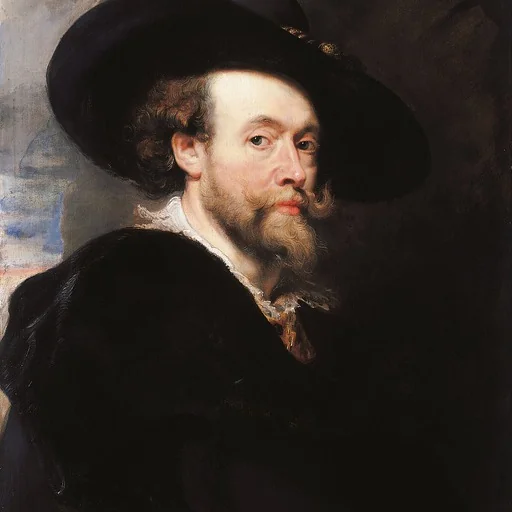
Sir Peter Paul Rubens ( ROO-bənz; Dutch:; 28 June 1577 – 30 May 1640) was a Flemish artist and diplomat.