Artwork
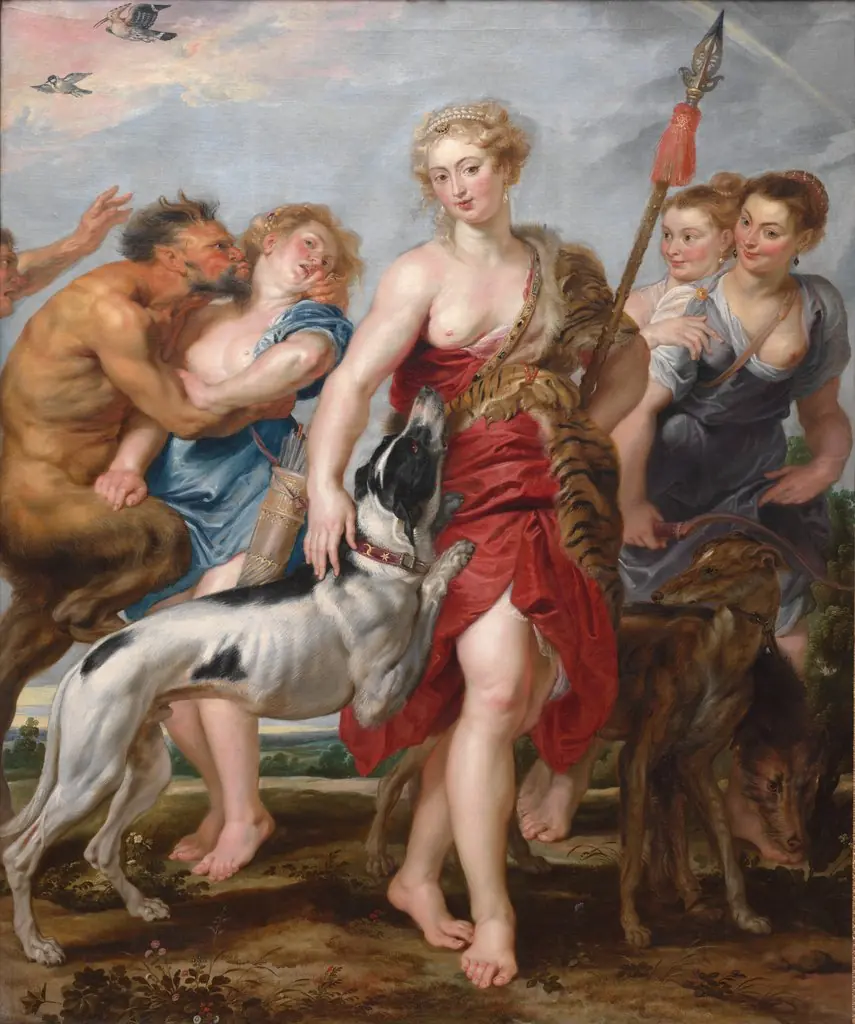
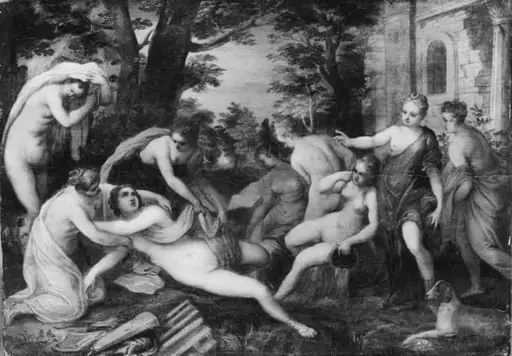
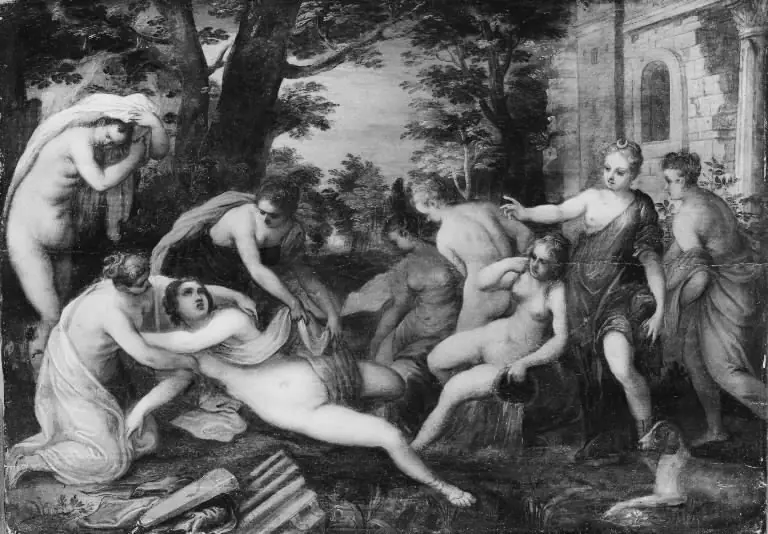
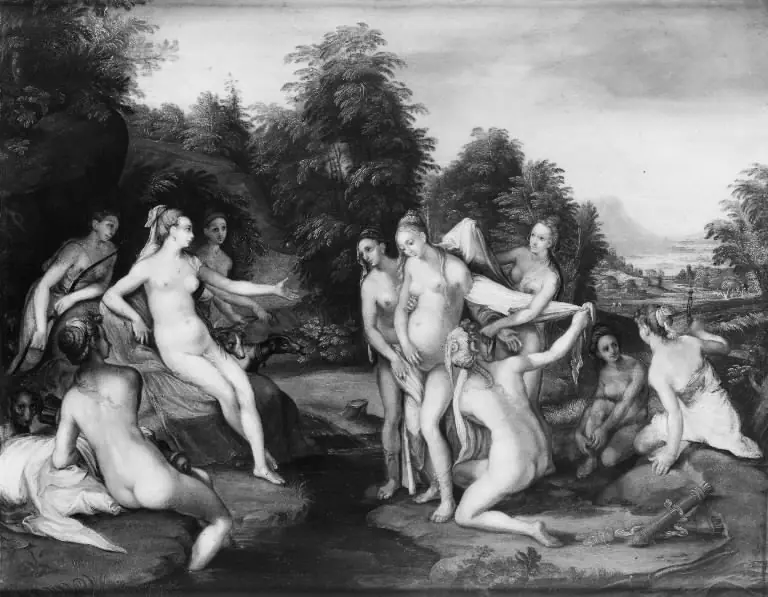
Diana and two nymphs surprised by satyrs while bathing
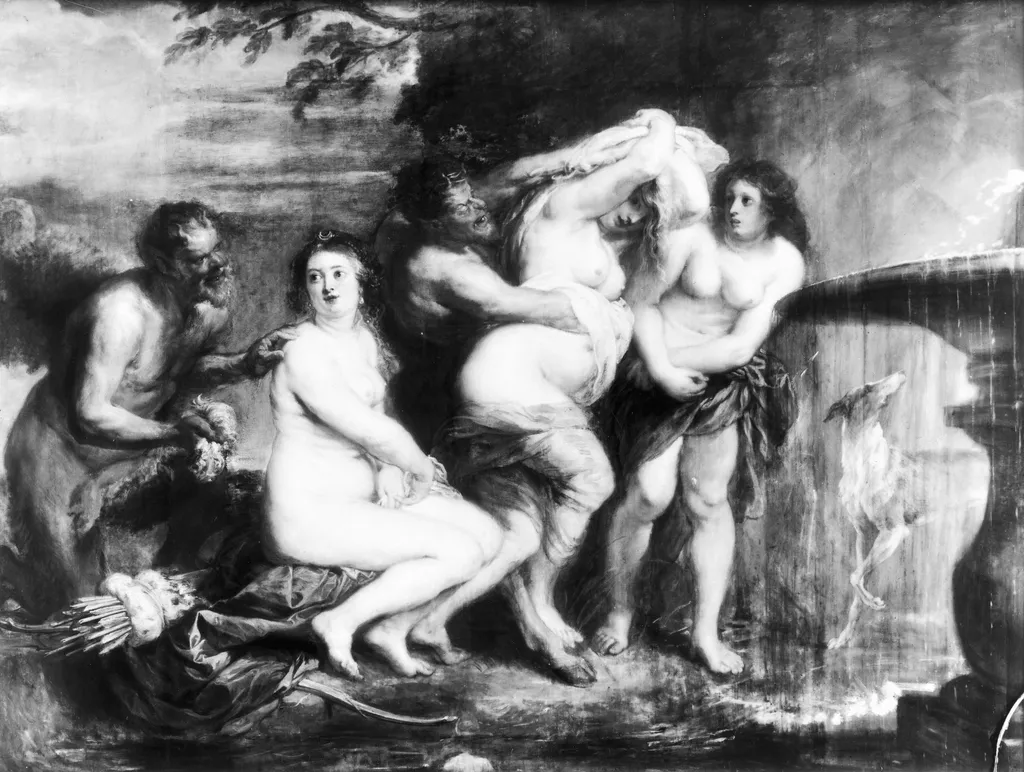
Diana and two nymphs surprised by satyrs while bathing is a paint painting by the Flemish Baroque painting artist Peter Paul Rubens. It dates from 1636 and is held in the collection of the Bode Museum.
About this work
Subject & Meaning
The work illustrates a mythological narrative centered on Diana, the Roman goddess of the hunt, depicted in the act of bathing alongside two nymphs.
The work illustrates a mythological narrative centered on Diana, the Roman goddess of the hunt, depicted in the act of bathing alongside two nymphs. The scene captures a moment of intrusion, as satyrs surprise the female figures, creating a dynamic interaction between the divine and the rustic. This subject matter aligns with the genre of mythological painting, utilizing the contrast between the modesty of the goddess and her attendants and the intrusive nature of the satyrs to explore themes of vulnerability and the disruption of sacred privacy. The composition focuses on these specific figures to convey the dramatic tension inherent in the classical story.
Technique & Style
The composition is executed in paint on panel, a support Rubens frequently favored for smaller-scale cabinet pictures. According to the catalogue record, the panel measures 190 cm in height by 249 cm in width, giving it a broad horizontal format suited to the multi-figure bathing scene. The work is classified as a mythological painting and is dated to 1636.
The painting is recorded as lost, and no information about its current condition, surface handling, or specific stylistic qualities is documented in the available sources.
History & Provenance
Created by Peter Paul Rubens in 1636, the painting Diana and two nymphs surprised by satyrs while bathing is a mythological work executed in oil on panel. The piece measures 190 cm in height and 249 cm in width. Historical records identify the work as a lost painting that was formerly part of the collection at the Bode Museum within the Gemäldegalerie Berlin.
The artwork is no longer extant, having been lost while housed at the Flakturm Friedrichshain location associated with the museum.
Context
Rubens painted this mythological work in 1636, depicting the goddess Diana and her attendants caught unawares by playful satyrs during a private bath. Though now lost, it was documented in the collection of the Bode Museum, Gemäldegalerie Berlin, where it resided in a protected tower location until recent conservation efforts. Scholars consider it a significant example of Rubens' mature approach to mythological narrative, blending sensuality with dynamic movement characteristic of his Baroque style.
Its compositional study of light on flesh and the interplay between divine and mortal realms influenced later 17th-century cabinet paintings, establishing a precedent for intimate yet dramatic reinterpretations of classical themes.
Legacy
The painting's later influence and reputation remain limited due to its lost status. As a mythological work by Peter Paul Rubens, it was documented in the Bode Museum's collection and Gemäldegalerie Berlin, but its current location is recorded at the Bode Museum Flakturm Friedrichshain. The work depicts Diana and two nymphs surprised by satyrs while bathing, a subject that aligns with Rubens' mythological themes.
Its legacy is primarily tied to its historical documentation rather than surviving presence, with its inception noted as 1636 in archival records.
The artwork's material composition of paint on panel and its classification as a mythological painting underscore its significance within Rubens' oeuvre. Though no longer extant, its inclusion in institutional records and genre-based categorization preserves its contextual legacy in art historical references.
Overview
Diana and two nymphs surprised by satyrs while bathing is a 1636 painting by Peter Paul Rubens, a Flemish artist associated with the Baroque movement.
Own this work as a print
Artist & collection
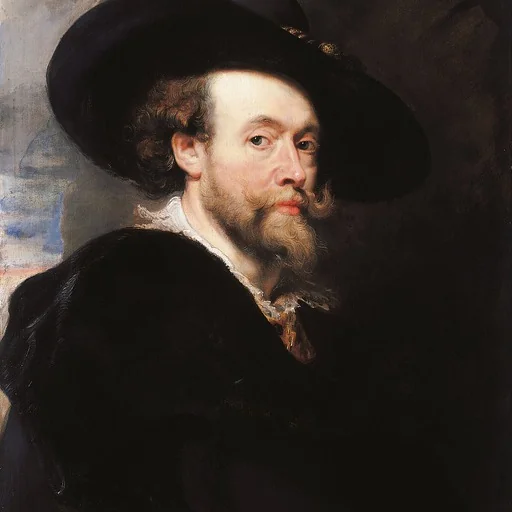
Artist
Sir Peter Paul Rubens ( ROO-bənz; Dutch:; 28 June 1577 – 30 May 1640) was a Flemish artist and diplomat.