Artwork
Diana and Callisto
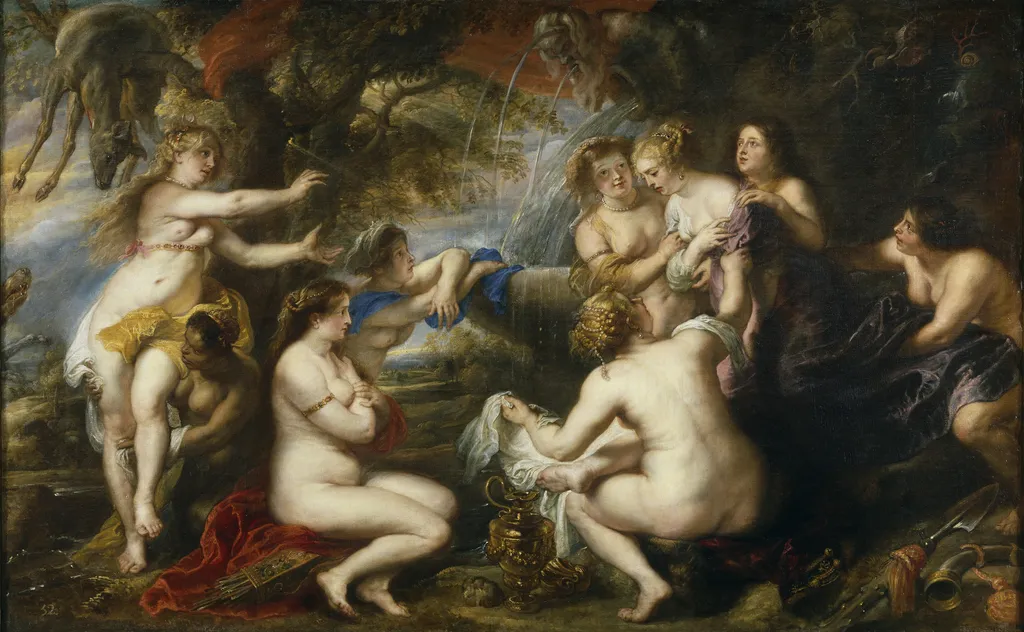
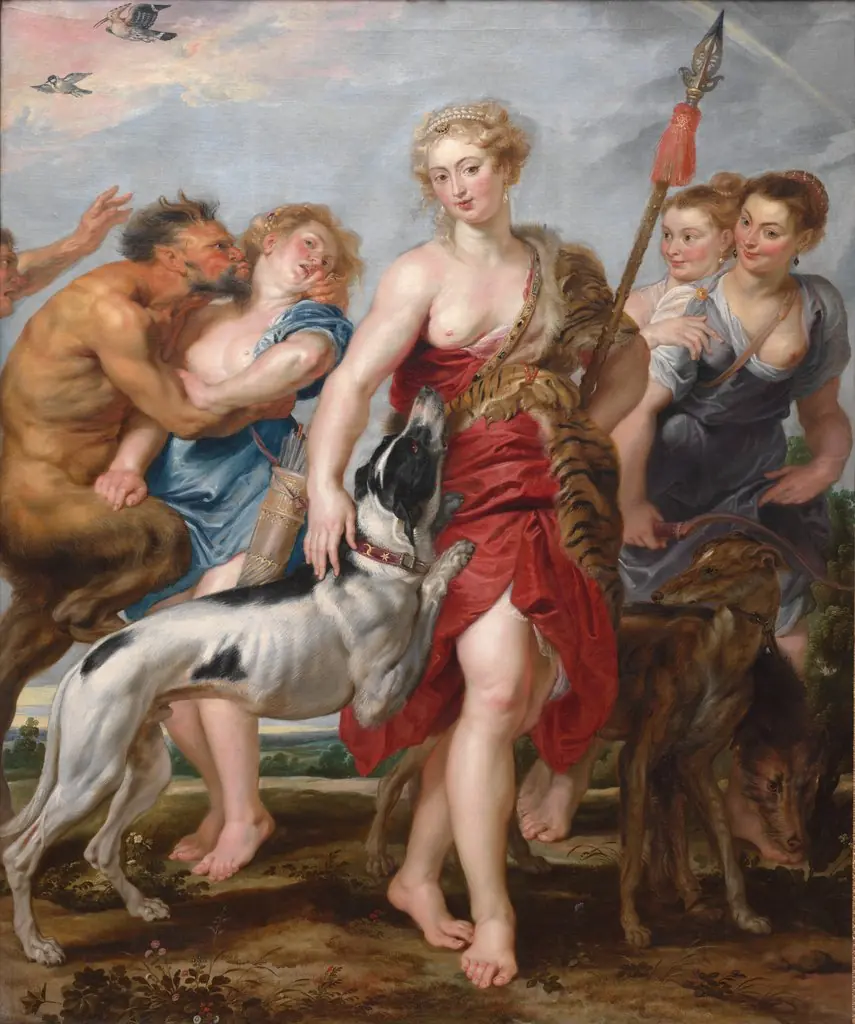
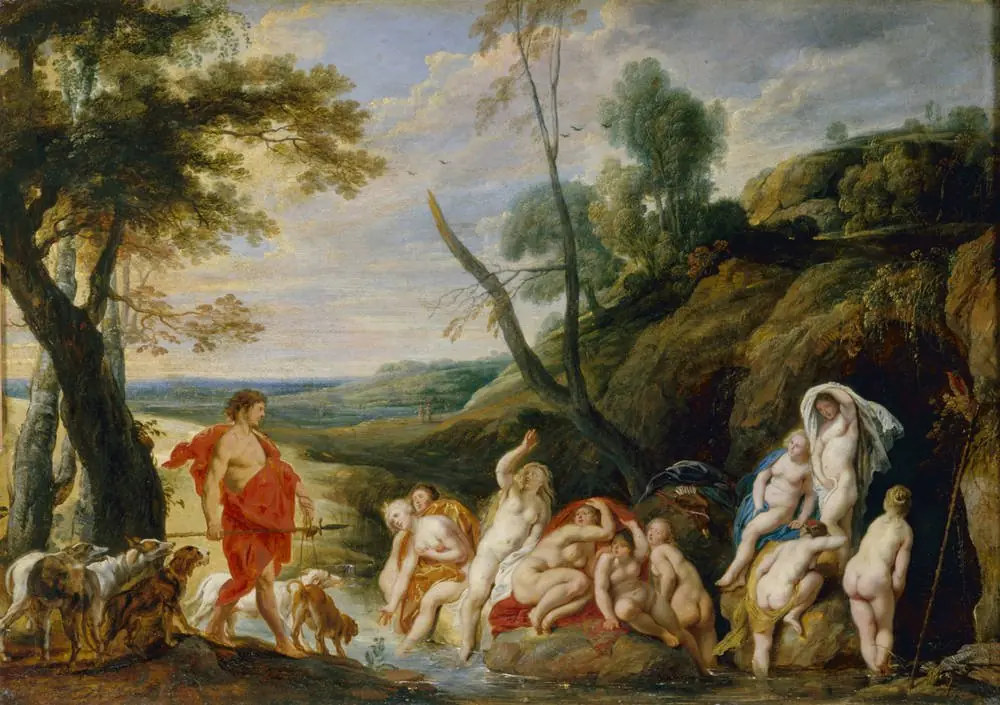
Diana and Callisto is an oil painting by the Flemish Baroque painting artist Peter Paul Rubens. It dates from 1635 and is held in the collection of the Museo del Prado.
About this work
Subject & Meaning
The work captures the immediate tension of the discovery, highlighting the contrast between the goddess's purity and the nymph's compromised state.
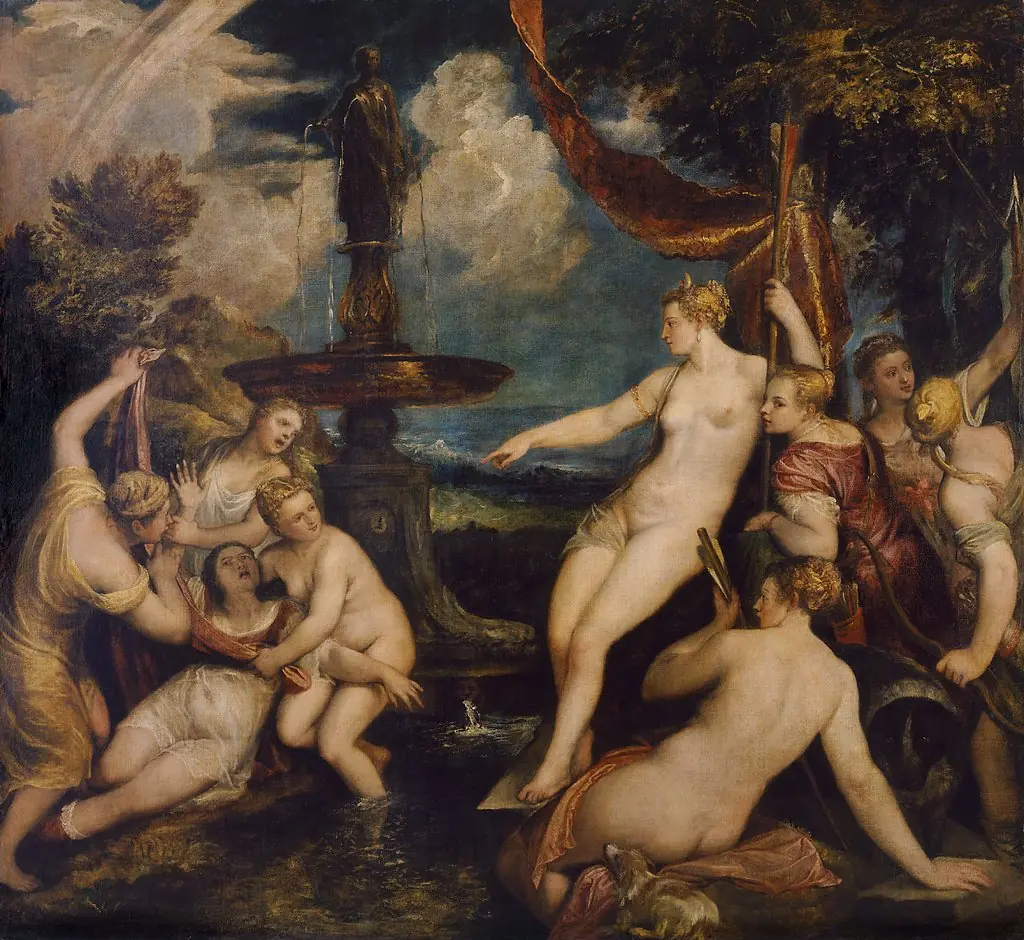
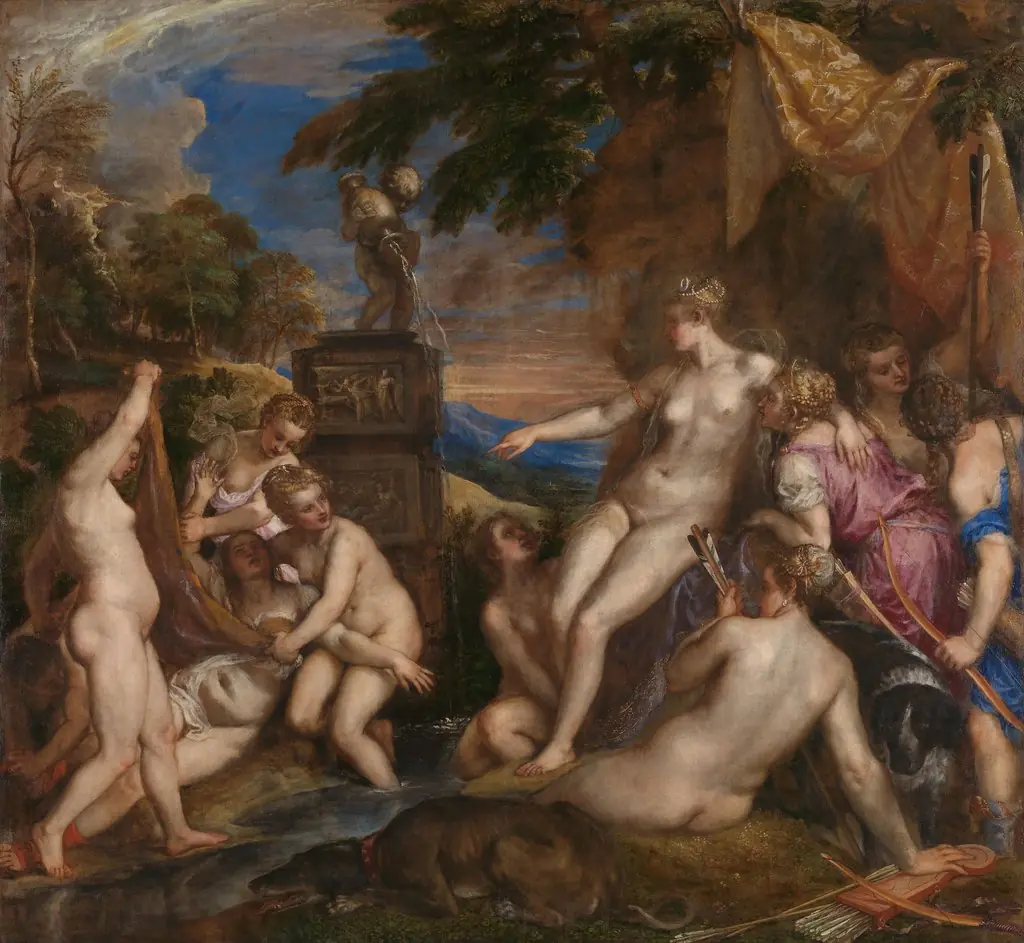
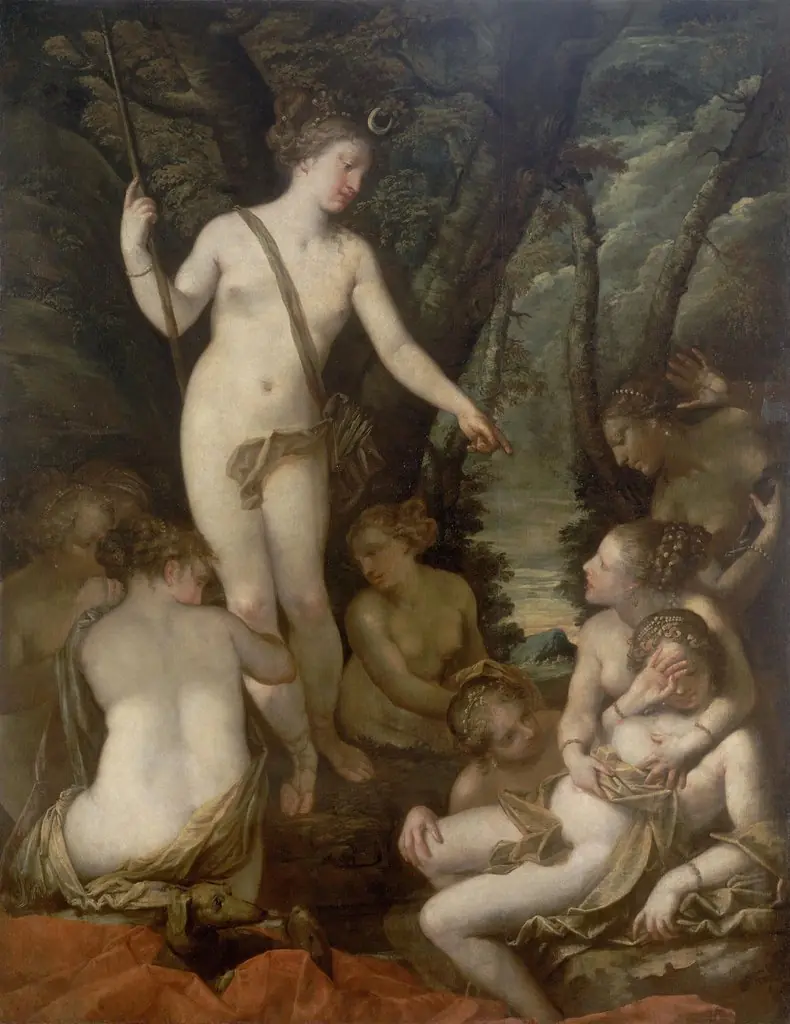
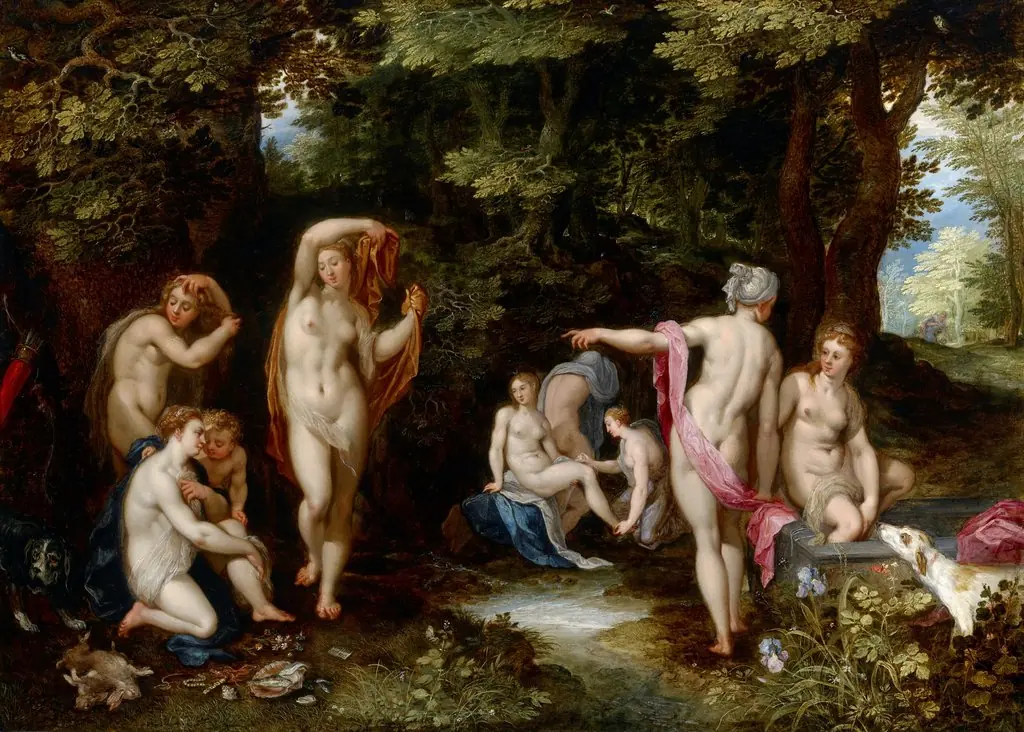
The painting depicts the mythological moment when the goddess Diana discovers her favorite nymph, Callisto, is no longer chaste. As Callisto emerges from a bath, Diana and her attendants witness the revelation of her pregnancy, a consequence of her violation by Jupiter. This scene illustrates the tragic intersection of divine power and human vulnerability, focusing on the breach of the vow of chastity required of Diana's followers.
The work captures the immediate tension of the discovery, highlighting the contrast between the goddess's purity and the nymph's compromised state. The inclusion of nudity and specific attributes like weapons underscores the themes of hunting, exposure, and the consequences of divine intervention in mortal lives.
Technique & Style
Diana and Callisto is executed in oil paint on a canvas support. The work measures 202.6 cm in height and 305.5 cm in width, presenting a substantial mythological scene. Stylistically, the painting belongs to the genre of mythological painting and prominently features nudity as a central formal element.
The composition depicts the goddess Diana alongside the figures of Callisto, various weapons, and gemstones. Created for the Torre de la Parada hunting lodge, the piece reflects the artist's engagement with classical themes during the mid-1630s.
History & Provenance
Commissioned by Philip IV of Spain, this oil painting was created for the Torre de la Parada, the monarch's new hunting lodge. While some records date the work to 1635, other accounts specify its production occurred between 1637 and 1638, with one source offering a broader range of 1635 to 1640. The canvas measures approximately 202 by 303 centimeters, though slight variations in recorded dimensions exist across different references.
Following its completion, the artwork entered the Spanish royal collection and is currently housed in the Museo del Prado in Madrid.
Peter Paul Rubens's painting Diana and Callisto is currently held in the Museo del Prado in Madrid, Spain. The work was commissioned by Philip IV of Spain for the Torre de la Parada hunting lodge. While sources provide varying specific dates for its creation, ranging from 1635 to a period between 1637 and 1638, the painting has remained in the Prado's collection since its inception.
The museum maintains the artwork as part of its permanent holdings, with the institution serving as its sole documented location in the provided records.
Overview
This painting, Diana and Callisto, was created by Peter Paul Rubens between 1637 and 1638. Executed in oil on a large canvas measuring 202 by 303 centimeters, it depicts the Roman goddess Diana alongside her nymph Callisto. The work was originally part of a significant commission for King Philip IV of Spain and is now housed in the Museo del Prado in Madrid.
Context
The commission for the Torre de la Parada provided Rubens with an opportunity to contribute to one of the most ambitious decorative schemes of the 17th century. Philip IV envisioned a space filled with classical narratives and natural imagery, reflecting both his intellectual interests and the lodge's function. Rubens, a prominent figure in Baroque art, was a natural choice for such a project, capable of delivering the grand scale and dramatic intensity desired by the Spanish court.
Own this work as a print
Artist & collection
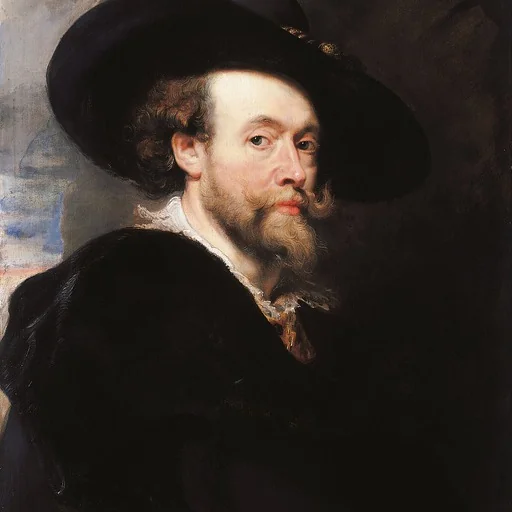
Artist
Sir Peter Paul Rubens ( ROO-bənz; Dutch:; 28 June 1577 – 30 May 1640) was a Flemish artist and diplomat.