Artwork
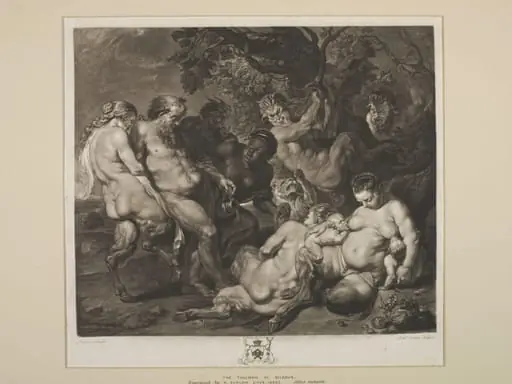
Drunken Silenus
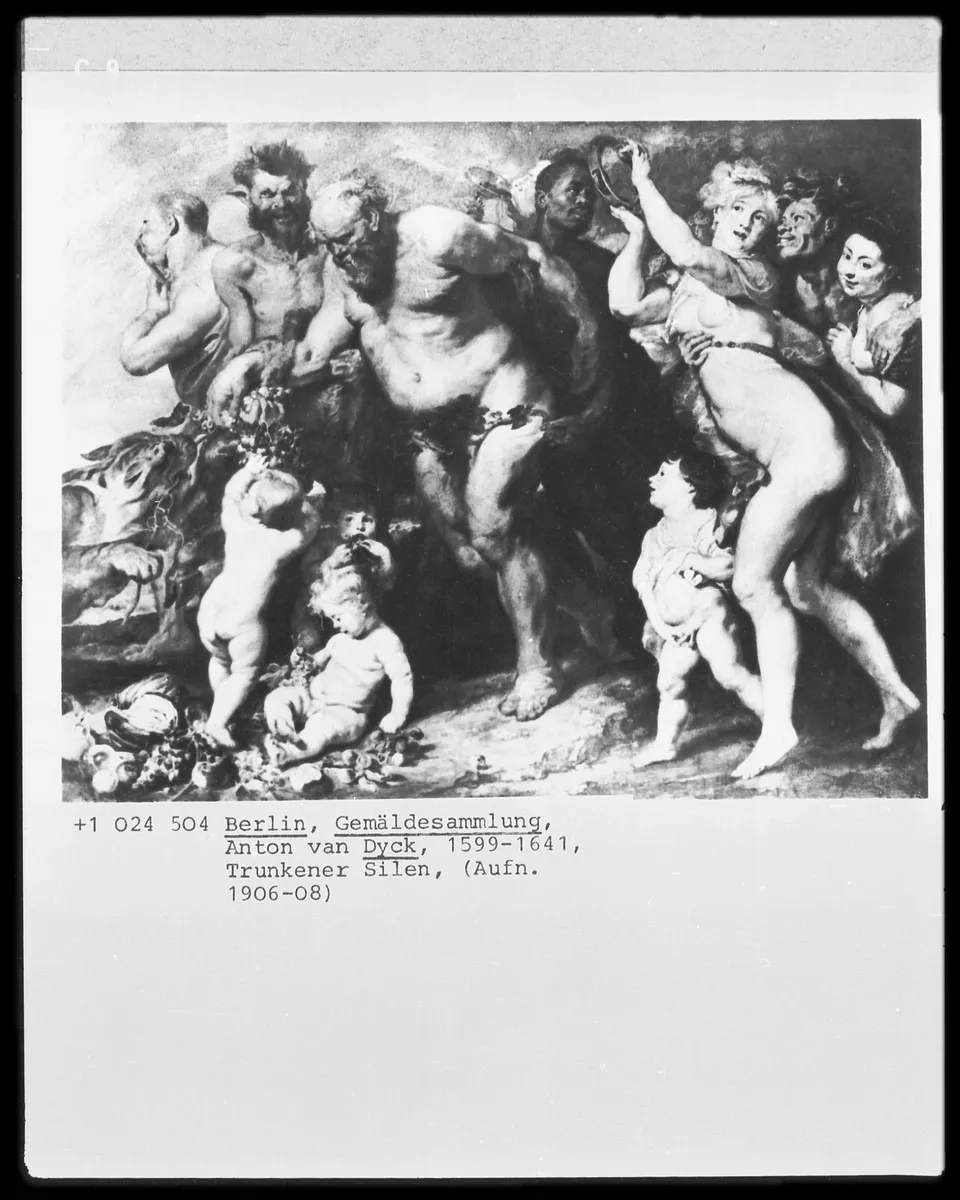
Drunken Silenus is an oil painting by the Flemish Baroque painting artist Peter Paul Rubens. It dates from 1619 and is held in the collection of the Gemäldegalerie Berlin.
About this work
Overview
The work is housed in the Alte Pinakothek in Munich, Germany, having entered the collection in 1806 from the Düsseldorf Gallery.
The Drunken Silenus is an oil painting on panel by Peter Paul Rubens, dated to around 1618-1619, measuring 212 by 214.5 centimeters. The work is housed in the Alte Pinakothek in Munich, Germany, having entered the collection in 1806 from the Düsseldorf Gallery. It stands as one of Rubens's most substantial and dynamic treatments of classical mythology, depicting the wine-soaked companion of Bacchus in a moment of comic pathos that exemplifies the artist's mastery of the Baroque nude, dramatic composition, and the fusion of Venetian color with Northern texture. The painting's scale, its vigorous handling of paint, and its unflinching yet humane portrayal of bodily excess have secured its place as a key work in Rubens's oeuvre and in the broader history of European mythological painting.
Subject & Meaning
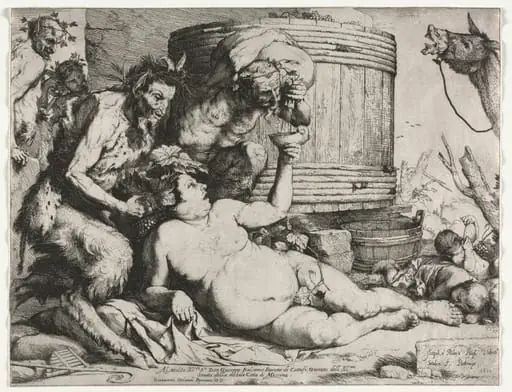
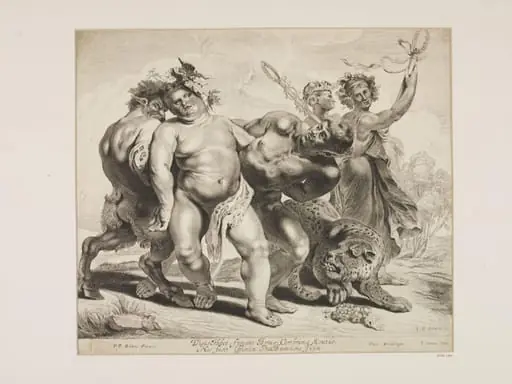
The painting depicts Silenus, the elderly foster father and tutor of Bacchus in Greek and Roman mythology, in a state of advanced inebriation. He stands at the center of a dense, horizontal cluster of bodies, his torso swaying to the left, one hand gripping的东西 gripping a cluster of grapes while attendants brace his unwieldy weight. His belly swollen, his vine crown slipping askew, Silenus embodies the classical paradox of the wise drunkard, a figure of both prophetic knowledge and comic excess. Around him gather a disparate retinue: satyrs and maenads, dotards and children, including plump infants at ground level who interact with scattered fruit. A donkey appears at the far left, partially visible, while a nude female figure raises a vessel overhead. The iconography is thoroughly Dionysian, grapes and ivy marking the scene as a bacchanal, yet Rubens avoids simple moralizing. The nursing nymph with her infants broadens the theme from mere drunkenness to fertility and the cycle of life, mingling wine and generation. The figures' expressions range from delight to concern, from complicity to steadying care, creating a social texture that acknowledges excess as a communal rather than solitary experience. Silenus himself is neither fully ridiculed nor fully idealized; his lowered gaze, drooping mouth, and rubbery knees invite both laughter at his condition and tenderness for his weathered humanity.
Technique & Style
The work is executed in oil on panel, a support that allowed Rubens the control and durability needed for a painting of this scale, 212 by 214.5 centimeters. The brushwork is loose and energetic, particularly in the rendering of flesh and drapery, with some areas smoothly blended and others more broadly handled. This varied finish serves expressive ends: quick flicks around hairlines, dragged strokes on animal pelts, stippled grain for grape clusters, and thin glazes for translucent flesh all contribute to a tactile immediacy. The composition was originally conceived with half-length figures but was later enlarged by Rubens himself, suggesting an evolving ambition for the work's physical and dramatic impact. Light behaves atmospherically rather than as a single spotlighted source, sliding across shoulders and bellies, pooling in highlights on moist flesh, and dissolving into rosy half-tones. A range of warm hues, peach, apricot, honey, and wine-flushed skin, is set against cooler zones of slate, olive, and shadowed brown. The dense, horizontal cluster of bodies leaves little visible background beyond dark, indistinct foliage, compressing space and intensifying the sensation of movement. Overlapping limbs and cascading draperies knit the multitude into one rhythmic mass.
History & Provenance
The painting is dated to 1618-1619 by most sources, though some broader estimates place it between 1616 and 1625. The year 1618 finds Rubens presiding over a flourishing Antwerp studio, having absorbed the color and sensuality of Venetian painting during his Italian sojourn and fusing these with Northern attentiveness to texture and weight. The work likely arises from Rubens's sustained interest in bacchanals, a theme he returned to throughout his career because it permitted the orchestration of flesh, fabric, animals, and landscape into a single pulse. The painting hung in Rubens's own house, suggesting it was not initially conceived as a commission but as a work for the artist's collection. Its provenance includes the Düsseldorf Gallery, from which it was acquired in 1806 for the Alte Pinakothek in Munich, where it remains. The work is also associated with the Bode Museum and Gemäldegalerie Berlin in some records, though the Alte Pinakothek is its confirmed current location.
Legacy
The Drunken Silenus has endured as a touchstone for understanding Rubens's art and Baroque painting more broadly. Its influence lies in the model it provides for treating mythological subjects with bodily candor and emotional complexity rather than distant idealization. The painting's reputation rests on its visceral sense of physicality, its dramatic contrasts of light and shade, and its orchestration of multiple figures into a single pulse of movement and meaning. As a classic example of Rubens's fascination with the human form, it has informed subsequent appreciation of how Baroque art could explore sensual and emotional states through paint. The work's cultural afterlife includes its role in shaping perceptions of Rubens as a painter of flesh who dignified even the most compromised bodies, and as an artist who understood that vitality and vulnerability are intertwined. Its presence in major public collections and its reproduction in scholarly and popular contexts have maintained its visibility, while its scale and technical bravura continue to command attention in the history of European art.
Artist & collection
Artist
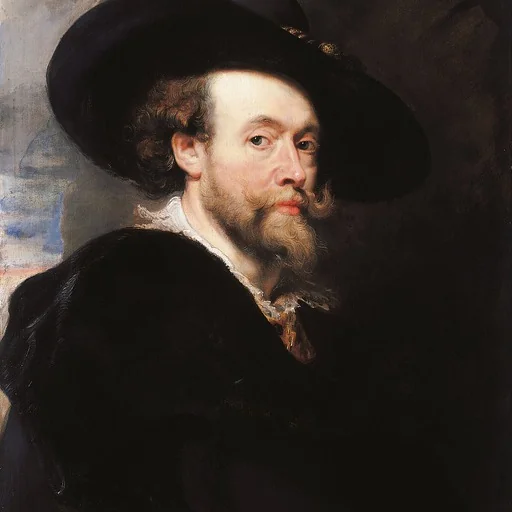
Sir Peter Paul Rubens ( ROO-bənz; Dutch:; 28 June 1577 – 30 May 1640) was a Flemish artist and diplomat.