Artwork
Prometheus
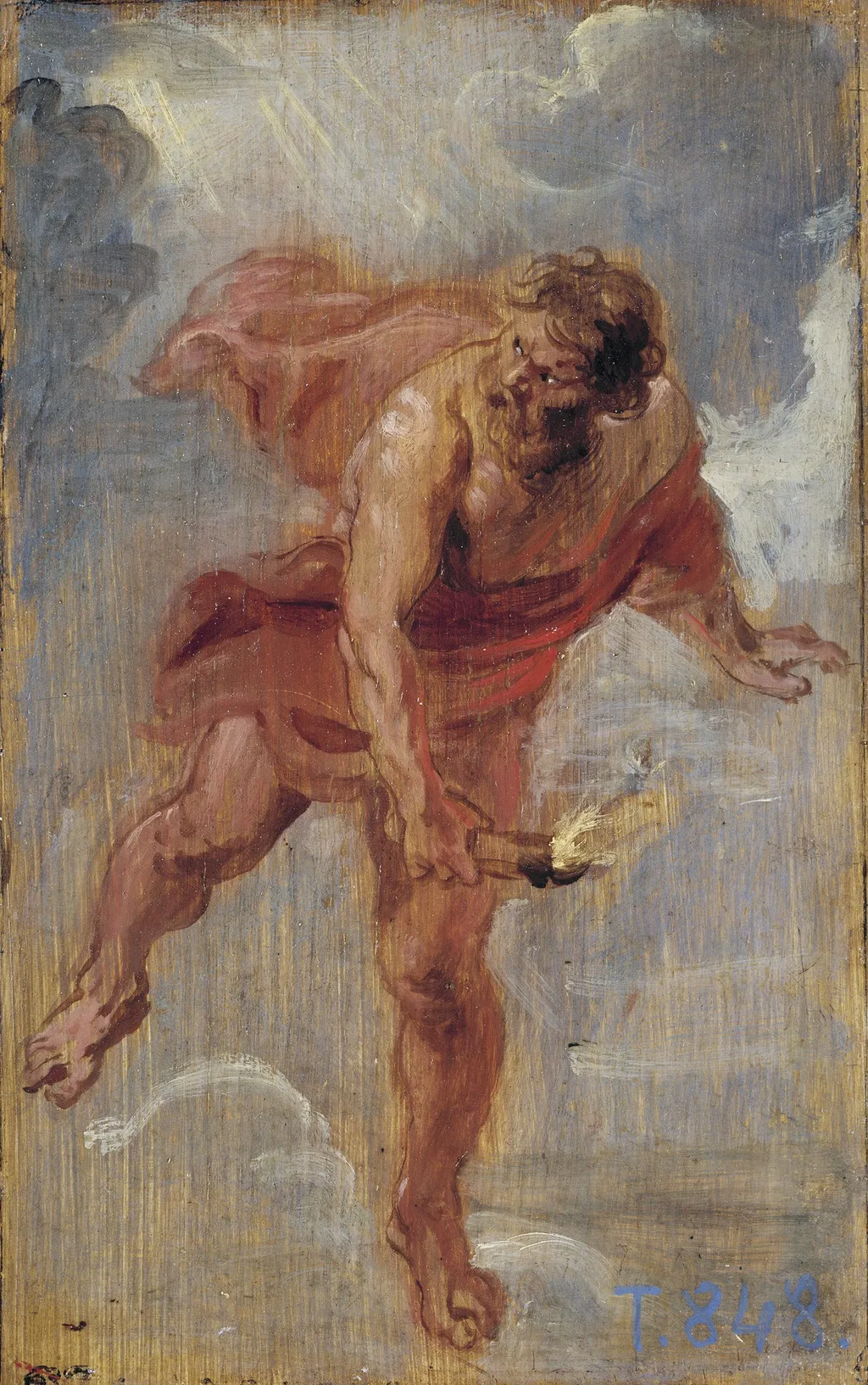
Prometheus is an oil painting by the Flemish Baroque painting artist Peter Paul Rubens. It dates from 1636 and is held in the collection of the Museo del Prado.
About this work
Subject & Meaning
Peter Paul Rubens's 1636 oil painting depicts the mythological figure Prometheus, specifically illustrating the moment of his theft of fire.
Peter Paul Rubens's 1636 oil painting depicts the mythological figure Prometheus, specifically illustrating the moment of his theft of fire. As a work of mythological painting, the subject centers on the Titan's transgression against the gods to bring fire to humanity. The composition captures the narrative core of the Prometheus legend, focusing on the act of stealing fire as the primary event.
This specific representation aligns with the genre's tradition of visualizing classical myths, highlighting the dramatic and symbolic weight of the Titan's defiance.
Technique & Style
Peter Paul Rubens painted Prometheus in oil paint on a wooden panel, a support typical of his small-scale works. The panel measures approximately 25.7 cm in height and 16.6 cm in width. The work is classified as a mythological painting, depicting the Titan Prometheus stealing fire.
History & Provenance
Peter Paul Rubens created the oil-on-panel painting Prometheus in 1636. The work depicts the mythological subject of Prometheus stealing fire. It is currently held in the collection of the Museo del Prado. The painting measures 25.7 cm in height and 16.6 cm in width.
Peter Paul Rubens's oil-on-panel painting Prometheus, created in 1636, is held in the collection of the Museo del Prado in Madrid. The work depicts the mythological figure Prometheus stealing fire and measures 25.7 cm in height by 16.6 cm in width. While the painting is a confirmed part of the museum's permanent holdings, the provided sources do not contain specific inventory numbers, accession details, or a record of its exhibition history.
Overview
Created in 1636, this oil painting by the Flemish artist Peter Paul Rubens portrays the mythic titan Prometheus. Executed in the dynamic Baroque style for which Rubens is renowned, the work resides in Madrid’s Museo del Prado. Its composition centers on a powerful, twisting figure against a turbulent sky, emphasizing movement and physical strain.
Context
The work exemplifies the Flemish Baroque’s preference for dramatic narrative, vigorous movement, and rich coloration. Rubens’s choice of a classical subject aligns with the period’s revival of antiquity, while his diplomatic career exposed him to a wide range of artistic influences that informed his energetic compositions.
Own this work as a print
Artist & collection
Artist
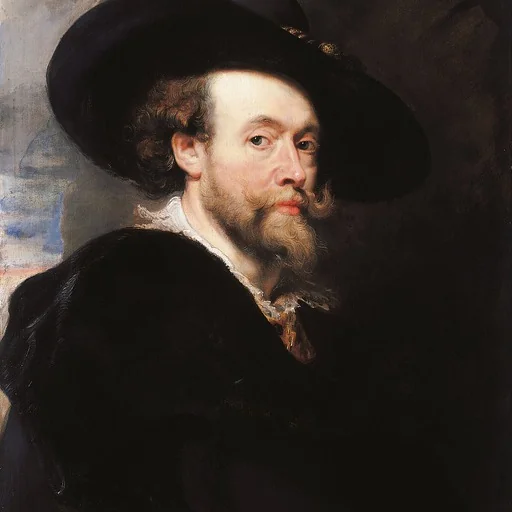
Sir Peter Paul Rubens ( ROO-bənz; Dutch:; 28 June 1577 – 30 May 1640) was a Flemish artist and diplomat.

 Saint John the Baptist Preaching in the Desert
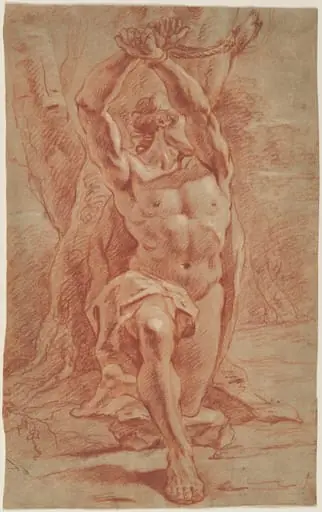 Kneeling Man Bound to a Tree
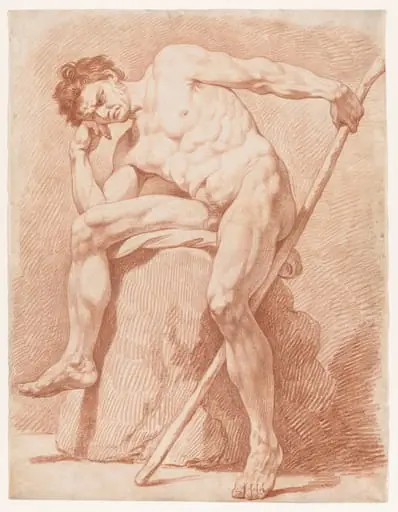 Academy of a Seated Nude Holding a Staff
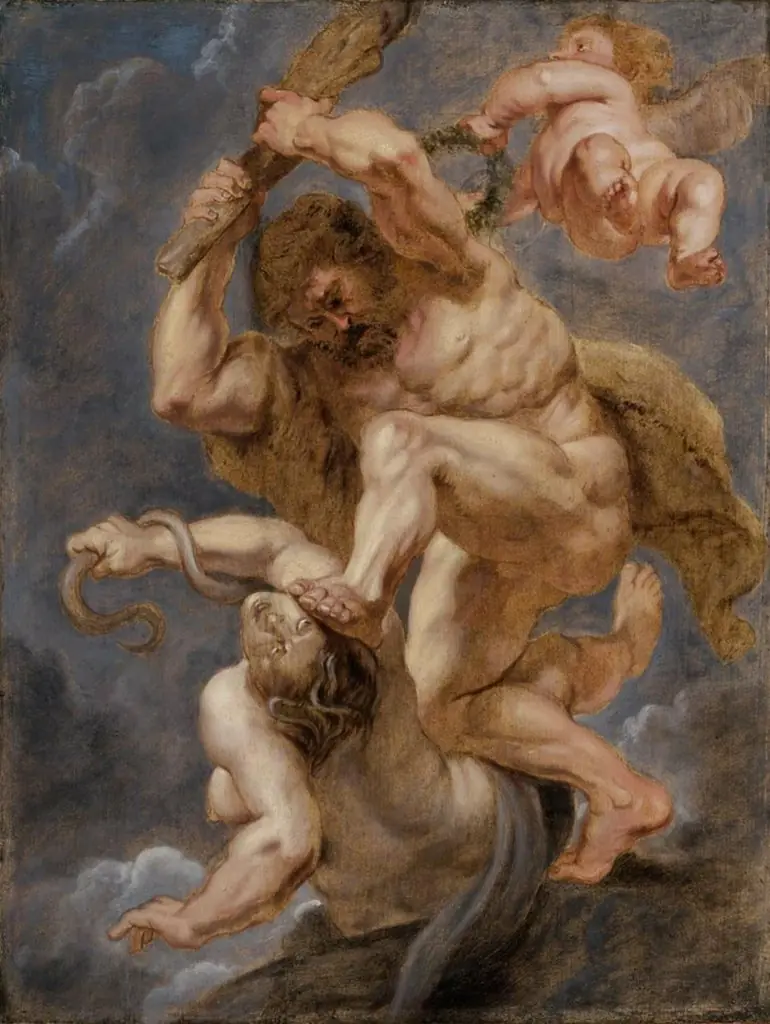 Hercules as Heroic Virtue Overcoming Discord
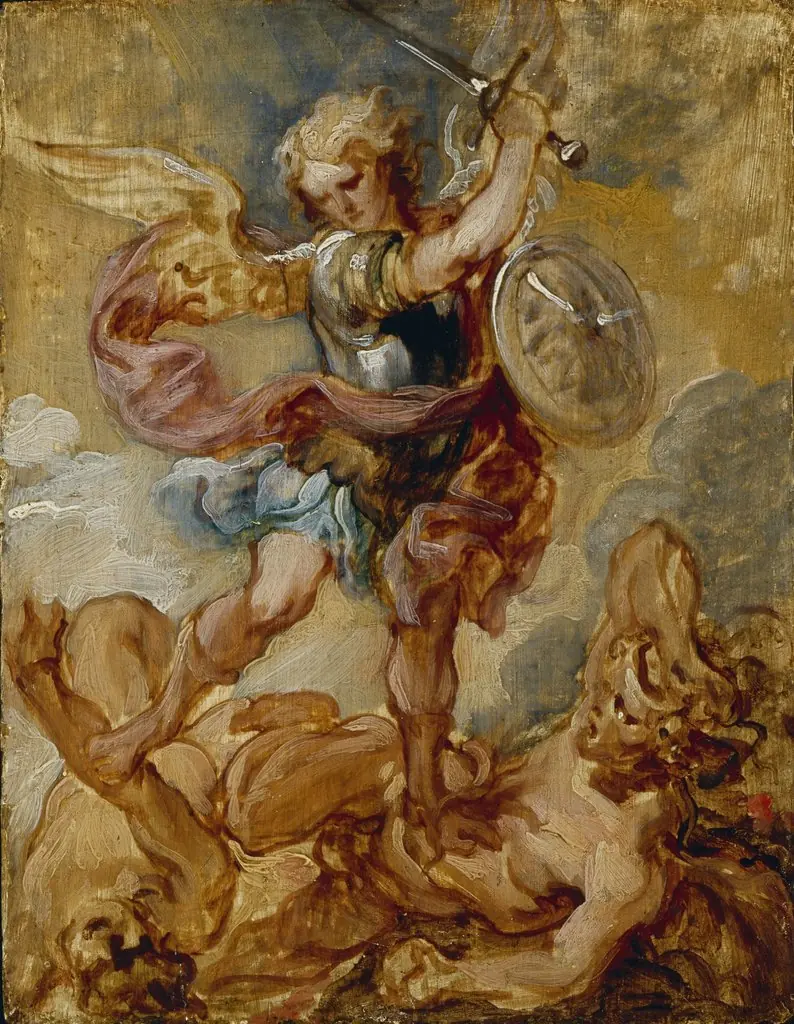 Saint Michael
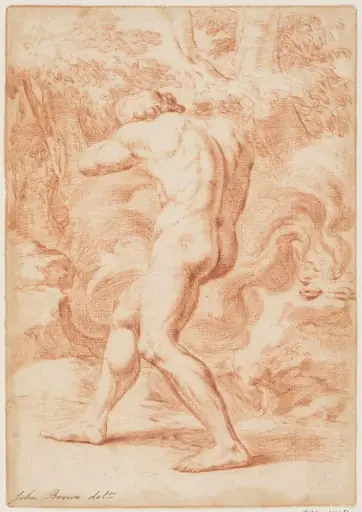 Cain after the murder of Abel
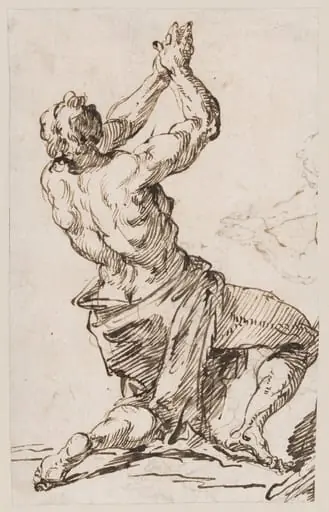 a) Study of a Man Kneeling, Looking Upward (recto); b) Studies of the Same Figure (verso)
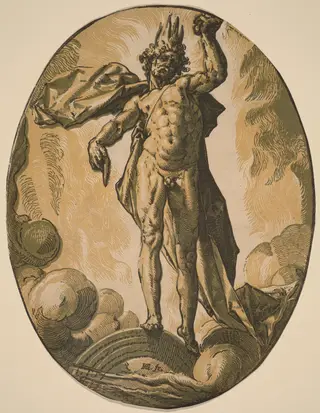 Aether
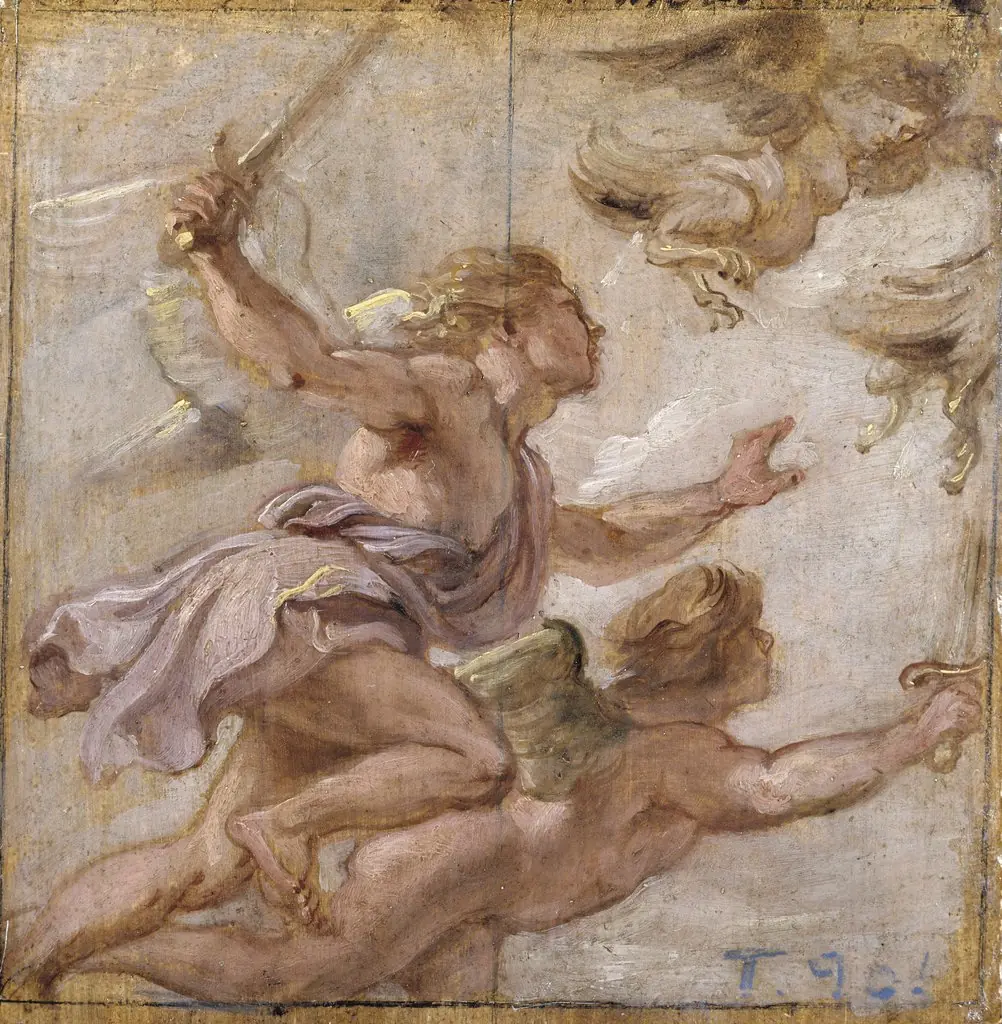 The Persecution of the Harpies
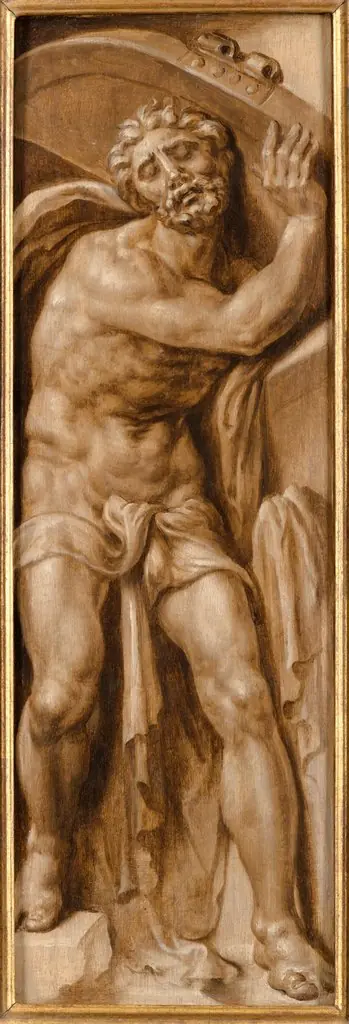 Samson Grasping the Gates of Gaza
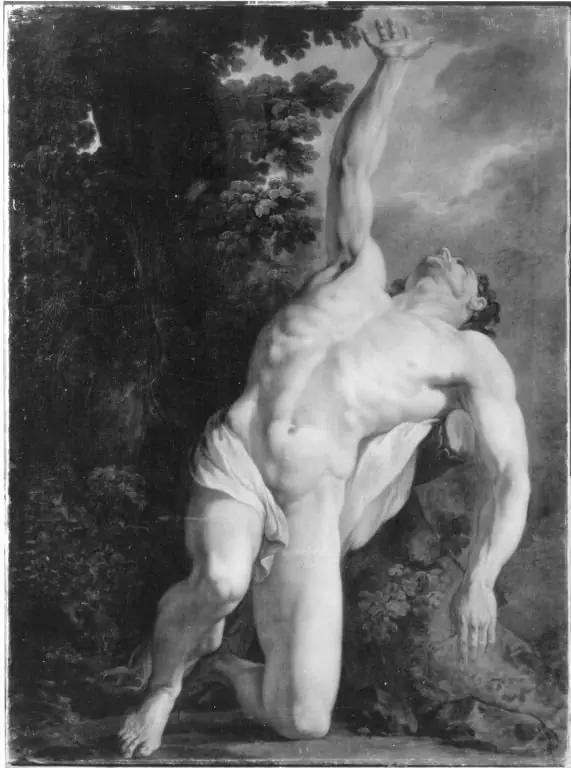 Männliche Aktstudie
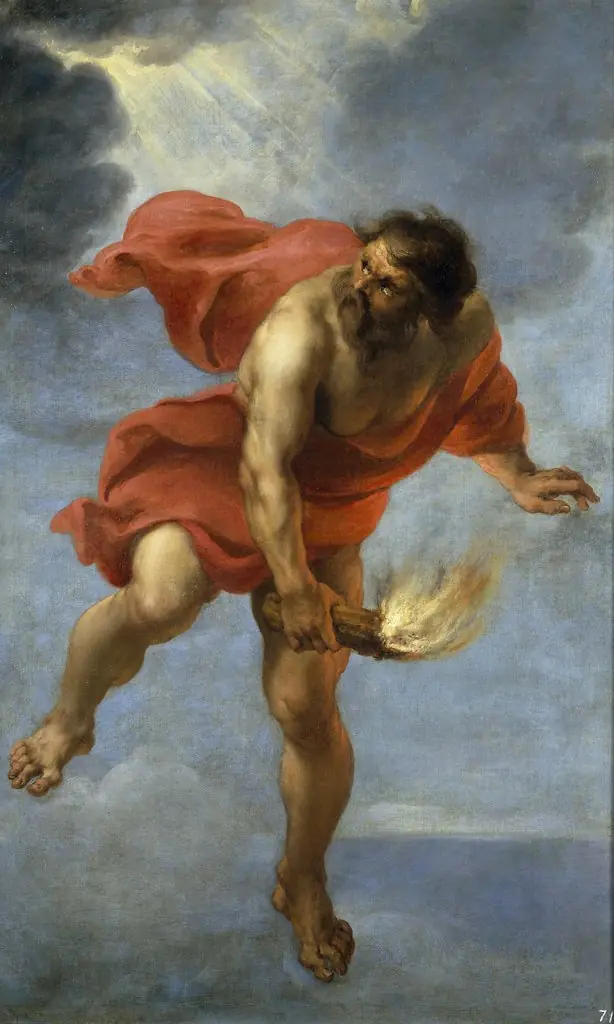
- Prometheus Carrying Fire