Artwork
Saint James the Greater
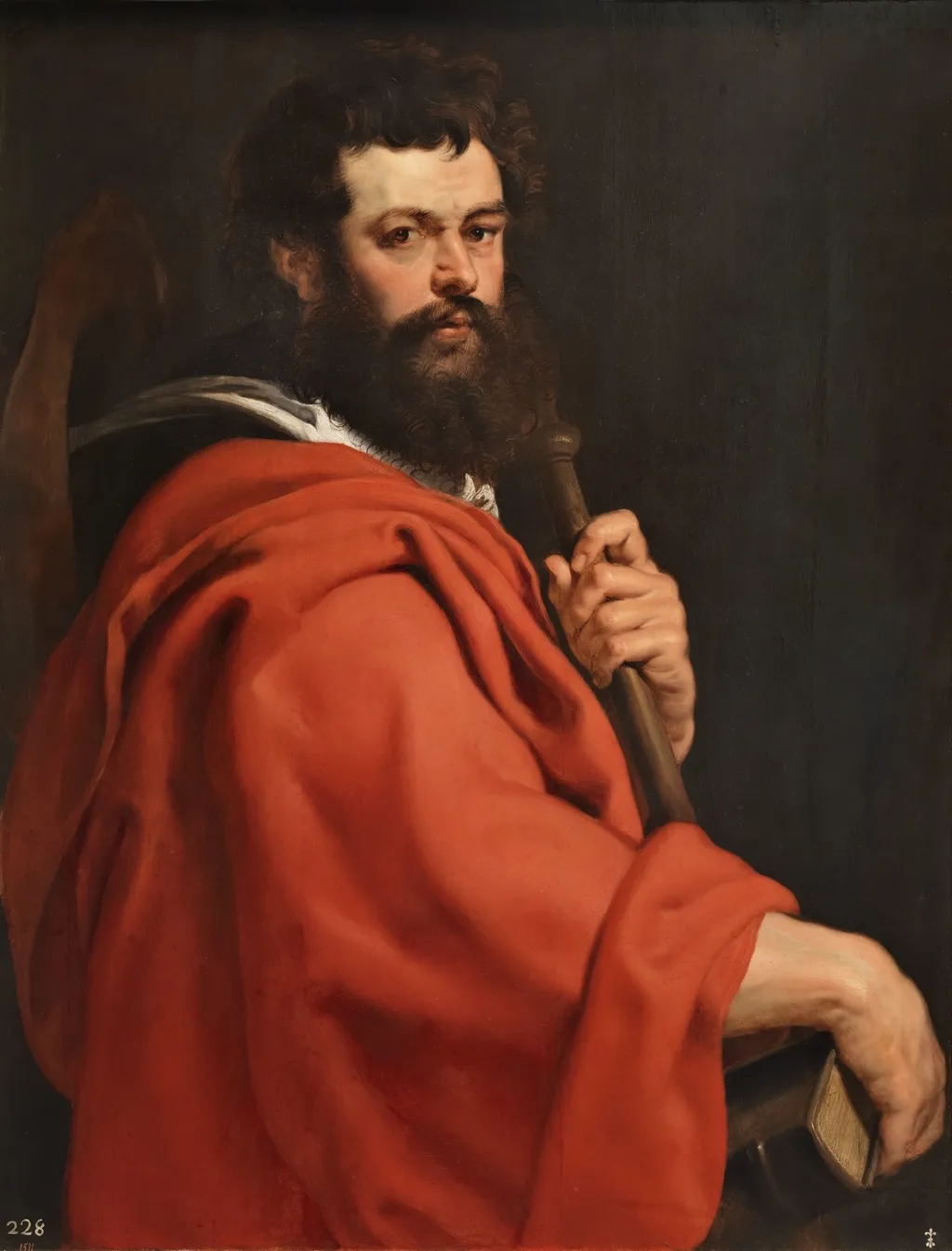
Saint James the Greater is an oil painting by the Flemish Baroque painting artist Peter Paul Rubens. It dates from 1610 and is held in the collection of the Museo del Prado.
About this work
Subject & Meaning
The inclusion of the crosier specifically anchors the figure's identity, distinguishing him within the tradition of Christian iconography.
The work depicts Saint James the Greater, also identified as St. James the Elder, as its main subject. As a piece of religious art, the painting presents the saint holding a crosier, a staff that serves as a key iconographic element identifying his status and authority. Created by Peter Paul Rubens in 1610, the image functions as a devotional representation of the apostle within the context of early 17th-century religious painting.
The inclusion of the crosier specifically anchors the figure's identity, distinguishing him within the tradition of Christian iconography. The work remains a significant example of Rubens' treatment of religious figures during this period.
Technique & Style
Created in 1610, Saint James the Greater is executed in oil paint on a panel support. The work measures 108 cm in height and 83 cm in width. As a religious painting by Peter Paul Rubens, the piece depicts St. James the Elder holding a crosier. The formal composition centers on the saint as the main subject within the genre of religious art.
History & Provenance
Peter Paul Rubens painted Saint James the Greater in 1610, an oil on panel work measuring 108 cm by 83 cm. The painting entered the Spanish royal collection, being owned successively by Ferdinand VII, Charles III, Elisabeth Farnese, and Philip V. It was initially displayed in the Royal Palace of Aranjuez before moving to the Museo del Prado. The work’s creation aligns with Rubens’s early seventeenth‑century religious series, reflecting the artist’s engagement with Counter‑Reformation iconography.
The work is held in the collection of the Museo del Prado, where it is recorded under the inventory number P00968. It has been displayed in the museum’s Spanish paintings galleries as part of exhibitions focusing on Baroque religious art and on the Spanish monarchy’s collections, most recently in a 2015 showcase of Rubens’s religious works.
Context
The painting Saint James the Greater by Peter Paul Rubens, completed in 1610, occupies a significant position within his mature religious oeuvre and reflects the Counter-Reformation emphasis on saintly intercession. The work's composition and devotional function have been analyzed in relation to Rubens' broader practice of blending dynamism with sacred narrative, situating it within the artistic milieu of early 17th-century Antwerp and the diplomatic networks of the Spanish Habsburg court. Its provenance through the Spanish royal collection underscores its political and devotional resonance, linking it to the patronage of Ferdinand VII and the broader circulation of Counter-Reformation imagery across Europe.
Legacy
The painting shaped subsequent devotional imagery through its portrayal of St. James the Elder bearing a crosier, establishing compositional conventions adopted by later artists. Its presence in royal Spanish collections amplified the saint’s prominence within Catholic visual culture, influencing processional iconography across Iberian territories. The work’s technical mastery of oil paint on panel informed academic instruction at the Academia de San Fernando, where copies of the composition remained in use through the eighteenth century.
Overview
Created in 1610 by the Flemish painter Peter Paul Rubens, this oil on canvas portrays Saint James the Greater. The figure is rendered in a deep red habit, holding a wooden staff that identifies him as a bishop. The composition is set against a dark, undefined background, emphasizing the saint’s solemn presence.
Own this work as a print
Artist & collection
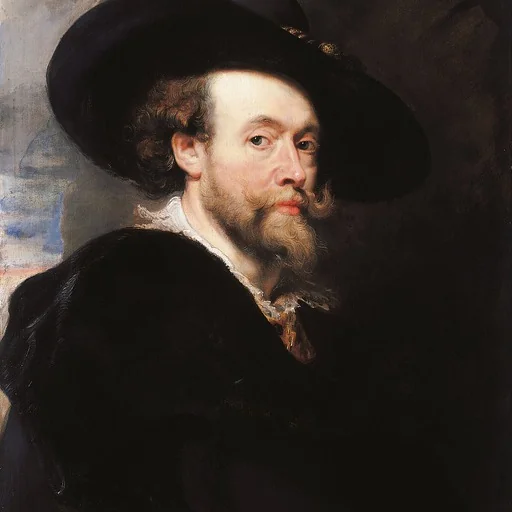
Artist
Sir Peter Paul Rubens ( ROO-bənz; Dutch:; 28 June 1577 – 30 May 1640) was a Flemish artist and diplomat.