Artwork
Saint Andrew
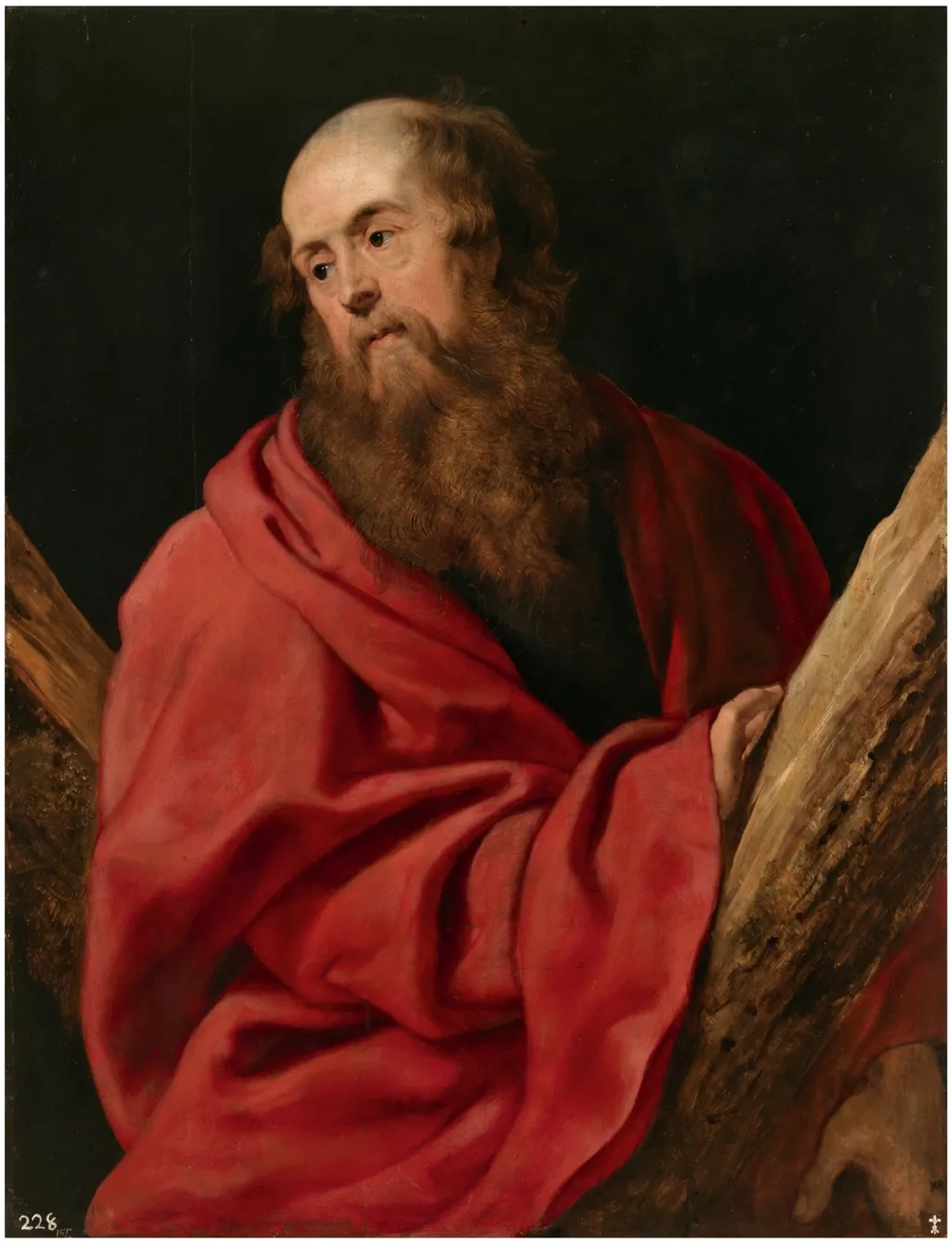
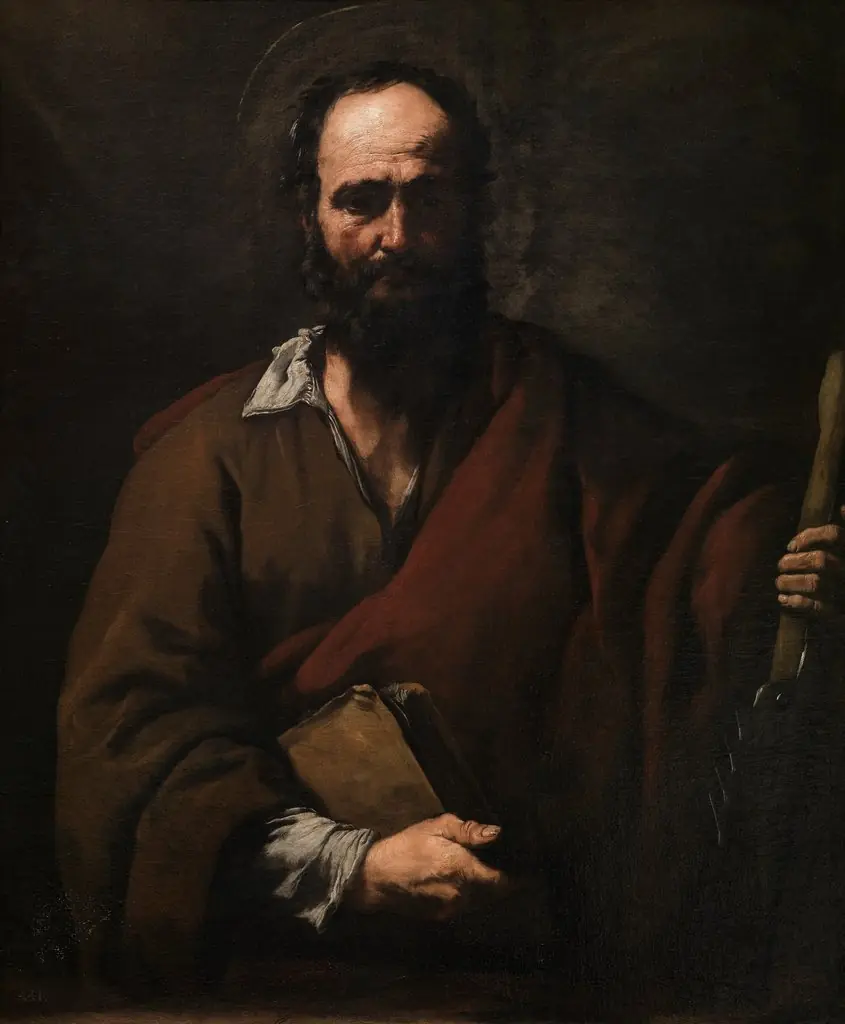
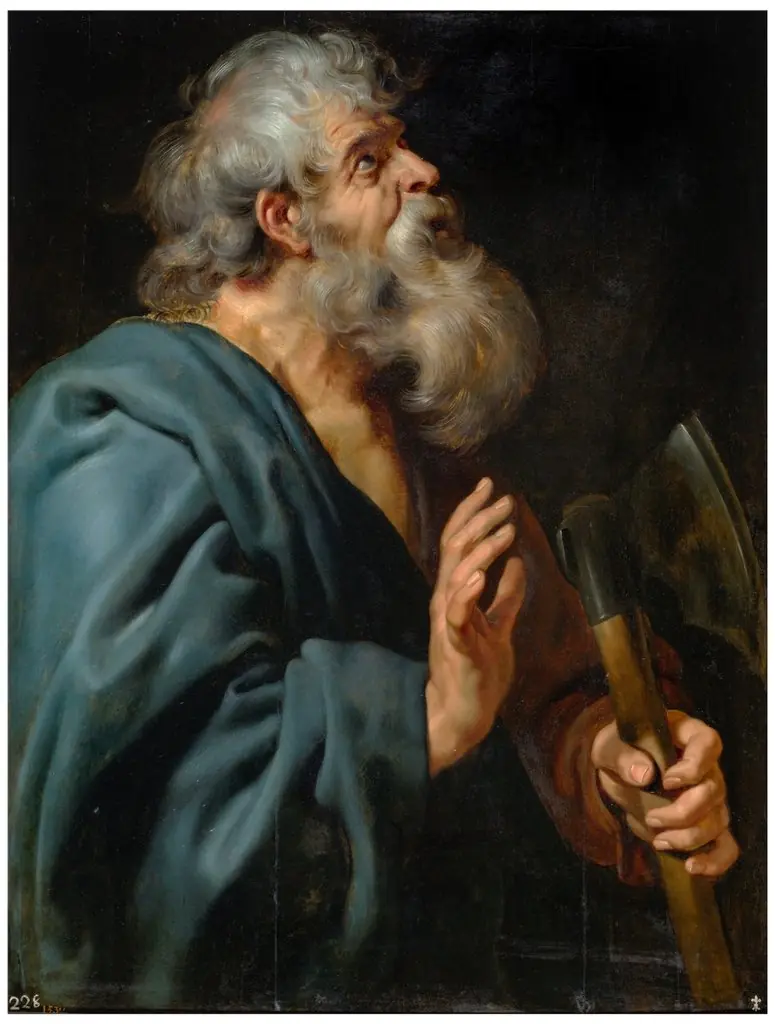
Saint Andrew is an oil painting by the Flemish Baroque painting artist Peter Paul Rubens. It dates from 1610 and is held in the collection of the Museo del Prado. Executed in 1610, this oil painting presents the apostle Andrew holding the X‑shaped cross linked to his martyrdom.
About this work
Subject & Meaning
The figure is shown alongside a cross, which serves as the primary iconographic symbol associated with the saint's martyrdom.
The work depicts Andrew the Apostle, identified as the main subject of this religious painting by Peter Paul Rubens. The figure is shown alongside a cross, which serves as the primary iconographic symbol associated with the saint's martyrdom. Created in 1610, the composition focuses entirely on the apostle and the instrument of his execution, adhering to the conventions of religious art to convey the narrative of his sacrifice.
Technique & Style
Executed in 1610, this religious painting by Peter Paul Rubens utilizes oil paint applied to a canvas support. The work measures 108 cm in height and 84 cm in width. Visually, the composition focuses on the figure of Andrew the Apostle alongside a cross, adhering to the conventions of religious art. The piece is currently held within the collection of the Museo del Prado.
History & Provenance
Peter Paul Rubens created the oil painting Saint Andrew in 1610. The work was commissioned for the Spanish royal collection, entering a lineage of ownership that included Philip V of Spain and his consort, Elisabeth Farnese. Subsequent monarchs Charles III and Ferdinand VII of Spain also held the piece before it became part of the permanent holdings of the Museo del Prado. The painting depicts the Apostle Andrew alongside his characteristic cross.
Peter Paul Rubens' painting Saint Andrew, created in 1610, is held in the collection of the Museo del Prado. The work has been associated with several locations within the Spanish royal holdings, including the Royal Palace of Aranjuez and the Royal Palace of La Granja de San Ildefonso. Historically, the painting was owned by Spanish monarchs Philip V, Charles III, and Ferdinand VII, as well as Elisabeth Farnese. No specific accession number or detailed exhibition history is provided in the available records.
Legacy
Rubens' depiction of Saint Andrew, painted in 1610, contributed to the iconographic standardization of the apostle's martyrdom, particularly through the recurring motif of the saltire cross. The work's presence in the Spanish royal collections, documented through successive owners including Ferdinand VII and Philip V, reinforced its influence on later religious compositions in European art. Its inclusion in the Museo del Prado's holdings cemented its reputation as a key example of Baroque Counter-Reformation painting, shaping scholarly interpretations of Rubens' role in advancing saintly visual narratives.
Contemporary assessments continue to reference the painting as a benchmark for studying Rubens' treatment of apostolic martyrdom, with its compositional elements frequently cited in art historical literature on Counter-Reformation visual culture.
Overview
Executed in 1610, this oil painting presents the apostle Andrew holding the X‑shaped cross linked to his martyrdom. The figure stands before a wooden cross that extends across the canvas, his gaze turned to the left and his right hand resting upon the instrument of his death. The work resides in the collection of the Museo del Prado.
Context
The painting aligns with Rubens’ broader engagement with Catholic iconography, responding to the Church’s call for emotionally resonant images. By portraying Andrew with his distinctive cross, Rubens contributes to the visual vocabulary that reinforced saintly exemplars for the faithful during a time of religious renewal.

Own this work as a print
Artist & collection
Artist
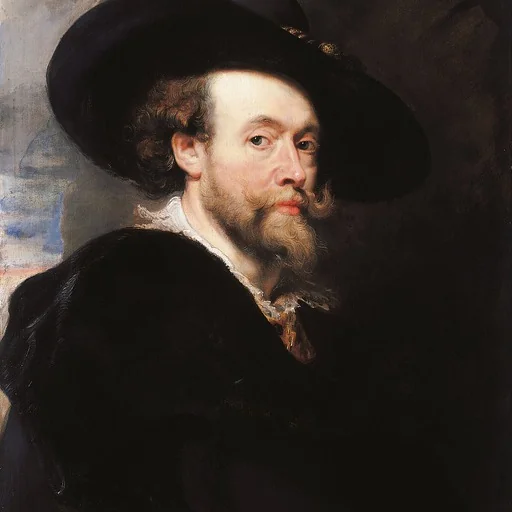
Sir Peter Paul Rubens ( ROO-bənz; Dutch:; 28 June 1577 – 30 May 1640) was a Flemish artist and diplomat.