Artwork
Study for "The Bear Hunt" (for the Alcázar, Madrid)
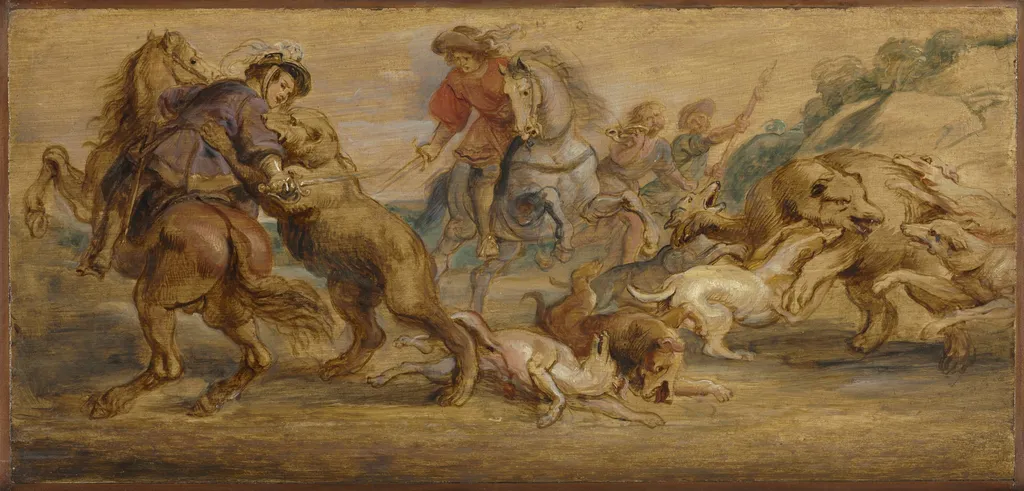
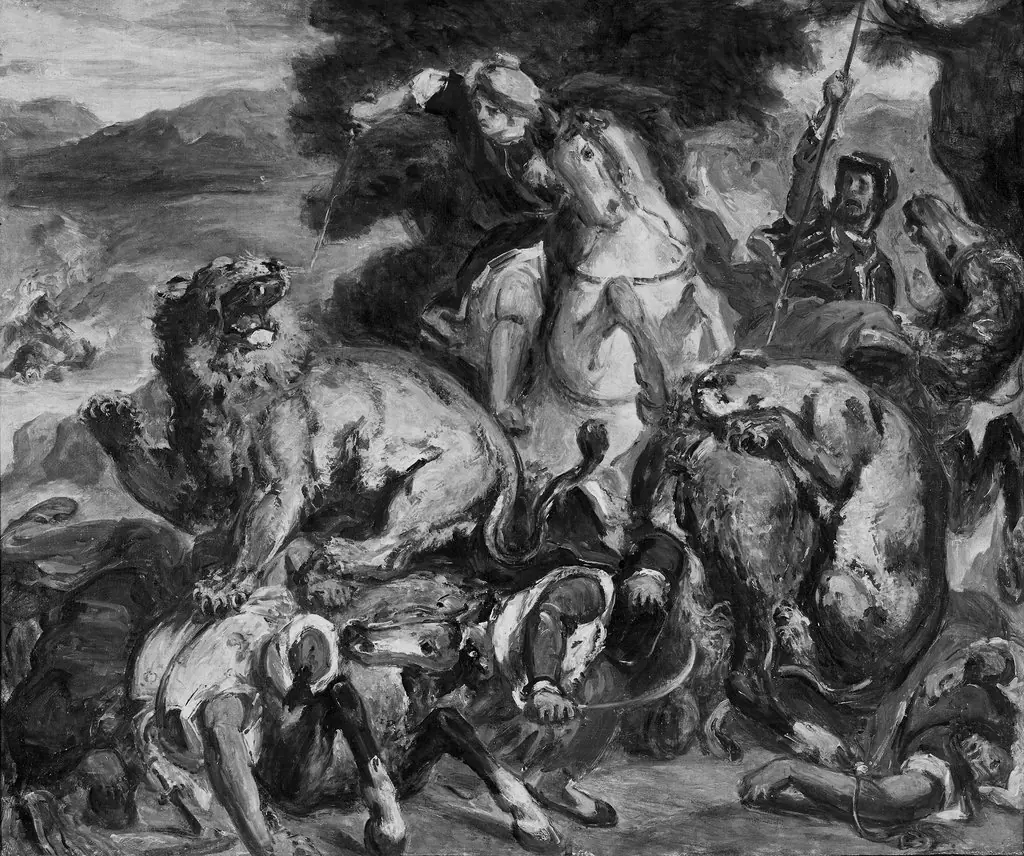
Study for "The Bear Hunt" (for the Alcázar, Madrid) is an oil painting by the Flemish Baroque painting artist Peter Paul Rubens. It dates from 1639 and is held in the collection of the Cleveland Museum of Art.
About this work
Technique & Style
The work is executed in oil paint on panel, a support Rubens frequently favored for smaller preparatory studies.
The work is executed in oil paint on panel, a support Rubens frequently favored for smaller preparatory studies. Its modest dimensions, 26.0 cm in height by 53.7 cm in width, and horizontal format suit its function as a preparatory study for the larger Bear Hunt composition intended for the Torre de la Parada hunting lodge at the Alcázar in Madrid.
The horizontal panel format allowed Rubens to work out the dynamic, frieze-like arrangement of figures, horses, and hounds that would characterize the finished decorative cycle. Painted in 1639, the study reflects the late manner in which Rubens rapidly blocked in forms with fluid, energetic brushwork, retaining the spontaneous handling typical of his oil sketches while still indicating the tonal contrasts and compositional rhythms required for the monumental final work.
History & Provenance
The oil-on-panel study, dated 1639, was produced in Flanders as a preparatory work for Peter Paul Rubens’ "The Bear Hunt" series commissioned for the Alcázar in Madrid. After its creation the painting remained in private hands until it entered the Cleveland Museum of Art’s collection in 1983 (accession 1983.69), where it is now housed.
Context
Rubens created this preparatory study in 1639 to plan a decorative scheme for the Alcázar palace in Madrid, reflecting his continued involvement in major imperial commissions during his later career. The work demonstrates his mastery of dynamic composition and chiaroscuro, linking it to his mature diplomatic artistry while serving as a bridge to his final decorative projects. Its significance is underscored by inclusion in the Cleveland Museum of Art collection, where it is studied alongside other Rubens studies for royal spaces.
Scholarship emphasizes its role in understanding Rubens' collaborative process with European courts, particularly how such studies functioned as both technical blueprints and artistic statements within Baroque court culture.
Overview
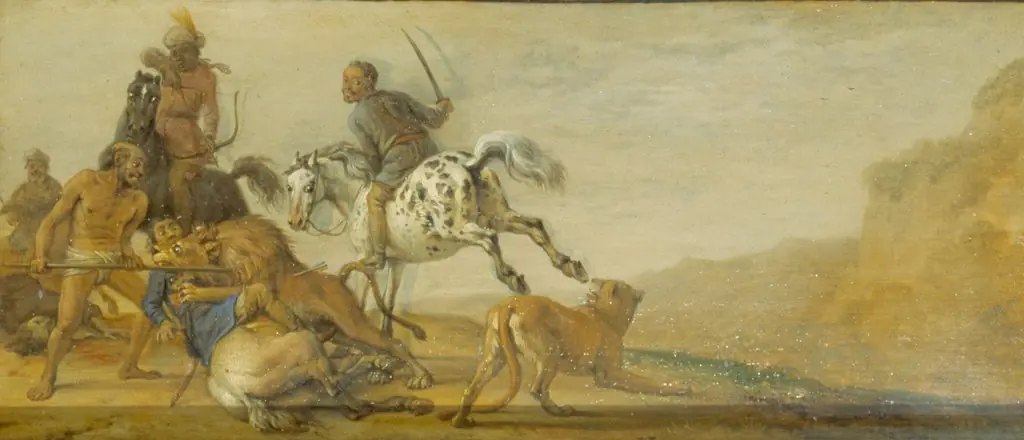
Peter Paul Rubens created this oil sketch in 1639 as a preparatory study for a larger composition intended for the Alcázar in Madrid. Executed in the Flemish Baroque idiom, the work captures a moment of violent pursuit, serving as a visual blueprint for the final painting.
Subject & Meaning
The scene depicts two mounted riders chasing a chaotic pack of bears accompanied by hunting dogs across an open field. One rider brandishes a spear while the other gestures with a staff, emphasizing the aggressive intent of the hunt and the struggle between man and wild beasts.
Artist & collection
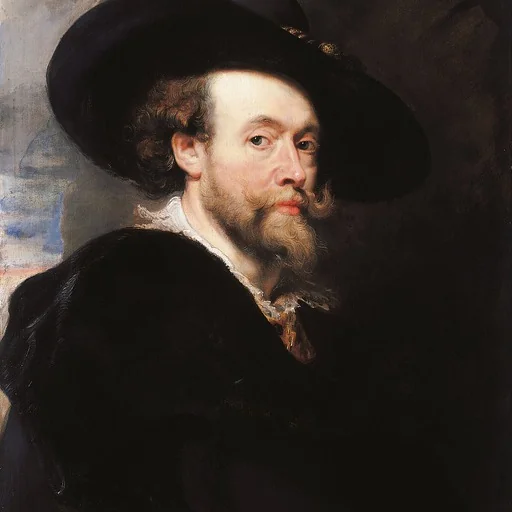
Artist
Sir Peter Paul Rubens ( ROO-bənz; Dutch:; 28 June 1577 – 30 May 1640) was a Flemish artist and diplomat.