Artwork
The Rainbow Landscape (1640)
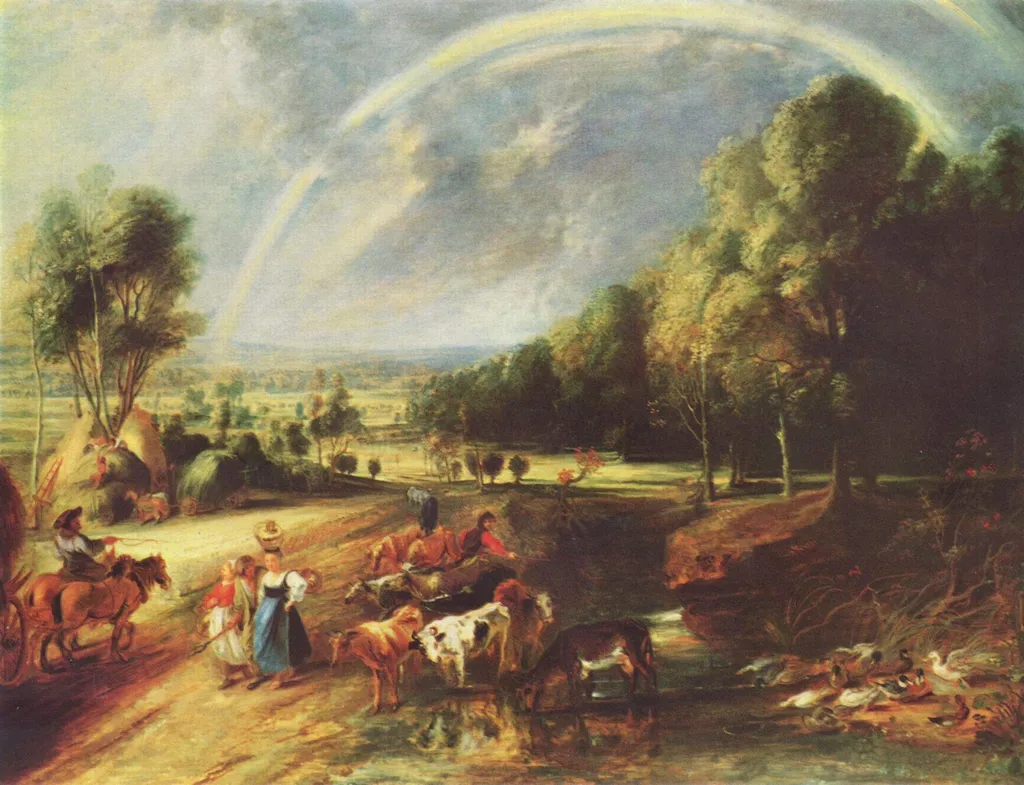
The Rainbow Landscape (1640) is an oil painting by the Flemish Baroque painting artist Peter Paul Rubens. It dates from 1640 and is held in the collection of the Bavarian State Painting Collections. Created in 1640, this oil painting on wood presents a broad countryside under a vivid rainbow that stretches across a sky filled with light.
About this work
This painting shows a wide outdoor scene with a bright rainbow arching over fields and trees. Peter Paul Rubens made it on wood in 1640. It’s one of his last works.
Rubens blended Italian and Flemish styles here. The figures feel like nymphs from other artists’ paintings. That mix makes the scene feel both lively and dreamy.
Check out the Alte Pinakothek next.
Subject & Meaning
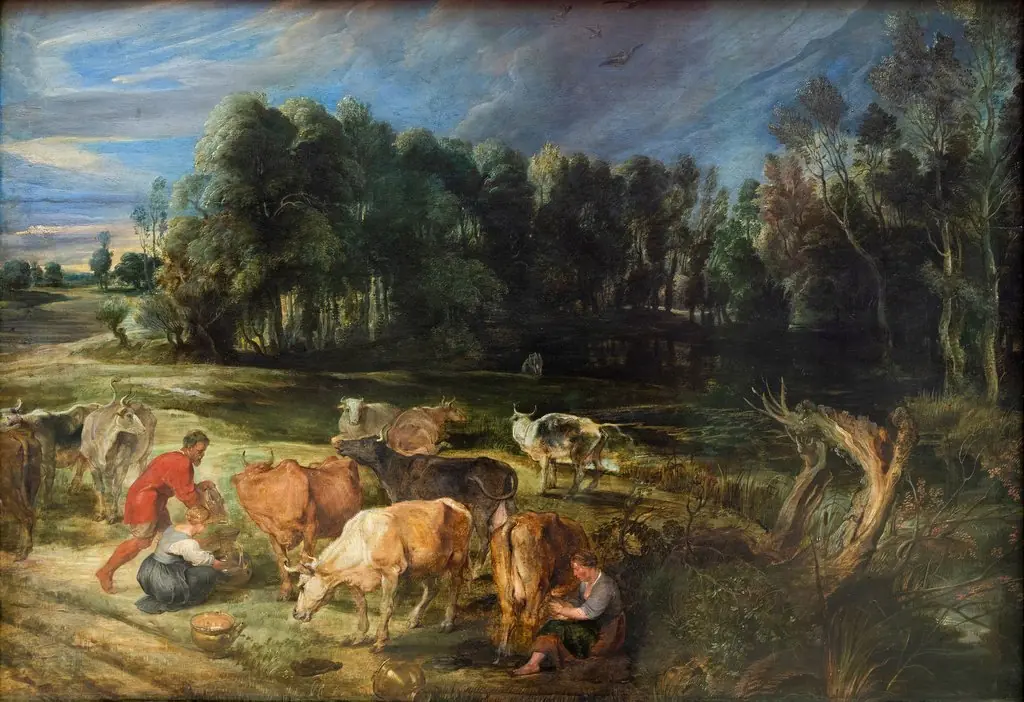
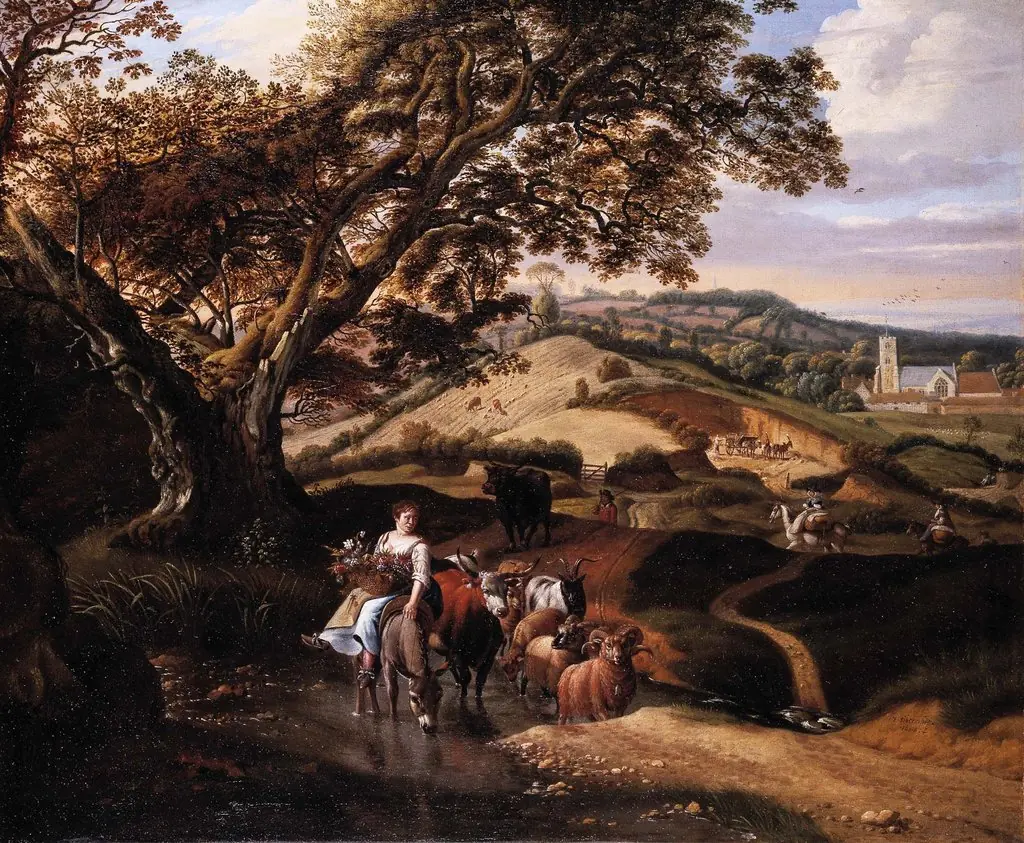
The composition includes specific figures such as a farmer, a milkmaid, and a herd of animals, integrating human activity within the natural setting.
The painting depicts a pastoral landscape featuring a prominent rainbow arching over the scene. The composition includes specific figures such as a farmer, a milkmaid, and a herd of animals, integrating human activity within the natural setting. Stylistically, the work combines Italian and Flemish influences, with the figures drawing inspiration from nymphs found in the art of Annibale Carracci and Domenichino.
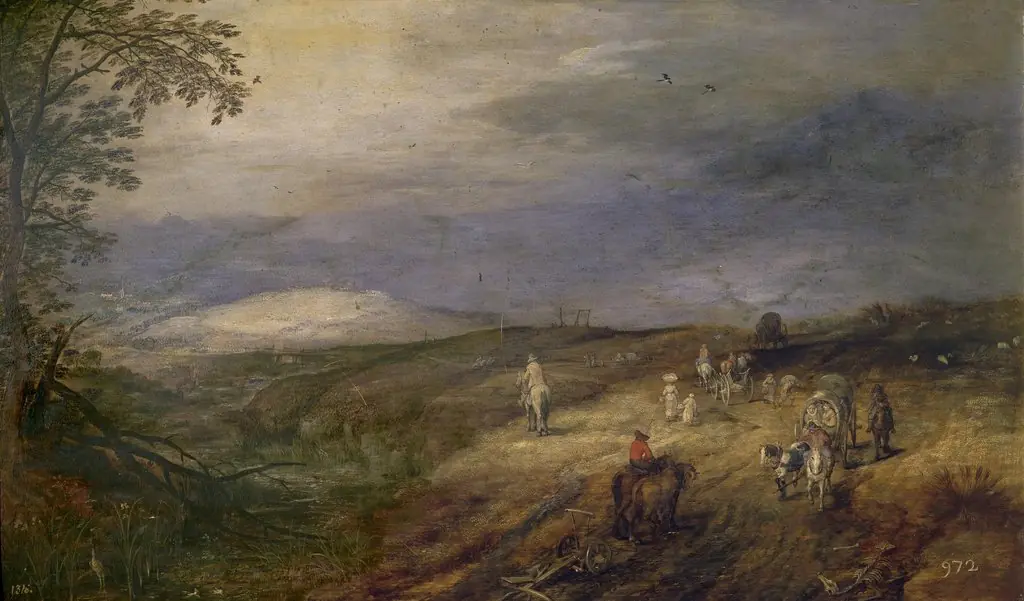
This synthesis creates a scene that reflects Rubens' engagement with the landscape traditions of his friend Jan Bruegel the Elder while maintaining his own late-career stylistic identity.
Technique & Style
The Rainbow Landscape (1640) is an oil-on-panel work executed on wood, measuring 93.8 cm by 123.2 cm. It belongs to the landscape genre and was painted during the final years of Peter Paul Rubens' career. The composition combines Italianate tonal harmony with Flemish naturalism, evident in the depiction of a rainbow arching over a scene of daily labor that includes a farmer, milkmaid, and herd. Figures are rendered with a grace inspired by the mythological subjects of Annibale Carracci and Domenichino, while the landscape background recalls the delicate foliage and atmospheric nuance characteristic of Jan Bruegel the Elder. The painting remains in the Alte Pinakothek in Munich, part of the Bavarian State Painting Collections.
History & Provenance
Painted in 1640, The Rainbow Landscape is one of Rubens’s final works and the third in a small autograph series on this subject.
The painting entered the Bavarian State Painting Collections via the Electoral Gallery in Düsseldorf, assembled by Johann Wilhelm, Elector Palatine, whose holdings included the work by 1715. After the elector’s death, the collection was transferred to Munich, where it has remained in the Alte Pinakothek since the gallery’s founding.
The Rainbow Landscape is held by the Alte Pinakothek in Munich, where it belongs to the Bavarian State Painting Collections. Its earlier provenance traces through the Johann Wilhelm von der Pfalz collection and the Electoral Gallery in Düsseldorf before entering the Munich institution.
The painting is an oil on wood panel measuring 93.8 × 123.2 cm, and it is catalogued as a 1640 work by Peter Paul Rubens. No specific inventory or accession number is recorded in the available sources, and no exhibition history beyond its current placement in the Alte Pinakothek is documented.
Context
Created in 1640, The Rainbow Landscape stands as one of Peter Paul Rubens' final artistic achievements and represents the third autograph iteration of this specific subject. The work exemplifies a synthesis of Italian and Flemish traditions, merging distinct regional approaches into a cohesive landscape composition. While the overall style recalls the aesthetics of Rubens' contemporary Jan Bruegel the Elder, the depiction of figures draws directly from the nymphs found in the works of Annibale Carracci and Domenichino.
Currently held in the Alte Pinakothek in Munich, the painting illustrates the artist's late-career engagement with classical motifs within a northern European framework.
Legacy
As one of Peter Paul Rubens' final works completed in 1640, The Rainbow Landscape holds significance as the third autograph painting the artist produced on this specific subject. The work is noted for synthesizing Italian and Flemish artistic traditions, creating a style that recalls the approach of Rubens' contemporary, Jan Bruegel the Elder. Furthermore, the figures within the composition draw upon mythological nymphs depicted in the works of Annibale Carracci and Domenichino, demonstrating the artist's integration of diverse influences in his late career.
Today, the painting is preserved in the Alte Pinakothek in Munich as part of the Bavarian State Painting Collections.
Overview
Created in 1640, this oil painting on wood presents a broad countryside under a vivid rainbow that stretches across a sky filled with light. The composition includes rolling fields, scattered trees, and a group of figures positioned within the landscape, offering a harmonious blend of natural and mythological elements characteristic of the artist’s late period.
Own this work as a print
Artist & collection
Artist
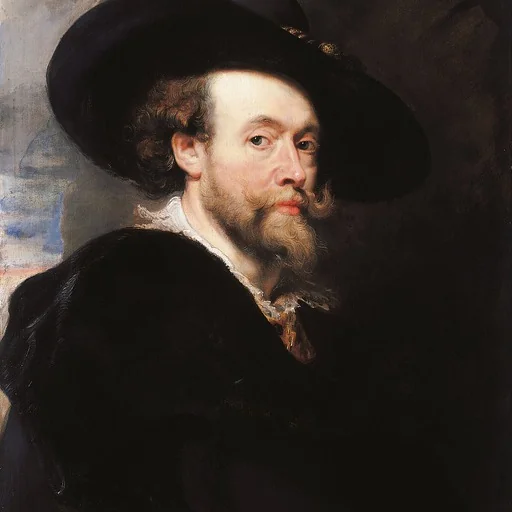
Sir Peter Paul Rubens ( ROO-bənz; Dutch:; 28 June 1577 – 30 May 1640) was a Flemish artist and diplomat.