Artwork
The Rape of Ganymede
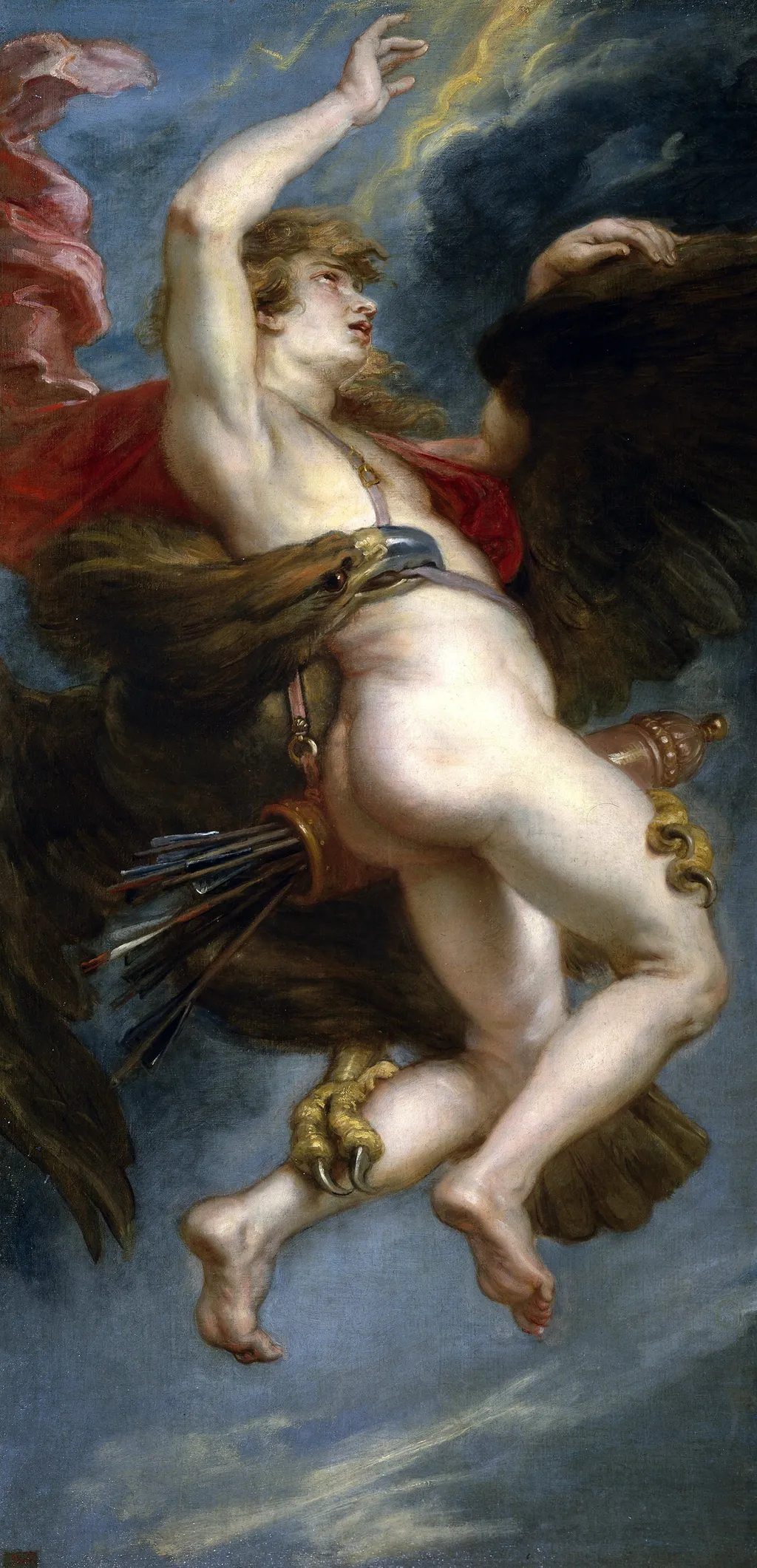
The Rape of Ganymede is an oil painting by the Flemish Baroque painting artist Peter Paul Rubens. It dates from 1637 and is held in the collection of the Museo del Prado.
About this work
Subject & Meaning
Based on Ovid's Metamorphoses, the work depicts the supreme god seizing the beautiful youth to carry him to Olympus as his cupbearer and lover.
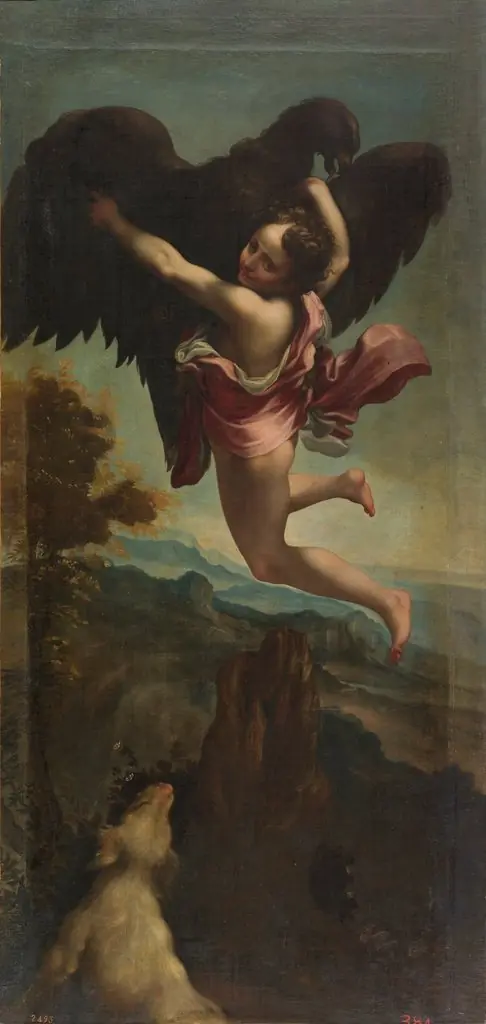
The painting illustrates the mythological abduction of the Trojan prince Ganymede by Jupiter, who appears in the form of an eagle. Based on Ovid's Metamorphoses, the work depicts the supreme god seizing the beautiful youth to carry him to Olympus as his cupbearer and lover. Rubens emphasizes the violent nature of the capture, with a thunderbolt in the background symbolizing Jupiter's power and fury.
The composition highlights the homoerotic undercurrents of the classical tale, particularly through the inclusion of a quiver of arrows whose placement suggests an erect phallus. While some interpretations align with Virgil's version where the eagle acts merely as an emissary, the imagery conveys the forceful removal of Ganymede from the mortal realm against his will.
Technique & Style
Created between 1636 and 1638, this work is executed in oil paint on a canvas support. The painting features a tall vertical format measuring 181 cm in height and 87.3 cm in width, a dimension suggesting it was designed to fit between windows in the Torre de la Parada hunting lodge. Stylistically, the composition relies on a strong diagonal axis to emphasize the violent upward motion of the abduction.
Rubens based the figure of Ganymede on classical sculpture, specifically referencing a child from the Hellenistic Laocoön group, while the eagle draws upon his own earlier compositions. The handling of the scene is dramatic, utilizing a background thunderbolt and stormy clouds to heighten the sense of force and fury. The figure of Ganymede appears apprehensive, looking upward toward the lightning, while the eagle's beak grips the strap of a quiver that adds specific erotic connotations to the narrative.
History & Provenance
Peter Paul Rubens created The Rape of Ganymede between 1636 and 1638 as part of a major commission from King Philip IV of Spain. The monarch ordered a series of sixty mythological paintings to decorate the Torre de la Parada, a royal hunting lodge located outside Madrid. Rubens executed this specific work personally, distinguishing it from other pieces in the series that were completed by assistants working from his designs.
The painting was intended for a tall, vertical placement between the windows of the lodge. Following its creation, the work entered the Spanish royal collection and was later owned by Ferdinand VII of Spain. It is currently held in the collection of the Museo del Prado in Madrid.
The work is held by the Museo del Prado in Madrid, where it is inventoried as oil on canvas, measuring 181 cm in height and 87.3 cm in width.
It was executed between 1636 and 1638 for Philip IV of Spain’s hunting lodge, the Torre de la Parada, as part of a series of mythological paintings based on Ovid’s Metamorphoses. The painting has remained in the Prado’s collection since its acquisition by the Spanish royal holdings.
Context
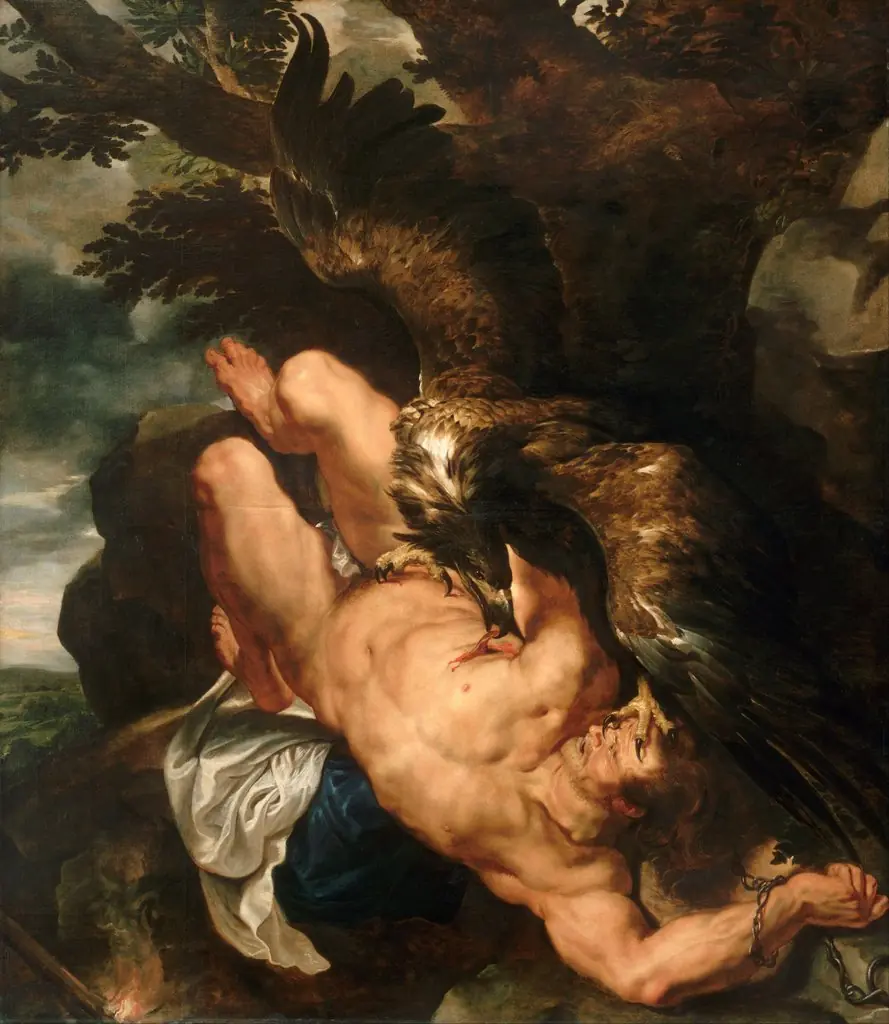
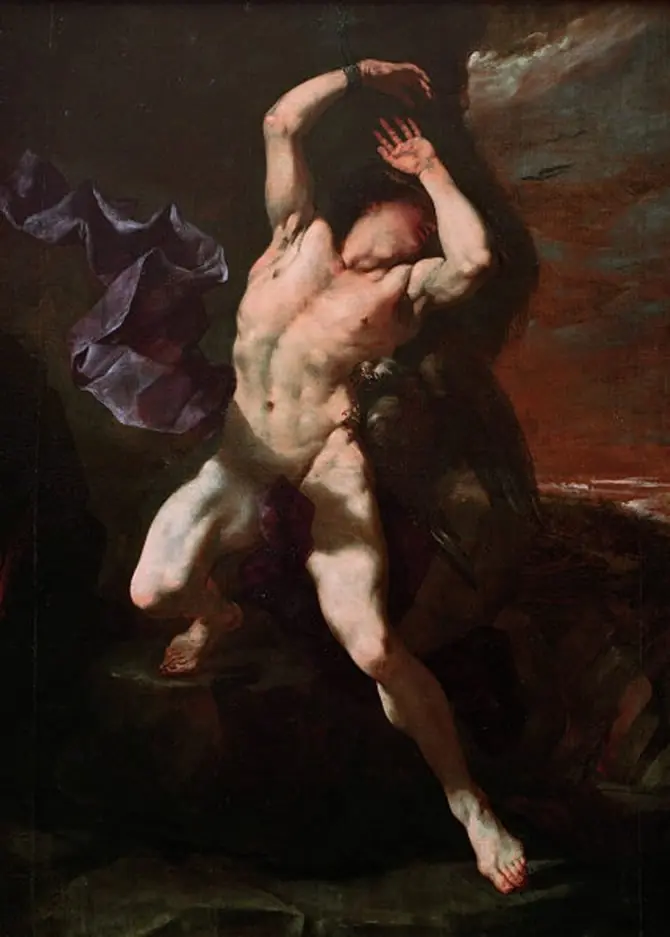
Created between 1636 and 1638, The Rape of Ganymede stands as a significant contribution to Peter Paul Rubens's extensive commission for the Torre de la Parada, a series of sixty mythological works for King Philip IV of Spain. The painting synthesizes classical literary traditions, drawing primarily from Ovid's Metamorphoses while also engaging with Virgilian interpretations where the eagle acts as an emissary rather than the deity himself. Rubens grounded the composition in his deep study of antiquity, basing Ganymede's figure on the Hellenistic Laocoön group and the eagle's dynamics on his own earlier works like Prometheus Bound.
This vertical format, designed for placement between windows, demonstrates the artist's mature ability to depict dramatic movement and the human form, reflecting the broader Baroque interest in emotional intensity and classical revival.
Overview
Peter Paul Rubens painted The Rape of Ganymede between 1636 and 1638 for the hunting lodge of Philip IV of Spain. The oil work shows the mythic moment when Jupiter, disguised as an eagle, seizes the youthful shepherd Ganymede and carries him aloft. Today the canvas belongs to the Museo del Prado in Madrid.
Artist & collection
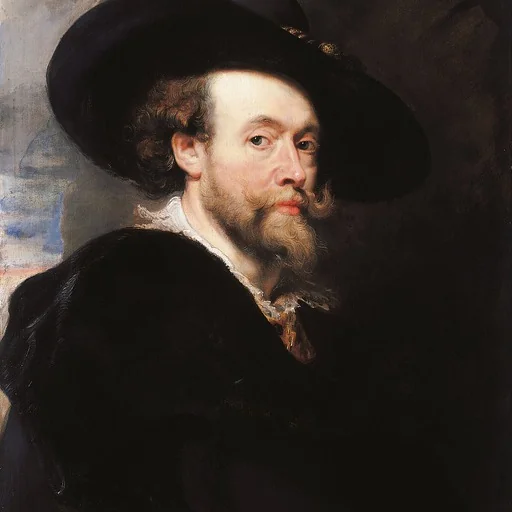
Artist
Sir Peter Paul Rubens ( ROO-bənz; Dutch:; 28 June 1577 – 30 May 1640) was a Flemish artist and diplomat.