Artwork
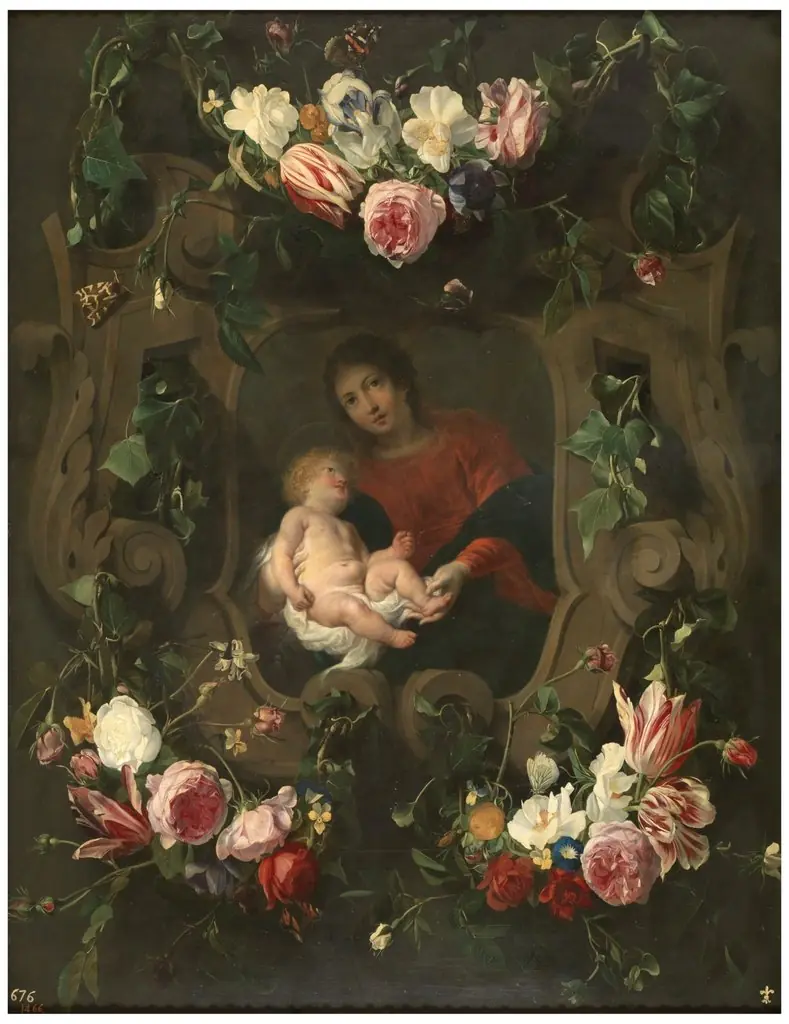
The Virgin and Child in a Painting surrounded by Fruit and Flowers
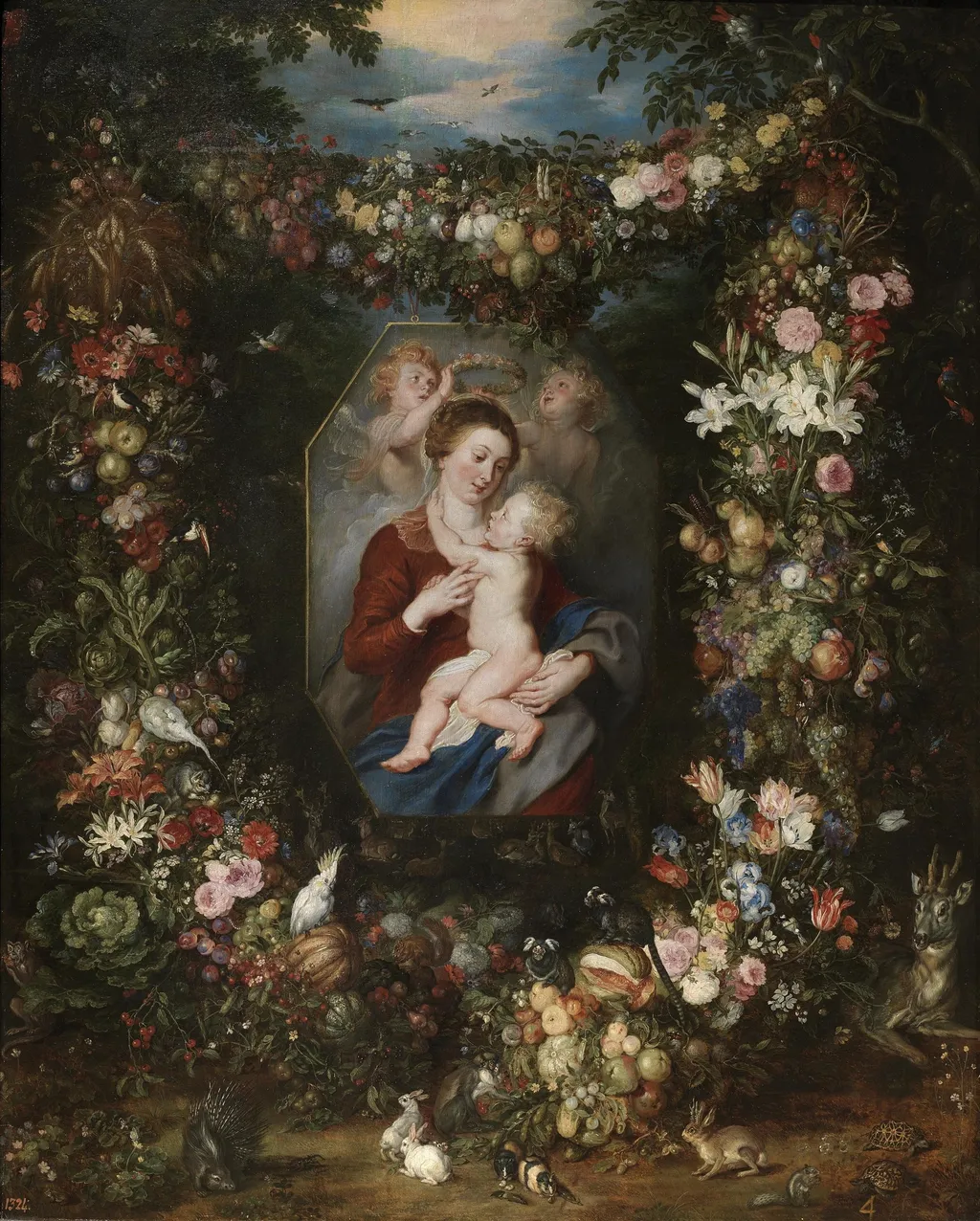
The Virgin and Child in a Painting surrounded by Fruit and Flowers is an oil painting by the Flemish Baroque painting artist Peter Paul Rubens. It dates from 1617 and is held in the collection of the Museo del Prado.
About this work
Subject & Meaning
The intimate interaction between mother and child is set against a luxuriant still‑life backdrop that alludes to both earthly abundance and spiritual blessing.
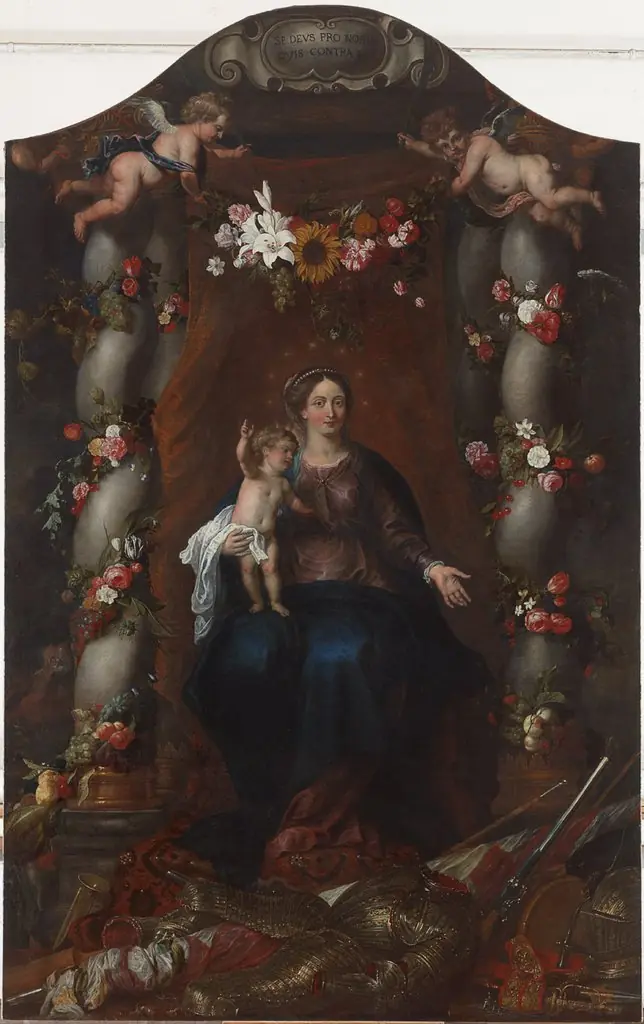
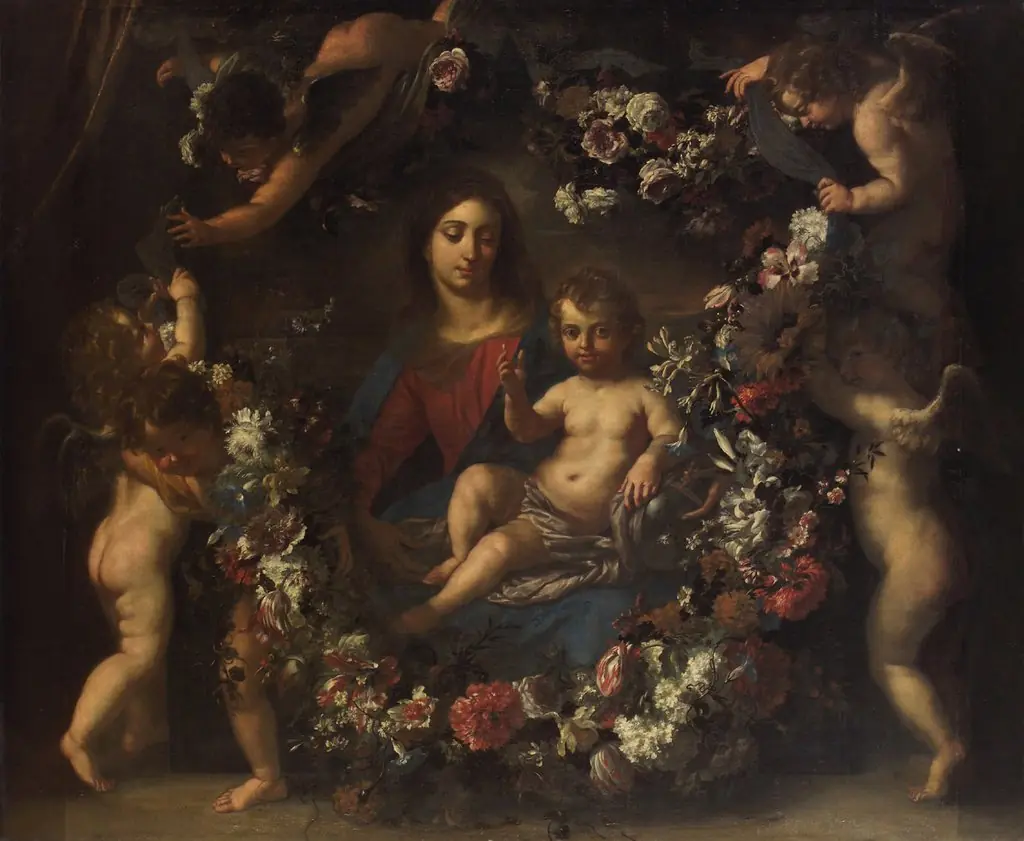
The painting portrays the Virgin Mary tenderly holding the infant Jesus, framed by an abundant arrangement of fruit and flowers. This composition combines a sacred narrative with emblematic elements of fertility and purity, reflecting Counter‑Reformation ideals of divine grace manifested through nature. The intimate interaction between mother and child is set against a luxuriant still‑life backdrop that alludes to both earthly abundance and spiritual blessing.
The work merges religious iconography with the decorative tradition of floral painting, using symbolic flora to convey themes of resurrection, sacrifice, and the immaculate conception. Its meaning extends to a visual meditation on the harmony between divine and earthly realms, resonating with contemporary devotional practices in early‑17th‑century Europe.
Technique & Style
Created in 1617, this work is an oil painting executed on a panel support. The piece is a collaborative effort attributed to Peter Paul Rubens and Jan Brueghel the Elder, combining religious imagery with floral elements. The composition depicts a painting of the Virgin and Child surrounded by an abundance of fruit and flowers, reflecting the artists' shared expertise in religious and still-life genres.
The physical dimensions of the panel measure 79.7 cm in height and 63.7 cm in width. The medium and style integrate the detailed naturalism characteristic of Brueghel's floral work with the figure painting associated with Rubens.
History & Provenance
Created in 1617, this collaborative work was executed by Peter Paul Rubens and Jan Brueghel the Elder. The piece, an oil painting on panel, depicts the Virgin and Child within a painted frame surrounded by floral and fruit elements. Since its inception, the artwork has entered the collection of the Museo del Prado in Madrid, where it remains housed.
The specific division of labor between the two masters regarding the figures versus the still-life components is not detailed in the available records, though their joint authorship is established for this religious genre piece.
The work is held by the Museo del Prado, Madrid, where it is inventoried as oil on panel (inventory number not specified in sources).
It was shown in the exhibition “Rubens: The Garden of Love” at the Museo del Prado in 2004.
Legacy
The composition established by the work influenced subsequent floral still lifes that combined sacred figures with abundant botanical motifs. Artists of the 17th century referenced its integration of religious subject matter with meticulously rendered fruit and blossoms, a convention that persisted in devotional painting across Northern Europe. The painting’s technical approach to rendering texture and light informed later interpretations of similar themes.
Its presence in the Museo del Prado collection has ensured continued scholarly attention to Rubens’ collaborative practice with Jan Brueghel the Elder, reinforcing the work’s role in shaping the genre of flower painting within religious contexts.
Overview
Created in 1617 by the Flemish painter and diplomat Peter Paul Rubens, this oil on canvas presents a devotional image of the Virgin Mary holding the infant Christ. The central figures are set within a gilded arch that frames a dark background, while an abundant still-life of fruit, flowers and small animals spills outward, blurring the boundary between painted space and the viewer’s world.
Context
The composition reflects Rubens’s synthesis of religious iconography and still-life, a practice common among Baroque artists seeking to engage viewers emotionally. The inclusion of abundant flora and fauna aligns with contemporary Counter‑Reformation aims to make sacred subjects accessible through vivid, sensory detail, while the gilded arch references earlier devotional frames used in Flemish altarpieces.
Own this work as a print
Artist & collection
Artist
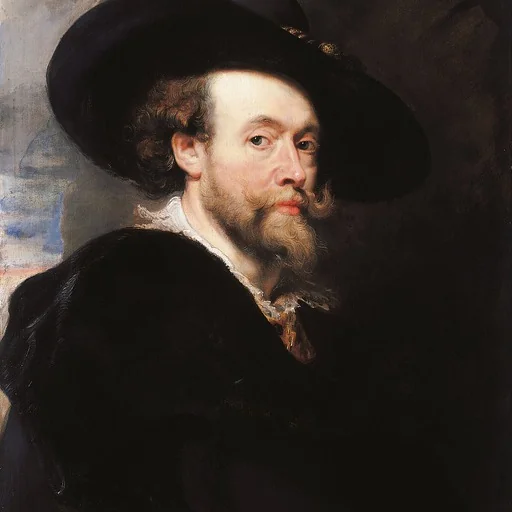
Sir Peter Paul Rubens ( ROO-bənz; Dutch:; 28 June 1577 – 30 May 1640) was a Flemish artist and diplomat.